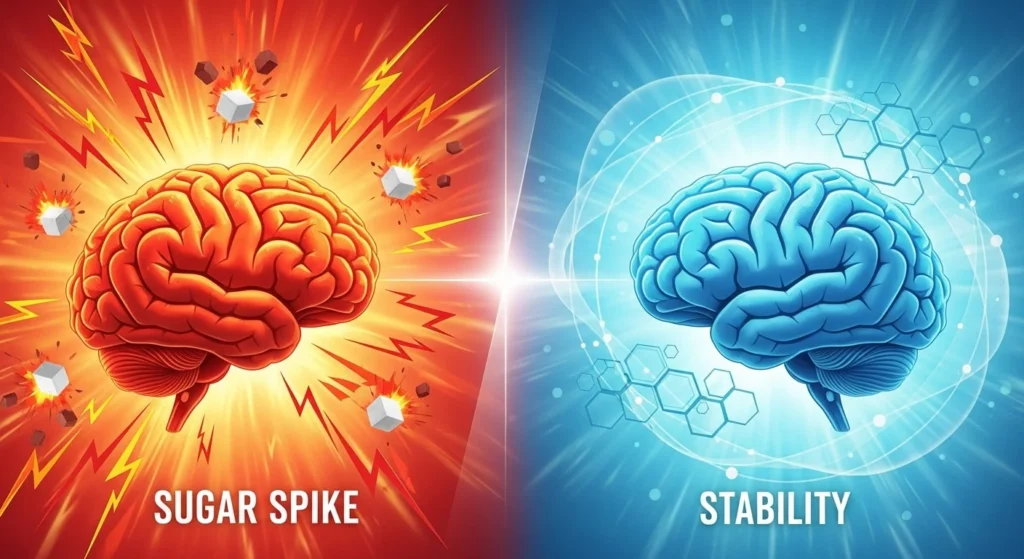
The Brain’s Quiet Obsession With Stability
The brain doesn’t ask for much.
It doesn’t demand excitement.
It doesn’t chase intensity.
It doesn’t thrive on extremes.
What it wants—above all else—is stability.
Not emotional stability.
Not routine.
Glucose stability.
When blood sugar swings wildly, the brain feels threatened.
When glucose stays steady, the brain relaxes, focuses, and performs.
This is why mental crashes feel sudden, emotional, and overwhelming—and why stable energy feels almost invisible when it’s working well.
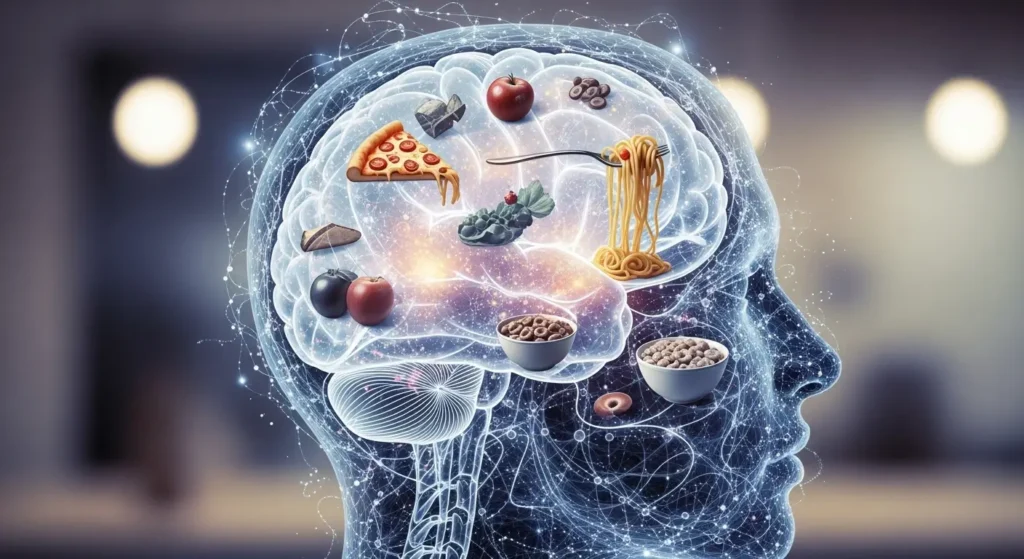
Why the Brain Depends on Glucose More Than Any Other Organ
Unlike muscles, the brain cannot store energy.
It relies on a constant supply of glucose from the bloodstream, minute by minute.
Key facts most people overlook:
- The brain uses ~20% of daily glucose
- Neurons cannot pause activity to “wait” for fuel
- Even small drops trigger stress responses
This makes the brain extremely sensitive to:
- Skipped meals
- Blood sugar spikes
- Rapid glucose crashes
Stability isn’t optional.
It’s protective.
Glucose Spikes: Why the Brain Sees Them as a Threat
Quick sugar feels energizing—for minutes.
But the brain reads spikes differently.
A spike means:
- Rapid insulin release
- Fast glucose clearance
- Unpredictable fuel delivery
To the brain, unpredictability equals danger.
That’s why glucose spikes are often followed by:
- Brain fog
- Anxiety
- Irritability
- Mental fatigue
- Sudden hunger
The crash isn’t weakness.
It’s neural self-defense.
The Stress Hormone Connection Most People Miss
When glucose drops too fast, the brain activates stress hormones.
These include:
- Cortisol
- Adrenaline
- Glucagon
Their job is to raise blood sugar quickly.
Side effects you feel:
- Racing thoughts
- Shakiness
- Emotional sensitivity
- Difficulty concentrating
This is why unstable blood sugar often looks like:
- Anxiety
- Poor focus
- Mood swings
The brain isn’t overreacting.
It’s protecting itself.
Why Stable Glucose Supports Focus, Memory, and Mood
When glucose supply is steady:
- Neurons fire more efficiently
- Neurotransmitters remain balanced
- Mental effort feels easier
- Emotional regulation improves
This creates:
- Longer attention spans
- Better working memory
- Fewer emotional dips
- More consistent energy
Stable glucose doesn’t feel exciting.
It feels calm, clear, and reliable.
Real-Life Example: The Afternoon Brain Crash Explained
Many people experience mental collapse between 2–4 PM.
Common causes:
- High-carb lunch without protein
- Sugary coffee drinks
- Skipped or delayed meals
- Dehydration
The brain runs out of predictable fuel—and sounds the alarm.
A glucose-stable lunch includes:
- Protein
- Fiber
- Healthy fats
- Moderate carbs
The goal isn’t fullness.
It’s fuel continuity.
Comparison Table: Stable vs. Unstable Glucose for the Brain
| Factor | Stable Glucose | Unstable Glucose |
|---|---|---|
| Focus | Sustained | Short bursts |
| Mood | Calm | Irritable |
| Energy | Even | Crash-prone |
| Stress hormones | Low | Elevated |
| Mental stamina | High | Rapid burnout |
Why the Brain Prefers Slow Fuel Over Fast Energy
The brain values predictability over power.
Slow-digesting foods provide:
- Gradual glucose release
- Lower insulin spikes
- Longer fuel availability
Examples include:
- Whole grains
- Legumes
- Vegetables
- Protein-paired carbohydrates
- Healthy fats
Fast sugar forces the brain into emergency mode.
Hidden Nutrition Mistakes That Disrupt Glucose Stability
Even “healthy” habits can backfire.
Common mistakes:
- Eating carbs alone
- Skipping breakfast during intense workdays
- Relying on caffeine instead of meals
- Undereating while mentally overworking
- Avoiding fats entirely
Glucose instability often comes from incomplete meals, not bad intentions.
Actionable Steps to Support Brain-Friendly Glucose Stability
You don’t need a strict diet.
You need consistency.
Start here:
- Pair carbohydrates with protein or fat
- Eat regularly during long mental tasks
- Avoid liquid sugars without food
- Hydrate steadily throughout the day
- Reduce ultra-processed snacks during focus-heavy hours
Small shifts create big neurological relief.
Why This Matters Today
Modern life demands prolonged attention.
Emails.
Screens.
Decisions.
Constant information flow.
The brain wasn’t designed for chaos—it was designed for steady fuel.
Glucose stability is becoming one of the most important foundations of mental performance.
Key Takeaways
- The brain prioritizes glucose stability over quick energy
- Spikes trigger stress responses, not productivity
- Stable blood sugar supports focus, mood, and memory
- Many “energy crashes” are neurological protection
- Balanced meals quietly improve mental endurance
Frequently Asked Questions
1. Is glucose bad for the brain?
No. Glucose is essential—but stability matters more than amount.
2. Does the brain run better on low-carb diets?
The brain prefers stable fuel, not extremes. Balance is key.
3. Why do sugar crashes feel emotional?
Stress hormones affect mood and cognition simultaneously.
4. Can stable glucose improve anxiety and focus?
Yes. Predictable fuel reduces stress signaling in the brain.
5. How fast can glucose stability improve mental clarity?
Often within days of consistent, balanced eating.
Conclusion: The Brain Thrives on What It Can Trust
The brain doesn’t chase excitement.
It seeks reliability.
When glucose is stable, the brain stays calm, focused, and resilient—without drama.
That quiet balance is what real mental energy feels like.


Pingback: Why Your Brain Runs Out Before You Do — The Nutrition–Cognition Connection
Pingback: Why Missing Meals Sabotages Focus, Memory, and Mental Clarity