A marathon coach I interviewed years ago for an unrelated story said something that stuck with me far longer than anything else from that conversation. He said the runners who dropped out rarely dropped out because their legs gave up. Their legs, physiologically, usually had more left to give. They dropped out because somewhere around mile eighteen, their brain decided the cost wasn’t worth it anymore and started negotiating a surrender the body hadn’t actually asked for.
That idea — that the mind often taps out before the body’s actual limits are reached — turns out to apply to a lot more than marathons. It shows up in the 3 p.m. wall at a desk job. In the sense of being “too tired” to cook dinner despite having done nothing physically demanding all day. In the mental exhaustion that hits well before any real physical exertion has occurred. And increasingly, researchers looking at fatigue are finding that a meaningful piece of this gap traces back to something unglamorous: how the brain is being fueled, moment to moment, long before willpower ever enters the conversation.
The Brain Is an Expensive Organ to Run
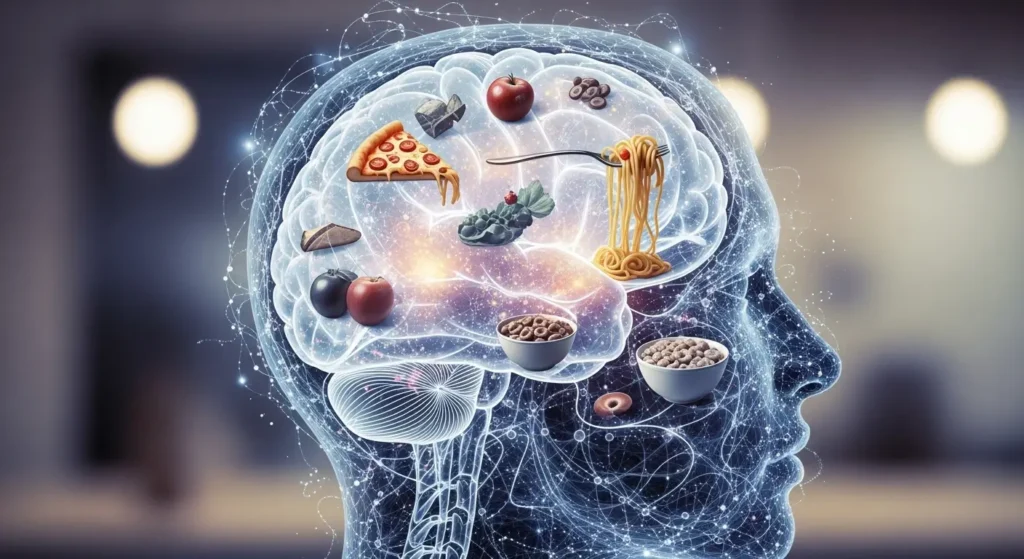
The brain makes up roughly two percent of body weight but consumes around twenty percent of the body’s energy at rest — a strikingly disproportionate share. Unlike muscle, it can’t store much fuel locally. It depends on a continuous, stable supply of glucose delivered through the bloodstream, and it is unusually intolerant of interruptions to that supply. A muscle running low on fuel simply performs a bit worse. A brain running low on fuel changes behavior — motivation drops, irritability rises, and the felt sense of fatigue kicks in as a kind of protective signal, often well before the body’s actual physical reserves are anywhere near exhausted.
This is part of what the marathon coach was describing without quite using the language for it. The mental “wall” often arrives ahead of the physical one because the brain, sensing depleting glucose availability, starts prioritizing conservation — and conservation, from the inside, feels exactly like giving up.
Central Fatigue Isn’t the Same as Physical Fatigue
Exercise physiologists distinguish between peripheral fatigue, which is the muscles’ actual capacity to keep contracting, and central fatigue, which originates in the brain and nervous system as a kind of protective override. Central fatigue tends to arrive earlier and is heavily influenced by neurotransmitter balance — particularly serotonin, which rises during prolonged exertion and is associated with the mental sensation of “I need to stop,” independent of what the muscles are actually still capable of doing.
What’s notable is how much of this pathway is nutrition-linked. Serotonin is synthesized from the amino acid tryptophan, and its production is affected by overall dietary protein balance and carbohydrate intake during sustained effort. Athletes who fuel consistently during long efforts — steady carbohydrate intake rather than starting depleted — report measurably higher perceived stamina, not because their muscles behave differently, but because the central fatigue signal arrives later.
This Isn’t Just About Athletes
The same mechanism plays out in far less dramatic settings. Someone who skips breakfast, runs on coffee through the morning, and hits a wall of “I can’t do this anymore” by early afternoon isn’t necessarily facing a motivation problem. They’re often facing the exact central fatigue pattern the coach described, just triggered by a desk chair and a missed meal instead of eighteen miles of pavement. The brain, sensing unstable fuel delivery, starts issuing the same protective “stop” signal it would during physical exertion — except there’s no finish line waiting on the other side, just a stack of unanswered emails.
Sleep Debt Compounds the Gap
Poor sleep amplifies this effect considerably. Sleep deprivation impairs the brain’s ability to regulate glucose metabolism efficiently, meaning a tired brain burns through available fuel less effectively than a well-rested one, even when calorie intake is identical. This helps explain why exhaustion after a bad night’s sleep often feels disproportionate to any actual physical demand — the mind is quitting early not because the day was hard, but because the fuel-management system underneath it was already compromised before the day began.
Closing the Gap
None of this means fatigue is purely a fueling issue — genuine physical limits, medical conditions, and emotional burnout are real and shouldn’t be waved away by nutrition advice. But for a large share of the daily exhaustion people write off as low willpower or poor discipline, the more accurate explanation is closer to what the marathon coach was pointing at: the mind, sensing unstable or insufficient fuel, taps out well ahead of the body’s actual capacity, as a built-in protective mechanism rather than a personal failing.
Steady meals, adequate protein, consistent sleep, and blood sugar that doesn’t swing wildly through the day don’t create unlimited stamina. But they do seem to move the point where the mind decides to quit a little closer to where the body’s real limits actually are — which, for most people on most days, turns out to be considerably further out than it feels by 3 p.m.
Sources:
- Harvard T.H. Chan School of Public Health — Nutrition Source: https://www.hsph.harvard.edu/nutritionsource/
- National Institutes of Health — Central Fatigue and Exercise Physiology Research: https://www.ncbi.nlm.nih.gov/pmc/
- Sleep Foundation — Sleep Deprivation and Cognitive Function: https://www.sleepfoundation.org/sleep-deprivation
- Mayo Clinic — Fatigue Causes and Management: https://www.mayoclinic.org/symptoms/fatigue/basics/causes/sym-20050894
- World Health Organization — Healthy Diet Fact Sheet: https://www.who.int/news-room/fact-sheets/detail/healthy-diet

Aarti Solanki, B.Sc. (Food Science), is a food science writer passionate about making nutrition simple and evidence-based. She creates well-researched, easy-to-understand articles on healthy eating, food science, and nutrition, using information from trusted scientific and public health sources.