
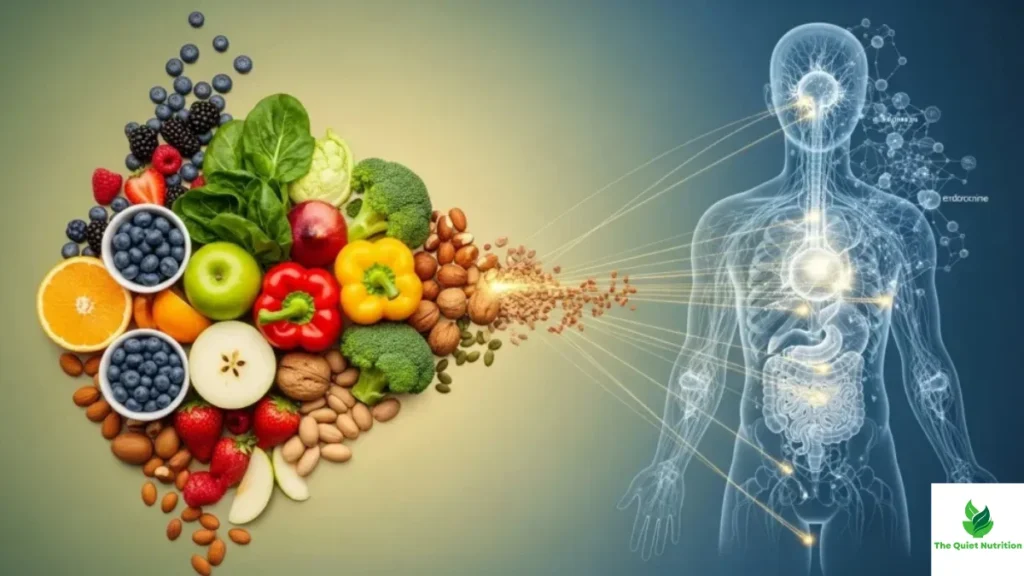
“My body is craving chocolate, so it must need magnesium.” “I want salty food, so I must be dehydrated.” Ideas like these circulate constantly, and they contain a real kernel of truth buried under a lot of oversimplification. The body genuinely does have specific hunger signals for certain nutrients — but the mechanism behind them is far narrower, stranger, and more specific than the version that ends up in casual wellness advice.
Understanding the real biology here means separating three things that get treated as interchangeable: ordinary hunger, genuine nutrient-specific appetite, and everyday cravings. They are not the same signal, and mixing them up leads people to misread what their body is actually telling them.
Ordinary Hunger Is About Energy, Not Ingredients
The hunger most people feel several times a day runs on a fairly well-understood hormonal system centered on two key players: ghrelin and leptin. Ghrelin, produced mainly by the stomach, rises before meals and drives the urge to eat, while leptin, produced by fat tissue, signals satiety and reflects the body’s longer-term energy reserves. Together, researchers have described their interaction as a kind of hormonal “tango” that tracks overall energy balance.
Critically, this system is tuned to detect changes in energy availability — how many calories you’ve taken in versus expended — not the specific nutritional content of what you eat. Research directly comparing these hormones found that ghrelin, leptin, and insulin respond to shifts in overall energy availability, while subjective appetite itself tracked more closely with the actual content of meals eaten. In plain terms: your basic hunger system is mostly counting calories in and calories out, not auditing your micronutrient intake.
Real Nutrient-Specific Appetite Exists — But It’s Rarer and More Precise Than People Assume
Here’s where it gets genuinely interesting. The body does have dedicated appetite systems for a small number of specific nutrients, separate from general caloric hunger, and the evidence for these is well documented in ways ordinary food cravings simply aren’t.
Sodium appetite is the clearest example. When the body’s sodium levels drop significantly, a distinct physiological drive emerges that specifically seeks out salt — not food in general, not calories, but sodium specifically. Historical medical case studies have documented this in extreme form: a person with a rare adrenal condition that caused severe sodium loss survived for years primarily by self-selecting an enormous salt intake, driven by this specific appetite, until circumstances restricted his access to sodium.
Protein appears to work similarly, through a separate and more recently understood pathway. Research has identified a liver-derived signal called FGF21 as a strong candidate for driving protein-specific appetite, distinct from the pathways governing general caloric hunger. Human studies testing different nutrient solutions found that protein was the most effective at reducing hunger and craving ratings compared to fat or carbohydrate, with a measurable hierarchy in how well different macronutrients satisfied hunger: protein first, then fat, then carbohydrate.
What makes these systems different from ordinary hunger is specificity. Sodium appetite doesn’t get satisfied by eating something else entirely — it’s targeted at sodium. That’s a genuinely distinct biological circuit, not a metaphor.
Most Everyday Cravings Aren’t This
This is where the popular version of “nutrient signaling” tends to overreach. The idea that a chocolate craving means a magnesium deficiency, or that wanting cheese signals a calcium shortfall, doesn’t hold up well against the evidence. Research reviewing the drivers of food cravings has found they’re most reliably predicted by a food’s reward value — how palatable, calorie-dense, or novel it is — along with emotional state and patterns of restriction or habitual eating, not nutrient status.
Three factors reliably intensify cravings, and none of them are nutritional messages in the way people assume: stress, which elevates cortisol and specifically increases preference for high-calorie, high-reward foods; sleep deprivation, which disrupts the same ghrelin and leptin signals discussed earlier, pushing hunger up and fullness down; and chronic dietary restriction, which produces a well-documented rebound effect where the foods someone works hardest to avoid become the ones they crave most intensely. These are real physiological responses — they’re just not your body diagnosing a trace mineral shortfall. They’re your nervous system responding to stress, fatigue, or restriction by pushing you toward efficient, high-reward fuel.
Why the Distinction Actually Matters
Confusing general craving with genuine nutrient-specific appetite has a practical cost: it sends people chasing the wrong fix. Someone who assumes every sweet craving reflects a magnesium gap might supplement magnesium indefinitely while the actual driver — poor sleep, chronic stress, or an overly restrictive eating pattern — goes unaddressed. The craving doesn’t resolve, because it was never really about the nutrient being blamed.
The nutrient-specific systems that are real — sodium appetite, protein-driven satiety — tend to be more targeted, more intense under genuine deprivation, and backed by identifiable biological pathways rather than a vague, generalized pull toward a broad category of “junk food.” If a craving disappears the moment you address stress or catch up on sleep, that’s a strong sign it was never a nutritional signal to begin with. If it’s a precise, persistent pull toward one specific thing under conditions of real physiological depletion, that’s closer to what genuine nutrient-specific appetite actually looks like — and it’s rarer than the wellness-industry version of this idea suggests.
Sources:
- NCBI/PMC — Appetite Responds to Changes in Meal Content, Whereas Ghrelin, Leptin, and Insulin Track Changes in Energy Availability
- ScienceDirect — Targeted Cravings: Unraveling the Drivers of Nutrient-Specific Appetite
- NCBI/PMC — The Relationship Between the Leptin/Ghrelin Ratio and Meals With Various Macronutrient Contents
- NCBI/PMC — Effects of Different Isocaloric Oral Nutrient Solutions on Hunger and Craving

Aarti Solanki, B.Sc. (Food Science), is a food science writer passionate about making nutrition simple and evidence-based. She creates well-researched, easy-to-understand articles on healthy eating, food science, and nutrition, using information from trusted scientific and public health sources.






Pingback: Why Your Brain Struggles When Your Meals Have No Rhythm
Pingback: How Nutritional Stress Speeds Up Aging Long Before You Notice