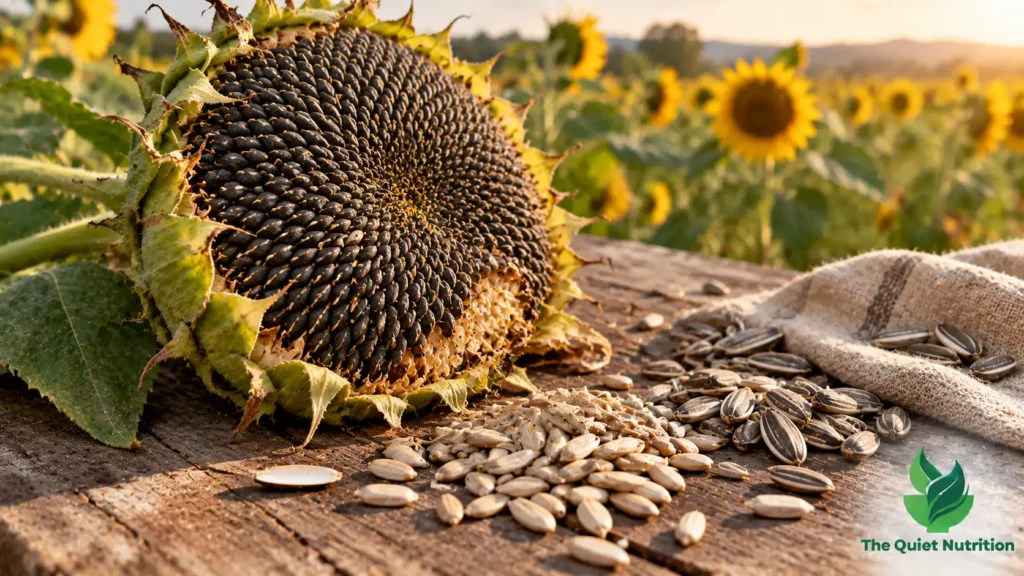
Sunflower seeds are easy to overlook. They are sprinkled over salads, mixed into granola, added to bread, or eaten by the handful as a snack. Yet these small seeds contain an impressive combination of vitamin E, unsaturated fats, plant protein, and essential minerals.
Their nutritional value is not based on a single so-called superfood compound. It comes from the way several nutrients work together within an everyday food. Sunflower seeds can help people add more nutrient-rich plant foods to their diets, particularly when they replace snacks that offer fewer vitamins, minerals, or beneficial fats.
But there is a distinction worth making: a food can be rich in nutrients associated with good health without being proven to prevent or treat a particular disease. Sunflower seeds are nutritious, but their benefits are best understood in that context.
1. They Are an Excellent Source of Vitamin E
One of the strongest nutritional reasons to eat sunflower seeds is their vitamin E content.
Vitamin E is a fat-soluble vitamin that acts as an antioxidant. It helps protect cell membranes from damage caused by reactive molecules and supports normal immune function. The body needs it in relatively small amounts, but getting enough through food remains important.
Sunflower seeds are among the better food sources of vitamin E. A one-ounce (28-gram) serving of dried sunflower seed kernels provides roughly 7–10 milligrams, depending on the product and preparation. For adults, the recommended dietary allowance is 15 milligrams per day. That makes a modest serving a meaningful contribution to daily intake.
Vitamin E is also found in almonds, vegetable oils, spinach, and other foods, so sunflower seeds are one useful option rather than the only way to obtain it.
The important distinction is between getting vitamin E from food and taking high-dose supplements. Although vitamin E has essential biological functions, clinical trials have not established that vitamin E supplements reliably prevent heart disease or cancer. Eating sunflower seeds should therefore be viewed as a way to improve dietary quality, not as a shortcut to disease prevention.
2. Their Fats Are Mostly Unsaturated
Sunflower seeds are relatively high in fat, but that is not automatically a disadvantage. The type of fat matters.
Most of the fat in conventional sunflower seed kernels is unsaturated. These fats include polyunsaturated fatty acids, particularly linoleic acid, an omega-6 fatty acid that the body cannot make on its own and must obtain from food. Sunflower seeds also contain monounsaturated fat.
Unsaturated fats can be valuable when they replace substantial amounts of saturated fat in the diet. For example, using seeds in place of a snack dominated by butter, pastry, or other sources of saturated fat may improve the overall fat profile of a meal or snack.
However, the benefit depends on what sunflower seeds replace. Simply adding extra calories to an already energy-rich diet does not guarantee better health outcomes.
It is also worth remembering that sunflower seeds contain different proportions of fatty acids depending on the variety. Conventional sunflower seeds and high-oleic sunflower varieties are not identical in their fat composition.
The practical takeaway is simple: sunflower seeds provide useful fats, but they work best as part of a balanced eating pattern that includes a variety of nuts, seeds, legumes, vegetables, whole grains, and other minimally processed foods.
3. They Supply Minerals That Support Normal Body Functions
Sunflower seeds contribute several minerals that the body uses every day. These include magnesium, copper, manganese, phosphorus, and selenium.
Each has a different role, which is one reason it is more accurate to think of sunflower seeds as a nutrient-dense food than to assign them one sweeping health benefit.
Magnesium for muscles, nerves, and energy metabolism
Magnesium participates in hundreds of enzyme reactions. It contributes to normal muscle and nerve function, energy production, protein synthesis, and the maintenance of healthy bones.
Sunflower seeds provide magnesium in a convenient plant-food form. They can help people build a more varied intake of this mineral, alongside foods such as beans, lentils, whole grains, leafy greens, and other seeds.
Eating magnesium-containing foods is useful, but sunflower seeds should not be described as a treatment for muscle cramps, sleep problems, or other symptoms without stronger evidence.
Copper and manganese for enzymes and metabolism
Copper is needed for iron metabolism, connective-tissue formation, and several enzyme systems. Manganese also supports normal enzyme activity, metabolism, and bone formation.
Sunflower seeds contain both minerals in meaningful amounts. Their contribution is particularly useful because small portions of seeds can supply a variety of micronutrients at once.
Selenium for antioxidant-related enzymes
Selenium is required for selenoproteins, some of which help regulate oxidative processes in the body. It also plays a role in thyroid hormone metabolism.
Sunflower seeds supply some selenium, although the amount can vary. They are one contributor to selenium intake rather than a food that should be relied upon as the sole source.
These minerals do not work independently of the rest of the diet. Their value comes from helping the body meet its normal nutritional requirements.
4. They Provide Plant Protein
Sunflower seeds also contain plant protein, making them a useful addition to vegetarian and vegan meals.
A one-ounce serving of dried kernels provides approximately six grams of protein. That is not equivalent to a full protein-rich meal, but it can add a useful amount to breakfast, lunch, or a snack.
Protein supports tissue maintenance and repair, and the body uses amino acids to build enzymes, hormones, and other important molecules. Sunflower seeds contribute several amino acids, although their protein is not nutritionally identical to every animal-based protein or to all combinations of plant proteins.
They are particularly convenient when added to foods that would otherwise contain little protein. A spoonful over oatmeal, a salad, or a vegetable soup adds more than crunch.
For people following plant-based diets, sunflower seeds can complement beans, lentils, tofu, soy foods, whole grains, and other nuts and seeds. Variety matters more than relying heavily on a single protein source.
5. Their Fiber Can Support Digestive Health
Sunflower seeds contain dietary fiber, although the amount varies with the product and serving size. Fiber is an important part of a healthy eating pattern because it supports normal bowel function and contributes to overall dietary quality.
The fiber in whole plant foods can also help make meals more satisfying. Sunflower seeds contain both fiber and fat, and their combination with protein may make them more substantial than a snack made mostly from refined starch or added sugar.
Still, sunflower seeds are not a guaranteed remedy for constipation or bloating. Digestive responses vary, and the total amount of fiber eaten throughout the day matters more than any one ingredient.
If you want to increase fiber intake, do so gradually and drink enough fluids. A broader range of fiber-containing foods—including fruits, vegetables, legumes, and whole grains—will usually contribute more to digestive health than depending on seeds alone.
6. They Can Fit Into a Heart-Healthy Eating Pattern
Sunflower seeds contain several features that make them a sensible addition to a heart-conscious diet: unsaturated fats, fiber, magnesium, and other nutrients.
Research on plant seeds and other nutrient-rich plant foods suggests that replacing less favorable food choices with these foods can support overall dietary quality. Their unsaturated fats are especially relevant when they replace foods high in saturated fat.
However, the evidence needs to be interpreted carefully. Studies of broad dietary patterns, nuts, or seed mixtures do not automatically prove that eating sunflower seeds by themselves prevents heart attacks, lowers blood pressure, or reduces cholesterol.
The strongest practical approach is to consider the whole diet. Regularly eating a variety of vegetables, fruits, whole grains, legumes, nuts, and seeds is more meaningful than expecting one seed to deliver a particular cardiovascular outcome.
Sunflower seeds can play a useful role in that pattern, especially when they are unsalted or lightly salted and replace less nutritious snack options.
7. They Offer Nutrients That Help Maintain Healthy Cells
Sunflower seeds contain vitamin E alongside other nutrients involved in normal cellular function. Vitamin E helps protect cell membranes from oxidative damage, while minerals such as copper and selenium contribute to enzyme systems that participate in the body’s maintenance processes.
This is one reason sunflower seeds are often described as antioxidant-rich.
But the word antioxidant can be misleading when it is used as a promise of better health. The fact that a nutrient participates in antioxidant activity does not establish that eating more of it will prevent cancer, slow ageing, or protect against every chronic disease.
Human health depends on many interacting factors, including overall dietary quality, physical activity, sleep, smoking status, genetics, and existing health conditions.
The reasonable conclusion is that sunflower seeds provide nutrients the body needs to function normally. Their value should not be inflated into claims that they detoxify the body or reverse cellular ageing.
8. They Are Easy to Add to Everyday Meals
One of the most useful things about sunflower seeds is how little effort they require. You do not need a special recipe or a large serving to include them in a varied diet.
Here are a few practical ways to use them:
- At breakfast: Sprinkle them over oatmeal, unsweetened yogurt, or whole-grain cereal.
- At lunch: Add a spoonful to salads, grain bowls, or vegetable soups.
- For a snack: Combine a measured portion with fruit or a small serving of other nuts and seeds.
- In baking: Add them to whole-grain bread, crackers, or homemade savoury muffins.
- As a topping: Use lightly toasted kernels to add texture to cooked vegetables or grain dishes.
- As a spread: Try sunflower seed butter as an alternative to peanut butter, while checking the ingredient list for added sugar, salt, or oils.
Light toasting can bring out their flavour. If you roast them at home, avoid burning them, and store the finished seeds in an airtight container away from heat and light.
How Much Sunflower Seed Should You Eat?
A practical starting point is around one ounce, or 28 grams, of shelled sunflower seeds. This is a common reference serving, not a strict daily requirement.
That portion contains approximately 160–170 calories, around six grams of protein, and a substantial amount of unsaturated fat. It also supplies vitamin E and several minerals.
Because seeds are energy-dense, portions can add up quickly when you eat directly from a large packet. Measuring a serving into a small bowl can help if you are watching your overall calorie intake.
There is no universal need to eat sunflower seeds every day. If you enjoy them, they can be part of a regular rotation that also includes pumpkin seeds, sesame seeds, nuts, legumes, and other nutrient-rich foods.
Are There Any Downsides to Eating Sunflower Seeds?
For most people, plain sunflower seeds are a nutritious food. A few practical considerations are worth keeping in mind.
Watch the salt
Salted sunflower seeds can contain substantial sodium, especially if you snack on them frequently or eat large portions. Choosing unsalted or lightly salted kernels makes it easier to manage sodium intake.
Remember the calories
Their fat content makes sunflower seeds energy-dense. That is not inherently bad, but large servings can contribute more calories than expected. A measured portion can make them easier to fit into your usual meals.
Check for allergies
Sunflower seed allergy is possible, even though sunflower seeds are not tree nuts. Anyone with a known or suspected reaction should avoid the food until they have received appropriate medical advice. Sunflower seed butter may also be manufactured in facilities that handle other allergens, so labels matter.
Consider the product, not just the seed
Flavoured, heavily salted, sugar-coated, or oil-roasted versions may have a different nutritional profile from plain kernels. Compare labels when choosing packaged products.
The Bottom Line
Sunflower seeds are healthy because they bring several useful nutrients together in a small, versatile food. They are especially notable for vitamin E, and they also provide unsaturated fats, plant protein, magnesium, copper, and other minerals.
Their benefits are best understood as part of an overall healthy diet, not as a promise that a daily handful will prevent disease or correct nutritional deficiencies. Choosing plain or lightly salted seeds, paying attention to portion size, and using them to add variety to meals are practical ways to enjoy what they offer.
You do not need to treat sunflower seeds as a superfood. You simply need to recognize them for what they are: a nutrient-rich, convenient plant food that can make an already balanced diet a little more varied and satisfying.
Research sources
- Harvard Health Publishing — Seed of the Month: Sunflower — overview of sunflower seeds’ vitamin E, minerals, and practical serving ideas.
- Harvard T.H. Chan School of Public Health — Vitamin E — vitamin E’s role, food sources, and limits of supplement evidence.
- NIH Office of Dietary Supplements — Vitamin E Fact Sheet — recommended intake and food sources.
- USDA-derived nutrition data — Dried sunflower seed kernels — reference values for calories, fats, protein, fiber, vitamin E, and minerals. Values vary by preparation and product.
- Review in Nutrition Reviews — Consumption of Plant Seeds and Cardiovascular Health — broader evidence on seeds and cardiovascular health; not proof that sunflower seeds alone prevent cardiovascular disease.

Aarti Solanki, B.Sc. (Food Science), is a food science writer passionate about making nutrition simple and evidence-based. She creates well-researched, easy-to-understand articles on healthy eating, food science, and nutrition, using information from trusted scientific and public health sources.