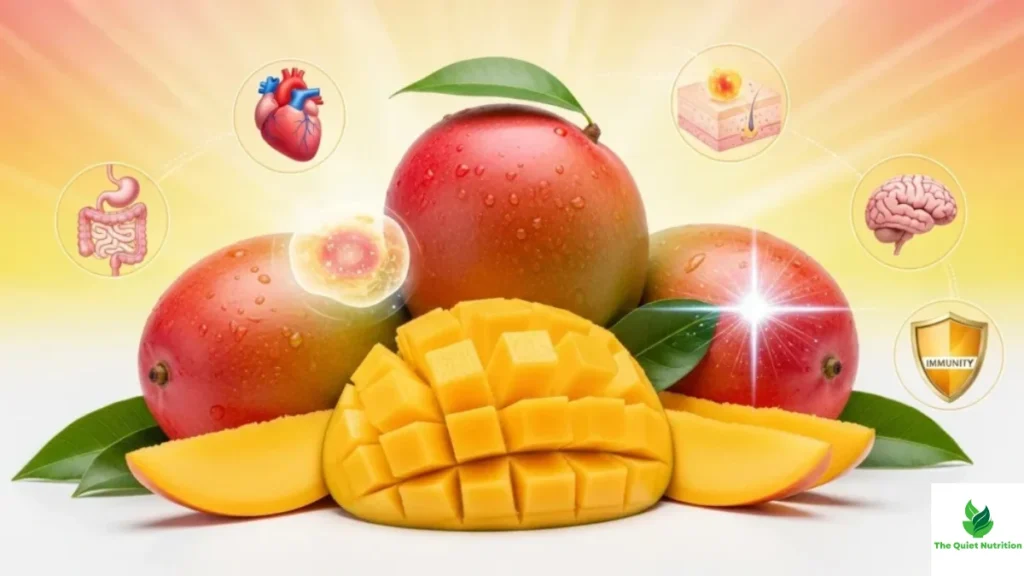
Mangoes have earned the nickname “king of fruits” for their taste alone, but that title barely scratches the surface. Beneath the sweetness sits a dense package of antioxidants, fiber, and plant compounds that researchers are still uncovering new benefits from. Here’s what mangoes are quietly doing for your body — well beyond dessert.
Your Antioxidant Levels Get a Serious Boost
Mangoes rank surprisingly high on the antioxidant scale. In comparative research measuring antioxidant power across common fruits, mangoes scored 108 — nearly double that of apples and roughly four times higher than bananas. That puts mangoes well ahead of many everyday fruits, though berries like blueberries and strawberries still lead the pack.
Much of this power comes from a rich mix of polyphenols and carotenoids, including quercetin, beta-carotene, and a mango-specific compound called mangiferin. These compounds help neutralize free radicals, the unstable molecules linked to cellular damage, aging, and chronic disease risk.
Your Blood Sugar Control May Actually Improve
This is the benefit most people don’t expect from a fruit that tastes this sweet. Multiple studies have found that regular mango consumption is linked to improved blood sugar control and insulin response, even though mango itself contains natural sugar. Researchers believe this is partly due to mangiferin, a compound that appears to slow sugar absorption through the intestinal wall.
One 12-week study involving obese adults found that mango supplementation significantly reduced blood sugar levels. Separate research presented by nutrition scientists suggests that the antioxidants, fiber, and polyphenols in mango may help offset the impact of its natural sugar content on glucose control, though researchers note that more studies are still needed to confirm the full effect.
Your Eyes Get Extra Protection
Mangoes are a strong source of two antioxidants your eyes specifically rely on: lutein and zeaxanthin. These compounds accumulate in the retina, where they help filter harmful light and protect against age-related vision decline. Mangoes also provide a meaningful amount of vitamin A, another nutrient essential for maintaining healthy eyesight.
Your Immune System Gets Reinforced
A single cup of mango provides close to two-thirds of your daily vitamin C needs. Vitamin C plays a direct role in immune function, helping your body produce and strengthen white blood cells while also supporting your skin’s natural defenses against damage.
Your Heart Gets Extra Support
Mangoes contain a meaningful combination of magnesium and potassium, two minerals linked to healthy blood pressure and a steady heart rhythm. Early research also suggests that mangiferin, the same compound involved in mango’s blood sugar benefits, may help reduce inflammation in heart tissue — though researchers describe this area of study as still developing.
Your Digestion Runs More Smoothly
Between dietary fiber and natural digestive enzymes like amylase, mangoes support smoother digestion and can help prevent constipation. This fiber content is also part of what helps offset the fruit’s natural sugar, slowing how quickly it affects your blood sugar compared to sugar consumed without fiber.
Your Cells May Get Extra Cancer-Protective Support
Some of the same antioxidant and polyphenol compounds found in mangoes — including quercetin, gallic acid, and mangiferin — have been studied for their potential role in cancer prevention. Research has also identified compounds in mango that inhibit an enzyme involved in regulating cell growth and proliferation, a pathway relevant to cancer development. This research is still emerging, but it adds another layer to mango’s reputation as more than just a sweet treat.
The One Thing to Watch: Portion Size
Mango’s biggest nutritional catch is also its most obvious one — natural sugar content. A single cup of fresh mango contains over 22 grams of sugar, more than many other fresh fruits. For most people this isn’t a concern, but if you’re managing blood sugar closely, it’s worth sticking to roughly a one-cup serving and pairing it with a source of fiber or protein to help minimize any blood sugar spike.
So, Why Eat Mangoes?
Between their outsized antioxidant content, blood sugar-friendly compounds, eye-protective nutrients, and immune support, mangoes deliver far more functional value than their reputation as a “treat fruit” suggests. Enjoyed in reasonable portions, they’re one of the more nutrient-dense ways to satisfy a sweet craving.
Sources
- NutritionFacts.org – Mango Health Topics
- Healthline – Mango: Nutrition, Health Benefits, and How to Eat It
- WebMD – Mango: Health Benefits, Nutrients per Serving, and More
- National Mango Board – Two New Studies Find Positive Health Outcomes of Mango Consumption
- Arabian Journal of Chemistry – The Contribution of Mango Fruit to Human Nutrition and Health
- Bentham Science – Nutritional Potency of Mangifera indica L. (Mango): Focus on Mango as Antioxidant

Aarti Solanki, B.Sc. (Food Science), is a food science writer passionate about making nutrition simple and evidence-based. She creates well-researched, easy-to-understand articles on healthy eating, food science, and nutrition, using information from trusted scientific and public health sources.







Pingback: Watermelon Isn’t Just Water: The Hidden Health Benefits Most People Don’t Know