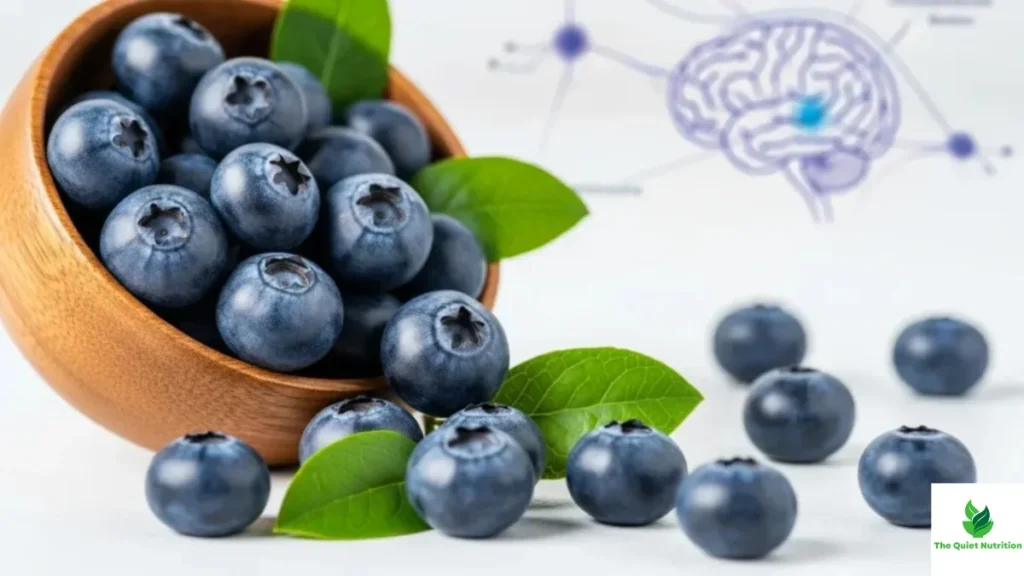
A handful of blueberries doesn’t look like much. No label, no health claim, no hype. Just a small, dusty-blue fruit that fits neatly into a smoothie or a bowl of yogurt.
But inside your brain, something more interesting may be happening.
Over the past two decades, scientists have been quietly building a body of research suggesting blueberries do more than satisfy a sweet craving. They may influence memory, mental sharpness, and even the pace at which your brain ages. The effects aren’t dramatic overnight transformations, but they are consistent enough that neuroscientists keep coming back to this one small fruit.
Here’s what the science actually shows.
The Berry That Keeps Showing Up in Brain Research
Much of the modern research on blueberries and cognition traces back to the lab of Robert Krikorian at the University of Cincinnati, whose team has run some of the most closely watched blueberry-brain trials over the past fifteen years.
Across multiple studies, a pattern kept emerging: older adults who added blueberries to their daily diet showed measurable improvements in specific areas of thinking, particularly memory and executive function, compared to those who didn’t.
One trial that illustrates this well involved older adults with subjective cognitive decline, meaning they had noticed changes in their own memory or thinking. After 12 weeks of eating about half a cup of blueberries daily, participants showed improved executive function. Their processing speed improved enough that they performed similarly to a comparison group with no cognitive complaints at all.
That’s a striking result for something as simple as a daily fruit serving.
So What’s Actually Happening Inside Your Brain?
The leading explanation centers on a group of plant compounds called anthocyanins, the pigments responsible for the blueberry’s deep blue-purple color. Alongside other flavonoids, carotenoids, and vitamins C and E found in the fruit, anthocyanins appear to influence several processes tied to brain aging and cognitive decline.
Researchers believe the effects work through a few overlapping pathways:
Reducing oxidative stress. The brain uses a disproportionate amount of the body’s oxygen, which makes it especially vulnerable to oxidative damage over time. Blueberry compounds act as antioxidants, helping to neutralize some of that cellular wear and tear.
Calming chronic inflammation. Low-grade, long-term inflammation is increasingly linked to neurodegenerative conditions, including Alzheimer’s disease. Blueberry polyphenols appear to help suppress inflammatory activity in the body.
Supporting brain signaling. Some research points to blueberries influencing neurotrophins like brain-derived neurotrophic factor (BDNF), a protein that supports the growth and survival of neurons and plays a role in learning and memory.
Improving blood flow. This might be the most consistently replicated finding of all. A comprehensive 2026 review of wild blueberry research concluded that the strongest, most reliable evidence supports improvements in blood vessel function, with encouraging but less definitive effects on blood pressure, cholesterol, blood sugar, and cognition. Since healthy blood flow is essential for delivering oxygen and nutrients to brain tissue, better vascular function may be one of the quieter ways blueberries support mental clarity.
In other words, blueberries may be working on the plumbing as much as the wiring.
The Honest Caveats Worth Knowing
Not every study paints a uniformly rosy picture, and it’s worth being upfront about that.
A meta-analysis pooling 14 separate studies found that anthocyanin supplementation didn’t produce statistically significant improvements across every cognitive domain tested. The benefits appear to be domain-specific, showing up more reliably in areas like memory and processing speed than across the board.
It also seems the people who benefit most are those who already have some cognitive vulnerability, such as mild memory problems, insulin resistance, or cardiovascular risk factors, rather than young, cognitively healthy adults. That doesn’t make the research less real. It just means blueberries aren’t a universal brain-boosting pill; their effects seem most pronounced in brains that already have some room for improvement.
Most of the human trials are also fairly small, often fewer than 40 participants, and relatively short, with the longest lasting around six months. Larger, longer studies are still needed to fully understand how lasting these effects are.
Beyond Memory: Heart and Metabolic Connections
Brain health doesn’t exist in isolation from the rest of the body, and blueberry research reflects that. A separate clinical trial looked at adults between 60 and 80 with mild memory problems or cardiovascular risk factors. After nearly six months of taking anthocyanin supplements, participants showed improvements in heart health markers, reduced inflammation, and lower LDL cholesterol.
Because cardiovascular health and brain health are so closely intertwined, protecting one may indirectly protect the other. A brain fed by healthier blood vessels is, in theory, a brain better equipped to function well over time.
How Many Blueberries Do You Actually Need?
The encouraging part of this research is the dose. Most of the studies showing cognitive benefits used amounts that are easy to fit into a normal diet, generally somewhere around half a cup to a full cup of blueberries per day, fresh or frozen.
You don’t need a supplement stack or an exotic superfood order from overseas. A daily handful, tossed into oatmeal, blended into a smoothie, or eaten plain as a snack, falls within the range researchers have studied.
The Bigger Picture
No single food prevents Alzheimer’s disease or guarantees a sharper mind forever. Brain health is shaped by sleep, exercise, social connection, stress, and overall diet, not one ingredient working in isolation.
But blueberries keep earning their reputation for a reason. The evidence, while still developing, points toward a small and steady fruit that may help protect the brain’s blood vessels, calm inflammation, and support the biological systems memory depends on.
It’s a rare case where the science and the simplicity align: something this easy to add to your day may genuinely be worth it.
Sources
- AARP – Health Benefits of Blueberries for Your Brain
- NIH/PMC – The State of the Science on the Health Benefits of Blueberries: A Perspective
- Alzheimer’s Drug Discovery Foundation – Blueberries & Your Brain (Cognitive Vitality)
- Blueberry Council Health Professionals – Blueberry Benefits to Cognitive Function Across the Lifespan
- ARC Journal of Public Health and Community Medicine – Blueberries and Alzheimer’s Disease: Evidence for Neuroprotective and Cognitive Benefits
- Food Science and Human Wellness – Harnessing the Cognitive Power of Blueberries (Neurotrophins Review)

Aarti Solanki, B.Sc. (Food Science), is a food science writer passionate about making nutrition simple and evidence-based. She creates well-researched, easy-to-understand articles on healthy eating, food science, and nutrition, using information from trusted scientific and public health sources.






Pingback: Pomegranates Are Antioxidant Powerhouses — Here’s Why Your Body Loves Them
Pingback: Watermelon Isn’t Just Water: The Hidden Health Benefits Most People Don’t Know
Pingback: The Hidden Health Benefits of Eating Mangoes (Why This Fruit Does More Than Taste Amazing)