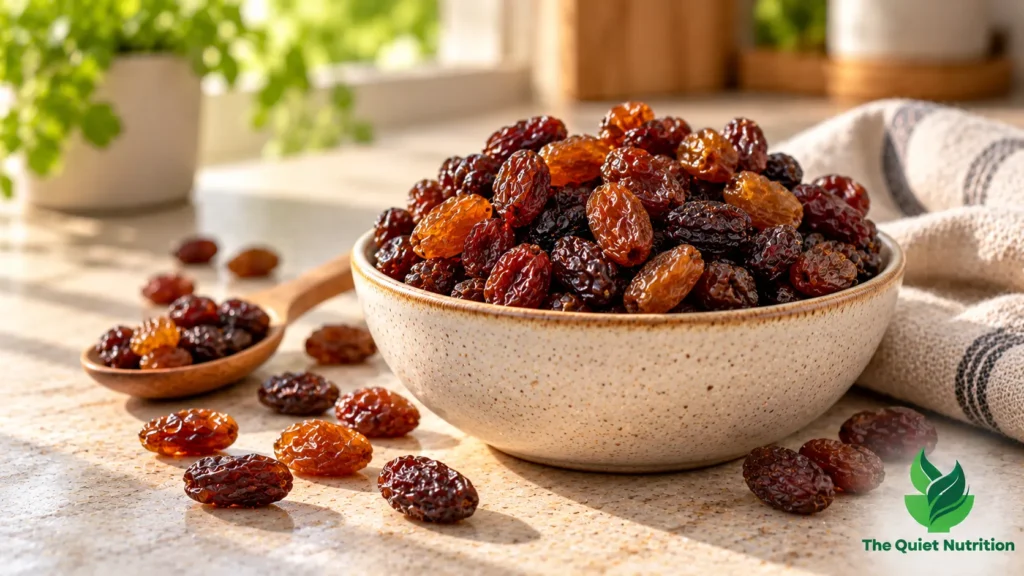
A small handful of raisins can add sweetness to breakfast, make a handful of nuts more satisfying, or turn plain oatmeal into something more enjoyable. Because raisins are sweet and concentrated, however, they are often treated as little more than sugary snacks.
That overlooks an important distinction: raisins are whole grapes with most of their water removed. Along with their natural sugars, they retain dietary fiber, potassium and various plant compounds. Their nutritional value is real, even if some of the health claims surrounding them go further than the evidence allows.
Research on daily raisin consumption has examined blood sugar responses, blood pressure, body weight and other markers of metabolic health. Some findings are encouraging, particularly when raisins replace less nutritious snacks. Others remain uncertain because the studies are relatively small or short.
So, what might happen if you eat raisins every day? The answer depends on how much you eat, what you eat them instead of, and your overall diet.
1. Raisins offer more than natural sweetness
The first useful thing to understand about raisins is that drying changes their concentration, not simply their appearance.
Fresh grapes contain considerable water. Once that water is removed, the remaining fruit becomes smaller, sweeter and more energy-dense by weight. This makes raisins convenient to store and eat, but it also means that a modest-looking handful can contain a meaningful amount of sugar and calories.
A typical 1.5-ounce (43-gram) serving of raisins provides approximately:
- 129 calories
- 25 grams of naturally occurring sugar
- 1.6 grams of dietary fiber
- 322 milligrams of potassium
- Small amounts of minerals, including magnesium and iron
These figures are drawn from published nutritional data and may vary slightly by variety and serving size.
Raisins contain little fat and provide some fiber, making them different nutritionally from sweets that consist primarily of added sugar. They also contain plant compounds, including phenolic acids and flavonoids, that researchers have investigated for their antioxidant properties.
The important qualification is that a food’s nutrient content does not automatically establish a specific health benefit. Raisins supply useful nutrients, but that alone does not prove they prevent disease or improve every measure of health.
2. They may have a more favorable effect on blood sugar than you expect
Raisins taste sweet enough to raise a reasonable question: do they cause blood sugar to rise sharply?
Their effect is more nuanced than their sweetness suggests.
The glycemic index (GI) measures how quickly a carbohydrate-containing food raises blood glucose under standardized testing conditions. Raisins have generally shown a low-to-moderate GI, although the result varies between studies and testing conditions.
In a clinical feeding study published in 2009, researchers compared the blood glucose and insulin responses to raisins with responses to a glucose reference food. Raisins produced a relatively low glycemic response.
A later randomized study involving 10 healthy adults also found that raisins had a lower GI than white bread. However, the study was small and examined responses to individual meals rather than the long-term effects of eating raisins every day.
These findings suggest that raisins do not necessarily produce the rapid glucose response their sweet taste might imply.
But a lower glycemic index does not mean unlimited portions are harmless. Raisins still contain substantial carbohydrate, and the total amount eaten affects the overall blood glucose response. Pairing them with protein- or fiber-rich foods can also change how a meal is digested and how satisfying it feels.
For someone managing diabetes, raisins may fit into a balanced eating plan, but portion size and total carbohydrate intake still matter.
Research: Acute effects of raisin consumption on glucose and insulin responses in healthy individuals.
3. Raisins may support healthier blood pressure, although the evidence is not conclusive
Potassium is one of the most useful nutrients raisins contribute to the diet.
Your body needs potassium for normal nerve and muscle function, including the functioning of the heart. Potassium also plays a role in blood pressure regulation, partly by helping the body manage the effects of sodium.
Raisins are a source of this mineral. A half-cup serving supplies approximately 618 milligrams of potassium, according to the US National Institutes of Health Office of Dietary Supplements.
That does not make raisins a treatment for high blood pressure. Their contribution is best understood as one small part of a dietary pattern that includes vegetables, fruits, legumes and other potassium-containing foods.
There is some direct human evidence worth examining. In a 2014 randomized, controlled trial, researchers compared raisins with conventional processed snacks over 12 weeks. The raisin group showed improvements in several blood pressure measurements, alongside changes in some measures of glucose regulation.
A 2024 systematic review and meta-analysis examined eight randomized clinical trials involving 352 participants. It reported a statistically significant reduction in systolic blood pressure associated with raisin consumption, but did not find significant effects on diastolic blood pressure, body weight, body mass index or waist circumference.
The overall picture is promising but limited. The trials differed in design and duration, and the number of participants was relatively small. A measured improvement in blood pressure also does not establish that raisins alone prevent heart attacks or strokes.
The practical takeaway is straightforward: raisins can contribute potassium to a heart-conscious diet, but they should not replace prescribed medication or other established approaches to blood pressure management.
Research: Systematic review and meta-analysis of randomized trials on raisin consumption.
4. Their fiber can contribute to digestive health
Raisins provide dietary fiber, which helps support normal bowel function and contributes to overall fiber intake.
Fiber is important because it helps maintain stool bulk and supports regular bowel movements. Some components of plant foods can also be used by gut microorganisms, although the effects depend on the type and amount of fiber consumed.
A 43-gram serving of raisins supplies approximately 1.6 grams of fiber. That is a useful contribution, but it is not enough to meet daily fiber needs on its own.
For context, many adults are advised to consume around 25–38 grams of fiber daily, depending on age, sex and individual requirements. Raisins can help close part of that gap alongside oats, beans, vegetables, nuts, seeds and other fruits.
If your usual breakfast contains refined cereal or white toast, adding raisins to oatmeal or pairing them with plain yogurt and nuts can make the meal more varied. The benefit comes from the overall combination of foods, not from raisins acting as a digestive remedy.
One caution: increasing fiber intake suddenly can cause bloating or discomfort in some people. Start with a modest serving and increase fiber gradually, while drinking enough fluid.
5. They provide plant compounds that researchers are investigating
Grapes contain a range of naturally occurring compounds, and some remain in raisins after drying.
These include phenolic acids and flavonoids. In laboratory experiments, certain plant compounds can act as antioxidants or influence processes involved in inflammation and cellular signaling.
This is one reason researchers have investigated raisins in relation to oxidative stress and cardiometabolic health.
However, the distinction between laboratory findings and human health outcomes matters. Showing that a compound can influence a biological process does not establish that eating raisins produces a meaningful clinical benefit.
For example, a small intervention study examining daily raisin consumption in overweight adults found modest changes in some antioxidant measurements, but did not demonstrate consistent improvements in inflammatory responses.
It would therefore be premature to claim that eating raisins daily reduces chronic inflammation, prevents cancer or protects against aging-related diseases.
The more defensible conclusion is that raisins contribute plant compounds to the diet, while the size and practical importance of their independent effects on long-term health remain uncertain.
6. They can be a useful replacement for less nutritious snacks
One of the most practical reasons to eat raisins regularly has little to do with a unique property of the fruit. It is about what they replace.
Suppose you usually reach for biscuits, candy or another highly refined snack in the afternoon. A measured serving of raisins, perhaps combined with unsalted nuts, may offer a more nutrient-rich alternative.
This substitution can add fiber and minerals while reducing reliance on snacks that provide fewer of those nutrients.
Some clinical trials have directly compared raisins with processed snacks. In a 2015 randomized study involving 51 people with type 2 diabetes, researchers found that the group consuming raisins instead of alternative processed snacks experienced a greater reduction in post-meal glucose and a reduction in systolic blood pressure over the study period.
However, not every measured outcome improved significantly, and the results cannot establish that raisins will produce the same effects in every person.
The distinction is important: raisins may be a better choice than certain snacks without being superior to every other fruit or snack.
An apple, a pear, berries, plain yogurt or a small portion of nuts may also be useful choices. The best option depends on your nutritional needs, preferences and the rest of your diet.
7. Daily raisins do not automatically lead to weight gain—or weight loss
Because raisins are concentrated in calories, it is easy to assume that eating them every day causes weight gain. The opposite claim—that they help people lose weight—is also too simplistic.
Body weight is influenced by total energy intake, energy expenditure, appetite, sleep, activity and many other factors. No single food determines the outcome.
The 2024 meta-analysis of randomized trials found no statistically significant effect of raisin consumption on body weight, body mass index or waist circumference. This does not prove that raisins can never affect weight; it means the available trials did not establish a consistent effect on these measures.
Portion size matters because dried fruit is easy to eat quickly. A handful can gradually become several handfuls, especially when eating directly from a large bag.
If you enjoy raisins and want to include them in your routine, measure out a serving rather than relying on appearance alone. Using them in place of another snack is generally more sensible than adding them on top of your usual intake without considering the extra calories.
The goal is not to avoid raisins because they contain sugar. It is to recognize that nutritious foods can still contribute substantial energy.
How many raisins should you eat daily?
There is no universally established raisin dose that guarantees a particular health benefit.
A practical starting point for many adults is around 1–1.5 ounces (28–43 grams), depending on appetite, energy needs and the rest of the diet. This is a portion suggestion, not a medically established prescription.
You could:
- Add a tablespoon or two to oatmeal.
- Combine a small handful with unsalted almonds or walnuts.
- Stir them into plain yogurt with fresh fruit.
- Add them to a whole-grain salad or homemade trail mix.
- Use them to replace some of the added sugar in a recipe.
Pairing raisins with nuts or yogurt may make a snack more satisfying by adding protein, fat or both. It does not eliminate the carbohydrates in raisins, but it can make the overall snack more balanced.
Choose plain raisins without unnecessary added sugar when possible. Most ordinary raisins are already sweet because their natural sugars become concentrated during drying.
Who should be more careful about eating raisins daily?
For most people, a moderate serving of plain raisins can fit into a varied diet. A few circumstances call for more attention.
People managing diabetes: Raisins contain concentrated carbohydrates. They can fit into an individualized eating plan, but the portion and total carbohydrate content should be considered.
People with chronic kidney disease or potassium restrictions: Raisins provide potassium, and the appropriate amount depends on kidney function, blood potassium levels and any dietary restrictions prescribed by a clinician.
People trying to manage calorie intake: Measure portions because dried fruit is more energy-dense by weight than fresh fruit.
People concerned about dental health: Raisins are sticky and contain fermentable sugars. Good oral hygiene and regular dental care remain important, particularly if you snack on them frequently throughout the day.
These considerations do not make raisins inherently unhealthy. They simply illustrate why the right portion can vary from one person to another.
So, is eating raisins every day worth it?
For many people, yes—provided they enjoy them, eat a reasonable portion and use them as part of a balanced diet.
Raisins supply fiber, potassium and plant compounds. Human studies suggest that replacing some processed snacks with raisins may improve selected measures of blood glucose regulation or blood pressure, although the evidence remains limited and does not establish that daily raisins prevent disease.
The strongest reason to include them is not that they offer a special shortcut to better health. It is that they are a convenient way to add fruit-derived nutrients to ordinary meals and snacks.
A small serving stirred into oatmeal or paired with nuts is a sensible habit. Eating large quantities in the belief that more must be better is not.
Raisins do not need extraordinary health claims to earn a place in your kitchen. Their value lies in what they genuinely offer—and in how thoughtfully you use them.
Scientific sources
1. Raisin consumption and cardiometabolic health — systematic review and meta-analysis (2024). Examines randomized trials involving blood pressure and body measurements. Read the research.
2. Raisins compared with conventional snacks — randomized controlled trial (2014). Investigates blood glucose and cardiovascular risk factors over 12 weeks. PubMed record.
3. Raisins versus alternative snacks in people with type 2 diabetes (2015). Evaluates glucose regulation and cardiovascular risk markers. PubMed record.
4. Acute effects of raisin consumption on glucose and insulin responses (2014). Examines blood glucose and insulin responses following raisin consumption. PubMed record.
5. Potassium — US National Institutes of Health, Office of Dietary Supplements. Provides authoritative information about potassium’s functions and food sources, including raisins. Read the fact sheet.
6. Association of raisin consumption with nutrient intake and health risk factors in US adults (2017). Provides nutritional information and observational evidence about raisin consumption. Read the study.
7. Dried fruit and cardiometabolic health — randomized crossover trial (2020). Offers useful context about the limits of evidence for dried fruit generally; it studied a mixture of dried fruits, not raisins alone. Read the study.

Aarti Solanki, B.Sc. (Food Science), is a food science writer passionate about making nutrition simple and evidence-based. She creates well-researched, easy-to-understand articles on healthy eating, food science, and nutrition, using information from trusted scientific and public health sources.