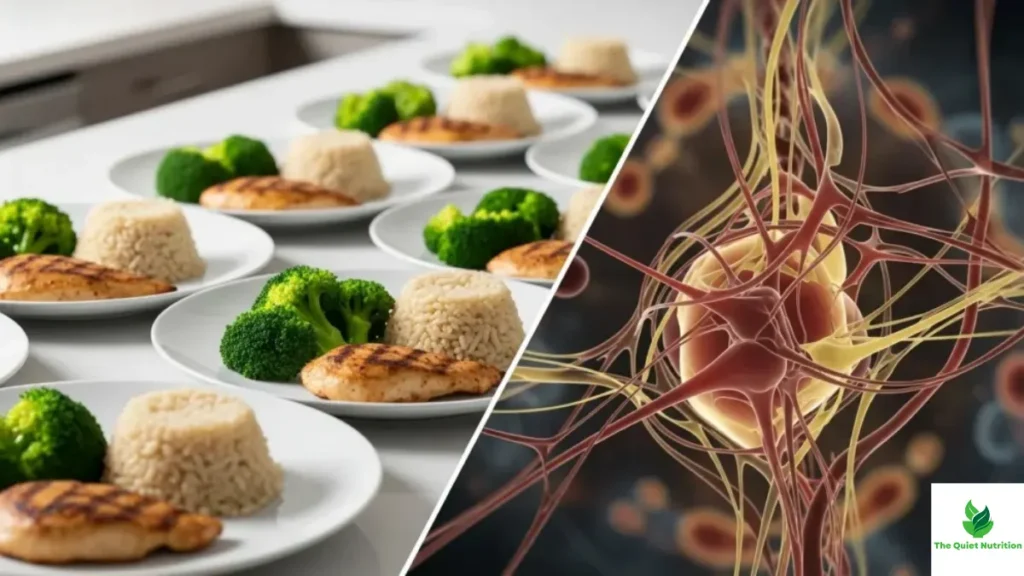
Try a new cuisine for the first time and your stomach sometimes pushes back a little — not sick, exactly, just unsettled, like it’s negotiating terms. Eat that same food regularly for a few weeks and the reaction fades almost completely. Nothing about the dish changed. What changed is you, on a level far below conscious awareness. Your gut quite literally learned that food.
This isn’t a metaphor. It’s one of the more fascinating, underappreciated facts about human physiology: the trillions of microbes living in your digestive tract, along with the metabolic systems surrounding them, actively reshape themselves based on what you repeatedly feed them. Familiarity with a food isn’t just psychological. It’s biological, and it happens faster than most people realize.
Your Gut Microbiome Is Built to Track What You Actually Eat
The human gut hosts an enormous, dynamic community of bacteria, and that community isn’t fixed. It’s responsive. Researchers describe the gut microbiome as an active participant in metabolizing whatever diet a host provides, meaning it doesn’t just passively process food — it shifts its own composition to better handle whatever shows up regularly.
This adaptive relationship shows up clearly across species with very different diets. Studies comparing primates with distinct dietary patterns — leaf-eating, fruit-eating, and omnivorous — found that their gut microbial communities were clearly differentiated by diet type. Leaf-eating primates carried higher levels of bacteria associated with breaking down fiber, while fruit-eating primates were dominated by bacteria better suited to processing sugar and simple carbohydrates. The gut wasn’t just tolerating each diet. It was specifically organized around it, shaped by what repeatedly passed through.
How Fast the Adaptation Actually Happens
What’s striking is the speed of this process in humans. Researchers studying gut microbiome responses to dietary shifts have noted a “peculiar propensity” for the microbiome to adapt to dietary changes rapidly, with detectable shifts in microbial composition occurring on a timescale of days, not months or years. That means the biological groundwork for “getting used to” a new way of eating starts almost immediately — long before it would show up as a conscious sense of familiarity or comfort with a food.
This adaptability appears to be a genuine evolutionary feature rather than a quirk. Researchers studying long-term dietary flexibility point to seasonal shifts observed in the gut microbiomes of traditional populations whose diets change with the seasons, as well as culture-specific adaptations in groups that eat very different macronutrient balances long-term. The framing that’s emerged from this research is metabolic flexibility — the idea that the human gut evolved specifically to shift its function based on changing food availability, rather than requiring one fixed “correct” diet to function properly.
Meal Timing Trains the Body Just as Much as Meal Content Does
It isn’t only what you eat that gets learned — when you eat shapes physiology too. Research on the gut microbiome has found it exhibits diurnal oscillations, meaning its activity naturally rises and falls across the day in sync with regular feeding patterns. Disrupting that rhythm — the microbial equivalent of jet lag — has been linked in research to disrupted glucose tolerance and metabolic changes, effects that could even be transferred through fecal microbial transplant in animal studies, underscoring how directly gut timing connects to broader metabolic function.
This helps explain something a lot of people notice anecdotally: eating on an irregular, unpredictable schedule tends to feel worse than eating the same meals at consistent times, even when the food itself is identical. Studies have found meaningful variability in how the same person responds to an identical meal eaten at different times of day, suggesting the body isn’t just reacting to food content — it’s reacting to whether that food arrives when its internal systems expected it to.
Early Life Sets the Template
This learning process starts remarkably early. Research tracking infant gut microbiomes through the introduction of solid food found the biggest shift in microbial composition and function happened during the initial transition from milk to solid foods, with the gut’s functional capacity actually stabilizing relatively early even as the specific bacterial composition kept diversifying afterward. In other words, a substantial part of your gut’s long-term relationship with food gets shaped in the first year of life, well before you have any memory of it.
Familiarity Runs Deeper Than Comfort
None of this means novelty is bad or that eating the same foods forever is somehow optimal — metabolic flexibility research actually argues the opposite, suggesting the gut is built to handle real dietary variety across seasons and circumstances. But it does explain why introducing a genuinely new way of eating, whether it’s a new cuisine, a shifted meal schedule, or a significantly different macronutrient balance, often comes with a real adjustment period that isn’t just in your head.
Your gut isn’t being difficult when a new diet feels briefly uncomfortable. It’s doing exactly what it evolved to do: recalibrating its microbial population, its enzyme activity, and its internal timing to match a new pattern of intake. Given a little consistency, it usually gets there — often faster than people expect, and almost entirely without their awareness that the adjustment is happening at all.
Sources:
- NCBI/PMC — The Relationship Between Gut Microbiome and Bile Acids in Primates With Diverse Diets
- mBio (ASM Journals) — Reframing Nutritional Microbiota Studies to Reflect Metabolic Flexibility of the Human Gut
- mSystems (ASM Journals) — The Gut Microbiome and Individual-Specific Responses to Diet
- NCBI/PMC — Adaptation of the Infant Gut Microbiome During the Complementary Feeding Transition

Aarti Solanki, B.Sc. (Food Science), is a food science writer passionate about making nutrition simple and evidence-based. She creates well-researched, easy-to-understand articles on healthy eating, food science, and nutrition, using information from trusted scientific and public health sources.






Pingback: How Nutrition Keeps Your Body Predictable — The Hidden Stability Most People Never Notice
Pingback: Your Brain Remembers How You Eat — Even When You Forget
Pingback: Why Your Brain Struggles When Your Meals Have No Rhythm
Pingback: How Long-Term Eating Patterns Shape Brain Efficiency — The Quiet Nutrition Factor Behind Mental Clarity