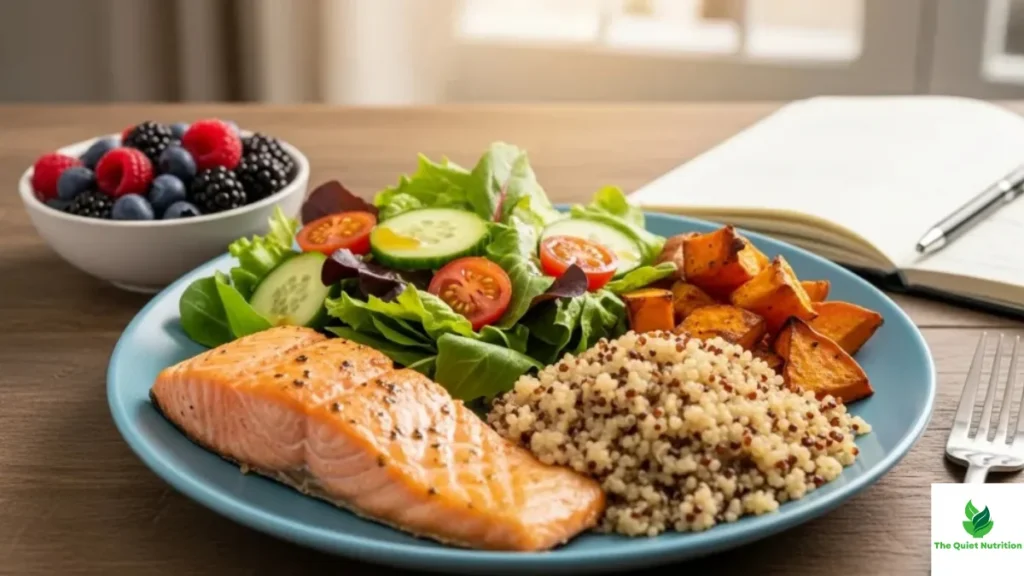
Someone eats a salad on Monday and checks the mirror on Tuesday, disappointed that nothing’s different. This happens more often than you’d think, and it says a lot about how badly we misunderstand what food actually does inside us.
Nutrition was never designed to work like a light switch. It works more like a slow current — steady, cumulative, and almost invisible day to day. That’s not a flaw in how food functions. It’s the entire point.
Your Body Isn’t Reacting to Meals, It’s Reacting to Patterns
A single meal barely registers on your long-term health. Your body doesn’t panic over one greasy lunch or celebrate one plate of vegetables. What actually shifts your health is the pattern repeated hundreds of times over months and years — the default choices you make without thinking twice.
This is exactly why a massive, decades-long Harvard analysis following more than 100,000 people found that it wasn’t any single “perfect” diet that predicted healthier aging — it was the consistency of a generally plant-forward, whole-food pattern sustained over 30 years that mattered. <cite index=”3-1″>Researchers found that plant-rich diets with low intake of ultra-processed foods significantly improved the odds of healthy aging, with certain dietary index scores showing the strongest benefits.</cite> Not a single dish. Not a single week. Three decades of quiet repetition.
The Body Treats Food Like Construction Material, Not Medicine
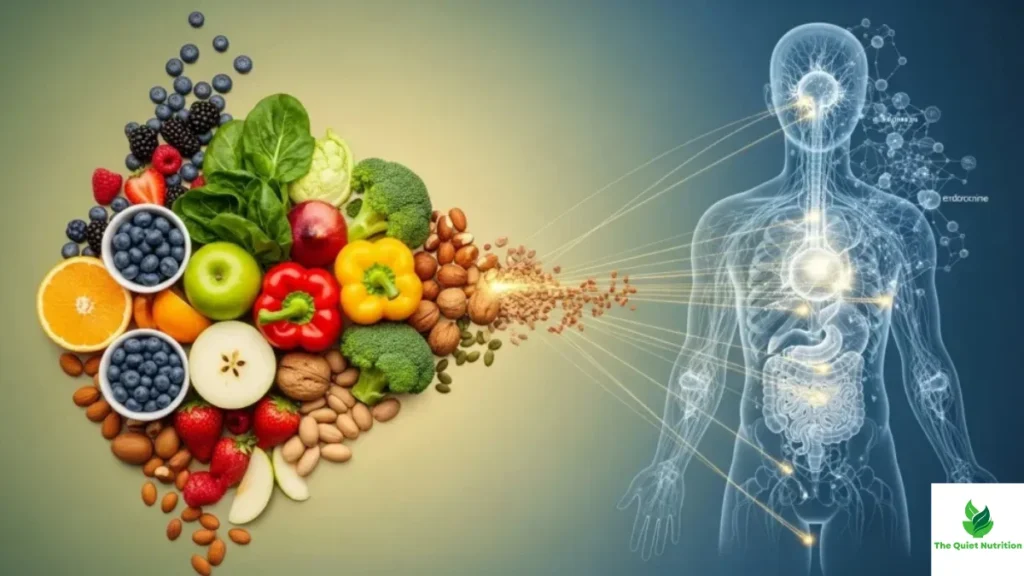
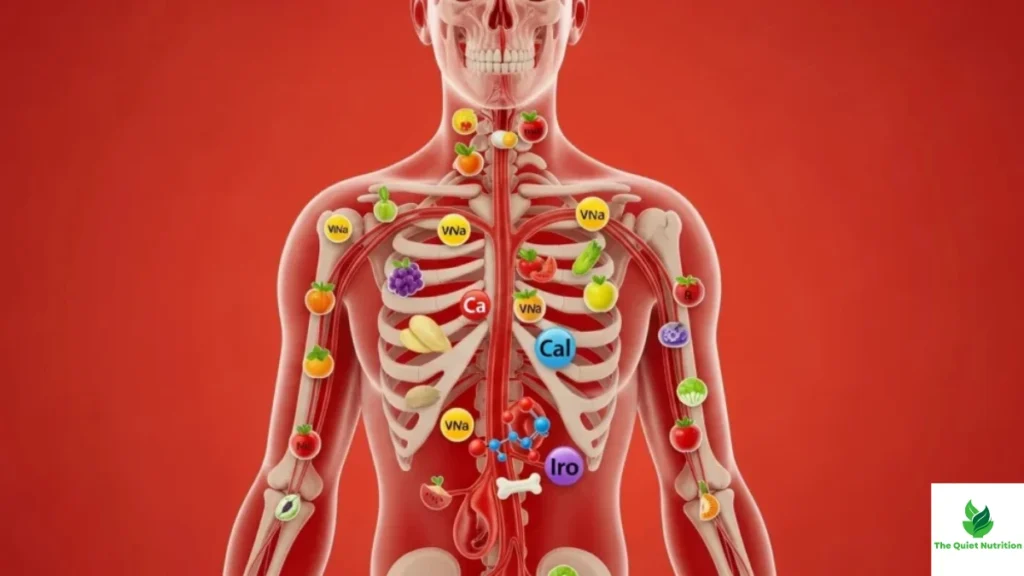
One useful way to think about it: food isn’t a drug that produces an effect and wears off. It’s raw material. Your body is constantly rebuilding itself — cell membranes, blood vessels, immune cells, hormones — using whatever nutrients you regularly supply it with.
If those materials are consistently high quality, the rebuilding process trends toward stability. If they’re consistently poor, the rebuilding process trends toward dysfunction. Either way, the change shows up in the output over time, not the raw input on any given day. That’s why eating well for a week rarely produces a dramatic before-and-after, while eating well for years reliably does.
<cite index=”6-1″>Macronutrients like carbohydrates, protein, and fat supply energy and serve as the building blocks for muscles and tissues</cite> — literal construction material, used and replaced continuously, whether or not you’re paying attention to it.
Why Chronic Disease Is a Nutrition Story Told in Slow Motion
Public health data makes the “pattern over moment” idea even clearer. <cite index=”13-1″>Most chronic diseases trace back to a short list of risk factors, with poor nutrition sitting alongside tobacco use, physical inactivity, and excessive alcohol use as one of the biggest drivers.</cite> None of those categories describe a single bad day. They describe years of repeated exposure.
<cite index=”18-1″>Seven of the top ten leading causes of death in the United States are linked to chronic disease, and treating people with these conditions accounts for the majority of national healthcare spending.</cite> That statistic isn’t about people who ate poorly once. It’s about millions of small dietary decisions compounding, unnoticed, until they eventually surface as a diagnosis.
This is also why nutrition-related health improvements tend to feel underwhelming in the short term. <cite index=”14-1″>Fiber-rich foods like fruits, vegetables, whole grains, legumes, nuts, and seeds help control blood sugar and lower cholesterol levels</cite> — but that effect builds gradually across weeks of consistent fiber intake, not from one high-fiber breakfast.
Stability, Not Speed, Is the Actual Goal
Here’s the part that trips people up: nutrition isn’t supposed to feel dramatic. A stable blood sugar curve, steady energy through the afternoon, digestion that isn’t erratic, inflammation that isn’t constantly flaring — none of that announces itself the way a new gadget or a new haircut does. Stability is quiet by design. You mostly notice it in hindsight, or you notice its absence when it’s gone.
That’s part of why so many people abandon healthy eating habits within weeks. They’re waiting for a signal that nutrition was never built to send that quickly. The visible payoff — sustained energy, fewer sick days, better long-term lab results, lower disease risk — shows up on a timeline measured in months and years, not days.
What Actually Works, Practically Speaking
None of this means small choices don’t matter — it means they matter cumulatively, which is arguably more motivating, not less. Skipping one dessert won’t change your health. Skipping dessert as your default, most nights, for a year, absolutely will. Adding a serving of vegetables to one dinner won’t do much. Making that the norm across hundreds of dinners reshapes your baseline.
The goal isn’t perfection on any single day — it’s building a pattern reliable enough that your “default” meal is already a healthy one, so willpower isn’t required every single time. That’s what actually produces the stability nutrition is capable of giving you: not a transformation you can point to next week, but a foundation that holds up for the next decade.
Sources:
- Harvard T.H. Chan School of Public Health — Nutrition Overview
- SciTechDaily — New Harvard Research Reveals Top Diets for Living a Longer, Healthier Life
- CDC — Preventing Chronic Diseases: What You Can Do Now
- CDC — Healthy Eating Tips
- CDC — Nutrition, Physical Activity, and Obesity At A Glance

Aarti Solanki, B.Sc. (Food Science), is a food science writer passionate about making nutrition simple and evidence-based. She creates well-researched, easy-to-understand articles on healthy eating, food science, and nutrition, using information from trusted scientific and public health sources.






Pingback: Why Small Food Changes Create Big Results—Just Much More Slowly Than You Expect
Pingback: The Hidden Health Power of Lemons Most People Completely Overlook
Pingback: Why Tart Cherries Are Becoming a Popular Natural Sleep Food