There’s a moment almost everyone with bad sleep knows too well: 2 a.m., eyes wide open, mind racing, staring at the ceiling and doing that miserable math of “if I fall asleep right now, I’ll get five hours.” You’ve probably tried the usual suspects — chamomile tea, white noise apps, melatonin gummies, maybe even a sleep tracker ring that just confirms how badly you slept.
But lately, a much older, much simpler fix has been quietly stealing the spotlight from all of them: tart cherries.
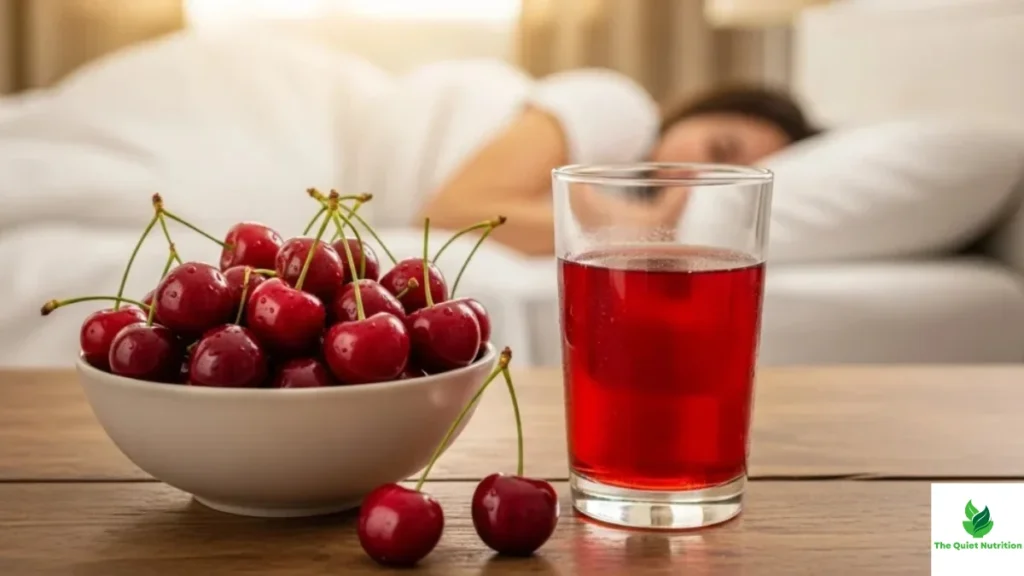
Not cherry-flavored candy. Not a cherry emoji on a wellness influencer’s smoothie bowl. Actual tart cherries — specifically a variety called Montmorency — and the juice made from them. Sleep scientists have been studying them for over a decade, and in the last few years, that research has spilled out of medical journals and into everyday conversations about how to sleep better without popping another pill.
So what’s actually going on here? Is this another fleeting wellness trend, or is there real science behind the hype? Let’s dig in.
Why Sleep Has Become Everyone’s Problem
Before we get to the cherries, it helps to understand why this conversation is happening at all. Sleep struggles aren’t a niche issue anymore — they’re close to a public health crisis. Poor sleep has been linked to weight gain, weakened immunity, mood disorders, and long-term cardiovascular problems. Millions of people reach for melatonin supplements every night, and while those can help, they aren’t a perfect solution. Synthetic melatonin doses in supplements are often wildly inconsistent, and some people report grogginess, vivid dreams, or a “melatonin hangover” the next morning.
That’s part of why food-based, whole-ingredient sleep support has become so appealing. People want something that feels natural, gentle, and backed by actual biology — not just another capsule. And tart cherries happen to check almost every one of those boxes.
What Makes Tart Cherries Different From Regular Cherries
This is the part most people don’t realize: not all cherries are created equal when it comes to sleep. The sweet cherries you snack on from a bag at the grocery store are a different variety from Montmorency tart cherries, which are more sour, more pigmented, and chemically distinct.
Tart cherries are naturally rich in a combination of compounds that happen to align almost perfectly with what your body needs to wind down at night:
- Melatonin — the same hormone your brain produces to regulate your sleep-wake cycle. Tart cherries are one of the very few natural food sources that actually contain measurable amounts of it.
- Tryptophan — an amino acid your body uses as a building block to produce both serotonin and melatonin.
- Anthocyanins — the deep red plant pigments responsible for tart cherries’ anti-inflammatory and antioxidant effects.
- Magnesium — a mineral tied to muscle relaxation and nervous system regulation.
No single compound here is some miracle molecule. What’s interesting is that they seem to work together, hitting sleep from a few different angles at once instead of just one.
What the Research Actually Shows
This is where tart cherries separate themselves from most “natural sleep hack” trends — there’s a real, growing body of clinical research behind them, not just anecdotes.
One of the most cited studies, a randomized, double-blind, placebo-controlled crossover trial, had healthy adults drink Montmorency tart cherry juice concentrate twice a day for seven days. The tart cherry group slept about 40 minutes longer on average and saw up to a 6% increase in sleep efficiency compared to the placebo group, with circulating blood melatonin levels also increased. The same research found that urinary melatonin was significantly elevated in the cherry juice group, alongside significant increases in time in bed, total sleep time, and sleep efficiency.
Older adults dealing with genuine insomnia saw even more dramatic results. A pilot study at Louisiana State University found that Montmorency tart cherry juice extended sleep time by 84 minutes in adults over 50 with chronic insomnia — a difference big enough to actually matter in daily life, not just on a lab printout.
A 2025 systematic review pulling together seven separate interventional studies backed this up further. Researchers found that three studies reported significant improvements in sleep indicators such as duration, efficiency, or sleep onset time, while three studies also reported increased melatonin levels after tart cherry consumption, along with reduced inflammatory markers in two studies. The review’s authors concluded that tart cherry juice supplementation appears to raise circulating melatonin and tryptophan, which can lower inflammation, boost antioxidant capacity, and reduce oxidative stress — effects that together seem to support longer, better-quality sleep.
Even athletes are getting in on it. A randomized controlled trial on elite female field hockey players examining tart cherry juice after intense exercise found supporting evidence too: earlier research had already shown that tart cherry juice intake led to a significant rise in urinary melatonin in healthy people, alongside a significant improvement in objective sleep efficiency measured by actigraphy.
It’s worth being honest, though — this science is promising but not bulletproof. Researchers themselves note that while initial results are encouraging, not everyone will experience the same benefits, and the jury is still out on how substantial the effects really are for the average person.
So How Much Melatonin Are We Actually Talking About?
Here’s a detail that surprises most people: tart cherries don’t contain nearly as much melatonin as a supplement pill. Tart cherry juice contains roughly 0.135 micrograms of melatonin per 100 grams, compared to a typical melatonin supplement dose of 1 to 5 milligrams — a difference of several thousand times.
That might sound like tart cherries shouldn’t work at all. But this is actually one of the more fascinating parts of the research. Scientists believe the effect isn’t just about the tiny melatonin dose itself — it’s the combination of naturally occurring melatonin, tryptophan (which your body converts into more melatonin and serotonin), magnesium, and anti-inflammatory anthocyanins working together, rather than one compound doing all the heavy lifting. It’s a gentler, more whole-food approach rather than a mega-dose shortcut.
Why This Trend Is Exploding Right Now
A few cultural shifts are converging at once to push tart cherries into the sleep-wellness spotlight:
People are burnt out on supplements. After years of melatonin gummies, magnesium powders, and adaptogen blends, there’s a growing appetite for solutions that feel like food first, supplement second.
Athletes and recovery culture normalized it. Tart cherry juice built its reputation in sports recovery circles for reducing muscle soreness and inflammation after intense training. Once athletes started reporting better sleep as a side effect, it wasn’t long before the wellness world took notice.
Anti-inflammatory eating is having a moment. Tart cherries fit neatly into the broader shift toward foods that fight inflammation, alongside things like turmeric, fatty fish, and leafy greens — except tart cherries come with sleep benefits most anti-inflammatory foods don’t.
It’s an easy habit to build. Unlike restrictive diets or complicated supplement stacks, drinking a small glass of tart cherry juice concentrate before bed is about as low-effort as a wellness habit gets.
How People Are Actually Using Tart Cherries for Sleep
If you’re curious to try it yourself, the research studies typically used:
- Tart cherry juice concentrate, diluted with water, consumed once in the morning and once in the evening, roughly an ounce (about 30 mL) per serving
- Consistency over roughly 7 to 14 days, since the benefits appear to build rather than hit instantly like a sedative
- Montmorency tart cherries specifically, since that’s the variety almost all the sleep research has focused on — not sweet cherries, and not all “cherry juice” blends on store shelves
Whole tart cherries, frozen tart cherries, and unsweetened tart cherry powder are other ways people are incorporating them, though most of the clinical evidence centers on the juice concentrate form.
A Reasonable Dose of Skepticism
It’s worth staying grounded here. The existing studies are genuinely encouraging, but most involve small sample sizes — often between 8 and 20 participants — over short time periods. That’s normal for early-stage nutrition research, but it does mean tart cherries aren’t a proven cure for insomnia the way a prescription sleep medication might be. Individual results vary, and researchers consistently call for larger, longer trials before making sweeping claims.
If you have a diagnosed sleep disorder, it’s worth talking to a doctor rather than relying on cherries alone. But as a low-risk, food-based addition to a wind-down routine, tart cherries have earned their place at the table — and increasingly, on people’s nightstands.
The Bottom Line
Tart cherries aren’t a magic fix, and no serious researcher is claiming they are. But they represent something people have genuinely been craving: a natural, food-first, science-backed option that works with the body’s own sleep chemistry instead of forcing it into submission with a high-dose pill. Between the melatonin, the tryptophan, the anti-inflammatory anthocyanins, and a growing stack of clinical studies showing real improvements in sleep duration and efficiency, it’s easy to see why this small, sour fruit has become one of the most talked-about natural sleep foods around.
Sometimes the best answers really were sitting on a tree the whole time.
Sources
- PubMed – Effect of tart cherry juice (Prunus cerasus) on melatonin levels and enhanced sleep quality
- NCBI/PMC – The Effect of Tart Cherry on Sleep Quality and Sleep Disorders: A Systematic Review
- Wiley Online Library – Food Science & Nutrition, Systematic Review (2025)
- NCBI/PMC – Montmorency Tart Cherry Juice and Sleep Quality in Elite Athletes
- ClinicalTrials.gov – Tart Cherry Juice for Sleep in Older Adults With Insomnia
- Choose Cherries (Cherry Marketing Institute) – Sleep Research Summary
- Texas Health Resources – The Tart Cherry Juice Craze and Its Impact on Sleep

Aarti Solanki, B.Sc. (Food Science), is a food science writer passionate about making nutrition simple and evidence-based. She creates well-researched, easy-to-understand articles on healthy eating, food science, and nutrition, using information from trusted scientific and public health sources.