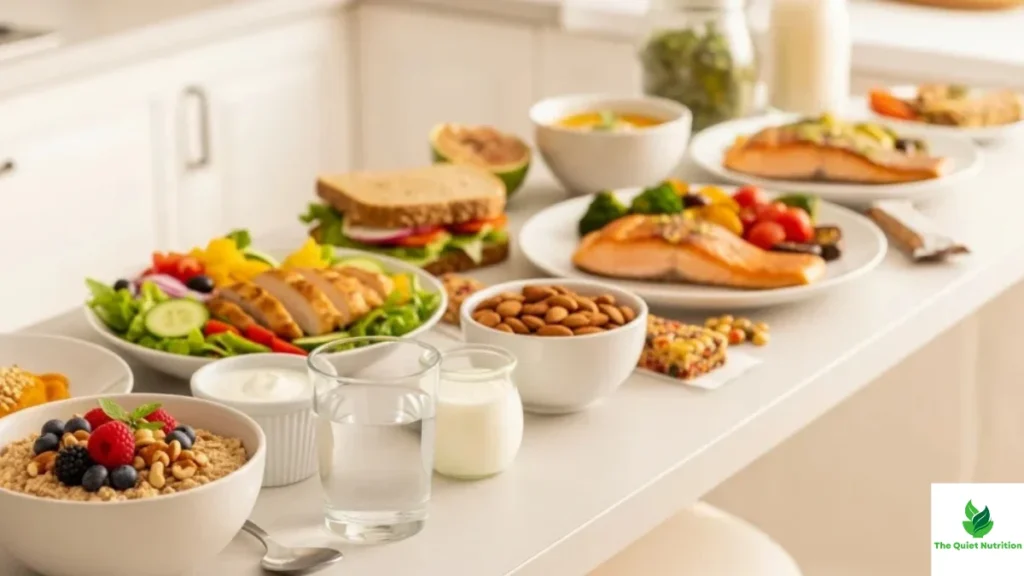
Every January, millions of people jump into aggressive diet overhauls. We cut entire food groups, meticulously weigh our portions, or commit to strict calorie limits. Yet, clinical data consistently shows that up to 80% to 95% of restrictive diets fail over a three-to-five-year horizon.
Why do these radical dietary overhauls fall short so often? Because they focus almost exclusively on what we eat while completely ignoring how, when, and in what manner we eat.
Long-term metabolic health, digestive resilience, and sustained energy levels are rarely built on short-term dietary extremes. Instead, they are quietly orchestrated by subtle daily eating mechanics — the micro-habits that run on autopilot behind the scenes every single day.
1. Chrononutrition: Why When You Eat Changes How Food Is Processed
Your body does not process calories the same way at 8:00 AM as it does at 10:00 PM.
This is the central finding of chrononutrition — the study of how your body’s circadian clock interacts with metabolic processes. While your brain houses the master circadian clock, nearly every organ in your body (including your liver, pancreas, and intestine) contains peripheral clocks that dictate daily metabolic efficiency.
- Morning Insulin Sensitivity: In the morning and early afternoon, your body is primed to handle carbohydrates. Pancreatic beta cells release insulin efficiently, and muscle cells absorb glucose rapidly.
- Evening Insulin Resistance: As darkness approaches and melatonin rises, your pancreas slows insulin secretion, and tissues become naturally more insulin resistant.
Eating a heavy, carbohydrate-dense meal late at night triggers significantly higher blood glucose and triglyceride spikes than eating the exact same meal earlier in the day. Over years, late-night dining quietly drives systemic insulin resistance and fatty liver accumulation, regardless of overall caloric intake. Research published in Cell Metabolism highlights that aligning meal timing with natural circadian rhythms improves glucose tolerance and metabolic longevity.
2. Food Sequencing: The Simple Order Trick That Blunts Glucose Spikes
Imagine two people eating the exact same meal: a chicken breast, a side of broccoli, and a bowl of jasmine rice.
- Person A eats the rice first, followed by the chicken and broccoli.
- Person B eats the broccoli first, the chicken second, and the rice last.
Even though both meals contain identical calories and macronutrients, their biological impact is dramatically different.
When you eat fiber first, it creates a viscous matrix in the upper intestine. Following with protein and fat stimulates the release of gastric inhibitory polypeptide (GIP) and delays stomach emptying. By the time the carbohydrates hit your system, their absorption is slowed to a gentle trickle rather than a sudden tidal wave.
Clinical studies compiled by the Harvard T.H. Chan School of Public Health demonstrate that simply sequencing meals — fiber first, protein/fat second, and carbohydrates last — can reduce post-meal glucose spikes by up to 70% and insulin surges by 40%. This simple habit lowers daily oxidative stress and prevents the energy crashes that lead to afternoon cravings.
3. The Migrating Motor Complex: Why Constant Grazing Silences Your Gut’s Housekeeper
In our modern food environment, snacking has become a continuous background activity. We sip caloric drinks, grab handfuls of nuts, or nibble on snacks every 60 to 90 minutes.
While this might seem harmless, continuous grazing disables one of your gut’s most critical self-cleaning mechanisms: the Migrating Motor Complex (MMC).
The MMC is a distinct electrical wave that sweeps through your stomach and small intestine, clearing out undigested food particles, cellular debris, and excess bacteria. However, there is a catch: the MMC only activates during periods of complete fasting, typically requiring 90 to 120 minutes without any caloric input.
What happens when you constantly graze?
Every time you consume even a small bite of food, the MMC halts immediately. Over time, a suppressed MMC can contribute to sluggish digestion, bloating, and Small Intestinal Bacterial Overgrowth (SIBO).
Giving your digestive tract 3 to 4 clean hours between meals allows the gut’s “housekeeping wave” to complete its full cycle, as detailed in research from Nature Reviews Gastroenterology & Hepatology.
4. Cephalic Phase Digestion: How Slow Chewing Unlocks Satiety Chemistry
Digestion doesn’t start in your stomach — it begins in your brain.
The moment you see, smell, or chew food, your nervous system initiates the cephalic phase response. Your mouth secretes salivary amylase, your stomach prepares gastric acid, and your pancreas gets ready to release digestive enzymes.
When you rush through meals — scarfing down food in 5 to 10 minutes while staring at a screen — you bypass key steps in this hormonal signaling chain:
- Incomplete Mechanical Breakdown: Unchewed food puts excess strain on stomach acid and pancreatic enzymes, leading to indigestion and nutrient malabsorption.
- Delayed Satiety Signals: It takes approximately 15 to 20 minutes for gut hormones like cholecystokinin (CCK) and glucagon-like peptide-1 (GLP-1) to reach the hypothalamus and signal that you are full.
- Overeating by Default: Fast eaters routinely consume 10% to 15% more calories before their brain ever receives the “I’m satisfied” signal.
According to longitudinal findings in The BMJ, individuals who eat slowly and chew thoroughly maintain significantly lower body mass index (BMI) levels and better long-term metabolic profiles over decades compared to fast eaters.
Unintended Traps vs. Micro-Habit Upgrades
Making lasting improvements to your health doesn’t require a total lifestyle overhaul. Shifting away from common habit traps toward small, sustainable upgrades makes a substantial cumulative difference over time:
| Common Habit Trap | The Micro-Habit Upgrade | Long-Term Health Benefit |
| Eating carbs first on an empty stomach | Start meals with fiber/veggies, then protein, then carbs | Prevents sharp glucose spikes and energy crashes |
| Constant sipping & grazing all day | Leave 3-4 hours of caloric rest between primary meals | Activates the gut’s self-cleaning mechanism (MMC) |
| Eating heavy meals late at night | Front-load your calories earlier in the day | Protects insulin sensitivity and improves sleep quality |
| Rushing through meals in 5 minutes | Chewing each bite thoroughly; putting utensils down between bites | Optimizes enzyme secretion and natural satiety signaling |
| Eating while distracted by screens | Take 3 deep breaths and focus on the first 5 bites of food | Engages parasympathetic state for optimal digestion |
Building a Healthier Relationship with Food
The quest for health is often framed as a battle of willpower against food. But when you understand how your body actually processes input, the focus shifts from deprivation to alignment.
You don’t need to adopt extreme diets to transform your well-being. By honoring your body’s circadian timing, respecting the mechanics of digestion, and adopting small, sensible eating patterns, you give your body the exact conditions it needs to thrive — day after day, year after year.

Aarti Solanki, B.Sc. (Food Science), is a food science writer passionate about making nutrition simple and evidence-based. She creates well-researched, easy-to-understand articles on healthy eating, food science, and nutrition, using information from trusted scientific and public health sources.






Pingback: How the Body Adjusts to Repeated Food Habits Over Time — The Quiet Adaptation Most People Never Notice
Pingback: How Long-Term Eating Patterns Shape Resilience — The Quiet Nutrition Advantage That Lasts for Decades
Pingback: What “Balanced Nutrition” Actually Means Inside the Body — Why It’s Not What Most People Think