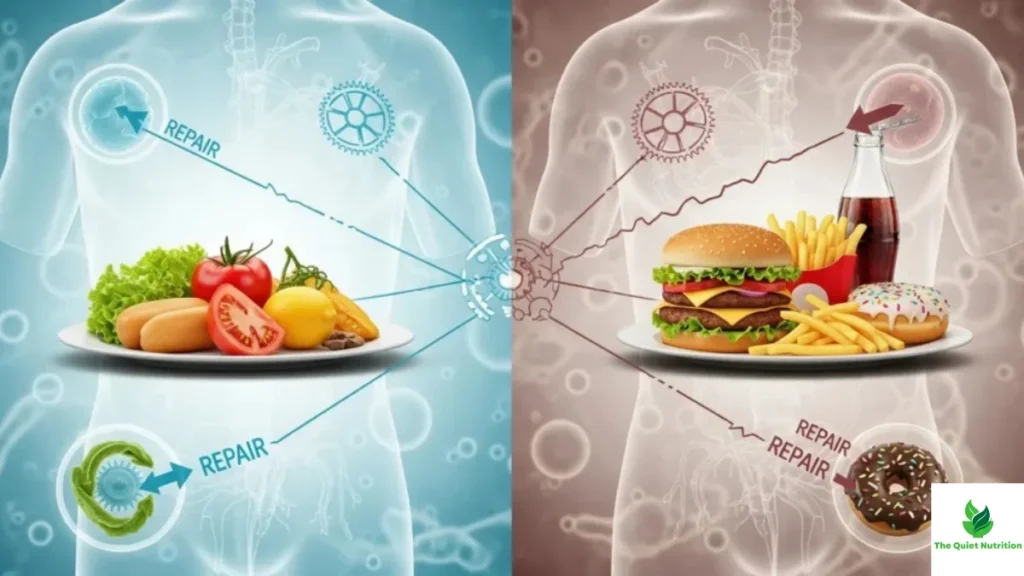
At twenty-five, skipping protein at breakfast and making up for it with a big dinner barely registers. The body absorbs the unevenness without complaint. At sixty-five, that same pattern starts costing something real — not dramatically, not overnight, but in a slow, compounding way that’s easy to miss until strength and mobility have already quietly declined. The nutrition doesn’t need to change in kind so much as in rhythm. And the biology behind why is more specific than most people realize.
Your Muscles Get Worse at Listening to Protein as You Age
There’s a well-documented phenomenon in aging research called anabolic resistance. It describes a simple but consequential shift: muscle tissue becomes less responsive to the normal signal that protein intake sends to trigger muscle protein synthesis — the process your body uses to build and repair muscle tissue.
Research comparing older and younger adults has found this gap is substantial. One study found older adults, on average in their early seventies, required roughly twice the protein intake that young adults in their early twenties needed to trigger the same level of muscle protein synthesis. The muscle isn’t refusing to respond entirely — research shows the maximum synthetic response older muscle can eventually reach is similar to younger muscle. The problem is what happens at lower, more typical protein intakes: the responsiveness curve is simply blunted, meaning a modest amount of protein that would meaningfully stimulate a younger person’s muscle produces a noticeably weaker signal in an older one.
This Is Why Sarcopenia Creeps in Quietly
This blunted responsiveness has a name for its long-term consequence: sarcopenia, the progressive loss of skeletal muscle mass, strength, and function that accompanies aging. It isn’t a disease that appears suddenly — research estimates it progresses at roughly 0.8% of skeletal muscle loss per year starting as early as someone’s fifties, a rate slow enough to be nearly invisible year to year, but substantial enough to reshape someone’s physical capability over a couple of decades. By some estimates, it affects roughly one in ten adults over 60 to a clinically significant degree.
Recent research digging into the underlying mechanism has found that the core issue isn’t that muscle breaks down faster with age — breakdown rates appear largely preserved across age groups. The real driver is a decline specifically in muscle protein synthesis, the building side of the equation, rather than accelerated breakdown on the other side. In other words, aging muscle isn’t degrading more aggressively. It’s simply rebuilding less efficiently in response to the same nutritional inputs that used to work reliably.
Why “Getting Enough Protein Eventually” Isn’t the Same as Getting It Consistently
This is where consistency becomes the operative word rather than just total quantity. Because older muscle needs a stronger, more concentrated protein signal to trigger meaningful synthesis, spreading adequate protein evenly across the day — rather than loading it all into one meal, as many people unconsciously do — becomes more important with age than it was in youth. A single large dinner with most of the day’s protein can’t fully compensate for near-absent protein at breakfast, because each meal needs to independently clear the higher threshold aging muscle now requires to respond at all.
Research testing higher, more consistent protein intake in older adults with sarcopenia found that a moderately elevated protein target — around 1.2 grams per kilogram of body weight daily, compared with a more standard 0.8 grams per kilogram — led to meaningful improvements in muscle strength and composition. The difference wasn’t just about hitting a bigger number once in a while. It was about reliably clearing a higher bar, meal after meal, day after day.
Physical Activity Makes the Nutritional Signal Work Better
There’s an important second piece to this picture: exercise, particularly resistance-type activity, appears to restore much of the anabolic responsiveness that aging blunts. Research has found that muscle protein synthesis in response to exercise remains largely preserved even in older adults, and that physical activity performed before protein intake increases how effectively the resulting amino acids get used for muscle repair. This suggests habitual physical activity functions almost like a sensitizer, helping aging muscle respond to nutritional signals nearly as effectively as younger muscle does — which is part of why combining consistent protein intake with regular resistance exercise is consistently identified as more effective than either strategy alone.
The Quiet Habit Worth Building Before It Feels Urgent
None of this requires dramatic dietary overhaul. It requires a shift in framing: protein consistency across meals matters more as you age, not because your total needs necessarily skyrocket, but because your body’s efficiency at using what you give it declines, and only a strong enough, well-timed signal reliably gets through. Skipping protein at one meal and “making up for it” later isn’t a neutral trade the way it might have been decades earlier — each meal is now doing more independent work than it used to.
The muscle loss driving frailty, falls, and declining independence in older age doesn’t arrive as a single dramatic event. It accumulates from years of meals that each, individually, fell just short of the threshold aging muscle needed to respond. Building the habit of consistent, well-distributed protein intake — paired with regular movement — is quiet, unglamorous work. It’s also one of the more reliable ways to protect strength and independence well before those things start to feel like something worth fighting for.
Sources:
- Frontiers in Physiology — Age-Related Anabolic Resistance and Post-Absorptive Muscle Protein Synthesis: A Systematic Review and Meta-Analysis
- Frontiers in Nutrition — Role of Protein Intake in Maintaining Muscle Mass Composition Among Elderly Females With Sarcopenia
- MDPI Nutrients — Strategies to Prevent Sarcopenia in the Aging Process: Role of Protein Intake and Exercise
- NCBI/PMC — Skeletal Muscle Protein Metabolism in the Elderly: Interventions to Counteract Anabolic Resistance

Aarti Solanki, B.Sc. (Food Science), is a food science writer passionate about making nutrition simple and evidence-based. She creates well-researched, easy-to-understand articles on healthy eating, food science, and nutrition, using information from trusted scientific and public health sources.