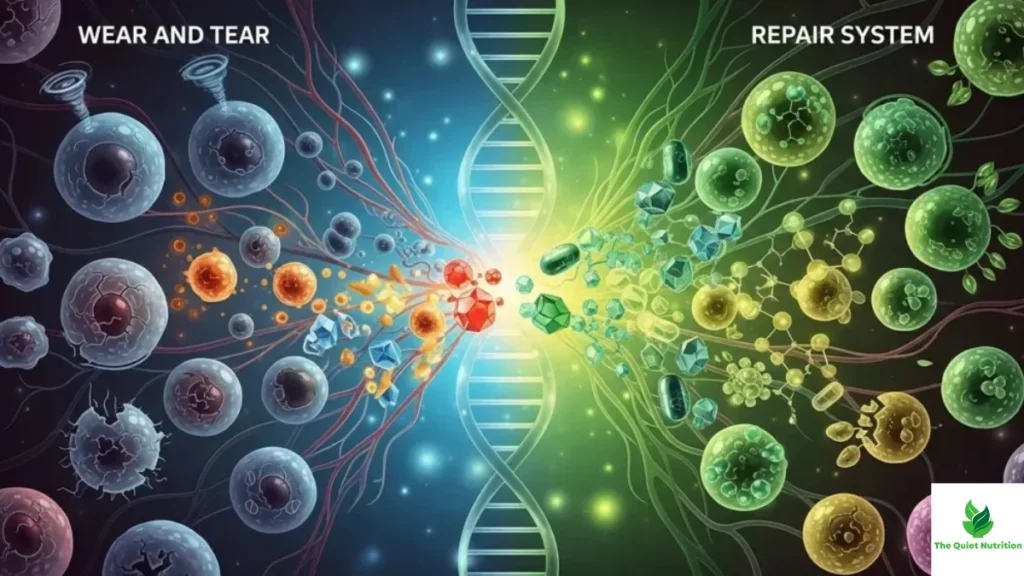
Think about how much your body actually absorbs in a single day. Walking puts repeated stress on your joints. Sunlight breaks down collagen in your skin. Digesting food, breathing, even just existing generates cellular byproducts that can damage tissue if left unmanaged. None of this is dangerous on its own — it’s normal wear and tear. The real question is whether your body can repair it as fast as it happens. And that repair capacity depends heavily on nutrition, far more than most people realize.
People tend to associate wear and tear with big, obvious causes — an old sports injury, years of manual labor, intense sun exposure. But a huge amount of daily wear is simply the cost of being a living, moving organism. The body is built to handle this, but only if it has the resources to keep up.
Oxidative Stress: The Damage You Don’t See
Every time your cells produce energy, they generate unstable molecules called free radicals as a natural byproduct. In small amounts, this is completely normal. The problem starts when free radicals outpace the body’s ability to neutralize them — a state known as oxidative stress. Over time, unmanaged oxidative stress damages cell membranes, proteins, and even DNA, contributing to the kind of gradual tissue wear associated with aging.
This is where antioxidant nutrients earn their reputation, though not in the dramatic way supplement marketing often suggests. Vitamin C, vitamin E, and plant compounds called polyphenols — found in berries, leafy greens, and colorful vegetables — help neutralize free radicals before they cause damage. This isn’t about mega-dosing on any single nutrient. It’s about consistently giving the body a steady supply of these compounds so repair can keep pace with everyday cellular wear.
Joints and Connective Tissue Need Raw Materials Too
Cartilage, tendons, and ligaments don’t get nearly as much nutritional attention as muscle, but they’re constantly undergoing their own repair cycles, just more slowly. Collagen — the structural protein that makes up much of this connective tissue — requires vitamin C, specific amino acids like glycine and proline, and adequate overall protein intake to be produced efficiently.
This is part of why joint discomfort tends to creep up gradually rather than appearing overnight. Cartilage has relatively poor blood supply to begin with, so it depends heavily on nutritional support to keep repair processes functioning well. A diet that’s consistently low in protein or vitamin C doesn’t cause immediate problems, but it can slowly limit how efficiently these tissues rebuild themselves after everyday stress.
Inflammation and the Repair-Damage Balance
A short burst of inflammation is actually a normal, necessary part of healing — it’s how the body signals repair crews to show up. The issue is when inflammation becomes chronic and low-grade, which can actually interfere with proper tissue repair rather than support it.
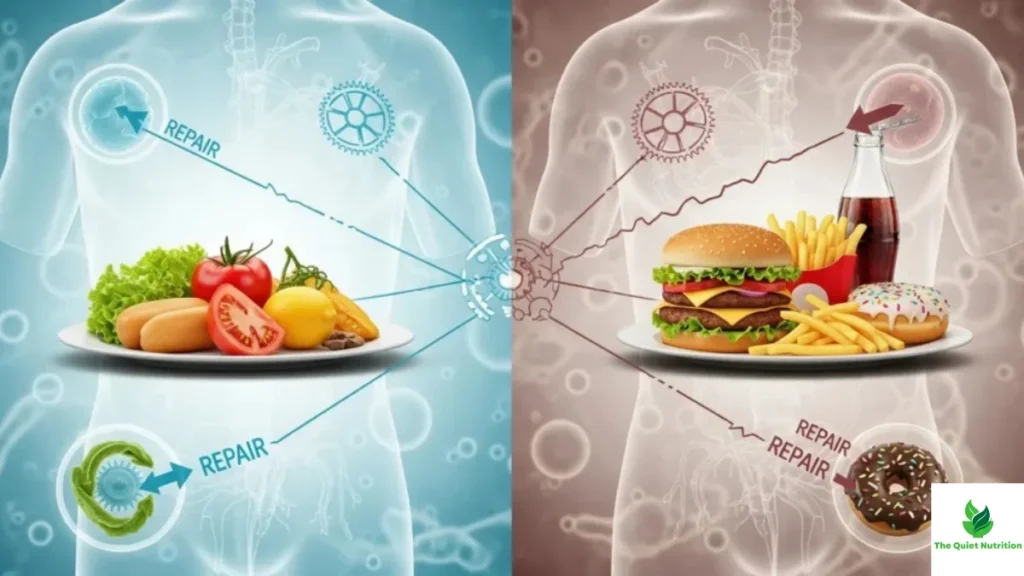
Diets high in refined sugar, processed foods, and unbalanced fats tend to promote this chronic inflammatory state, while diets rich in omega-3 fatty acids — found in fatty fish, walnuts, and flaxseed — along with fiber and colorful produce, tend to support a more balanced inflammatory response. This matters directly for wear and tear, because tissue that’s stuck in a low-grade inflammatory state generally repairs less efficiently than tissue supported by an anti-inflammatory dietary pattern.
Sleep and Nutrition Work as a Repair Team
It’s worth mentioning that a large portion of physical repair happens during sleep, but sleep quality itself is influenced by nutrition. Deficiencies in magnesium, for example, have been linked to poorer sleep quality, while excessive late-night sugar or caffeine intake can disrupt the deep sleep stages where much of the body’s repair work is concentrated. Nutrition and sleep aren’t separate systems — they’re part of the same repair cycle, feeding into each other in both directions.
Why This System Gets Undervalued
The reason this repair system doesn’t get much credit is simple: it works silently, and its failures show up as vague, easy-to-dismiss symptoms — stiffness, slower recovery from minor strains, skin that seems to “give up” its elasticity earlier than expected. None of these get diagnosed as a nutrition problem, even when nutrition is a major contributing factor.
People tend to notice wear and tear only once it becomes uncomfortable, at which point they look for external fixes — supplements, creams, treatments — without addressing the underlying repair capacity that nutrition governs from the inside.
The Practical Takeaway
You don’t need a complicated regimen to support this system. What matters most is consistency: enough protein to supply the raw material for tissue repair, a wide range of colorful fruits and vegetables for antioxidant coverage, regular omega-3 intake to help manage inflammation, and decent sleep to give repair processes the time they need to actually happen.
Wear and tear is inevitable — it’s simply the cost of using your body. But how efficiently that wear gets repaired is far more within your control than most people assume, and nutrition sits right at the center of that process, quietly doing the work long before anything ever feels broken.
Source: National Institutes of Health – Office of Dietary Supplements

Aarti Solanki, B.Sc. (Food Science), is a food science writer passionate about making nutrition simple and evidence-based. She creates well-researched, easy-to-understand articles on healthy eating, food science, and nutrition, using information from trusted scientific and public health sources.







Pingback: Why Nutritional Consistency Matters More With Age — The Quiet Habit That Protects Strength, Energy, and Health
Pingback: How Long-Term Eating Patterns Shape Resilience — The Quiet Nutrition Advantage That Lasts for Decades