
Most people talk about aging like it’s a one-way slide downhill — something that happens to you, slowly stealing energy, strength, and sharpness with no real say in the matter. But that framing, while common, isn’t quite accurate. A growing body of research suggests aging behaves less like decline and more like a maintenance problem. And nutrition is one of the biggest levers in how well that maintenance gets done.
This shift in framing matters more than it sounds. “Decline” implies something inevitable and passive. “Maintenance” implies something ongoing, responsive, and — importantly — influenceable.
Your Body Is Always Under Renovation
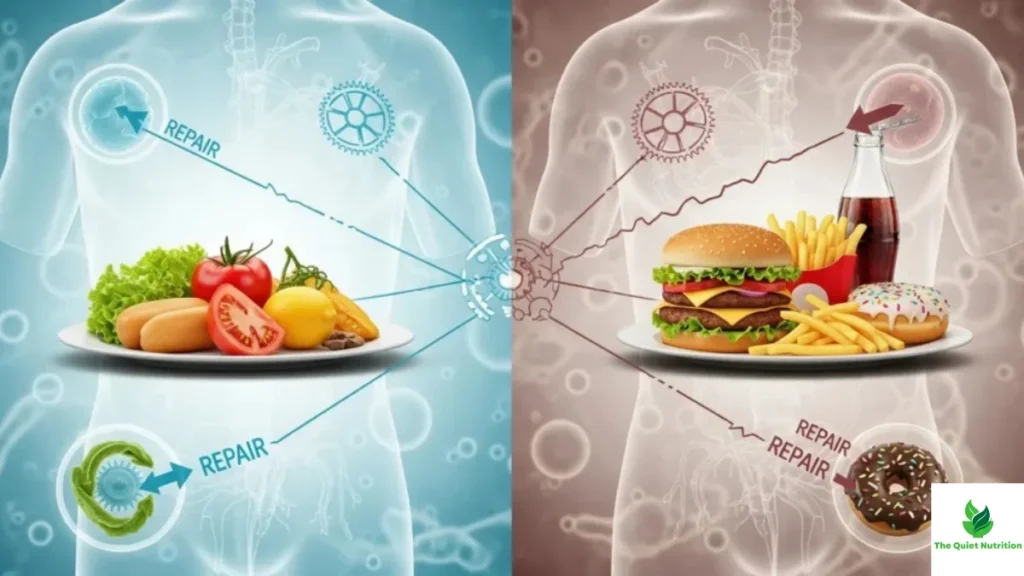
Every day, your body is quietly repairing and replacing itself. Skin cells regenerate. Damaged proteins get cleared out. Muscle fibers rebuild after use. Even bone tissue is constantly being broken down and reformed in a cycle called remodeling. None of this is unique to youth — it happens throughout life.
What changes with age isn’t that this maintenance stops. It’s that the efficiency of these repair systems can slow down, especially without the raw materials and conditions they need to function well. This is the key idea: aging isn’t simply time passing and things wearing out — it’s what happens when the body’s ongoing repair processes don’t get adequately supported.
And repair processes run almost entirely on nutrition.
Protein: The Literal Building Material
Nearly every repair process in the body depends on amino acids — the building blocks of protein. Muscle repair, immune cell production, enzyme creation, even neurotransmitter synthesis all draw from the same amino acid pool. When protein intake is inadequate, the body has to prioritize, and maintenance tasks that aren’t immediately life-threatening — like keeping muscle mass steady — often lose out.
This is a major reason older adults are generally advised to consume more protein per kilogram of body weight than younger adults, not less, even though appetite and food intake often naturally decline with age. The maintenance demand doesn’t shrink; if anything, the body’s ability to efficiently use protein for repair, known as anabolic efficiency, tends to decrease slightly with age — meaning the input needs to go up just to maintain the same output.
Micronutrients Keep the Repair Crew Running
If protein is the raw building material, micronutrients are more like the tools and supervisors making sure the work gets done correctly. Vitamin D and calcium support bone remodeling. B vitamins are essential for cellular energy production and nervous system maintenance. Antioxidant nutrients like vitamin C and E help manage oxidative stress — a natural byproduct of energy metabolism that, left unchecked, can damage cells faster than they can be repaired.
This is where a lot of unnoticed aging actually happens. Someone can be eating “enough” in terms of calories while still running short on the specific micronutrients that keep repair systems functioning smoothly. The result isn’t a dramatic health event — it’s a slow drift toward reduced resilience.
Cellular Cleanup Needs Fuel Too
There’s a lesser-known process called autophagy — essentially the body’s system for clearing out damaged or dysfunctional cellular components so they don’t accumulate and cause problems. This process is influenced by nutrition patterns, including meal timing and periods without eating, and tends to become less efficient with age.
While this is a more advanced area of research, the broader point holds up well even at a basic level: cellular cleanup and renewal aren’t automatic guarantees. They depend on the body having the right conditions and resources, and chronic nutritional gaps can quietly interfere with how well this process keeps up.
What This Means for How You Actually Eat
Reframing aging as maintenance changes the practical advice too. It’s not about chasing anti-aging trends or restrictive eating. It’s about consistently giving the body what it needs to keep its repair systems running well: enough protein spread across the day, a wide variety of colorful plant foods for micronutrient coverage, adequate hydration, and enough overall energy intake so the body isn’t forced to break down its own tissue to make up a deficit.
This also means the timeline matters less than people think. It’s never “too early” to start supporting maintenance, and it’s rarely “too late” either — repair systems respond to better input at nearly any age, even if the response is slightly slower later in life.
The Real Shift in Thinking
Once aging is understood as an ongoing maintenance process rather than a fixed downhill trajectory, it stops being something to simply brace for and becomes something to actively participate in. The people who tend to age with more strength, sharper thinking, and greater independence usually aren’t genetically exceptional — they’ve simply kept their maintenance systems well-fed for longer.
Decline feels inevitable. Maintenance feels manageable. And based on what the science actually shows, maintenance is the far more accurate — and far more useful — way to think about it.
Source: National Institute on Aging – Nutrition for Older Adults

Aarti Solanki, B.Sc. (Food Science), is a food science writer passionate about making nutrition simple and evidence-based. She creates well-researched, easy-to-understand articles on healthy eating, food science, and nutrition, using information from trusted scientific and public health sources.







Pingback: Why Nutritional Consistency Matters More With Age — The Quiet Habit That Protects Strength, Energy, and Health
Pingback: Why Aging Is Influenced by Nutrient Availability — The Hidden Factor That Shapes How Fast You Age
Pingback: Why Aging Reflects Efficiency Loss, Not Failure — The Nutrition Truth That Changes How We Age
Pingback: Why Aging Isn’t Just About Time — It’s About Energy Balance