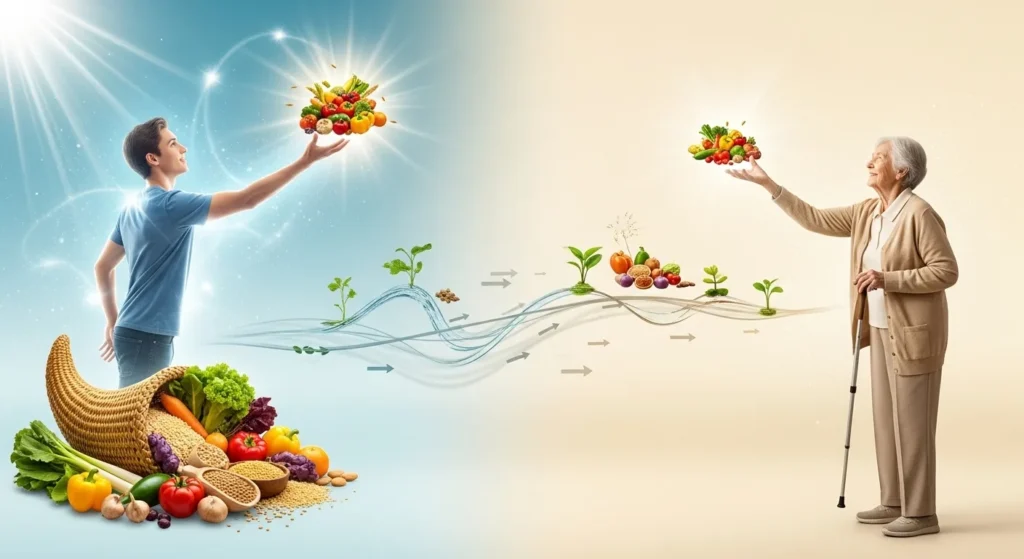
Nobody wakes up one day suddenly old. There’s no switch that flips at 40, 50, or 60. And yet we talk about aging like it’s a countdown timer built into us at birth — as if the body is simply running out a preset clock, and food is just something we do while we wait.
That mental model is convenient. It’s also wrong.
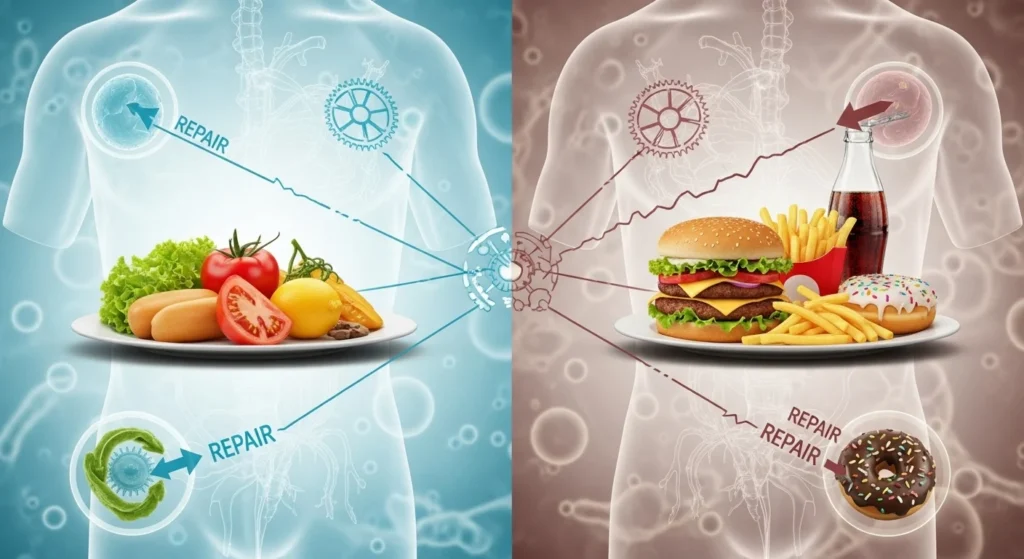
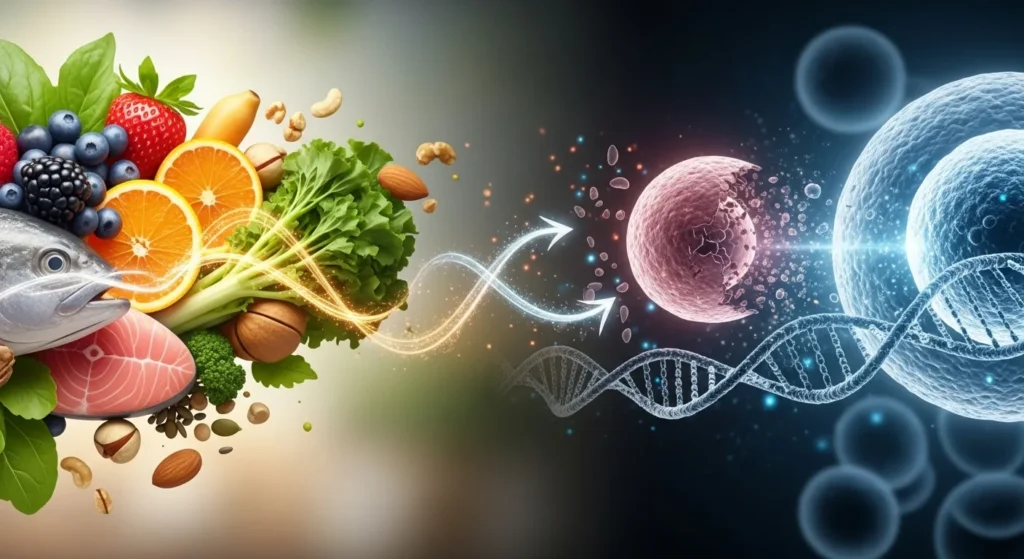
Aging isn’t a passive event happening to your body. It’s an active, cumulative process — and a surprising amount of it is being written, meal by meal, by what you eat. Not metaphorically. Literally, at the molecular level, your food is either feeding repair or feeding decay, every single day, for decades. Understanding how that happens changes the way you think about your next meal entirely.
The Sugar-Protein Reaction Nobody Warns You About
Here’s something most people have never heard of, despite it happening inside them right now: when sugar molecules in your bloodstream come into contact with proteins or fats, they can bind together in a process called glycation. Over time, this creates compounds called advanced glycation end products — AGEs, fittingly. They’re not just a byproduct of aging; research shows they’re one of its drivers.
AGEs are sticky, damaged molecules that build up in your skin, blood vessels, joints, and organs. They stiffen collagen (which is part of why skin loses elasticity and wrinkles form), and they trigger oxidative stress and inflammation wherever they accumulate. A review in the journal Nutrients found that dietary AGEs — which come heavily from fried, grilled, and highly processed foods — accumulate faster in people who eat a lot of them, and that reducing dietary AGE intake has shown measurable benefits for wound healing, insulin resistance, and cardiovascular markers.
This is a genuinely different way to think about aging: it’s not simply time passing, it’s a slow chemical reaction between what you eat and the proteins that make up your body. Fewer AGEs going in generally means less structural damage accumulating over the years.
Your Mitochondria Are Taking Notes on Every Meal
Inside nearly every cell in your body are mitochondria — the structures responsible for turning food into usable energy. They’re also, unfortunately, one of the first things to decline with age, and that decline is closely tied to how you eat.
This is where caloric intake patterns matter almost as much as food quality. Research on calorie restriction consistently shows it triggers cellular “housekeeping” processes — most notably autophagy, where cells clean out damaged components and molecular debris before they cause further harm. Studies summarized by aging researchers describe this as one of the most consistently observed mechanisms by which reduced-calorie eating patterns slow measurable signs of aging across animal models. You don’t need to starve yourself to get an echo of this benefit — simply avoiding chronic overeating and giving your digestive system regular breaks between meals appears to support the same repair pathways.
The Gut You’re Feeding Today Shapes How You Age Tomorrow
The gut microbiome — the trillions of bacteria living in your digestive tract — has become one of the most active areas in aging research, and for good reason. As people age, microbial diversity tends to decline, and the bacteria that produce beneficial compounds (short-chain fatty acids that reduce inflammation and support the gut lining) become less abundant. Scientists have started calling the resulting low-grade, chronic inflammation “inflammaging” — a slow simmer of immune activation that contributes to nearly every major age-related disease.
Here’s the encouraging part: this shift isn’t fixed. Research on caloric restriction in animal models found it reshaped the gut microbiome toward a more diverse, “younger” profile, increasing beneficial bacterial populations that had declined with age. Fiber-rich, plant-diverse diets feed exactly the bacteria responsible for producing those protective compounds. Your gut isn’t a passive passenger in the aging process — it’s an active participant, and its condition is largely a reflection of what you’ve been feeding it for years.
Why “Gradual” Is the Key Word
None of these processes — glycation, mitochondrial decline, gut microbiome shifts — happen overnight. That’s exactly the point, and exactly why it’s so easy to miss the connection between diet and aging. You don’t see the consequence of Tuesday’s fried food and Friday’s soda on Saturday morning. You see it accumulate, quietly, over years, until it shows up as stiffer joints, duller skin, slower recovery, or a diagnosis that seems to arrive “out of nowhere.”
But this also means the reverse is true. Better nutritional patterns don’t produce instant results either — and that’s not a flaw, it’s how a gradual, cumulative process works in both directions. Every meal is a small vote for which version of your future body you’re building.
What This Means Practically
You don’t need to obsess over avoiding every gram of sugar or memorizing which foods produce the most AGEs. The patterns that matter most are broad and manageable:
- Favor cooking methods that use moisture and lower heat (steaming, poaching, stewing) over high-heat dry cooking like frying and grilling, which sharply increase AGE formation in food
- Give your body regular breaks from constant eating rather than grazing all day, to support natural cellular cleanup processes
- Feed your gut deliberately — a wide variety of plant fiber sources tends to matter more than any single “superfood”
- Treat consistency as the real intervention; these are slow biological processes, so the goal is a sustainable pattern over years, not a two-week fix
The Bigger Shift in Thinking
Once you understand aging as a nutritional process rather than a fixed timeline, the whole conversation changes. It stops being about fighting an inevitable countdown and starts being about influencing a set of biological processes that respond, slowly but measurably, to what you do every day. Time will always pass. But how your body experiences that time — how much damage accumulates, how well your cells keep repairing themselves — is being decided far more in your kitchen than on your birth certificate.
Sources
- Nature — Advanced Glycation End Products (AGEs) in Aging-Related Diseases, National Institute on Alcohol Abuse and Alcoholism
- NIH/NCBI — Dietary Advanced Glycation End Products and Aging
- NIH/NCBI — Mechanistic Targeting of Advanced Glycation End-Products in Age-Related Diseases
- Aging (Aging-US) — Calorie Restriction Prevents Age-Related Changes in the Intestinal Microbiota (NIH-funded study)
- NIH/NCBI — Gut Microbiota, Probiotics, and Aging: Molecular Mechanisms and Implications for Healthy Aging

Aarti Solanki, B.Sc. (Food Science), is a food science writer passionate about making nutrition simple and evidence-based. She creates well-researched, easy-to-understand articles on healthy eating, food science, and nutrition, using information from trusted scientific and public health sources.




Pingback: Why Aging Reflects Years of Small Habits (Not Sudden Decline or Bad Luck)
Pingback: How Nutrition Quietly Controls the Speed of Aging (And Why It Matters More Than Genetics)
Pingback: Why Aging Starts Earlier Than Most People Think — The Quiet Changes That Begin Long Before You Feel “Old”