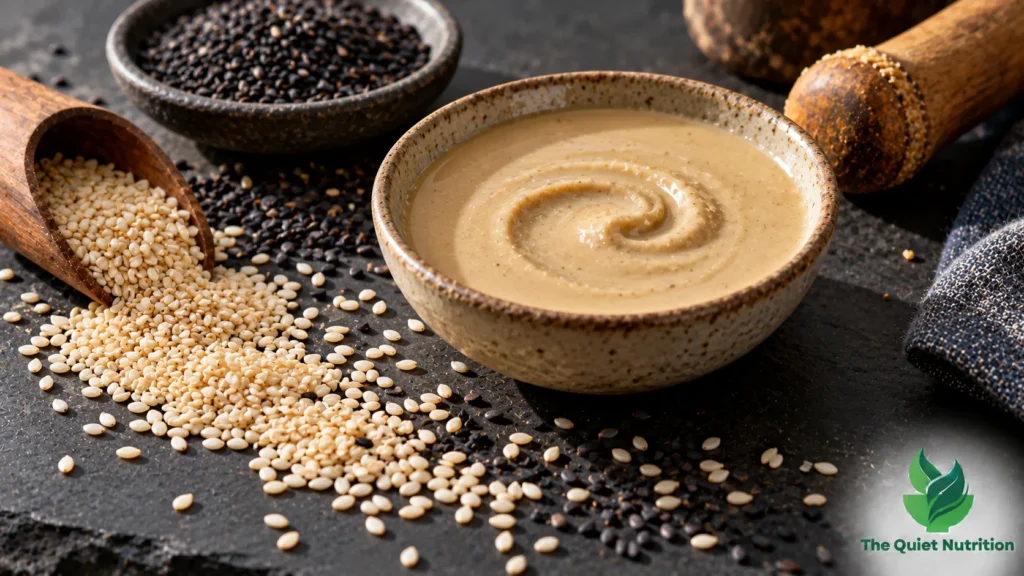
Sesame seeds are tiny enough to disappear into a loaf of bread or a spoonful of dressing, yet they contain a surprisingly diverse mix of nutrients. They provide unsaturated fats, plant protein, minerals, and distinctive plant compounds that researchers continue to investigate.
They are also deeply woven into everyday cooking. Sesame seeds appear in tahini, hummus, Asian-style dressings, breads, spice blends, and countless traditional dishes. Their nutritional value does not depend on an elaborate recipe or an expensive supplement. A modest amount can add flavour, texture, and useful nutrients to an ordinary meal.
What makes sesame particularly interesting is its combination of nutrients and naturally occurring compounds called lignans. These include sesamin and sesamolin, which have attracted scientific interest because of their biological activity.
But there is an important distinction between a compound showing promising effects in laboratory research and a food being proven to prevent disease in people. Sesame seeds have genuine nutritional strengths, but some popular claims about their benefits go further than the evidence allows.
Here is what makes them worth including in a balanced diet—and what to understand before treating them as a health food.
1. They Contain Distinctive Plant Compounds Called Lignans
One of the less widely known features of sesame seeds is their lignan content.
Lignans are naturally occurring plant compounds. Sesame is particularly notable for sesamin and sesamolin, which have been studied for their chemical properties and potential biological effects. Depending on how sesame is processed, other compounds, including sesamol, may also be present.
Researchers have investigated sesame lignans for their antioxidant activity and possible effects on lipid metabolism and other biological processes. Some findings are promising, but much of the evidence comes from laboratory experiments, animal research, or studies using sesame oil and concentrated preparations rather than ordinary portions of whole seeds.
That distinction matters. A substance showing antioxidant activity in a laboratory does not automatically mean that eating a particular food will prevent cancer, slow ageing, or protect against chronic disease.
The more reliable conclusion is that sesame offers a distinctive collection of plant compounds alongside its conventional nutrients. Eating sesame seeds can add variety to a diet rich in different plant foods, each of which supplies its own combination of naturally occurring compounds.
2. They Provide Unsaturated Fats
Sesame seeds contain a substantial amount of fat, most of it unsaturated. Their fatty acids include oleic acid, a monounsaturated fat, and linoleic acid, a polyunsaturated omega-6 fatty acid.
Linoleic acid is essential, meaning the body cannot produce it in sufficient amounts and must obtain it from food. Fat also helps provide energy, forms part of cell membranes, and supports the absorption of fat-soluble vitamins.
The type of fat in a food matters. Replacing some sources of saturated fat with unsaturated fats can improve the overall quality of the diet and may help support healthier blood cholesterol levels.
For example, adding sesame seeds to a vegetable bowl in place of a topping dominated by butter or another source of saturated fat may improve the meal’s fat profile.
However, simply adding more sesame seeds to an already energy-rich diet does not guarantee better health. They are calorie-dense, so the overall eating pattern and what the seeds replace are important.
Their unsaturated fats are one reason sesame fits comfortably into a varied diet that includes nuts, seeds, legumes, whole grains, vegetables, and other minimally processed foods.
3. They Supply Minerals, Including Magnesium
Sesame seeds contain several minerals involved in normal body functions. Magnesium is one of them.
The body uses magnesium in hundreds of biochemical reactions, including those involved in energy production, protein synthesis, muscle and nerve function, and the maintenance of healthy bones.
A one-ounce (28-gram) serving of sesame seeds can provide a useful contribution to magnesium intake, although the exact amount varies by variety and preparation.
Sesame also supplies minerals such as copper, manganese, iron, zinc, and phosphorus. These nutrients have different roles, ranging from enzyme activity and oxygen transport to bone structure and normal cell function.
This variety is part of sesame’s nutritional appeal. A small serving contributes more than one nutrient, making the seeds a practical addition to meals that might otherwise contain limited amounts of certain minerals.
Still, nutrient content is not the same as a guaranteed health outcome. Eating sesame seeds does not automatically correct a deficiency, relieve muscle cramps, or improve energy levels. Those outcomes depend on the person’s nutritional status and broader health circumstances.
The sensible approach is to use sesame as one of several foods that help meet normal nutrient requirements.
4. They Contain Calcium—but Absorption Matters
Sesame seeds are often described as an excellent plant source of calcium, a mineral needed for bones and teeth, muscle contraction, nerve signalling, and other essential processes.
Whole sesame seeds can contain substantial calcium, especially when their outer hulls are retained. However, the amount varies with the product, and the calcium listed in a food’s nutrient profile is not necessarily the amount the body absorbs.
Sesame contains naturally occurring compounds, including oxalates and phytates, that can bind minerals and reduce their absorption. The effect depends on the seed’s composition and preparation.
This means it would be misleading to assume that all the calcium in sesame seeds is as readily available to the body as calcium from every other food source.
Tahini, made by grinding sesame seeds, can be a useful ingredient, but its calcium content also varies according to whether hulled or unhulled seeds were used. Check the product’s nutrition information if calcium intake is a particular concern.
Sesame can contribute to a varied calcium-containing diet, but it should not automatically be treated as a complete substitute for more bioavailable calcium sources. Depending on individual needs, those may include dairy foods, calcium-fortified alternatives, calcium-set tofu, or selected vegetables.
5. They Add Plant Protein to Everyday Meals
Sesame seeds also provide plant protein. A one-ounce serving of whole seeds typically supplies around four to six grams, depending on the variety and preparation.
Protein helps maintain and repair tissues. It is also needed to produce enzymes and other molecules that carry out essential bodily functions.
Sesame is not necessarily the main protein source in a meal, but it can contribute useful amounts when added to foods that otherwise contain little protein.
Try sprinkling sesame seeds over roasted vegetables, adding them to whole-grain bread, or mixing tahini into a dressing served with beans or lentils.
For people following vegetarian or vegan diets, sesame can add variety alongside other protein sources such as soy foods, legumes, nuts, and whole grains.
As with other plant foods, sesame’s value is best understood within the context of the whole diet. No single seed needs to supply every amino acid or meet all daily protein requirements on its own.
6. Their Fiber Can Contribute to Digestive Health
Whole sesame seeds contain dietary fiber, which supports normal digestive function and contributes to overall dietary quality.
Fiber helps maintain regular bowel movements and can support a healthy eating pattern when consumed alongside sufficient fluids and a variety of plant foods.
Sesame seeds are a useful addition, but they are unlikely to be the most significant source of fiber in most diets. Beans, lentils, whole grains, vegetables, and fruits can make larger contributions depending on the portions eaten.
There is also a practical distinction between whole seeds and sesame oil. Oil provides fat and sesame-derived compounds but does not provide the same fiber as the intact seed.
If you are trying to increase fiber intake, gradually adding a range of fiber-rich foods is usually more helpful than relying on sesame seeds alone.
People who are not accustomed to eating much fiber may experience digestive discomfort if they suddenly increase their intake. Gradual changes can make the transition easier.
7. They May Support Heart Health as Part of a Balanced Diet
Sesame seeds contain several features that make them a useful component of a heart-conscious eating pattern: unsaturated fats, minerals, lignans, and other naturally occurring plant compounds.
Research has investigated whether sesame products may influence blood lipids and other cardiovascular risk markers. Some studies have reported encouraging results, but the research varies in its methods, participants, quantities used, and type of sesame product studied.
For example, findings involving sesame oil or concentrated sesame preparations cannot automatically be applied to a teaspoon of whole seeds sprinkled over a meal.
It is also important to distinguish changes in a risk marker from proof that a food prevents heart attacks or strokes. More research is needed to establish the specific effects of ordinary sesame-seed consumption on long-term health outcomes.
The practical advice remains straightforward: sesame seeds can be part of a diet that emphasizes unsaturated fats and minimally processed plant foods. They are not a replacement for prescribed cholesterol medication, blood-pressure treatment, or other evidence-based care.
8. They Are an Easy Way to Add Flavour Without Complicated Recipes
A nutritional benefit is more useful when a food is easy to eat regularly. Sesame seeds have an advantage here: a small quantity can make a noticeable difference to flavour and texture.
Their mild, nutty taste works in both sweet and savoury dishes. Toasting them briefly can intensify their aroma, although they should be watched carefully to prevent burning.
Here are a few practical ways to use them:
- On vegetables: Sprinkle toasted sesame seeds over broccoli, carrots, green beans, or roasted aubergine.
- In dressings: Mix tahini with lemon juice, water, garlic, and seasonings for a creamy dressing.
- At breakfast: Add a small spoonful of sesame seeds to oatmeal or a savoury breakfast bowl.
- In breads: Use sesame as a topping for homemade bread or whole-grain rolls.
- In grain bowls: Combine sesame seeds with brown rice, vegetables, tofu, or chickpeas.
- In homemade dips: Blend tahini into hummus or other bean-based spreads.
- In snacks: Combine a measured amount with nuts or other seeds for a simple snack mix.
The goal is not to eat as much sesame as possible. It is to use a small, versatile ingredient to make nutritious meals more enjoyable.
How Much Sesame Seed Should You Eat?
There is no single daily sesame-seed requirement for everyone. A practical starting point is around one tablespoon, or roughly 9–10 grams, depending on the seed and how it is measured.
This provides a modest amount of fat, protein, and minerals without requiring a large portion. Larger amounts can fit into some diets, but sesame is energy-dense, so portions matter if you are monitoring overall calorie intake.
Whole seeds, ground sesame, tahini, and sesame oil also differ nutritionally. Whole seeds and tahini retain more of the seed’s overall nutritional components than pure oil, which is predominantly fat.
You do not need to consume sesame every day to benefit from its nutrients. It can be rotated with pumpkin seeds, sunflower seeds, chia seeds, nuts, and other foods.
Consistency across the overall diet matters more than finding a perfect daily dose of one ingredient.
Are There Any Downsides to Eating Sesame Seeds?
For most people who tolerate sesame, it can be a useful food. There are a few important considerations.
Sesame is a recognised food allergen
Sesame can trigger allergic reactions, which may be serious. People with a sesame allergy need to avoid sesame seeds, tahini, and other products containing sesame, and should check ingredient labels carefully.
If you experience symptoms suggesting an allergic reaction after eating sesame, seek appropriate medical advice. Difficulty breathing, throat swelling, or other signs of a severe reaction require emergency care.
Calories can accumulate
Sesame seeds and tahini contain substantial fat and therefore provide considerable energy for their size. This is not inherently unhealthy, but generous portions can add more calories than expected.
Products can contain added salt or sugar
Sesame itself is not the same as a heavily salted seasoning blend, sweetened sesame snack, or packaged product containing additional ingredients. Compare labels when sodium or added sugar is a concern.
Calcium claims need context
Although sesame seeds may contain substantial calcium, the amount that is absorbed depends partly on their composition and preparation. Do not rely on sesame alone to meet calcium needs if your diet has other limitations.
The Bottom Line
The hidden benefits of sesame seeds come from their combination of unsaturated fats, plant protein, minerals, fiber, and distinctive lignans such as sesamin and sesamolin.
These nutrients and compounds make sesame a worthwhile addition to a varied diet. They do not, however, establish that sesame seeds can prevent cancer, treat high cholesterol, balance hormones, or replace medical treatment.
Enjoy them sprinkled over vegetables, mixed into grain bowls, or blended into tahini-based dressings. Pay attention to portion size, and remember that calcium content does not automatically equal calcium absorption.
Sesame seeds do not need extraordinary health claims to earn a place in your kitchen. Their nutritional variety, distinctive flavour, and versatility are already good reasons to enjoy them.
Research sources
- Sesame: A Comprehensive Review of Nutritional Value and Health Research — Foods (2022) — nutritional composition, lignans, minerals, and processing considerations.
- A Systematic Review on the Nutrition, Health Benefits, and Allergy Risks of Sesame Seeds — Food Chemistry (2026) — overview of sesame’s nutritional properties, proposed health effects, and allergy risks.
- NIH Office of Dietary Supplements — Calcium Fact Sheet — calcium absorption and the influence of compounds found in plant foods.
- Lignans of Sesame (Sesamum indicum L.): A Comprehensive Review — sesamin, sesamolin, and other sesame lignans.
- In Vitro Calcium Bioavailability of Vegetables, Legumes and Seeds — research on calcium bioavailability and the effects of oxalates in sesame and other plant foods.

Aarti Solanki, B.Sc. (Food Science), is a food science writer passionate about making nutrition simple and evidence-based. She creates well-researched, easy-to-understand articles on healthy eating, food science, and nutrition, using information from trusted scientific and public health sources.