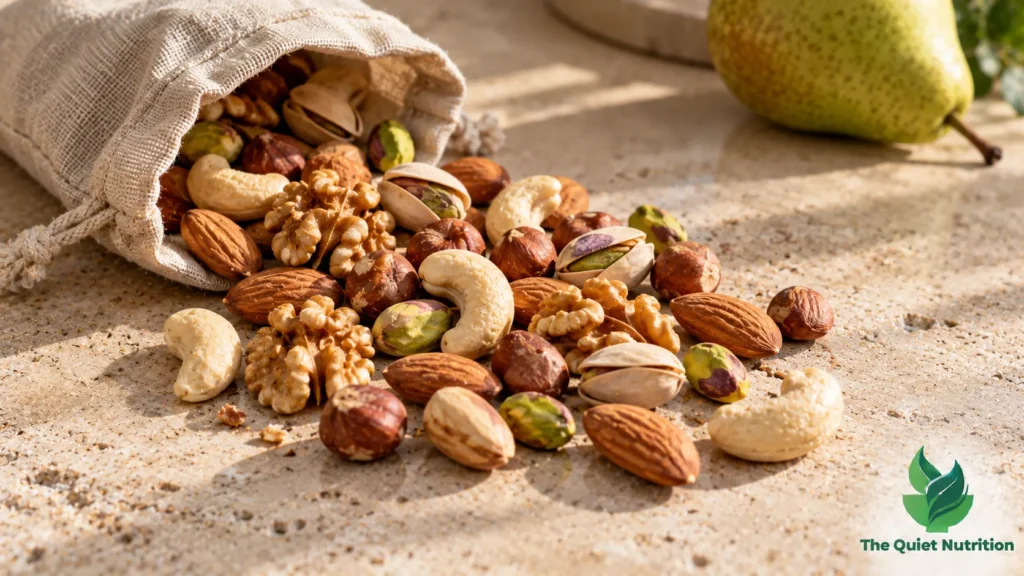
A small handful of mixed nuts can change more about your diet than you might expect. Almonds, walnuts, pistachios, cashews, and other nuts each bring a slightly different combination of fats, protein, fiber, vitamins, minerals, and plant compounds. Eating a variety gives you access to a broader range of nutrients in one convenient snack.
The potential benefits are not limited to nutrition labels. Research on nut consumption has linked regular intake with healthier blood cholesterol levels and a lower risk of cardiovascular disease. Nuts can also make snacks more satisfying and provide an easy way to include more plant-based foods in everyday meals.
But mixed nuts are not a magic food. The results depend on portion size, the type of nuts you choose, what they replace in your diet, and your overall eating habits. Salted, sugar-coated, or heavily flavoured varieties can also differ substantially from plain nuts.
So, what actually happens when you start eating mixed nuts regularly? Here is what the evidence suggests—and what it does not prove.
1. You Get a Wider Range of Nutrients
One of the clearest advantages of mixed nuts is variety.
Almonds provide vitamin E and magnesium. Walnuts are notable for alpha-linolenic acid (ALA), a plant-based omega-3 fatty acid. Cashews contribute minerals such as copper and magnesium, while pistachios provide protein, fiber, and several micronutrients. The exact nutritional profile depends on the mixture.
This variety matters because different nuts are not nutritionally identical. Choosing a mix can broaden the range of nutrients you obtain rather than relying on a single type.
Most nuts contain unsaturated fats, plant protein, and some fiber. They also supply minerals involved in normal bodily functions, including magnesium, phosphorus, copper, and manganese. Certain varieties provide meaningful amounts of vitamin E and other antioxidant compounds.
These nutrients help the body carry out essential processes, from maintaining cells and producing energy to supporting normal muscle and nerve function.
However, a varied handful of nuts does not automatically meet all your nutritional needs. It is one useful part of a broader diet that includes vegetables, fruits, legumes, whole grains, and other nutrient-rich foods.
2. Your Blood Cholesterol May Improve
One of the better-supported benefits of regular nut consumption is its effect on blood lipids.
Nuts contain unsaturated fats, fiber, plant sterols, and other compounds that may influence cholesterol metabolism. Replacing some foods high in saturated fat with nuts can help improve the overall quality of dietary fat.
A systematic review and meta-analysis published in 2024 examined 113 randomized trials involving more than 8,000 adults. The researchers found that nut consumption produced modest average reductions in total cholesterol and LDL cholesterol, often called “bad” cholesterol. The size of the effect varied among studies and participants.
This is encouraging evidence, but it needs to be interpreted correctly. These trials examined different nuts, portions, and dietary comparisons. They do not establish that every mixed-nut product will produce the same effect.
The practical lesson is to use nuts as a replacement for less nutritious snacks or some foods high in saturated fat, rather than simply adding them on top of your existing diet.
If you have high cholesterol, mixed nuts can complement a heart-conscious eating pattern. They are not a substitute for prescribed cholesterol-lowering medication or other recommended treatment.
3. They Can Support a Heart-Healthy Eating Pattern
Regular nut consumption has been associated with a lower risk of cardiovascular disease in large observational studies. Researchers have also investigated the effects of nuts on risk factors such as cholesterol, inflammation, and blood-vessel function.
Several characteristics help explain why nuts may be useful in a heart-conscious diet:
- Unsaturated fats can improve the dietary fat profile when they replace some saturated fats.
- Fiber contributes to overall dietary quality and may help influence cholesterol metabolism.
- Minerals, including magnesium, support normal physiological functions.
- Plant compounds contribute to the distinctive nutritional profiles of different nuts.
However, observational research cannot prove that nuts alone cause a lower risk of heart disease. People who regularly eat nuts may also have other health-conscious habits, and researchers cannot always account for every difference.
Clinical trials provide stronger evidence for improvements in some cardiovascular risk markers, especially blood lipids, than for the claim that eating mixed nuts alone prevents heart attacks or strokes.
That distinction does not diminish their value. It simply places mixed nuts where they belong: as one useful component of a broader dietary pattern.
4. You May Feel More Satisfied Between Meals
Mixed nuts combine fat, protein, and fiber in varying proportions. Together, these nutrients can help make a snack more substantial than one dominated by refined carbohydrates.
For example, a small handful of plain nuts may be more satisfying than a similarly sized serving of sweets or refined crackers. Their texture also encourages chewing, and their nutrient density makes them a convenient option when you need something between meals.
Satiety is individual, however. The effect depends on the portion, the rest of the meal, your activity level, and your appetite.
Mixed nuts should not be described as a guaranteed appetite suppressant. Nor does feeling fuller after eating them mean that they automatically cause weight loss.
A more useful approach is to include a measured portion as part of a snack or meal, especially when it replaces a food that offers less protein, fiber, or micronutrient value.
5. They Do Not Automatically Cause Weight Gain
Because nuts contain considerable fat, they are often assumed to cause weight gain. But the evidence is more nuanced.
Nuts are energy-dense: a typical one-ounce (28-gram) serving provides roughly 160–200 calories, depending on the mixture. Eating large quantities on top of your usual meals can increase total calorie intake.
At the same time, research does not consistently show that regular nut consumption leads to weight gain. Their protein, fiber, and fat can contribute to fullness, and not all the energy in whole nuts is necessarily absorbed because some fat remains trapped within their cellular structure.
What matters most is how they fit into your overall eating pattern.
Consider two situations. In the first, you add a large handful of nuts to several existing snacks without changing anything else. In the second, you replace a packet of sweets or chips with a measured serving of plain mixed nuts. The second approach is more likely to improve the nutritional quality of your snack without unnecessarily increasing your overall intake.
If weight management is a goal, pay attention to portions rather than avoiding nuts altogether.
6. You Add Plant Protein to Your Diet
Mixed nuts provide plant protein, although the amount varies with the ingredients.
Almonds, pistachios, and peanuts are relatively protein-rich compared with some other nuts. Walnuts, pecans, and macadamias generally provide less protein per equal serving, though they contribute other useful nutrients.
A one-ounce serving of mixed nuts often supplies around 4–6 grams of protein, depending on the blend.
Protein helps maintain and repair body tissues and supports the production of enzymes and other molecules the body needs. Nuts can contribute to daily protein intake, especially when combined with other plant foods.
For people following vegetarian or vegan diets, mixed nuts can complement beans, lentils, tofu, soy foods, and whole grains. They are not necessarily a sufficient protein source by themselves for a full meal, but they can help round out one.
The key is variety across the day. A balanced diet does not need to rely on a single food to provide all the protein and essential amino acids you require.
7. Your Diet Gets More Fiber and Plant Compounds
Nuts provide varying amounts of dietary fiber. Fiber supports normal digestive function and contributes to overall dietary quality, particularly when eaten alongside vegetables, fruits, legumes, and whole grains.
Different nuts also contain different plant compounds, including polyphenols and other phytochemicals. These substances are studied for their potential biological effects, including antioxidant activity.
But it is important not to overstate what this means. Finding antioxidant compounds in a food does not prove that eating it will prevent cancer, slow ageing, or detoxify the body.
Similarly, the fiber in a handful of nuts is helpful but usually represents only a portion of daily fiber needs. For digestive health, the bigger picture includes the amount and variety of fiber-rich foods eaten throughout the day, as well as adequate fluid intake.
Mixed nuts are a convenient contribution to that pattern, not a complete digestive-health strategy on their own.
8. You Get Different Benefits From Different Nuts
A mixed-nut blend can be more varied than a single-nut snack, but the ingredients matter. Each nut brings a different nutritional emphasis.
- Almonds: Notable for vitamin E, magnesium, and fiber.
- Walnuts: Provide ALA, a plant-based omega-3 fatty acid.
- Pistachios: Supply protein, fiber, and several vitamins and minerals.
- Cashews: Provide copper, magnesium, and unsaturated fats.
- Hazelnuts: Notable for monounsaturated fats and vitamin E.
- Pecans: Provide unsaturated fats and plant compounds.
- Brazil nuts: Particularly rich in selenium, so large amounts should not be eaten routinely.
This last point is important. More variety does not always mean that eating unlimited quantities is better. Brazil nuts, for example, can contain exceptionally high amounts of selenium, and the concentration varies substantially. Eating several every day can push selenium intake above recommended limits, depending on the nuts and the rest of your diet.
A sensible mixed-nut blend offers variety without requiring large amounts of any one nut. If you buy a commercial mix, check its ingredient list to see which nuts dominate the product.
How Much Mixed Nuts Should You Eat?
For many adults, around one ounce (28 grams) is a practical starting point. This is a common serving size, not a compulsory daily target.
Depending on the mixture, this portion generally provides around 160–200 calories, along with unsaturated fats, some protein, fiber, and a range of micronutrients.
A small handful can work as a snack, or you can divide it between meals by adding nuts to oatmeal, yogurt, salads, or cooked vegetables.
You do not have to eat mixed nuts every day. They can be rotated with seeds, legumes, fruit, and other nutrient-rich foods according to your preferences and needs.
The most important consideration is whether they improve the overall quality of your diet. If they replace a less nutritious snack, they may be particularly useful. If they are simply added in large quantities to an already energy-rich diet, the advantage may be smaller.
Choosing the Right Mixed Nuts
Not all mixed-nut products are the same. A few simple checks can help you choose one that fits your goals.
Choose mostly plain nuts. Raw or dry-roasted varieties without heavy coatings are usually straightforward choices.
Watch the sodium. Salted mixes can contribute substantial sodium if you eat large portions or consume them frequently. Unsalted or lightly salted options offer more control.
Limit sugary coatings. Honey-coated, caramelised, or candy-style mixes can contain added sugar and may have a very different nutritional profile from plain nuts.
Look at the ingredients. Some products contain more peanuts than tree nuts, while others include dried fruit, chocolate, or flavoured crackers. There is nothing automatically wrong with these ingredients, but they change the nutritional composition.
Store them properly. Nuts contain unsaturated fats that can become rancid. Keep them in an airtight container in a cool, dark place, or refrigerate them for longer storage.
Who Should Be Careful?
For most people who tolerate nuts, plain mixed nuts are a useful food. A few exceptions deserve attention.
People with a tree-nut or peanut allergy should carefully check the ingredients and cross-contact warnings. Peanuts are legumes rather than botanical tree nuts, but they are often included in mixed-nut products and can trigger serious allergic reactions.
People who have been advised to limit particular nutrients for a medical reason may also need to consider portion size and product ingredients. For example, heavily salted mixes may not be suitable for someone following a sodium-restricted diet.
If you have a specific allergy, follow your clinician’s advice rather than experimenting with mixed-nut products.
The Bottom Line
Adding mixed nuts to your diet can increase your intake of unsaturated fats, plant protein, fiber, minerals, and other plant compounds. Research suggests that regular nut consumption can modestly improve blood cholesterol levels, while observational studies link it with better cardiovascular outcomes.
But mixed nuts are not a shortcut to perfect health. They are calorie-dense, their nutritional composition depends on the ingredients, and the benefits are most meaningful when they replace less nutritious foods rather than simply adding extra calories.
Start with a modest portion of mostly plain nuts, vary the types you eat, and include them in a diet rich in vegetables, fruit, whole grains, and legumes. A small handful can be a practical daily habit—but the overall pattern of your diet matters more than any single snack.
Research sources
- Harvard T.H. Chan School of Public Health — Nuts for the Heart — evidence on nut nutrition, unsaturated fats, and cardiovascular health.
- Harvard Health Publishing — Quick-Start Guide to Nuts and Seeds — nutrient content, typical serving sizes, calories, and practical advice.
- Harvard T.H. Chan School of Public Health — Types of Fat — differences between saturated and unsaturated fats and why replacement foods matter.
- Harvard T.H. Chan School of Public Health — Peanuts and Peanut Butter Can Be Healthy — peanut butter’s nutrient profile and considerations when choosing products.
- US Food and Drug Administration — Added Sugars on the Nutrition Facts Label — how to identify and compare added sugar on packaged-food labels.

Aarti Solanki, B.Sc. (Food Science), is a food science writer passionate about making nutrition simple and evidence-based. She creates well-researched, easy-to-understand articles on healthy eating, food science, and nutrition, using information from trusted scientific and public health sources.