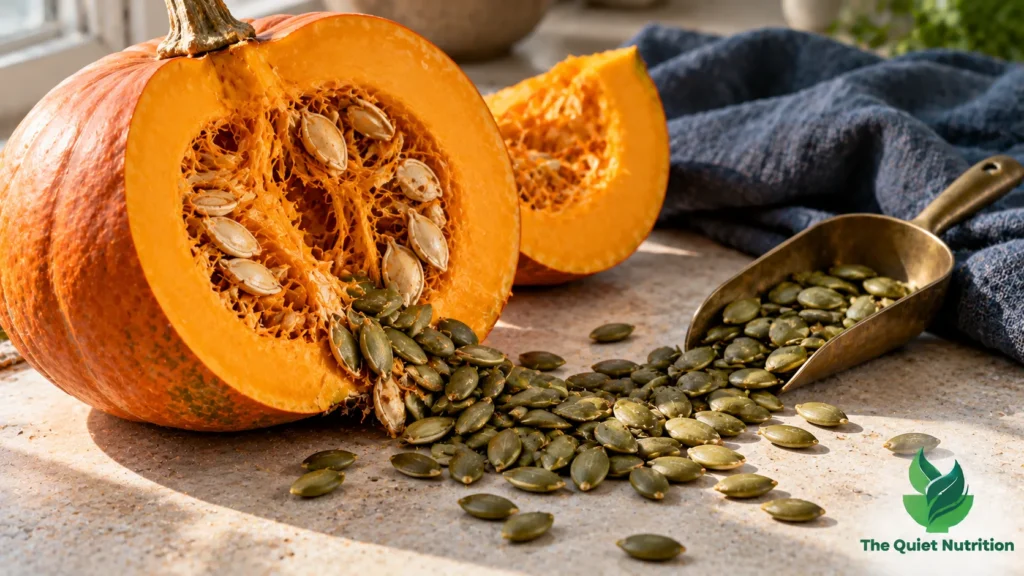
Pumpkin seeds rarely need much introduction. They are the crunchy centrepiece of a roasted autumn snack, a familiar topping for soups, and a simple addition to salads, oatmeal, and homemade trail mix. Yet their nutritional value extends well beyond their pleasant, nutty flavour.
Often called pepitas when sold without their hard outer shells, pumpkin seeds provide plant protein, unsaturated fats, magnesium, zinc, and other minerals. These nutrients contribute to ordinary but essential processes throughout the body, from maintaining muscle and nerve function to supporting immunity and tissue repair.
Their appeal lies in that combination. Rather than relying on a single nutrient, pumpkin seeds offer several useful components in a compact serving.
Still, the word wellness deserves a little perspective. Pumpkin seeds can contribute to a nutritious diet, but they are not a treatment for insomnia, a guaranteed way to improve hormone levels, or a substitute for medical care. Their strongest case is also the simplest: they are a versatile plant food that helps make a balanced diet more nourishing.
1. They Provide Magnesium for Everyday Body Functions
Magnesium is one of the most notable nutrients in pumpkin seeds.
The body uses this mineral in hundreds of biochemical processes. It helps regulate muscle and nerve function, supports energy production, contributes to protein synthesis, and plays a role in maintaining healthy bones. Magnesium is also involved in processes that regulate blood glucose and blood pressure.
Pumpkin seeds are a convenient way to add magnesium to everyday meals. A one-ounce (28-gram) serving of shelled pumpkin seed kernels typically provides roughly 150–170 milligrams, although the exact amount depends on the variety and preparation.
For context, recommended daily magnesium intake for adults generally ranges from 310 to 420 milligrams, depending on age and sex. A small serving of pumpkin seeds can therefore make a meaningful contribution.
This does not mean eating pumpkin seeds will automatically relieve muscle cramps, correct a magnesium deficiency, or lower high blood pressure. Those outcomes depend on several factors, including a person’s existing nutritional status, overall diet, health conditions, and medications.
The more reliable takeaway is that pumpkin seeds help supply a mineral the body needs to function normally. They can sit alongside other magnesium-rich foods, including beans, lentils, whole grains, leafy greens, and other nuts and seeds.
2. They Supply Zinc for Immune Function and Tissue Repair
Zinc is another reason pumpkin seeds deserve a place in a varied diet.
This essential mineral is involved in immune-system function, wound healing, DNA synthesis, cell division, and normal growth. The body cannot manufacture zinc, so it must come from food or, when appropriate, supplements.
Pumpkin seeds provide a plant-based source. A one-ounce serving of roasted pumpkin seeds contains approximately 2 milligrams of zinc, although the amount varies by product.
That is useful, but it is not the whole story. Adult zinc requirements are generally around 8 milligrams daily for women and 11 milligrams for men. Pumpkin seeds can contribute to these needs, while other foods supply the remainder.
Zinc is particularly relevant when considering dietary variety. People eating mostly plant-based diets can obtain zinc from foods such as pumpkin seeds, beans, lentils, whole grains, and fortified cereals. However, zinc from plant foods can be less readily absorbed because compounds such as phytates bind some of the mineral during digestion.
This is not a reason to avoid seeds. It is a reason to eat a varied diet rather than depending on one food to meet every nutritional requirement.
Although zinc is essential for immunity, eating extra pumpkin seeds does not necessarily make the immune system stronger if zinc intake is already adequate. The goal is to meet normal needs, not to assume that more is always better.
3. They Contain Plant Protein for Maintenance and Repair
Pumpkin seeds offer a useful amount of plant protein in a relatively small serving.
One ounce of shelled kernels typically supplies around 7–9 grams of protein, depending on the product. This makes them a practical addition to meals for people who eat less meat, follow vegetarian diets, or simply want more variety in their protein sources.
Protein is needed to maintain and repair body tissues. It also contributes to the production of enzymes and other molecules that carry out essential functions.
The benefit of pumpkin seeds is not that they can replace every other protein food. Instead, they make it easier to add protein to meals that might otherwise contain very little.
Try adding them to oatmeal, a vegetable-based soup, a grain bowl, or a salad. They can also be blended into sauces or ground and mixed into homemade savoury patties.
For people following plant-based diets, pumpkin seeds work well alongside beans, lentils, tofu, soy foods, and whole grains. A variety of protein sources across the day is more useful than relying on one ingredient alone.
4. Their Unsaturated Fats Support a Balanced Eating Pattern
Pumpkin seeds contain fat, and that is part of what makes them nutritious.
Much of their fat is unsaturated, including polyunsaturated and monounsaturated fatty acids. These fats help provide energy and support normal cell structure. Essential fatty acids also have roles in growth and other physiological processes.
The quality of fat in a diet matters, particularly when unsaturated fats replace some sources of saturated fat. For example, using pumpkin seeds instead of a snack dominated by butter, pastry, or other foods rich in saturated fat may improve the overall nutritional profile of that choice.
But context matters. Adding pumpkin seeds on top of an already calorie-rich diet is not the same as using them to replace a less nutritious snack.
Pumpkin seeds are also energy-dense. A one-ounce serving of shelled kernels typically provides around 150–170 calories, largely because of their fat content. That is not a drawback in itself; it simply means that portion size is worth considering.
Their fats are best understood as one component of a healthy eating pattern, alongside vegetables, fruit, legumes, whole grains, and other sources of unsaturated fats.
5. They Can Contribute to Heart-Conscious Eating
Pumpkin seeds contain several nutrients associated with normal cardiovascular function, including magnesium and unsaturated fats.
Magnesium participates in processes involved in blood-pressure regulation, while replacing some saturated fat with unsaturated fat can improve the overall fat profile of the diet. Pumpkin seeds also provide other minerals and plant compounds that contribute to their nutritional complexity.
However, it is important to distinguish biological plausibility from proven clinical results.
Research into plant seeds and cardiovascular health has explored their potential effects on markers such as blood lipids and blood pressure. But evidence about seeds as a broad food category does not establish that pumpkin seeds alone prevent heart attacks, treat hypertension, or reliably lower cholesterol.
The strongest practical approach is to include them within a broader pattern of eating that emphasizes vegetables, fruits, whole grains, legumes, and unsaturated fats. Choosing unsalted pumpkin seeds can also help people who need to manage their sodium intake.
Think of them as a useful part of the dietary picture, not a standalone heart-health intervention.
6. They Offer Nutrients Involved in Bone Health
When people think about bone health, calcium often comes to mind first. Yet healthy bones depend on more than one nutrient.
Magnesium contributes to bone structure and mineral metabolism. Zinc also plays roles in normal growth and tissue maintenance. Pumpkin seeds provide both minerals, making them a useful addition to a varied diet that supports bone health.
That said, they are not a replacement for major calcium sources or other nutritional requirements. Depending on a person’s diet, foods such as dairy products, calcium-fortified alternatives, certain leafy greens, and other calcium-rich foods may be important too.
Bone health is also affected by physical activity, hormonal factors, age, genetics, and overall nutritional status.
Pumpkin seeds can contribute to the bigger picture, but it would be misleading to claim that eating them alone strengthens bones or prevents osteoporosis.
7. They Bring Variety to a Fiber-Rich Diet
Pumpkin seeds can contribute some dietary fiber, but the amount depends considerably on whether you eat shelled kernels or whole seeds with their shells.
The distinction matters. Shelled pepitas are convenient and nutrient-dense, but whole seeds eaten with their outer shells generally provide more fiber.
Fiber supports normal digestive function and helps contribute to a balanced eating pattern. Yet pumpkin seeds should not be treated as a guaranteed remedy for constipation or digestive discomfort.
If you want to improve your fiber intake, it is more effective to build variety across the day. Beans, lentils, vegetables, fruit, whole grains, nuts, and seeds all contribute different amounts and types of fiber.
People who increase fiber intake quickly may notice bloating or gas. Gradually increasing fiber and drinking adequate fluids can make the transition more comfortable.
Pumpkin seeds are therefore best viewed as one small part of a broader fiber strategy, rather than the main solution to digestive problems.
8. They Are a Convenient Way to Make Meals More Satisfying
Nutrition is not only about individual vitamins and minerals. It is also about how food fits into daily life.
Pumpkin seeds combine protein, fat, and a distinctive crunch. That combination can make a simple meal feel more substantial, particularly when the seeds are added to foods containing vegetables, whole grains, or other sources of fiber.
For example, a bowl of plain porridge becomes more varied when topped with pumpkin seeds and fruit. A vegetable soup gains texture and extra nutrients from a spoonful of toasted pepitas. A salad can become more satisfying when seeds are combined with beans, whole grains, and a balanced dressing.
This does not mean pumpkin seeds guarantee weight loss or suppress appetite in a predictable way. Appetite and fullness depend on the entire meal, portion size, eating habits, and individual differences.
Their practical advantage is that they make nutritious meals easier to build without complicated preparation.
Do Pumpkin Seeds Help With Sleep or Hormonal Balance?
Pumpkin seeds are sometimes promoted as a natural sleep aid because they contain magnesium, zinc, and the amino acid tryptophan. They are also discussed in connection with testosterone and prostate health.
These topics deserve a careful distinction between nutrient function and evidence for a specific outcome.
Tryptophan is involved in the production of serotonin and melatonin, which participate in sleep-related processes. Magnesium and zinc also have important physiological roles. But the presence of these nutrients in pumpkin seeds does not establish that a serving will improve sleep, treat insomnia, or meaningfully change hormone levels.
Similarly, findings from studies of pumpkin seed oil or concentrated extracts should not automatically be applied to ordinary roasted seeds. The preparation, dose, and research question may be different.
If sleep difficulties persist or hormonal symptoms are concerning, it is better to seek appropriate medical guidance than to rely on pumpkin seeds as treatment.
You can still enjoy them in the evening if that suits your routine. There is simply no need to assume they work as a natural medicine.
How Much Pumpkin Seed Should You Eat?
A practical starting point is around one ounce, or 28 grams, of shelled pumpkin seeds. This is a common reference serving, not a mandatory daily target.
That portion provides a useful amount of magnesium, zinc, protein, and unsaturated fat. It can fit into breakfast, lunch, or a snack, depending on your preferences and energy needs.
If you prefer whole pumpkin seeds with their shells, remember that the edible portion and fiber content will differ from those of shelled pepitas.
You do not need to eat pumpkin seeds every day to benefit from them. They can be rotated with sunflower seeds, sesame seeds, chia seeds, nuts, and other nutrient-rich foods.
A small serving is often enough to add flavour and texture without allowing the calories or sodium from heavily seasoned varieties to accumulate unnoticed.
Simple Ways to Enjoy Pumpkin Seeds
Pumpkin seeds are easy to use without turning a meal into a special recipe.
- At breakfast: Add pepitas to oatmeal, unsweetened yogurt, or whole-grain cereal.
- In salads: Sprinkle them over leafy greens, roasted vegetables, or grain bowls.
- With soups: Use lightly toasted seeds as a crunchy topping for pumpkin, tomato, or lentil soup.
- As a snack: Pair a measured portion with fresh fruit or another whole-food snack.
- In baking: Add them to whole-grain bread, savoury muffins, or homemade crackers.
- In sauces: Blend pumpkin seeds into pesto-style sauces or creamy dressings.
- For homemade trail mix: Combine them with a modest amount of nuts and dried fruit.
Lightly toasting pumpkin seeds can deepen their nutty flavour. Avoid burning them, and store them in an airtight container away from heat and light to help preserve quality.
When buying packaged seeds, compare labels. Plain or lightly salted versions usually make it easier to manage sodium intake than heavily seasoned products.
Are There Any Downsides?
For most people, pumpkin seeds are a nutritious food. A few practical considerations are worth remembering.
Calories can add up. Their fat content makes them energy-dense. That is not inherently unhealthy, but large handfuls can contribute more calories than expected.
Salted varieties may contain substantial sodium. If you need to limit sodium, choose unsalted or lightly salted options and check the nutrition label.
Digestive tolerance varies. Large amounts, particularly when you are not accustomed to eating much fiber, may cause digestive discomfort. Increase portions gradually if needed.
Allergies are possible. Pumpkin seed allergy can occur. If you experience symptoms after eating them, avoid further exposure and seek appropriate medical advice.
They do not replace treatment. Pumpkin seeds may contribute useful nutrients, but they cannot substitute for prescribed medication, a medically indicated supplement, or professional evaluation of persistent symptoms.
The Bottom Line
Pumpkin seeds support everyday wellness by supplying a combination of magnesium, zinc, plant protein, unsaturated fats, and other nutrients. These help the body carry out normal functions, from maintaining muscles and nerves to supporting immunity and tissue repair.
Their value is not that they cure a condition or produce dramatic changes after a few servings. It is that they offer a convenient way to add nutritional variety to ordinary meals.
Choose a portion that suits your needs, favour unsalted or lightly salted products when appropriate, and combine pumpkin seeds with other nutrient-rich foods. A handful can be a worthwhile addition to a balanced diet—without needing to be a miracle food.
Research sources
- Harvard Health Publishing — Seed of the Month: Pumpkin Seeds — pumpkin seeds’ magnesium, minerals, unsaturated fats, fiber, and serving ideas.
- NIH Office of Dietary Supplements — Magnesium Fact Sheet — magnesium’s functions, recommended intake, food sources, and evidence limitations.
- Harvard Health Publishing — Zinc: What It Does and Food Sources — zinc’s role in immune function, wound healing, and the contribution of pumpkin seeds.
- Ros and Hu, Circulation — Consumption of Plant Seeds and Cardiovascular Health — review of evidence on plant seeds and cardiovascular health; findings across seed types should not be treated as proof that pumpkin seeds alone prevent disease.

Aarti Solanki, B.Sc. (Food Science), is a food science writer passionate about making nutrition simple and evidence-based. She creates well-researched, easy-to-understand articles on healthy eating, food science, and nutrition, using information from trusted scientific and public health sources.