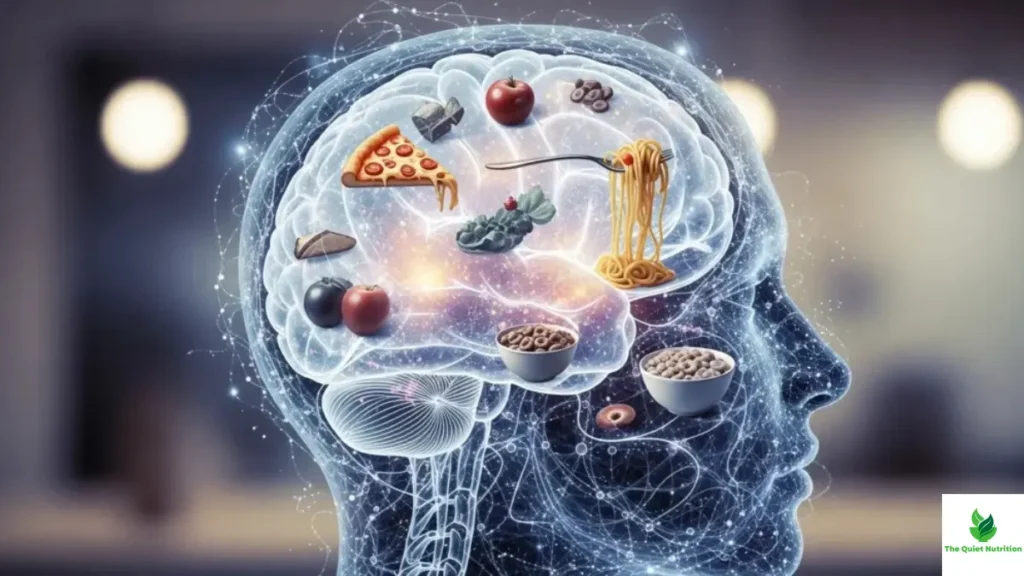
Why Your Memory Struggles Even When You’re Not Forgetful
A friend of mine, a lawyer who can recite case law from a decade ago without blinking, called me last month convinced something was wrong with her. Not because she was forgetting things — she wasn’t. She could remember every detail of a case, every argument from a meeting. Her problem was different and, she said, harder to explain to a doctor: she couldn’t hold things anymore. She’d walk into a room and lose the thread of why. She’d read a paragraph and have to read it again, not because she forgot the words, but because none of them had landed the first time.
That distinction turns out to matter more than most people realize. Forgetting and struggling are not the same mechanism, and conflating them sends a lot of people down the wrong path — assuming decline when what’s actually happening is closer to a resource problem.
Memory Isn’t One System — It’s a Relay
What most people call “memory” is really several distinct processes working in sequence: encoding, where new information first gets registered; consolidation, where it gets stabilized, largely during sleep; and retrieval, where it gets pulled back up when needed. A breakdown in any one of these can look like “bad memory” from the outside while being an entirely different problem underneath.
My friend wasn’t failing at retrieval — she could clearly recall old information without effort. She was failing at encoding, the very first step, where attention has to lock onto new information for it to even become a memory candidate. And encoding, it turns out, is unusually sensitive to something that has nothing to do with memory itself: working memory bandwidth, which is deeply tied to blood sugar stability, sleep quality, and stress hormones — all of which are, in turn, shaped substantially by diet.
The Blood Sugar Connection Nobody Mentions
Encoding new information requires the prefrontal cortex to be well-fueled and well-regulated, and that region is particularly sensitive to glucose volatility. A blood sugar spike followed by a crash — the exact pattern produced by a carb-heavy lunch with little protein or fiber — creates a window of impaired attention that can last an hour or more. During that window, information simply doesn’t encode well, regardless of how sharp someone normally is. It’s not that the memory gets lost later. It’s that it never fully formed in the first place.
This is often mistaken for early cognitive decline, especially in people over forty who’ve been primed to worry about it. But the pattern — fine in the morning, foggy after lunch, fine again by evening — tracks far more closely with blood sugar rhythm than with any degenerative process.
Sleep Is Doing More Work Than People Credit
Consolidation, the step where short-term memories get filed into longer-term storage, happens overwhelmingly during deep sleep. Diets high in sugar and alcohol close to bedtime disrupt the deep sleep stages where this consolidation is most active, even when total sleep time looks normal on a tracker. Someone can log a full eight hours and still wake up with meaningfully impaired consolidation if the sleep architecture underneath was fragmented by blood sugar swings or alcohol metabolism overnight.
This was, it turned out, a piece of my friend’s puzzle. A glass of wine most nights, technically light drinking by any standard, was quietly interfering with the deep sleep stage where the day’s information should have been getting filed away.
Micronutrients That Quietly Run the Machinery
A handful of nutrients play an outsized role in the biochemistry of memory, and deficiencies in them are common enough to matter without being dramatic enough to get flagged in a routine checkup. Omega-3 fatty acids, particularly DHA, are structurally important to neuron membranes involved in learning. B12 deficiency, more common than people assume — especially in those eating little animal protein — can produce cognitive symptoms that closely resemble early decline and are fully reversible once corrected. Iron deficiency, even mild and non-anemic, has been linked to measurable impairment in attention and working memory, particularly in women.
None of these show up as an obvious signal. They show up as exactly what my friend described — not forgetting, but a kind of thinning in the ability to hold and process information in the moment.
What Changed
Her fix wasn’t dramatic. Protein at lunch instead of a sandwich that was mostly bread. The wine moved earlier in the evening, a few nights cut entirely. A B12 and iron panel that came back lower than ideal, addressed directly. Within a few weeks, the “losing the thread” feeling had mostly resolved — not because her memory had been broken, but because the conditions required for new information to properly encode had been restored.
The lesson, if there is one, is that a struggling memory and a failing memory are often confused for the same thing when they’re not. One is often correctable through the mundane, unglamorous levers of blood sugar, sleep, and nutrient status. The other is a different conversation entirely, and worth ruling out with an actual doctor rather than guessing. But for a lot of people standing in a room wondering why they walked in, the answer isn’t in the brain’s storage. It’s in whether the brain was ever properly fueled to store anything in the first place.
Sources:
- Harvard T.H. Chan School of Public Health — Nutrition Source: https://www.hsph.harvard.edu/nutritionsource/
- National Institute on Aging — Cognitive Health and Older Adults: https://www.nia.nih.gov/health/brain-health/cognitive-health-and-older-adults
- National Institutes of Health — Office of Dietary Supplements (Vitamin B12): https://ods.od.nih.gov/factsheets/VitaminB12-Consumer/
- Sleep Foundation — How Sleep Affects Memory: https://www.sleepfoundation.org/how-sleep-works/sleep-and-memory
- Mayo Clinic — Insulin Resistance and Metabolic Health: https://www.mayoclinic.org/diseases-conditions/insulin-resistance

Aarti Solanki, B.Sc. (Food Science), is a food science writer passionate about making nutrition simple and evidence-based. She creates well-researched, easy-to-understand articles on healthy eating, food science, and nutrition, using information from trusted scientific and public health sources.