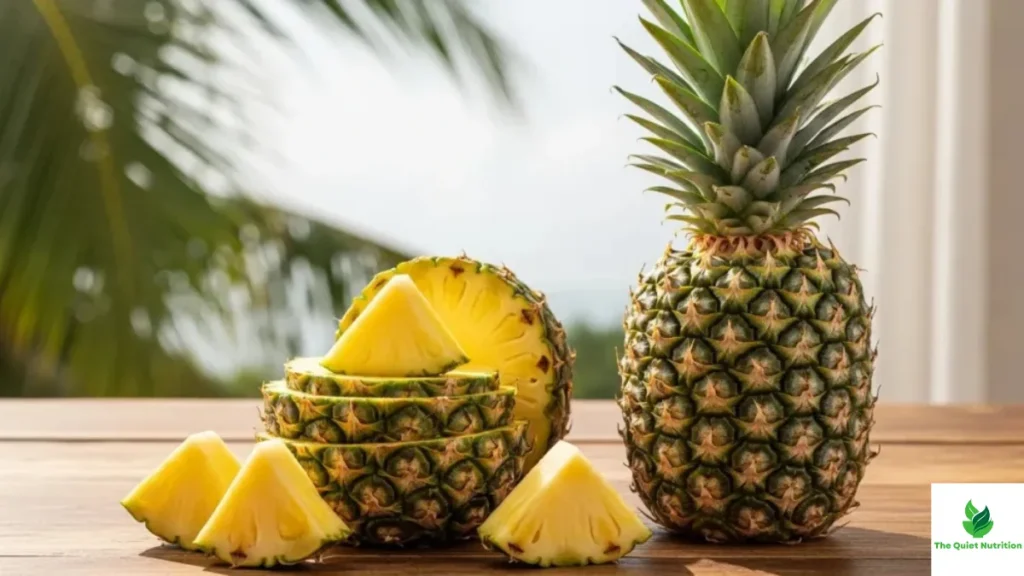
If you’ve ever finished a heavy meal and reached for a slice of pineapple without knowing exactly why it made you feel better, you weren’t imagining things. Pineapple isn’t just a sweet, tangy tropical treat — it’s one of the few fruits on the planet that contains a natural enzyme complex capable of helping your body break down food more efficiently. That enzyme is called bromelain, and the research behind it is more compelling than most people realize.
Here’s what’s actually happening inside that spiky yellow fruit, and why it deserves a permanent spot in your digestion-friendly diet.
The Secret Ingredient: What Is Bromelain?
Bromelain is a mixture of protein-digesting enzymes found throughout the pineapple plant, concentrated most heavily in the stem and the flesh of the fruit. Unlike most food compounds, bromelain is proteolytic — meaning its job is to break down proteins into smaller peptides and amino acids that your body can absorb more easily. This is the same enzymatic action that gives you a slight tingling sensation on your tongue after eating fresh pineapple, since bromelain is literally breaking down proteins in your mouth’s tissue.
Bromelain isn’t a modern wellness trend, either. Indigenous peoples across Central and South America have used parts of the pineapple plant for medicinal purposes for centuries, including treating digestive issues, reducing inflammation, and healing wounds, and the enzyme itself was formally isolated by European researchers in the late 1800s.
How Pineapple Actually Supports Digestion
1. It Helps Break Down Protein-Heavy Meals
When you eat a protein-rich meal — steak, chicken, eggs, legumes — your body has to work to break those long protein chains into usable amino acids. Bromelain assists this process directly. When consumed with meals, bromelain helps transform complex proteins into smaller, easier-to-absorb components, which can lead to smoother digestion and less bloating, gas, and indigestion. That’s why pineapple is a popular pairing with grilled meats in many tropical cuisines — it’s not just flavor, it’s function.
2. It Works Even When Your Stomach Acid Doesn’t Cooperate
Most digestive enzymes your body produces only function within a narrow pH range. Bromelain is unusual in that it functions across a wider pH range than human digestive enzymes, making it effective even in less acidic environments — which is part of why it’s often recommended for people with low stomach acid or sluggish digestion.
3. It Survives the Trip Further Than Scientists Expected
For years, the assumption was that fruit enzymes like bromelain would be destroyed by stomach acid before they could do anything useful. Newer research has challenged that idea. Scientists at Duke University found that bromelain makes it to the colon intact, where it may deliver anti-inflammatory benefits that could play a role in preventing ulcerative colitis — a discovery that’s helping build a stronger case for fruit enzymes having real, functional benefits in the human gut, not just in a lab dish.
4. It May Help Balance Your Gut Microbiome
Beyond breaking down protein, researchers are increasingly interested in bromelain’s broader effects on gut health. A 2024 review in the peer-reviewed literature noted that bromelain’s proteolytic activity, anti-inflammatory properties, and potential modulation of gut microbiota collectively contribute to its beneficial effects on digestive health, supporting protein digestion, nutrient absorption, relief of digestive discomfort, and gut microbiota balance.
5. It Comes With a Fiber Bonus
Bromelain gets most of the attention, but pineapple’s fiber content plays a supporting role too, helping keep digestion moving and supporting regularity as part of a balanced diet.
What About Bromelain Supplements?
Bromelain is popular as a standalone supplement, and it does appear to be well tolerated. Bromelain is a mixture of enzymes with potential health benefits including reducing inflammation and improving digestion, and the body is generally able to absorb a significant amount of it safely — most sources cite tolerances up into the low double-digit gram range without notable side effects, though whole pineapple remains the simplest and most naturally balanced way to get it, since it comes packaged with fiber, vitamin C, and manganese rather than as an isolated compound.
It’s worth noting that researchers are still working out bromelain’s optimal dosing and long-term effects, so it shouldn’t be treated as a cure-all — think of it as a genuinely useful digestive assist, backed by real evidence, rather than a miracle fix.
The Bottom Line
Pineapple’s reputation as a “digestion food” isn’t just folklore passed down through tropical food culture — it’s backed by decades of research into bromelain’s ability to break down protein, function in a wide range of gut conditions, and potentially support a healthier gut environment overall. Adding a few slices to a protein-heavy meal, or blending it into a post-meal smoothie, is a simple, evidence-supported way to give your digestive system a little extra help.
High-Authority Sources
- Exploring the Therapeutic Potential of Bromelain: Applications, Benefits, and Mechanisms — PMC/NIH
- Properties and Therapeutic Application of Bromelain: A Review — PMC/NIH
- Bromelain: Benefits, Risks, Sources, and Side Effects — Medical News Today
- Pineapple’s Digestive Power — Dole Nutrition Institute
Disclaimer: This article is for informational purposes only and is not a substitute for professional medical advice. If you have a digestive condition or are considering bromelain supplements, talk to a healthcare provider.

Aarti Solanki, B.Sc. (Food Science), is a food science writer passionate about making nutrition simple and evidence-based. She creates well-researched, easy-to-understand articles on healthy eating, food science, and nutrition, using information from trusted scientific and public health sources.


Pingback: What Happens When You Eat Papaya Every Week (The Health Benefits Surprise Most People)