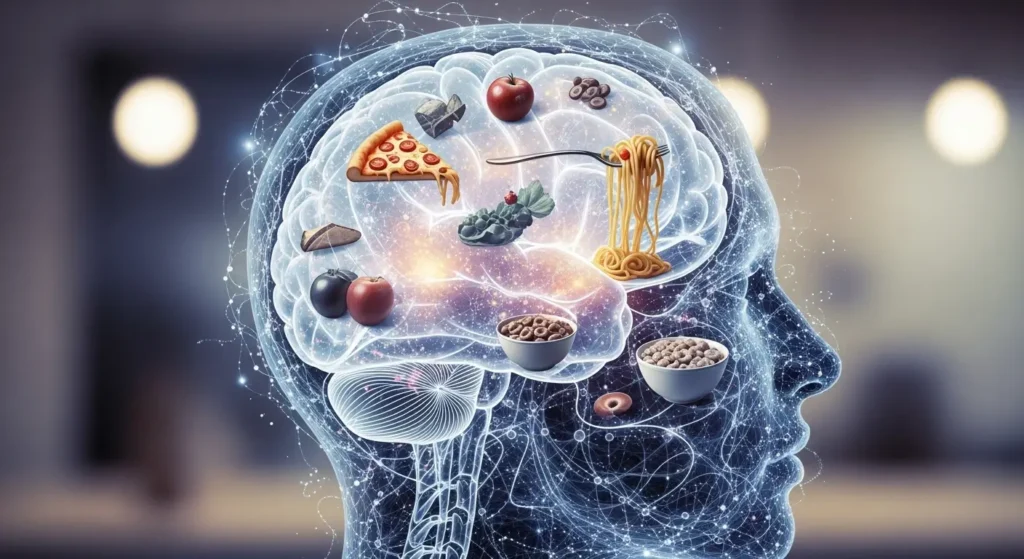
When Your Brain Feels Slow, Food Might Be Part of the Story
Have you ever had a day where your mind just… lags?
You read the same sentence twice.
You forget what you walked into a room for.
Simple decisions feel strangely hard.
Your thoughts feel delayed, like your brain is buffering.
Most people blame:
- stress
- poor sleep
- too much screen time
- getting older
But one of the most underestimated causes is nutritional.
Because mental processing speed isn’t just about intelligence.
It’s about brain energy availability.
And nutrition shapes that more than most people realize.
Your brain runs on biology, not willpower.
Let’s explore how food patterns, nutrients, and blood sugar quietly control how fast your mind can think.
What Is Mental Processing Speed (In Simple Terms)?
Mental processing speed is the brain’s ability to:
- absorb information quickly
- react efficiently
- make decisions smoothly
- retrieve memory without delay
- stay mentally sharp under pressure
It’s the difference between feeling:
- clear and quick
or - foggy and slow
Processing speed depends heavily on:
- glucose stability
- neurotransmitter production
- oxygen delivery
- brain cell membrane function
- inflammation levels
Nutrition influences all of these.
The Brain Is a High-Speed Engine With a Constant Fuel Demand
The brain is only about 2% of body weight…
But it uses around 20% of the body’s energy at rest.
That’s enormous.
And unlike muscles, the brain can’t “pause.”
It’s always running:
- attention networks
- emotional regulation
- memory scanning
- sensory processing
- executive decision-making
That constant activity means even small nutritional disruptions can slow things down.
A brain with unstable fuel becomes a slower brain.
Blood Sugar Instability Is the Fastest Way to Slow the Brain
The brain depends heavily on glucose.
But it needs glucose delivered steadily.
When meals cause spikes and crashes, you feel it mentally.
High spike → fast crash → slower cognition
This can look like:
- fog after sugary breakfast
- afternoon mental slump
- irritability with hunger
- slow reaction time
Even in healthy people, blood sugar swings reduce cognitive efficiency.
Processing speed is often about stability, not stimulation.
Real-Life Example: The “2 PM Brain Shutdown”
This is one of the most common nutrition-related cognitive patterns.
A typical day:
- coffee for breakfast
- quick carb-heavy lunch
- no protein
- long gap until dinner
Then at 2–4 PM:
- focus collapses
- thinking slows
- cravings hit
- productivity disappears
This isn’t laziness.
It’s brain fuel mismanagement.
The brain doesn’t slow down because you lack discipline.
It slows down because glucose delivery becomes unreliable.
Key Nutrients That Support Faster Mental Processing
Calories matter, but nutrients matter more.
Mental speed depends on biochemical support.
Nutrients linked to brain processing:
- B vitamins (energy metabolism in neurons)
- Iron (oxygen delivery and dopamine pathways)
- Omega-3 fatty acids (cell membrane communication)
- Magnesium (calming neural signaling)
- Zinc (neurotransmitter balance)
- Choline (acetylcholine for memory and speed)
Deficiencies don’t always cause dramatic symptoms…
They often cause subtle slowness first.
Comparison Table: Fast Brain vs Slower Brain Nutrition Patterns
| Brain State | Supportive Nutrition Pattern | Slowing Nutrition Pattern |
|---|---|---|
| Focus speed | Balanced meals with protein + fiber | Skipped meals and sugar spikes |
| Reaction time | Stable glucose delivery | Rapid carbs and crashes |
| Memory recall | Adequate micronutrients | Low iron, low B vitamins |
| Mental endurance | Healthy fats + hydration | Dehydration + ultra-processed diet |
| Mood stability | Consistent meal timing | Chaotic eating patterns |
Hydration Also Controls Cognitive Speed
Even mild dehydration reduces:
- attention
- working memory
- mental clarity
- reaction speed
The brain is highly water-dependent.
What feels like brain fog is sometimes simply fluid imbalance.
Hidden tip:
If your brain feels slow, don’t only ask “What did I eat?”
Ask:
Did I drink enough water today?
Ultra-Processed Diets Can Quietly Slow Mental Sharpness
Ultra-processed foods often create a double hit:
- fast energy surge
- nutrient-poor baseline
They tend to be:
- low in micronutrients
- high in refined starches
- pro-inflammatory over time
- poor for gut-brain signaling
That can lead to:
- sluggish thinking
- mood volatility
- craving-driven cycles
Processing speed thrives on nourishment, not just calories.
Gut-Brain Connection: Digestion Shapes Cognition
The gut produces and influences neurotransmitters like serotonin.
A disrupted gut ecosystem can affect:
- mental clarity
- emotional regulation
- cognitive stamina
Diets low in fiber and diversity reduce microbiome strength.
A healthier gut environment supports more stable mental performance.
Common Mistakes That Slow Mental Processing
Mistakes to avoid:
- skipping breakfast consistently
- relying on caffeine instead of food
- high-sugar snacks for focus
- under-eating during busy days
- low-protein meals
- eating too irregularly
- ignoring hydration
The brain doesn’t want extremes.
It wants steady supply.
Actionable Steps to Improve Mental Processing Speed Through Nutrition
Here are practical, evidence-aligned strategies.
1. Build a Protein-Based First Meal
Even 20–30g protein improves stability.
Examples:
- eggs + toast
- Greek yogurt + nuts
- tofu scramble
- protein oats
2. Reduce Sugar-Only Snacks
Swap:
- candy → fruit + nuts
- pastries → yogurt
- soda → water + electrolytes if needed
3. Add Omega-3 Sources Weekly
Examples:
- salmon
- sardines
- chia/flax seeds
- walnuts
4. Eat for Glucose Stability
A simple brain-friendly plate:
- protein
- fiber
- healthy fat
- slow carbs
5. Hydrate Early, Not Just Late
Start your day with water before caffeine.
Why This Matters Today (Evergreen Truth)
Modern life demands fast cognition:
- constant multitasking
- digital overload
- high productivity expectations
Yet modern eating patterns often undermine mental speed:
- rushed meals
- ultra-processed convenience
- skipped nourishment
Many people think their brain is failing…
When their nutrition is simply unstable.
Food doesn’t just affect weight.
It affects thought velocity.
Key Takeaways
- Mental processing speed depends on stable brain energy
- Blood sugar spikes and crashes are a major cognitive disruptor
- Key nutrients like iron, B vitamins, and omega-3s support faster thinking
- Hydration and meal timing strongly influence mental sharpness
- Small consistent nutrition changes improve cognitive clarity over weeks
FAQ: Nutrition and Mental Processing Speed
1. Can food really affect how fast I think?
Yes. Brain speed depends on glucose stability, neurotransmitters, and nutrient support.
2. Why does sugar make me feel energetic then foggy?
Because sugar spikes glucose quickly, then triggers a crash that slows cognition.
3. What’s the best breakfast for brain speed?
A protein-rich meal with fiber and healthy fat supports steady mental energy.
4. Does dehydration cause brain fog?
Absolutely. Even mild dehydration reduces attention and reaction speed.
5. How quickly can nutrition improve mental sharpness?
Many people notice improvements within 1–3 weeks of more stable eating patterns.
Conclusion: A Faster Brain Is Often a Better-Fed Brain
Mental speed isn’t just about productivity hacks.
It’s biology.
Your brain is an energy-intensive organ that needs:
- steady glucose
- key micronutrients
- hydration
- consistent meal rhythms
When nutrition becomes stable…
Your mind becomes quicker.
Clearer.
More responsive.
So if your brain has been feeling slow lately…
Don’t assume something is wrong with you.
Ask a gentler question:
Has my brain been properly fueled?
Because sometimes, the fastest upgrade…
Is simply steadier nourishment.