The Quiet Nutrition Truth: Your Body Runs on a Schedule
Have you ever noticed how some days you feel energized, focused, and steady…
And other days you feel hungry at odd times, tired in the afternoon, or wired late at night?
Most people blame:
- stress
- poor sleep
- lack of motivation
- “getting older”
But often, something much simpler is happening.
Your eating patterns may be reshaping your body’s internal rhythms.
Because your body doesn’t just respond to food…
It responds to when food arrives.
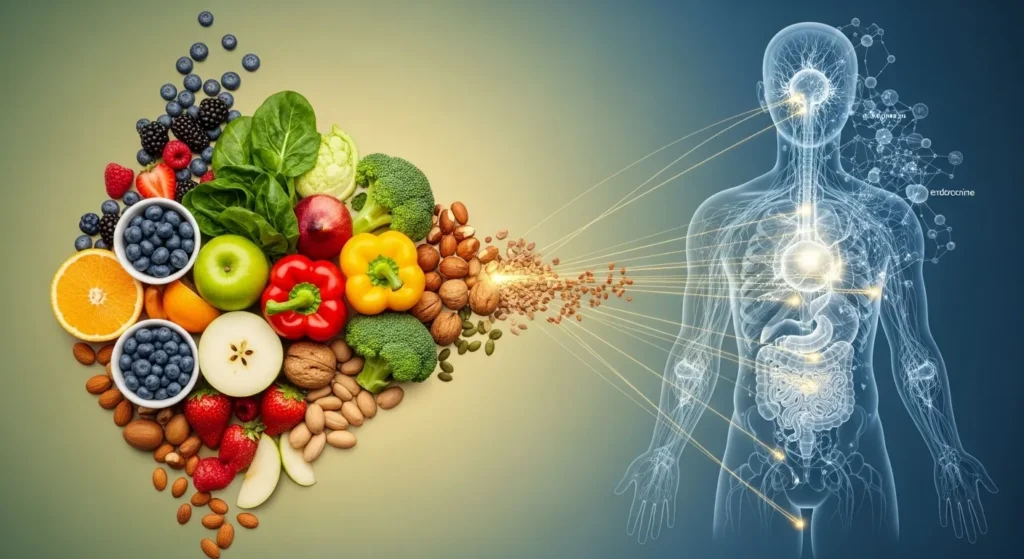
And that timing influences almost everything beneath the surface:
- hormone balance
- digestion cycles
- sleep-wake rhythm
- metabolism
- appetite signals
In nutrition science, this is one of the most overlooked drivers of health.
Let’s unpack it.
What Are Internal Rhythms (And Why Do They Matter)?
Your body operates on natural timing systems called circadian rhythms.
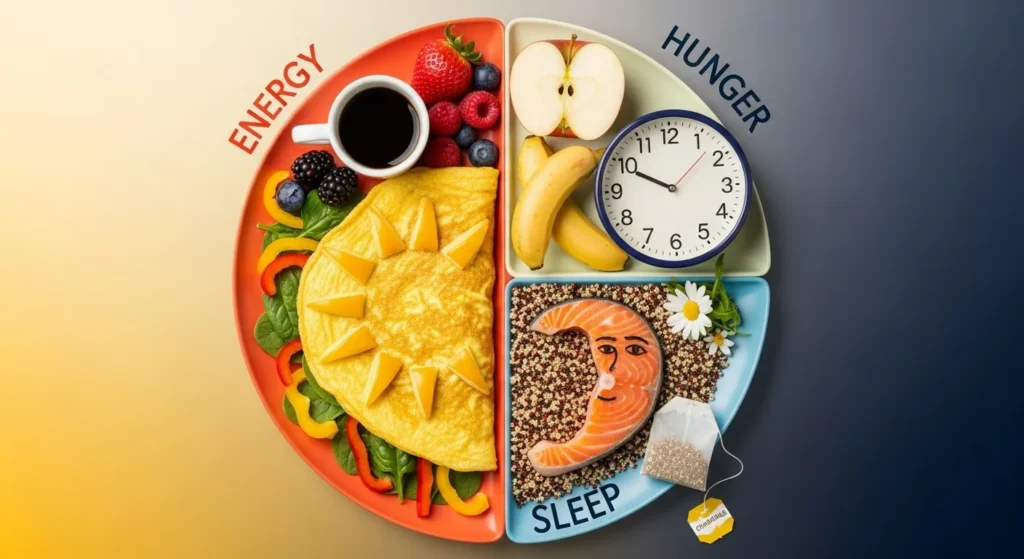
These are internal 24-hour cycles that control:
- energy levels
- body temperature
- insulin sensitivity
- hunger hormones
- digestion efficiency
- sleep patterns
Your brain’s “master clock” sits in the hypothalamus.
But here’s the surprising part:
Your organs have clocks too.
Your liver, gut, pancreas, and even fat cells follow daily rhythms.
And one of the strongest signals telling them what time it is…
Is food.
Eating Patterns: The Daily Signal That Sets Your Metabolic Clock
Light controls your brain clock.
But food controls your metabolic clock.
That’s why meal timing is more than routine.
It’s biological information.
When you eat, your body receives a message:
“Now is the active phase. Prepare energy systems.”
When you eat late or irregularly, your body gets mixed signals.
That misalignment can affect:
- blood sugar regulation
- digestive strength
- sleep hormone release
- cravings
In other words:
Eating patterns shape internal rhythms even when food quality stays the same.
The Body Doesn’t Digest the Same Way All Day
Here’s something many people don’t realize:
Digestion is time-dependent.
Your body handles food differently at 9 AM versus 10 PM.
Research consistently shows:
- insulin sensitivity is higher earlier in the day
- glucose clearance is better in the morning
- digestion slows at night
- melatonin interferes with late-night metabolism
So eating late isn’t just a lifestyle choice…
It changes internal processing.
Comparison Table: Early vs Late Eating Rhythms
| Eating Pattern | Internal Rhythm Impact | Common Outcome |
|---|---|---|
| Consistent meals earlier in the day | Strong circadian alignment | Better energy and appetite control |
| Frequent late-night eating | Rhythm disruption in liver and gut | Poor sleep, cravings, metabolic stress |
| Skipping meals randomly | Hormonal confusion (ghrelin/cortisol shifts) | Hunger spikes, fatigue |
| Long overnight fasting window | Supports rhythm repair | Improved metabolic stability |
| Constant snacking all day | No clear digestion-rest phase | Sluggish appetite cues |
Why Meal Regularity Matters More Than People Think
Most nutrition advice focuses on nutrients:
- protein
- fiber
- calories
- vitamins
But your body also needs predictability.
Regular eating patterns help regulate:
- ghrelin (hunger hormone)
- leptin (satiety hormone)
- cortisol (stress rhythm)
- insulin release cycles
That’s why people often feel better simply by eating meals at similar times…
Even before changing the diet itself.
Real-Life Example: The “Afternoon Crash” Pattern
Let’s say someone eats like this:
- coffee only in the morning
- big lunch at 3 PM
- snacks at 6 PM
- heavy dinner at 10 PM
They may notice:
- exhaustion mid-day
- poor sleep
- constant sugar cravings
- morning appetite loss
That’s not just “bad willpower.”
That’s rhythm disruption.
The body never gets a stable signal of:
- when fuel is coming
- when digestion should rest
- when sleep hormones can rise
The Gut Has Its Own Clock Too
Your digestive system runs in waves.
Stomach acid, bile release, microbiome activity…
All follow internal timing.
When eating patterns are chaotic:
- gut motility becomes irregular
- bloating increases
- reflux risk rises
- microbiome balance shifts
A healthy gut isn’t just about probiotics.
It’s also about rhythm.
Hidden Tip: Your First Meal Sets the Day’s Metabolic Timing
One of the most powerful anchors is:
when you eat your first real meal.
That first meal helps the body decide:
- active phase begins
- insulin systems wake up
- digestion starts cycling
If breakfast is skipped regularly…
Your body delays metabolic readiness.
Then dinner becomes heavier.
And internal rhythms shift later and later.
Common Mistakes That Quietly Disrupt Internal Rhythms
Many people accidentally sabotage their body clock through habits that seem harmless.
Mistakes to avoid:
- Eating dinner too close to bedtime
- Skipping meals during the day and overeating at night
- Constant grazing without meal breaks
- Using caffeine as the first “meal signal”
- Weekend eating schedules that completely flip timing
Even healthy foods eaten at chaotic times can create internal confusion.
Actionable Steps: Eating Patterns That Support Natural Rhythms
You don’t need perfection.
Here are realistic steps that work.
1. Create a 10–12 Hour Eating Window
Example:
- First meal: 8 AM
- Last meal: 6 PM
This allows digestion to rest overnight.
2. Anchor Meals at Similar Times Daily
Not rigidly.
Just predictably.
3. Eat Earlier When Possible
Your metabolism is strongest earlier in the day.
4. Leave 2–3 Hours Between Dinner and Sleep
This supports melatonin release and gut recovery.
5. Reduce Late-Night Snacking
If hunger hits, try:
- herbal tea
- protein earlier at dinner
- better meal balance during the day
Why This Matters Today (Even If You Eat “Healthy”)
Modern life encourages rhythm disruption:
- screen exposure late
- irregular schedules
- on-the-go eating
- constant snacking culture
So people wonder:
“Why do I feel off even when I eat well?”
Often the missing piece isn’t nutrition quality…
It’s nutrition timing.
Eating patterns shape internal rhythms whether we notice or not.
Key Takeaways
- Your body runs on internal clocks, not just calories
- Meal timing acts as a biological signal for metabolism
- Eating late or irregularly disrupts hunger, sleep, and digestion
- Consistent eating patterns help regulate hormones naturally
- Supporting rhythms is one of the simplest nutrition upgrades
FAQ: Eating Patterns and Internal Rhythms
1. Does meal timing really matter if food quality is good?
Yes. Even healthy food eaten at inconsistent times can disrupt metabolic rhythms.
2. Is eating late always harmful?
Occasionally no, but frequent late-night eating can interfere with digestion, insulin control, and sleep quality.
3. What’s the best schedule for internal rhythm support?
A consistent eating window earlier in the day with a 2–3 hour gap before bedtime works well for most people.
4. Can skipping breakfast harm circadian rhythms?
For many people, yes. It can delay metabolic activation and increase evening cravings.
5. How fast do eating rhythms improve?
Many people notice changes in energy, appetite, and sleep within 1–2 weeks of consistent meal timing.
Conclusion: Your Body Thrives on Nutritional Rhythm
Nutrition isn’t only about what you eat.
It’s also about the quiet structure around eating.
Your body is listening for patterns:
- When does fuel arrive?
- When does digestion rest?
- When does recovery begin?
When eating patterns align with internal rhythms…
Health becomes easier.
Energy becomes steadier.
Cravings become quieter.
And your body stops feeling like it’s constantly catching up.
Because the truth is simple:
Your meals don’t just feed you.
They set your internal clock.