The Most Powerful Nutrition Secret Isn’t Glamorous
If you’ve ever felt like healthy eating is exhausting…
You’re not alone.
One week it’s low-carb.
Next week it’s high-protein.
Then it’s fasting.
Then it’s cutting sugar again.
Nutrition has become loud.
But here’s the truth that quietly changes everything:
Nutrition works best when it’s boring and regular.
Not dramatic.
Not extreme.
Not constantly changing.
The healthiest people aren’t reinventing their diet every month.
They’re repeating simple habits so consistently…
Their body finally has room to thrive.
And that’s what this article is really about:
Why the boring basics beat the exciting trends every single time.
Why Your Body Doesn’t Want Novelty — It Wants Predictability
Your brain loves novelty.
Your body doesn’t.
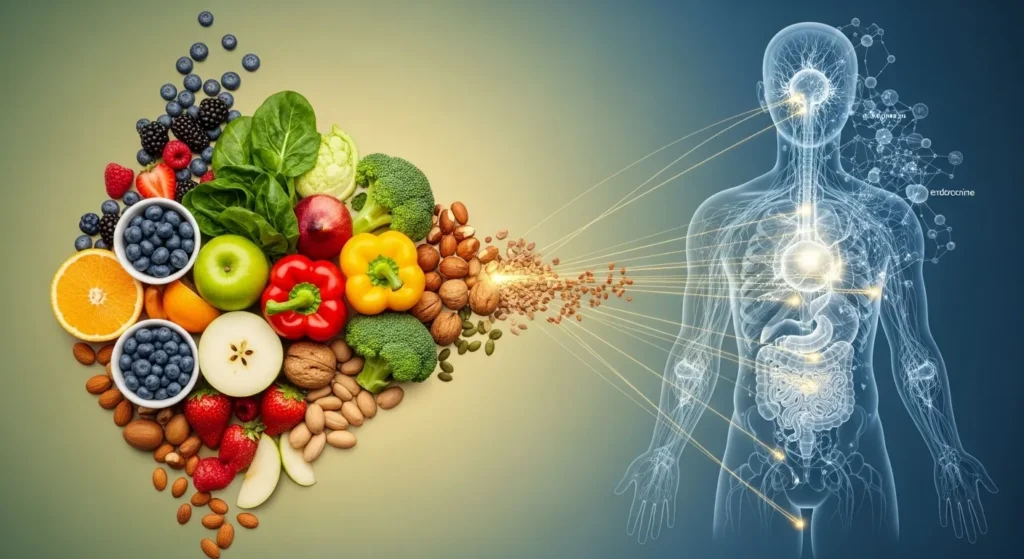
Internally, your metabolism is built around rhythms:
- digestion cycles
- hormone patterns
- blood sugar regulation
- appetite signals
- nutrient absorption timing
When meals are chaotic, your body has to keep adjusting.
That creates friction.
But when eating becomes regular and predictable…
Your system relaxes.
That’s when nutrition actually starts working.
Consistency is like giving your biology a schedule it can trust.
The Hidden Reason Diet Culture Feels So Hard
Most people fail diets not because they’re weak…
But because diets are built around disruption.
- “Never eat carbs again”
- “Only eat between 2–6 PM”
- “Completely avoid fat”
- “Detox for 10 days”
These create short-term change…
But long-term stress.
Your body responds best to:
- steady intake
- repeated patterns
- consistent nutrients over time
Health is rarely built through intensity.
It’s built through repetition.
Boring Nutrition Works Because Biology Is Slow
One of the biggest misconceptions in wellness is this:
If I’m eating better, I should feel different immediately.
But nutrition doesn’t work like a stimulant.
It works like construction.
Your body is constantly rebuilding:
- muscle tissue
- bone density
- gut lining
- neurotransmitters
- enzymes
- immune cells
That takes time.
And time requires regular input.
A single salad doesn’t change anything.
But 300 similar meals do.
That’s why boring nutrition wins:
It gives the body enough repetition to actually adapt.
Real-Life Example: The Person Who “Eats Healthy” But Never Feels Better
You’ve probably seen this pattern:
Someone eats healthy… randomly.
- smoothie Monday
- skipped meals Tuesday
- takeout Wednesday
- strict cleanse Thursday
- binge Friday
Even if the foods are “healthy,” the pattern isn’t.
The body doesn’t experience stability.
It experiences confusion.
But the person who eats:
- similar breakfast
- balanced lunch
- consistent dinner
- regular protein and fiber
Often feels better without doing anything extreme.
Boring works because it’s reliable.
The Consistency Advantage: Hormones Love Routine
Hormones are not just influenced by food…
They’re influenced by eating patterns.
Regular meals help regulate:
- insulin (blood sugar control)
- ghrelin (hunger signaling)
- leptin (satiety cues)
- cortisol (stress rhythm)
When meals are inconsistent, hormones become reactive.
That’s when you get:
- unpredictable cravings
- sudden energy crashes
- overeating late at night
- mood swings tied to hunger
Boring eating reduces hormonal drama.
Comparison Table: Trendy Nutrition vs Boring Regular Nutrition
| Approach | How It Feels | Long-Term Result |
|---|---|---|
| Trend-hopping diets | Exciting, intense, stressful | Burnout, inconsistency |
| Extreme restriction | Fast initial change | Rebound cravings, fatigue |
| “Perfect eating” mindset | Pressure-filled | Unsustainable |
| Boring balanced meals | Simple, repetitive, calm | Real metabolic stability |
| Regular eating patterns | Predictable and supportive | Better health over time |
Why Repetition Builds Better Gut Health
Your gut thrives on regularity.
The microbiome responds to what you repeatedly eat.
Not what you occasionally eat.
A fiber-rich meal once a week doesn’t reshape digestion.
But steady intake of:
- vegetables
- legumes
- whole grains
- fermented foods
- consistent hydration
Over time builds:
- stronger digestion
- more stable appetite
- reduced bloating patterns
Gut health isn’t built on hacks.
It’s built on boring repetition.
The “Boring Plate” Formula That Works Almost Everywhere
You don’t need complicated tracking.
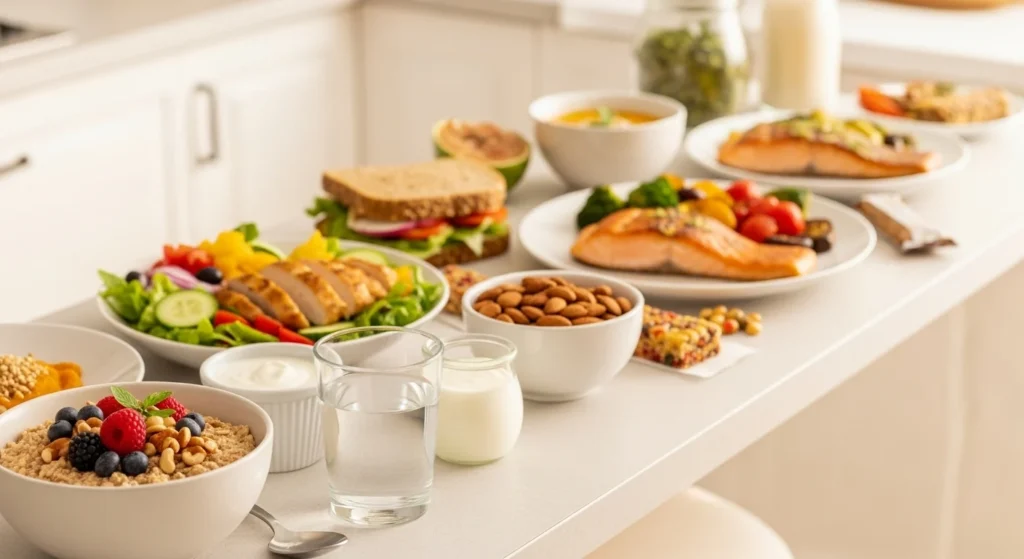
Most people benefit from a simple repeatable template:
A boring balanced plate includes:
- Protein (chicken, eggs, tofu, fish, beans)
- Fiber-rich carbs (rice, oats, potatoes, fruit)
- Healthy fats (olive oil, nuts, avocado)
- Color (vegetables, greens, berries)
The magic isn’t in novelty.
It’s in doing this again and again.
Hidden Tip: Your Body Improves When Decision Fatigue Disappears
One underrated benefit of boring meals?
You stop negotiating with yourself all day.
The more choices you make, the more fatigue builds.
Boring nutrition reduces daily mental load:
- you already know what breakfast is
- lunch is predictable
- snacks are simple
This consistency creates freedom.
Not restriction.
That’s why routines feel easier over time.
Mistakes People Make When Trying to Eat “Healthy”
Many people accidentally sabotage nutrition by chasing excitement.
Common mistakes to avoid:
- treating every week as a reset
- changing plans too often
- relying on motivation instead of structure
- skipping meals then overeating later
- thinking variety matters more than consistency
Variety is good…
But stability comes first.
Actionable Steps: How to Make Nutrition Boring in a Good Way
Here’s how real people build sustainable eating habits.
1. Repeat 2–3 Reliable Breakfast Options
Rotate simple staples.
Example:
- oatmeal + fruit
- eggs + toast
- yogurt + nuts
2. Build a Default Lunch
A boring go-to meal is powerful.
- grain bowl
- salad with protein
- sandwich + fruit
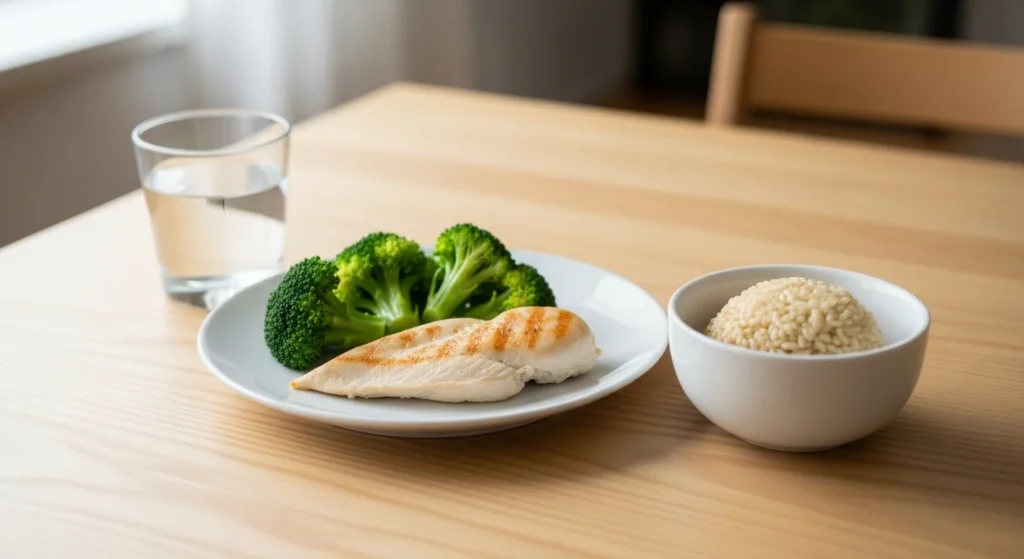
3. Make Dinner Familiar, Not Perfect
Consistency beats complexity.
- protein + vegetable + starch
4. Stop Searching for the “Best” Diet
The best diet is the one you can repeat calmly.
5. Track Patterns, Not Calories
Ask:
- Am I eating enough protein daily?
- Do I have fiber most meals?
- Is my timing consistent?
That’s more useful than obsession.
Why This Matters Today (Evergreen Truth)
Modern nutrition has become entertainment.
Algorithms reward extremes.
But your body doesn’t.
Your body rewards:
- regular meals
- steady nutrients
- predictable rhythms
- calm repetition
The quieter your eating becomes…
The more powerful the results become.
Because health is not built in dramatic moments.
It’s built in ordinary Tuesdays.
Key Takeaways
- Nutrition works best when it’s repetitive and predictable
- Your metabolism thrives on regular patterns, not novelty
- Boring meals reduce cravings, stress, and decision fatigue
- Consistency supports hormones, gut health, and energy
- Sustainable nutrition is built through calm repetition over time
FAQ: Why Boring Nutrition Works
1. Is eating the same meals every day unhealthy?
Not if meals are balanced. Repetition is fine, and small variety over weeks is enough.
2. Why do trendy diets feel effective at first?
Because disruption creates fast shifts, often through water loss or restriction, but consistency is what creates lasting health.
3. How long does regular eating take to show benefits?
Many people notice improved appetite and energy within 2–3 weeks of consistent patterns.
4. Does boring nutrition help with cravings?
Yes. Predictable meals stabilize blood sugar and reduce reactive hunger.
5. What matters more: food quality or consistency?
Both matter, but consistency is what allows quality nutrition to compound over time.
Conclusion: The Most Effective Nutrition Plan Is the One You Can Repeat
The truth is almost disappointing…
Nutrition doesn’t work best when it’s exciting.
It works best when it becomes normal.
Boring meals aren’t failure.
They’re foundation.
Because the body doesn’t need constant surprises.
It needs steady signals:
- regular nourishment
- consistent building blocks
- calm routines
So if you’ve been chasing the next big diet idea…
Maybe the breakthrough isn’t a new plan.
Maybe it’s finally committing to the quiet power of boring and regular.
That’s where real health starts.