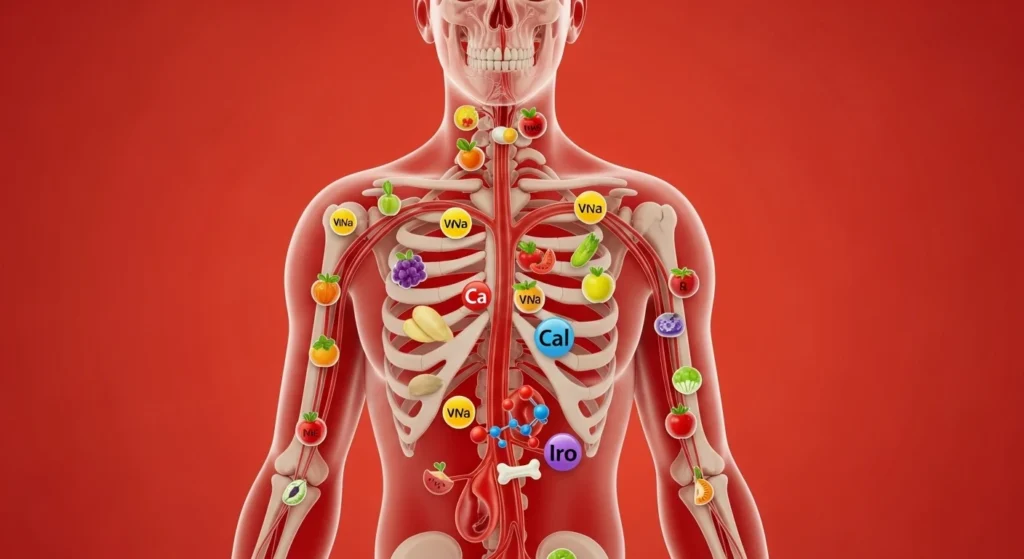
The Question Everyone Asks — But Rarely Gets a Clear Answer
“Just eat a balanced diet.”
You’ve heard it from doctors.
From family.
From health articles everywhere.
But what does balanced actually mean?
Is it:
- Equal portions of carbs, protein, and fat?
- A colorful plate?
- Hitting daily nutrient targets?
- Following a food pyramid?
Inside the body, balanced nutrition doesn’t look like a plate at all.
It looks like:
- Stable hormones
- Efficient energy use
- Predictable hunger
- Cells receiving what they need, when they need it
Balance isn’t visual.
It’s physiological.
And once you understand how the body defines balance, nutrition suddenly becomes far less confusing.
Why the Body Doesn’t Think in Food Groups
The body doesn’t recognize:
- “Low-carb”
- “High-protein”
- “Clean eating”
It recognizes signals and outcomes.
Every time you eat, your body asks:
- Can I extract nutrients efficiently?
- Are energy demands met?
- Are repair processes supported?
- Is the system under stress or stable?
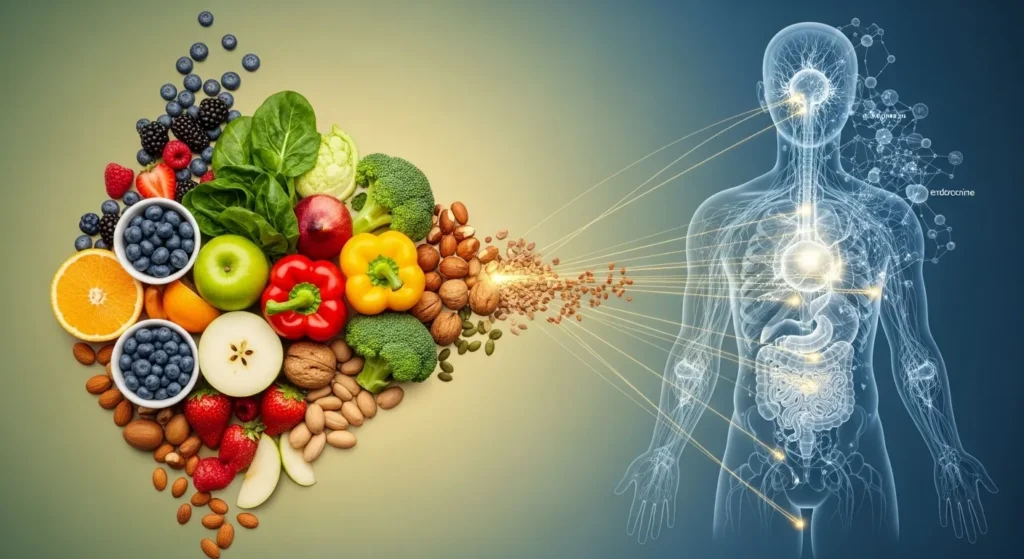
Balanced nutrition means multiple systems being supported at the same time, not one nutrient being maximized while others are neglected.
This is why diets that focus too heavily on a single macronutrient often create problems later—even if they “work” initially.
Balanced Nutrition Is About Cooperation, Not Competition
They work in networks.
For example:
- Protein requires certain vitamins and minerals to be fully utilized
- Carbohydrates affect how amino acids enter cells
- Fats help absorb fat-soluble vitamins
When one nutrient dominates excessively, others struggle to function properly.
Balanced nutrition means:
- Nutrients arriving together
- Digestion happening smoothly
- Absorption being efficient
- Hormonal responses staying proportional
It’s less about ratios on paper and more about biological teamwork.
What Happens Inside the Body When Nutrition Is Balanced
When nutrition is truly balanced, several things quietly improve:
- Blood sugar rises and falls smoothly
- Hunger signals become predictable
- Energy stays steadier through the day
- Inflammation remains controlled
- Repair processes function normally
You don’t feel this as “perfect health.”
You feel it as:
- Fewer crashes
- Less constant thinking about food
- More stable mood
- Easier appetite control
Balance often feels unremarkable—and that’s the point.
Macronutrients: Why Balance Is Functional, Not Equal
Balanced nutrition doesn’t mean equal amounts of carbohydrates, protein, and fat.
It means appropriate amounts for the body’s current needs.
For example:
- Protein supports repair, immune function, and muscle maintenance
- Carbohydrates provide accessible energy and support hormonal balance
- Fats maintain cell membranes, hormones, and nutrient absorption
Too little of any one creates strain.
Too much of one can overwhelm the system.
Balance shifts based on:
- Activity level
- Age
- Stress load
- Metabolic health
The body values flexibility, not rigid formulas.
Micronutrients: The Hidden Half of Balance
Macronutrients get the attention.
Micronutrients do the quiet work.
Vitamins and minerals:
- Enable energy production
- Regulate nerve signaling
- Support hormone synthesis
- Protect cells from damage
A diet can be calorie-sufficient yet nutritionally imbalanced if micronutrients are lacking.
This is why some people feel tired, foggy, or unwell despite “eating enough.”
Balanced nutrition ensures:
- Calories come with cofactors
- Energy can actually be used
- Repair systems have raw materials
Without micronutrient balance, macronutrients can’t do their jobs properly.
Absorption Matters More Than Intake
What you eat isn’t the same as what your body absorbs.
Balanced nutrition considers:
- Digestive efficiency
- Food combinations
- Gut health
- Meal timing
For example:
- Fat helps absorb vitamins A, D, E, and K
- Fiber slows sugar absorption
- Protein stimulates digestive enzymes
Eating “healthy foods” without considering absorption can still lead to imbalance.
The body values usable nutrition, not just consumed nutrition.
Balanced Nutrition vs Popular Diet Thinking
| Popular Diet Focus | What the Body Actually Needs |
|---|---|
| Calorie control | Hormonal stability |
| Macronutrient extremes | Nutrient cooperation |
| Short-term results | Long-term adaptability |
| Visual plate rules | Internal metabolic balance |
| Food restriction | Nutrient sufficiency |
This gap explains why many diets feel effective initially—but unsustainable long term.
Real-Life Example: When “Healthy” Eating Isn’t Balanced
Consider someone eating:
- Lean protein every meal
- Very low fat
- Minimal carbohydrates
On paper, it looks disciplined.
Inside the body:
- Hormone production may decline
- Energy availability fluctuates
- Fat-soluble vitamin absorption drops
Another person eating:
- Moderate protein
- Natural fats
- Whole carbohydrates
Often experiences:
- Better energy
- Fewer cravings
- More stable appetite
Balanced nutrition isn’t about intensity.
It’s about supporting systems simultaneously.
Common Mistakes People Make About Balance
1. Chasing perfect ratios
The body changes needs daily.
2. Ignoring food context
How foods interact matters more than isolated nutrients.
3. Undereating micronutrients
Calories without minerals create imbalance.
4. Overcorrecting one problem
Fixing blood sugar by eliminating carbs can create other issues.
Balance solves problems without creating new ones.
Why This Matters Today (Without Being Trend-Based)
Modern diets often push extremes:
- Ultra-low carb
- Very high protein
- Fat elimination
- Supplement dependence
The body hasn’t evolved for extremes.
It evolved for diversity, consistency, and moderation.
Balanced nutrition protects against:
- Metabolic burnout
- Hormonal disruption
- Chronic cravings
- Nutrient deficiencies
It’s not exciting—but it’s resilient.
And resilience is what health looks like over decades.
Practical Ways to Support Balanced Nutrition
You don’t need tracking apps or rigid rules.
Start here:
- Build meals with protein, carbohydrates, and fats present
- Prioritize whole foods most of the time
- Eat enough to feel satisfied, not stuffed
- Include a variety of foods across the week
- Pay attention to energy and hunger signals
Balance shows up as ease, not effort.
Hidden Tip: Balance Changes Across the Day
Your body doesn’t need the same balance at every meal.
- Earlier meals often benefit from more accessible energy
- Later meals may benefit from slower digestion
Listening to these shifts improves balance naturally—without calculation.
Key Takeaways
- Balanced nutrition is an internal state, not a visual rule
- Nutrients work together, not in isolation
- Macronutrient balance is flexible and context-dependent
- Micronutrients are essential for true balance
- Absorption and digestion matter as much as intake
FAQs
1. Is balanced nutrition the same for everyone?
No. Needs vary by age, activity, health, and lifestyle.
2. Do I need supplements for balance?
Not always. Food diversity often covers needs.
3. Can a diet be balanced but still lead to weight gain?
Yes. Balance supports health, not guaranteed weight outcomes.
4. How do I know if my nutrition is balanced?
Stable energy, manageable hunger, and consistent digestion are good signs.
5. Is balance boring?
It can feel subtle—but subtle is sustainable.
A Calmer Way to Think About Nutrition
Balanced nutrition isn’t about doing everything right.
It’s about not forcing the body into extremes.
When nutrients arrive together, in reasonable amounts, consistently, the body relaxes.
And when the body relaxes, health quietly follows.
Disclaimer: This content is for general education and should not replace individualized medical or nutritional advice.


Pingback: Why “High Protein” Doesn’t Equal Balanced Nutrition — The Popular Health Shortcut That Often Backfires
Pingback: Why Consistency Matters More Than Perfection in Nutrition — The Quiet Rule That Actually Changes Health
Pingback: Why Your Body’s Strength Depends on What You Eat Every Day
Pingback: The Hidden Power of Kiwi: The Superfruit Most People Overlook
Pingback: Strawberries Are More Powerful Than You Think—Here’s What They Do Inside Your Body