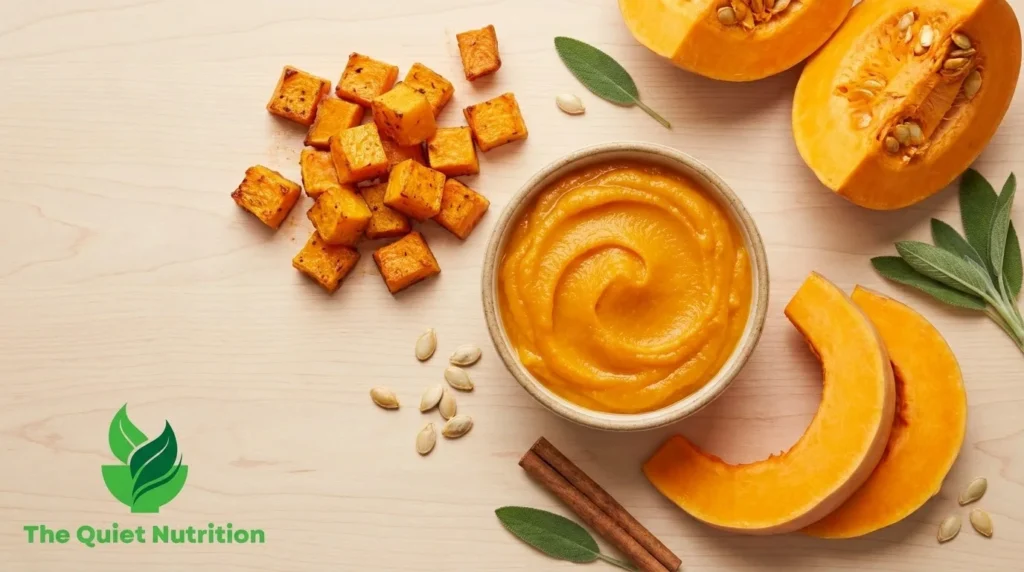
Pumpkin is often treated as a seasonal ingredient for pies, soups and autumn decorations. Yet its bright orange flesh has a nutritional quality worth paying attention to: it can provide a substantial amount of provitamin A carotenoids, the plant pigments the body can convert into vitamin A.
Pumpkin also supplies potassium and dietary fibre while contributing relatively few calories in its plain cooked form. These qualities make it useful in everyday meals, whether blended into soup, stirred into oatmeal or roasted alongside other vegetables.
There is a practical distinction, though, between pumpkin as a whole food and the products made from it. Plain pumpkin purée has a different nutritional profile from a sweetened pumpkin-pie filling, and pumpkin flesh contributes a different combination of nutrients from the seeds.
Understanding those differences offers a more useful picture of pumpkin’s role in a balanced diet than a long list of supposedly miraculous health benefits.
The orange colour points to one of pumpkin’s most valuable nutrients
The intense orange flesh of many pumpkins comes largely from carotenoids, naturally occurring pigments found in numerous yellow, orange and red fruits and vegetables. One of the best-known is beta-carotene, which the body can convert into vitamin A. Pumpkin can also contain alpha-carotene and other carotenoids, although their amounts vary considerably between varieties.
Vitamin A performs several essential jobs. It helps maintain normal vision, supports immune function and contributes to the growth and maintenance of tissues. It is also involved in normal cellular communication and development.
The distinction between beta-carotene and vitamin A matters. Beta-carotene is not simply identical to the vitamin itself; the body must convert it into a usable form. That conversion varies with individual biology, the food matrix and other factors. Consequently, the amount of beta-carotene in a vegetable does not translate into exactly the same amount of vitamin A for everyone.
Even with that qualification, pumpkin is a worthwhile source of provitamin A carotenoids.
As an illustration, USDA food-composition data for one cup of plain cooked, mashed pumpkin, weighing approximately 245 grams, list around 706 micrograms of retinol activity equivalents (RAE) of vitamin A, alongside roughly 49 calories. Values differ with the pumpkin variety and preparation method, so these figures should be treated as reference estimates rather than universal numbers.
That is a useful contribution from an ingredient that can be incorporated into meals in many different ways. It does not mean that pumpkin improves vision beyond normal function or that eating it can reverse an existing eye condition. Its value is in helping supply a nutrient the body needs.
The broader lesson is that brightly coloured vegetables can contribute nutrients that are not always obvious from their calorie content alone.
Why cooking pumpkin can help make its carotenoids more accessible
Pumpkin’s carotenoids are contained within the structure of its plant tissues. The body needs to release these compounds from that structure before they can be absorbed.
Cooking softens plant tissues and can increase the bioavailability of beta-carotene, meaning that a larger proportion may become available for absorption. The National Institutes of Health’s Office of Dietary Supplements recognises cooking and heat treatment as factors that can improve carotenoid bioavailability in foods.
This helps explain why cooked pumpkin can be a particularly practical source of provitamin A carotenoids. Roasting, steaming and boiling all make the flesh softer, although their effects on nutrient retention differ according to temperature, duration and cooking conditions.
There is another useful consideration: carotenoids are fat-soluble compounds. Research examining dietary fat and carotenoid absorption has found that consuming carotenoid-rich foods with some fat can improve bioavailability. A systematic review and meta-analysis published in Nutrition Reviews included 27 laboratory studies and 12 randomised controlled trials and found that dietary fat generally enhanced carotenoid absorption.
In everyday cooking, this does not require adding large amounts of butter or oil. Pumpkin roasted with a modest amount of olive oil, served with a dressing containing oil or incorporated into a meal containing nuts and seeds can provide a reasonable combination.
The point is not to maximise absorption at any cost. It is to recognise that nutrients work within a meal, rather than existing independently of the other foods eaten alongside them.
Pumpkin contributes potassium, too
Potassium rarely gets the same attention as vitamin A, but it is essential for normal body function.
The mineral is involved in nerve transmission, muscle contraction and kidney function. It also plays a role in maintaining normal fluid balance inside cells.
A cup of plain cooked pumpkin supplies approximately 560 milligrams of potassium, according to USDA-based food-composition data. [3] This is a meaningful contribution, although pumpkin is not the richest source available. Foods such as potatoes, lentils and certain other vegetables can provide substantial amounts as well.
Potassium is particularly relevant when considering an overall eating pattern. It is one of several nutrients involved in normal cardiovascular and muscular function, but the presence of potassium in pumpkin does not establish that eating pumpkin by itself lowers blood pressure or prevents cardiovascular disease.
For most people, the sensible approach is to obtain potassium from a variety of foods. Pumpkin can contribute to that pattern alongside fruits, vegetables, beans, whole grains and other potassium-containing ingredients.
People with impaired kidney function or those taking certain medications may need individual guidance about potassium intake. More potassium is not automatically better for everyone.
How much fibre does pumpkin really provide?
Pumpkin has a reputation as a light, filling food, but its fibre contribution deserves a closer look.
One cup of plain cooked pumpkin provides approximately 2.7 grams of dietary fibre. It also contains considerable water, which helps explain why a relatively large serving can contribute fewer calories than many concentrated starches or fats.
Fibre supports normal bowel function and can contribute to stool formation and regularity. Adequate fibre intake is also associated with broader health benefits, although the effects depend on the type of fibre, the overall diet and other individual factors.
Pumpkin is a useful contributor, but it is not an exceptionally concentrated source of fibre. Legumes, some whole grains, nuts, seeds and several other vegetables can provide considerably more per serving.
That distinction is important when planning meals. A bowl of pumpkin soup may contain a nutritious vegetable, but it should not automatically be considered a high-fibre meal. The recipe matters: the amount of pumpkin used, whether the soup contains other vegetables and whether it is accompanied by whole-grain bread or beans all influence the final nutritional profile.
Adding lentils or beans to pumpkin soup, for example, can increase its fibre and protein content while creating a more substantial meal.
Pumpkin is most useful when it contributes to a range of fibre-containing foods throughout the day rather than being expected to meet the body’s requirements by itself.
Pumpkin flesh and pumpkin seeds tell two different nutritional stories
The soft flesh and the seeds come from the same fruit, but they should not be treated as nutritionally interchangeable.
Pumpkin flesh is largely water and supplies relatively few calories when prepared without substantial additions. Its strongest nutritional feature is its carotenoid content, alongside potassium and modest amounts of fibre and other nutrients.
Pumpkin seeds, sometimes sold as pepitas when their outer shells have been removed, have a very different profile. They provide more concentrated energy because they contain fat, as well as useful amounts of protein, magnesium and other minerals.
That means the two parts of pumpkin can complement each other in a diet, but they serve different purposes.
A bowl of roasted pumpkin can add vegetable variety and provitamin A carotenoids to dinner. A sprinkle of pumpkin seeds can add crunch, protein, fat and minerals to that same meal. Neither food needs to be considered a substitute for the other.
Seeds are also much more energy-dense than pumpkin flesh, so their portions are naturally smaller. That is not a disadvantage; it simply reflects their different composition.
There is no need to eat every part of a pumpkin to benefit from it. Choosing the flesh, seeds or both can depend on the dish, personal preference and what the rest of the meal needs.
Does pumpkin help control blood sugar?
Pumpkin is sometimes discussed in connection with blood sugar because it contains carotenoids, fibre and other plant compounds. Some experimental and clinical research has investigated pumpkin and its by-products in relation to glucose metabolism.
However, the evidence requires careful interpretation.
A systematic review published in Nutrition Reviews in April 2026 examined controlled clinical trials investigating pumpkin or pumpkin-derived products and measures related to blood glucose regulation and type 2 diabetes. The review included nine trials involving 316 participants. Although the researchers identified potential benefits, they concluded that more high-quality and longer-term clinical trials are needed to establish the effects reliably.
The distinction between pumpkin flesh and pumpkin-derived products is important. Studies may examine extracts, seeds or other preparations that are not nutritionally equivalent to a normal serving of cooked pumpkin.
The available evidence therefore does not justify describing ordinary pumpkin as a treatment for diabetes or promising that eating it will lower someone’s blood sugar.
Plain pumpkin can still fit into a balanced eating pattern. Its relatively low calorie content and contribution of fibre make it a useful ingredient, but it contains carbohydrates and should be considered alongside the other components of a meal. Portion size, preparation and the foods eaten with it all matter.
People managing diabetes should base dietary decisions on their individual needs and established medical advice, rather than assuming that one vegetable will reliably control blood glucose.
Plain pumpkin purée is not the same as pumpkin-pie filling
One of the easiest ways to use pumpkin is to buy it canned. Plain canned pumpkin can be convenient for soups, sauces, baked goods and breakfast dishes, and it avoids the work of peeling and cooking a whole pumpkin.
The label is important, however, because plain pumpkin purée and pumpkin-pie filling are different products.
Plain purée generally consists of cooked pumpkin that has been blended into a smooth consistency. Pumpkin-pie filling is formulated for a dessert recipe and commonly contains added sugar and spices.
Both can be useful in the right context, but their nutritional implications differ. The pumpkin itself can provide carotenoids and other nutrients regardless of whether it is fresh or canned, while added ingredients can change the finished product’s sugar and energy content.
When buying canned pumpkin for everyday cooking, check the ingredient list and choose plain pumpkin purée when that is what the recipe requires.
The same principle applies to pumpkin-flavoured drinks, desserts and baked goods. A product can contain pumpkin while still deriving much of its energy or sweetness from sugar, cream, refined flour or other ingredients. The nutritional contribution of the pumpkin does not erase the rest of the recipe.
This is not a reason to avoid pumpkin pie or other desserts. It is simply a useful distinction between eating pumpkin as a vegetable and eating a sweetened product made with pumpkin.
The easiest ways to make pumpkin part of your diet
Pumpkin’s mild sweetness makes it adaptable to both savoury and sweet dishes. That versatility is one of its practical advantages because it allows the ingredient to appear in meals beyond occasional seasonal desserts.
Roasted pumpkin can accompany chicken, fish, tofu or lentils. Its soft texture works in soups, curries and grain bowls, while plain pumpkin purée can be stirred into oatmeal or used in baking.
For a savoury meal, combine roasted pumpkin with chickpeas, leafy greens and a whole grain, then dress the ingredients with a little olive oil and lemon juice. The pumpkin contributes colour and carotenoids, while the other ingredients add protein, fibre and a wider range of micronutrients.
For breakfast, a spoonful of plain pumpkin purée can be mixed into oats with yoghurt, nuts or seeds. The addition is useful for variety, but it does not transform an otherwise unbalanced breakfast into a complete meal.
Frozen pumpkin or plain canned purée may be especially useful when fresh pumpkin is inconvenient to prepare. Fresh varieties differ in their texture, sweetness and nutrient composition, so there is no reason to expect every pumpkin-based dish to have identical nutritional values.
As with any vegetable, the best preparation is one that fits your cooking habits and encourages variety across the week. Pumpkin need not be eaten daily to have a useful place in your diet.
What pumpkin can realistically add to overall wellness
Pumpkin’s value comes from a combination of established nutritional contributions rather than a single extraordinary effect.
Its orange flesh provides carotenoids that the body can convert into vitamin A, a nutrient necessary for normal vision, immune function and tissue maintenance. Pumpkin also contributes potassium and fibre while offering a relatively low-calorie way to add volume and variety to meals.
Preparation matters. Cooking can make carotenoids more available for absorption, and consuming carotenoid-rich foods with some dietary fat can improve their bioavailability. Meanwhile, plain pumpkin purée remains a different choice from sweetened pie filling, and pumpkin seeds offer a separate, more energy-dense combination of nutrients.
The evidence on pumpkin extracts and blood sugar regulation is still developing and does not justify medical promises about eating pumpkin flesh.
The practical conclusion is straightforward: use pumpkin as a vegetable, prepare it in ways you enjoy and combine it with foods that supply protein, fibre and other nutrients. Its benefits do not depend on turning it into a supplement, eating it in enormous quantities or treating it as a cure for anything.
Pumpkin is valuable because it makes a varied diet easier to build, not because it can do everything a balanced diet is meant to do.
Sources
[1] Grassino AN, Brnčić SR, Badanjak Sabolović M, et al. Carotenoid Content and Profiles of Pumpkin Products and By-Products. Molecules. 2023;28(2):858. DOI: 10.3390/molecules28020858. Reviews the carotenoids found in pumpkin products and explains how their amounts vary by species, cultivar, plant part and processing. https://pubmed.ncbi.nlm.nih.gov/36677916
[2] National Institutes of Health, Office of Dietary Supplements. Vitamin A and Carotenoids: Fact Sheet for Health Professionals. Explains vitamin A’s role in vision, immune function and tissue maintenance, the conversion of provitamin A carotenoids, and factors affecting their bioavailability. https://ods.od.nih.gov/factsheets/VitaminA-HealthProfessional
[3] U.S. Department of Agriculture. FoodData Central: Pumpkin, cooked, boiled, drained, without salt. Food-composition reference data for calories, dietary fibre, potassium and vitamin A in plain cooked pumpkin. Figures quoted in the article are approximate USDA-based values for a standard reference serving. https://fdc.nal.usda.gov/food-search/?query=pumpkin%20cooked
[4] Yao Y, Tan P, Kim JE. Effects of dietary fats on the bioaccessibility and bioavailability of carotenoids: a systematic review and meta-analysis of in vitro studies and randomized controlled trials. Nutrition Reviews. DOI: 10.1093/nutrit/nuab098. Reviews evidence that consuming carotenoid-rich foods with dietary fat can improve carotenoid absorption. https://pubmed.ncbi.nlm.nih.gov/34897461
[5] National Institutes of Health, Office of Dietary Supplements. Potassium: Fact Sheet for Health Professionals. Explains potassium’s roles in normal nerve transmission, muscle contraction and kidney function, as well as its place in healthy dietary patterns. https://ods.od.nih.gov/factsheets/potassium-healthprofessional
[6] U.S. Department of Agriculture. FoodData Central. Nutrient-composition reference for pumpkin seeds and other foods, including protein, fats and minerals. https://fdc.nal.usda.gov/food-search/?query=pumpkin%20seeds
[7] Geraldo Gomes JM, et al. Effects of Pumpkin (Cucurbita spp.) on Glycemic and Type 2 Diabetes–Related Metabolic Biomarkers: A Systematic Review of Controlled Clinical Trials. Nutrition Reviews. Published April 3, 2026. DOI: 10.1093/nutrit/nuag027. Reviews nine controlled clinical trials involving 316 participants and concludes that more high-quality, longer-term research is needed to establish the effects of pumpkin and its by-products on glycemic outcomes. https://academic.oup.com/nutritionreviews/advance-article-abstract/doi/10.1093/nutrit/nuag027/8586671

Aarti Solanki, B.Sc. (Food Science), is a food science writer passionate about making nutrition simple and evidence-based. She creates well-researched, easy-to-understand articles on healthy eating, food science, and nutrition, using information from trusted scientific and public health sources.