
You’re Not Deficient — So Why Don’t You Feel Your Best?
Most people assume nutrition works in two modes:
Deficient.
Or healthy.
But the human body doesn’t operate in such clean categories.
There’s a wide, quiet middle ground where millions of people live every day:
Not deficient enough to be sick — but not nourished enough to thrive.
You eat regularly.
Your blood tests come back “normal.”
You function at work, at home, in daily life.
Yet something feels… limited.
Energy isn’t what it used to be.
Stress hits harder.
Recovery takes longer.
Motivation fades faster.
This isn’t a mystery. It’s what happens when the body receives just enough nutrition to survive, not enough to optimize.
Let’s explore what “enough” really means inside the body — and why it often comes at a hidden cost.
The Difference Between Survival Nutrition and Thriving Nutrition
Nutrition science often focuses on preventing disease.
That’s important.
But it sets a very low bar.
Most recommended intake levels are designed to:
- Prevent overt deficiency diseases
- Maintain basic physiological function
- Support population-wide safety
They are not designed to maximize performance, resilience, or long-term repair.
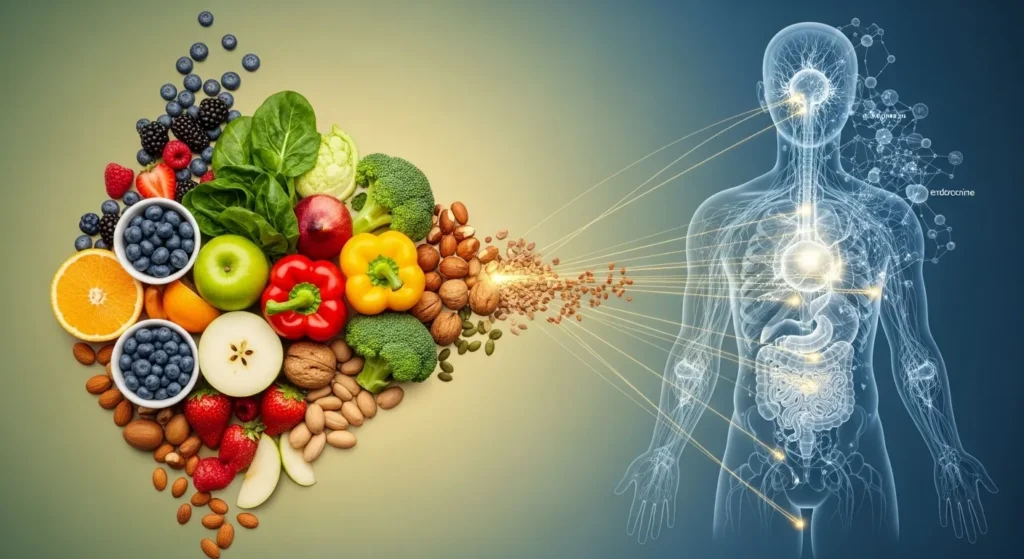
So when your body gets “enough” nutrition, it prioritizes survival systems — not excellence.
What the Body Does First When Nutrition Is Limited
The body is strategic.
When nutrients are just adequate, it allocates them carefully:
Top priority systems:
- Brain function
- Heart rhythm
- Breathing
- Blood sugar control
Lower priority systems:
- Muscle growth and repair
- Hair, skin, and nail renewal
- Hormonal fine-tuning
- Immune precision
- Cellular cleanup and renewal
Nothing shuts down.
But many systems operate at reduced capacity.
Why You Can Function Normally — Yet Feel Suboptimal
This is where confusion sets in.
People think:
“If something were wrong, I’d feel sick.”
But biology doesn’t work like a warning light.
On “just enough” nutrition:
- Energy production becomes less efficient
- Recovery slows quietly
- Stress tolerance narrows
- Inflammation resolution takes longer
You’re not broken.
You’re running on conservative mode.
The Metabolic Trade-Offs of Bare-Minimum Nutrition
Metabolism isn’t just about calories.
It’s about:
- Enzyme efficiency
- Mitochondrial output
- Hormonal signaling
- Nervous system balance
When micronutrients are only barely sufficient, the body compensates by:
- Slowing non-essential repair
- Recycling nutrients aggressively
- Reducing metabolic flexibility
This keeps you alive — but limits how adaptable you feel.
Real-Life Example: “I Eat Enough, But I’m Always Tired”
Consider a common scenario:
Someone eats three meals a day.
Protein is present.
Vegetables are included.
No obvious junk overload.
Yet they report:
- Afternoon energy crashes
- Poor workout recovery
- Frequent minor infections
- Low motivation despite sleep
They’re not malnourished.
They’re under-optimized.
This is exactly how “enough” nutrition plays out in real life.
Adequate vs. Optimal Nutrition: A Clear Comparison
| Aspect | Just-Enough Nutrition | Optimal Nutrition |
|---|---|---|
| Energy | Functional | Stable, resilient |
| Recovery | Slow | Efficient |
| Stress tolerance | Narrow | Broad |
| Immune response | Reactive | Adaptive |
| Hormonal balance | Barely maintained | Fine-tuned |
| Long-term health | Maintained | Protected |
Most people unknowingly live in the left column.
Why Modern Diets Encourage “Just Enough”
Even well-intentioned diets can fall short.
Common reasons include:
- Repetitive food choices
- Processed foods replacing nutrient density
- Soil mineral depletion
- Chronic stress increasing nutrient demand
- Poor absorption from gut issues
You can meet calorie needs and still undersupply key micronutrients.
That’s why population data from organizations like the World Health Organization and the National Institutes of Health consistently show widespread micronutrient insufficiency without obvious deficiency.
What Slowly Suffers When Nutrition Is Only Adequate
The damage isn’t dramatic — it’s cumulative.
Over time, “just enough” nutrition affects:
- Muscle preservation with age
- Bone remodeling efficiency
- Cognitive endurance
- Emotional regulation
- Metabolic resilience
These declines are often blamed on:
- Aging
- Stress
- Lifestyle
But nutrition quietly shapes all three.
Hidden Signs You’re Living on Bare-Minimum Nutrition
Before labs change, the body whispers.
Watch for:
- Feeling “flat” instead of energized
- Longer recovery after exercise
- Needing more caffeine to function
- Subtle mood instability
- Reduced tolerance for sleep loss
These aren’t personality flaws.
They’re biological signals.
Common Mistakes That Keep People Stuck at “Enough”
Many people unknowingly reinforce the problem by:
- Eating the same safe foods daily
- Focusing only on macros, not micronutrients
- Assuming fortified foods cover everything
- Ignoring mineral balance
- Over-restricting calories during stress
Consistency matters — but variety and density matter more.
Why This Matters Today (Even If You’re Not Sick)
Chronic conditions don’t start with disease.
They start with:
- Reduced repair capacity
- Narrow stress tolerance
- Persistent low-grade inflammation
Living on “enough” nutrition accelerates these processes quietly.
Thriving requires margin — not just adequacy.
How to Move From “Enough” to Supportive Nutrition
You don’t need perfection.
You need intention.
Actionable steps:
- Rotate protein and produce sources weekly
- Prioritize nutrient-dense foods over fortified ones
- Support absorption (fat-soluble vitamins need fat)
- Match nutrition to stress levels
- Periodically reassess diet quality, not just quantity
Small upgrades compound powerfully over time.
Key Takeaways
- “Enough” nutrition supports survival, not optimization
- The body prioritizes essential systems when nutrients are limited
- Suboptimal energy and recovery are common signs
- Modern diets often meet calories but miss micronutrients
- Thriving requires nutritional margin, not bare adequacy
Frequently Asked Questions
1. If my blood tests are normal, isn’t my nutrition fine?
Normal ranges prevent disease, not necessarily optimal performance.
2. Can stress increase how much nutrition I need?
Yes. Stress increases demand for many vitamins and minerals.
3. Do I need supplements to go beyond “enough”?
Not always, but they can help when diet or absorption is limited.
4. Why do symptoms appear slowly?
The body compensates quietly before systems become overwhelmed.
5. Is eating more calories the solution?
No. Nutrient density matters more than calorie quantity.
Conclusion: Functioning Is Not the Same as Flourishing
Your body is remarkably adaptive.
It will make do with “enough” for a long time.
But adaptation isn’t the same as optimization.
If you feel like you’re constantly managing energy, stress, and recovery instead of feeling supported by your body, nutrition may not be deficient — just insufficient for the life you’re asking it to support.
Thriving doesn’t require extremes.
It requires margin.
Disclaimer: This article is for general educational purposes and does not replace personalized medical or nutritional advice. Individual needs can vary.

Pingback: Why Food Labels Rarely Reflect How We Actually Eat — And Why That Mismatch Matters