The Warning You Never Hear
Most people believe the body works like a machine.
Something goes wrong.
A warning light turns on.
You fix the problem.
But the human body doesn’t behave that way.
Instead, it does something far more impressive—and far more dangerous:
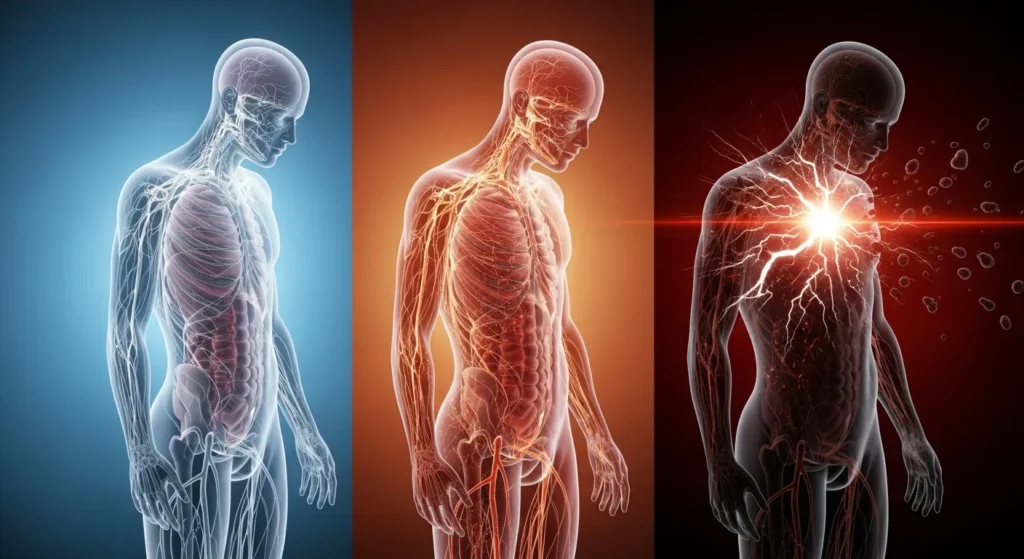
It adapts quietly, absorbs stress silently, and keeps you functional long after strain has begun.
That’s why people often say:
- “This came out of nowhere.”
- “I felt fine until suddenly I didn’t.”
- “There were no signs.”
In reality, the signs were there.
They just weren’t loud.
This article explains why the body adapts before it breaks, how this survival mechanism works, and what most people miss while everything still feels “normal.”
Adaptation Is the Body’s First Line of Defense
The human body evolved for survival in unpredictable environments.
Food shortages.
Infections.
Physical danger.
Environmental stress.
To survive, the body learned one core rule:
Don’t fail early. Compensate instead.
This is why adaptation—not breakdown—is the default response.
When something changes, the body:
- Redistributes resources
- Adjusts hormones
- Alters metabolism
- Changes tissue priorities
All without asking for your attention.
Homeostasis vs. Allostasis: The Hidden Balance Shift
Most people know the term homeostasis—keeping things stable.
But long-term stress introduces allostasis.
Allostasis means:
Stability through change.
Instead of restoring the original balance, the body creates a new normal that allows survival under strain.
Heart rate may rise.
Inflammation may increase slightly.
Energy production may shift.
You’re still functional—but at a cost.
Why You Don’t Feel Adaptation Happening
Adaptation is intentionally subtle.
If the body signaled every adjustment, survival would be impossible.
So instead:
- Hormones shift gradually
- Tissues compensate quietly
- Systems borrow resources from less critical areas
You don’t feel the change.
You feel normal.
This is why people are often shocked when symptoms finally appear.
The Order of Biological Priorities
When resources are limited, the body triages.
Highest priority systems:
- Brain function
- Heart rhythm
- Blood pressure
- Blood sugar control
Lower priority systems:
- Hair, skin, nails
- Muscle repair
- Hormonal optimization
- Immune fine-tuning
- Long-term tissue regeneration
Nothing stops working.
It just works less optimally.
Real-Life Example: Stress That “Didn’t Bother Me” (Until It Did)
Consider someone under chronic stress.
They manage deadlines.
They sleep “enough.”
They keep going.
Inside the body:
- Cortisol stays elevated
- Magnesium and B vitamins are depleted faster
- Inflammation rises slightly
- Recovery pathways slow
No crisis occurs.
Years later, they experience:
- Burnout
- Hormonal imbalance
- Metabolic issues
The body didn’t fail suddenly.
It ran out of adaptive room.
Why Symptoms Appear Late, Not Early
Symptoms are a last resort, not an early warning.
The body avoids them because symptoms reduce survival capacity.
So it delays:
- Pain
- Fatigue
- Dysfunction
Until compensation no longer works.
By the time you feel symptoms, the body has often been adapting for years.
Adaptation vs. Damage: A Critical Comparison
| Feature | Adaptation Phase | Breakdown Phase |
|---|---|---|
| Symptoms | Minimal or vague | Clear and disruptive |
| Function | Maintained | Declining |
| Reversibility | High | Lower |
| Awareness | Low | High |
| Intervention | Easier | More complex |
Most prevention opportunities exist before symptoms appear.
Common Areas Where the Body Compensates First
The body is especially good at hiding stress in:
- Blood sugar regulation
- Blood pressure control
- Hormonal balance
- Bone density
- Gut function
You may not notice anything wrong—until multiple systems can no longer compensate simultaneously.
Why Modern Life Pushes Adaptation to the Limit
Our ancestors faced short bursts of stress.
Modern stress is:
- Chronic
- Psychological
- Nutritional
- Sedentary
This forces the body to adapt continuously without recovery.
According to research summarized by organizations like the World Health Organization and the National Institutes of Health, chronic low-grade stress and inflammation are now central drivers of long-term disease risk.
The issue isn’t stress itself.
It’s never leaving adaptation mode.
Subtle Signs You’re Living in Adaptation Mode
Before breakdown, the body whispers.
Watch for:
- Reduced stress tolerance
- Slower recovery from exercise
- Needing more caffeine to function
- Feeling “flat” emotionally
- Minor issues stacking up instead of resolving
These aren’t failures.
They’re signals that adaptation is being stretched thin.
Mistakes That Accelerate Breakdown
Many people unknowingly push past adaptation limits by:
- Ignoring early fatigue
- Normalizing constant stress
- Skipping recovery and sleep
- Treating symptoms instead of causes
- Believing “no pain means no problem”
Adaptation buys time—not immunity.
Why This Matters Today (Even If You Feel Fine)
Most chronic conditions don’t start with disease.
They start with:
- Long-term compensation
- Reduced resilience
- Narrow stress tolerance
Understanding adaptation helps you intervene early—when the body is still flexible.
Prevention isn’t about fear.
It’s about timing.
How to Support the Body Before It Breaks
You don’t need extreme measures.
You need margin.
Actionable steps:
- Respect early fatigue signals
- Build recovery into daily life
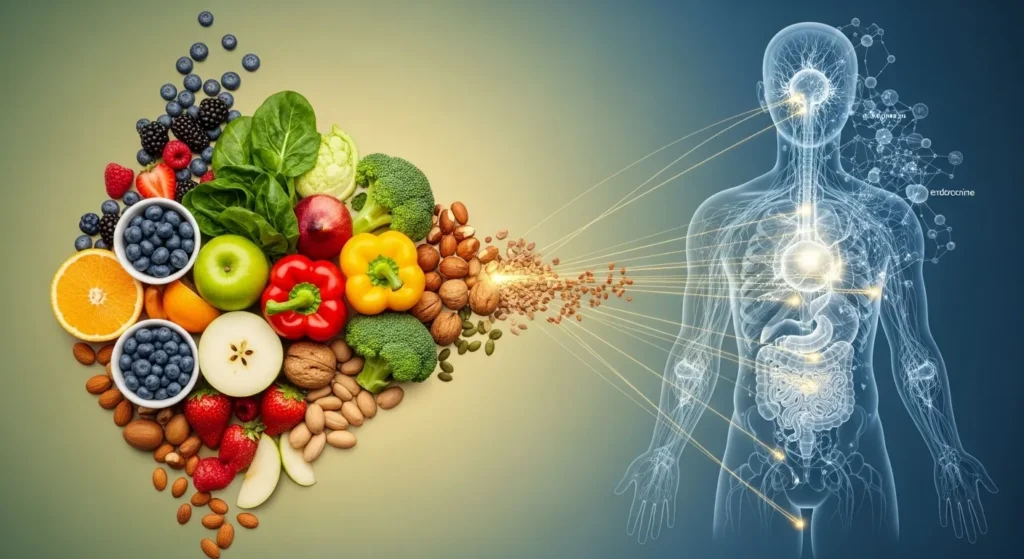
- Support nutrition during stress
- Reduce chronic load, not just acute stress
- Periodically reassess habits—even when you feel fine
Adaptation thrives on support.
Breakdown happens when support disappears.
Key Takeaways
- The body adapts silently before it breaks
- Symptoms appear late, not early
- Adaptation is protective but finite
- Chronic stress narrows resilience over time
- Early support prevents late-stage problems
Frequently Asked Questions
1. Is adaptation always bad?
No. Adaptation is essential for survival—but it becomes risky when it never stops.
2. Why don’t doctors catch problems earlier?
Many tests detect disease, not declining resilience.
3. Can adaptation be reversed?
Often yes—especially when addressed early.
4. Does feeling “normal” mean I’m fine?
Not always. Normal can be a compensated state.
5. What’s the biggest early warning sign?
Reduced recovery and stress tolerance are often first.
Conclusion: The Body Buys Time — Not Guarantees
Your body is incredibly loyal.
It compensates.
It adapts.
It protects you quietly.
But adaptation is not infinite.
Understanding this doesn’t create fear—it creates opportunity. The earlier you respect the body’s quiet adjustments, the less likely you’ll ever meet its breaking point.
Disclaimer: This article is for general educational purposes only and does not replace personalized medical or health advice. Individual responses can vary.

Pingback: Why Your Brain Hates Sugar Spikes — And Craves Stability Instead