Have you ever noticed this?
On days when meals happen naturally—around the same times, with familiar foods—your mind feels calmer.
Decisions feel easier.
Focus lasts longer.
Emotions feel steadier.
But on days when food is unpredictable—skipped meals, rushed snacks, late dinners—everything feels harder.
That contrast isn’t coincidence.
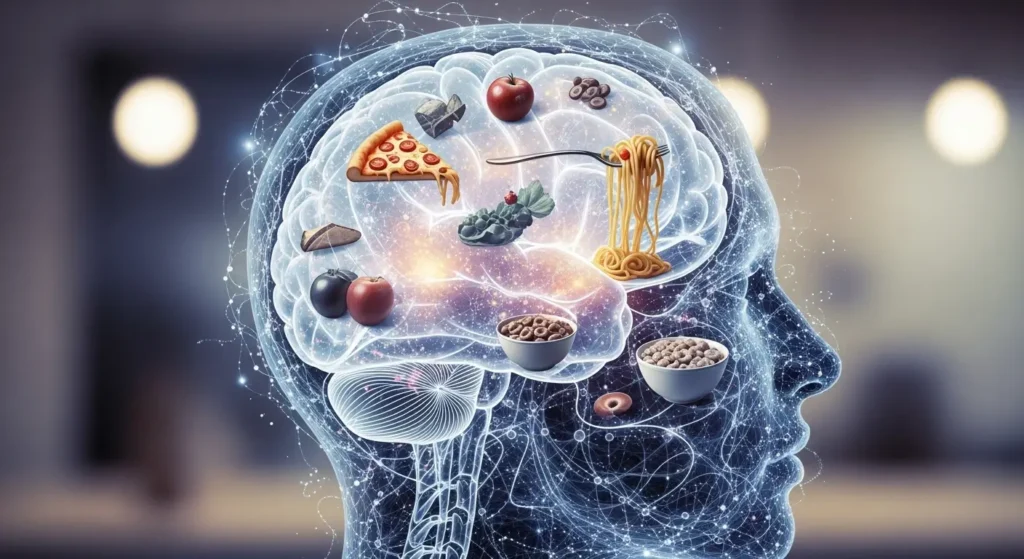
The human brain is wired to prefer predictable nutrition—and it reacts strongly when food becomes uncertain.
This preference isn’t about discipline or diet quality alone.
It’s about how the brain manages energy, safety, and survival.
The Brain’s Relationship With Food Is About Security, Not Perfection
The brain evolved in environments where food access was uncertain.
Because of that history, it developed one core priority:
Avoid energy surprises.
According to neuroscience and public health education widely referenced by organizations such as the World Health Organization, the brain consumes a large share of the body’s energy continuously—day and night.
To manage that demand, the brain values:
- Consistency over abundance
- Predictability over novelty
- Stability over extremes
When food arrives reliably, the brain relaxes.
When food is erratic, the brain becomes alert—and stressed.
What “Predictable Nutrition” Actually Means
Predictable nutrition does not mean eating the same food forever.
It means:
- Regular meal timing
- Familiar energy patterns
- Minimal long gaps or sudden surpluses
From the brain’s perspective, predictability answers one key question:
Can I count on fuel arriving when I need it?
When the answer is yes, mental resources are freed for thinking, creativity, and emotional regulation.
Why the Brain Reacts Poorly to Nutritional Uncertainty
The brain doesn’t interpret skipped meals neutrally.
It interprets them as risk.
When food becomes unpredictable:
- Stress hormones rise
- Attention narrows
- Emotional reactivity increases
- Cognitive flexibility drops
This is not weakness.
It’s an ancient protective response designed to keep you alive when resources are scarce.
Real-Life Example: The “Unplanned Day” Effect
Think about a day like this:
- Late breakfast
- Missed lunch
- Random snacks
- Heavy dinner
Even if total calories are enough, the day feels mentally draining.
Why?
Because the brain spent hours uncertain about fuel delivery.
That uncertainty costs energy.
Predictability vs Diet Quality: A Surprising Insight
Many people assume food quality matters more than consistency.
In reality, both matter, but predictability often comes first.
Here’s why:
- A “perfect” meal eaten irregularly still creates stress
- A reasonably balanced meal eaten consistently creates safety
The brain prefers a steady rhythm over nutritional perfection.
How Predictable Nutrition Supports Mental Clarity
When meals arrive consistently:
- Blood glucose fluctuates less
- Stress hormones remain lower
- Neurotransmitter production stabilizes
The result:
- Improved focus
- Better working memory
- Reduced brain fog
- More emotional resilience
Predictability reduces the brain’s need to stay on alert.
Predictable Nutrition vs Chaotic Eating
Here’s a simple comparison:
| Predictable Nutrition | Chaotic Eating |
|---|---|
| Regular meal timing | Skipped or delayed meals |
| Familiar patterns | Constant changes |
| Steady energy | Energy spikes and crashes |
| Calm focus | Mental fatigue |
| Emotional stability | Irritability and cravings |
The brain thrives in the left column.
Why Extreme Dieting Disrupts Brain Stability
Extreme dietary changes—fasting cycles, rigid restriction, sudden eliminations—often create nutritional unpredictability, even if intentional.
From the brain’s view:
- Food signals become unreliable
- Energy planning becomes difficult
- Stress responses increase
This is why many people experience:
- Brain fog
- Mood swings
- Obsessive food thoughts
The brain is trying to regain predictability.
The Role of Meal Timing in Brain Comfort
The brain doesn’t watch the clock—but it learns patterns.
When meals arrive around similar times:
- Hormonal responses anticipate food
- Digestion becomes more efficient
- Energy availability stabilizes
This is why irregular schedules often feel mentally harder, even when nutrition is adequate.
Common Mistakes That Break Predictability
Even well-meaning habits can disrupt the brain.
❌ Skipping Meals “When Busy”
The brain still expects fuel.
❌ Saving Calories for Later
Delayed energy feels like uncertainty.
❌ Constantly Changing Diet Styles
The brain can’t adapt fast enough.
❌ Treating Hunger as an Enemy
Hunger is a signal—not a failure.
How to Build Predictable Nutrition (Without Rigidity)
Predictability doesn’t require strict rules.
It requires patterns.
Practical Steps:
- Eat within similar time windows daily
- Include familiar foods regularly
- Avoid long, unplanned gaps
- Adjust gently—not abruptly
- Prioritize consistency over extremes
These habits calm the brain quickly.
Hidden Tip: Predictability Reduces Food Obsession
When food becomes predictable:
- Cravings decrease
- Mental noise around eating quiets
- Decision fatigue drops
The brain stops scanning for emergency fuel.
Freedom often comes from reliability, not restriction.
Why This Matters Today
Modern life is unpredictable:
- Work schedules
- Screen exposure
- Constant decision-making
When everything else feels uncertain, nutrition can become a stabilizing anchor.
Predictable nutrition:
- Supports mental resilience
- Reduces burnout
- Improves long-term focus
It’s one of the simplest ways to support brain health in a demanding world.
Key Takeaways
- The brain prefers predictable fuel delivery
- Irregular eating increases cognitive stress
- Consistency matters more than perfection
- Predictable nutrition supports focus and mood
- Stability reduces mental fatigue and cravings
Frequently Asked Questions (FAQs)
1. Does predictable nutrition mean eating the same foods daily?
No. It means consistent timing and energy patterns, not identical meals.
2. Why do skipped meals affect my mood so quickly?
Because the brain interprets fuel uncertainty as stress.
3. Is fasting bad for brain health?
It can be for some people, especially during mentally demanding periods.
4. How long does it take to feel benefits from consistency?
Many people notice calmer focus within days of regular eating.
5. What matters more: food quality or consistency?
Both matter, but consistency often stabilizes the brain first.
Conclusion: The Brain Doesn’t Want Surprise — It Wants Reliability
Your brain isn’t asking for the perfect diet.
It’s asking for predictable support.
When nutrition becomes reliable, the brain relaxes.
Focus improves.
Mood steadies.
And mental clarity stops feeling fragile.
Disclaimer: This article is for general educational purposes only and does not replace personalized nutrition or medical advice.


Pingback: How Nutrition Keeps Your Body Predictable — The Hidden Stability Most People Never Notice
Pingback: Why Nutrition Is About Signals, Not Just Substances — How Food Actually Communicates With Your Body