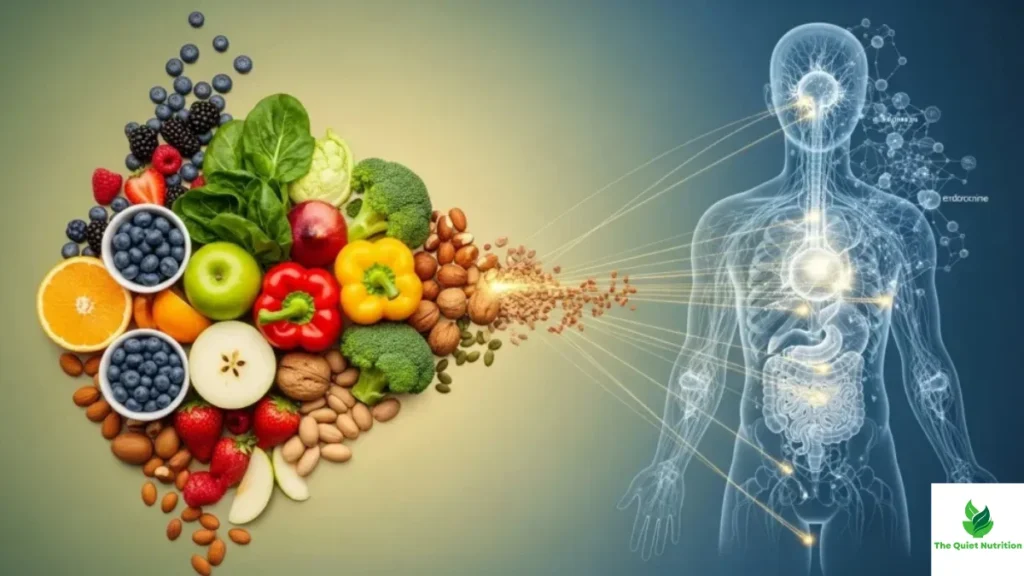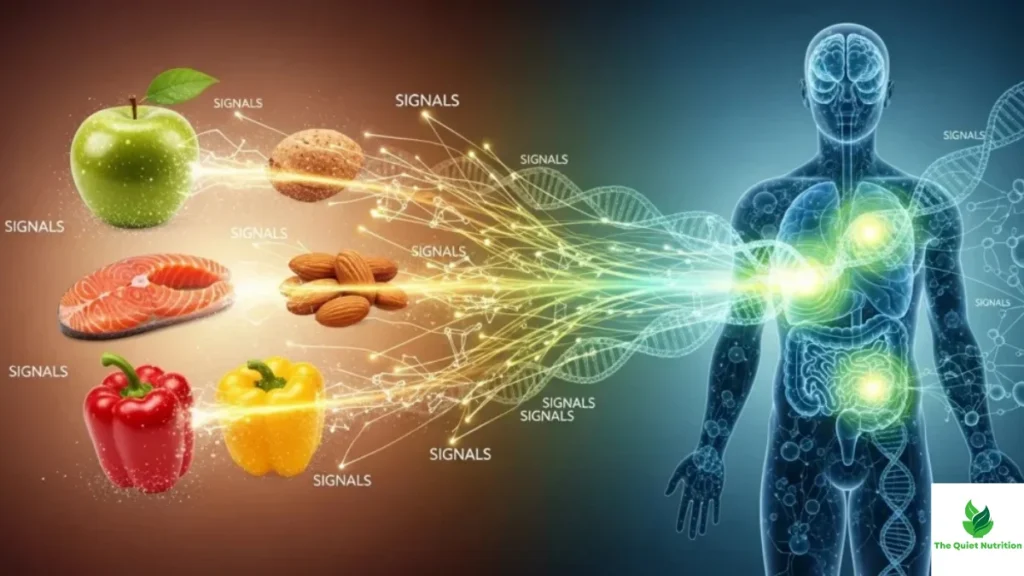
Most people think about food the way they think about gasoline: it goes in, it gets burned, it produces energy, end of story. That model isn’t wrong, exactly — but it’s missing almost the entire picture. Down at the cellular level, nutrients aren’t just fuel waiting to be combusted. They’re information. Every meal you eat is, quite literally, sending molecular messages that tell your cells whether to grow, repair, conserve, or shut down non-essential processes. Food doesn’t just power the body. It instructs it.
Cells Have Dedicated Sensors Just for Detecting Nutrients
This isn’t a loose metaphor — it’s an actual, well-mapped biological system. Cells throughout your body contain specific molecular sensors whose entire job is to detect how much of various nutrients are available and translate that information into a cellular decision. The two most extensively studied of these sensing networks are called mTOR and AMPK, and together they function almost like a thermostat for your body’s metabolic state.
Researchers describe this as a toolkit nature has built into both single-celled and complex organisms, allowing cells to detect and respond to nutrient availability in real time. The comparison researchers often draw is to bacteria, which use a similarly elegant system — the lac operon — to sense available sugar and switch on only the genes needed to metabolize it. Human cells run a vastly more complex version of the same basic idea: sense what’s available, then adjust gene activity and cellular behavior accordingly.
mTOR: The Signal That Says “Build”
When nutrients — particularly amino acids and glucose — are abundant, a pathway called mTOR activates. mTOR orchestrates growth-oriented, energy-consuming processes: protein synthesis, cell growth, and other anabolic, building-focused activities that only make sense to run when raw materials are plentiful.
Amino acids specifically signal to mTOR through a set of molecular intermediates that researchers are still working to fully map, since exactly where and how amino acids get detected remains an active area of investigation. What’s already well established is the outcome: when your body senses ample nutrient availability, it doesn’t just pass those nutrients through — it uses their presence as a green light to actively invest in growth and repair processes it would otherwise hold back.
AMPK: The Signal That Says “Conserve”
The counterpart to mTOR is AMPK, which activates under the opposite condition — when cellular energy runs low. AMPK acts as a metabolic checkpoint during nutrient scarcity, and it directly suppresses mTOR activity through specific molecular interactions, effectively hitting the brakes on energy-expensive growth processes when fuel is limited. Under sustained nutrient stress, this same pathway has been shown to influence whether cells survive or undergo programmed cell death, underscoring how consequential this signaling really is — it isn’t a minor metabolic adjustment, it’s a decision point for the cell.
This push and pull between mTOR and AMPK happens continuously, adjusting in response to what you’ve eaten, when you last ate, and how much energy your body is currently expending. It’s a live, ongoing negotiation, not a fixed setting.
The Signal Can Change How Genes Get Expressed, Not Just How Cells Behave Short-Term
Here’s where the “just fuel” model really breaks down. These nutrient-sensing pathways don’t only produce quick, temporary adjustments in cell behavior — they can influence gene expression itself, creating more durable changes in how a cell functions going forward. Researchers studying this have noted that while a great deal is known about the immediate, short-term effects of AMPK and mTOR signaling, comparatively less is understood about how these pathways regulate the genes involved in the sensing system itself, and the extent to which sustained nutrient patterns can produce lasting phenotypic change.
This is the essence of what nutrigenomics studies: not just how nutrients get metabolized, but how patterns of nutrient intake interact with your genetic blueprint to shape cellular function over time. Researchers in this field describe nutrient-sensing systems as integrated across the whole body through hormonal signals, coordinating cellular-level decisions about sugars, amino acids, lipids, and other metabolites into a synchronized, organism-wide response.
Why This Reframing Actually Matters
Thinking of nutrition purely in terms of calories in, calories out treats food as an undifferentiated fuel source — as if a gram of protein and a gram of sugar are interchangeable units of energy that simply get burned. The signaling reality is far more specific. Amino acids trigger different cellular instructions than glucose does. Periods of nutrient abundance send fundamentally different signals than periods of scarcity, activating entirely different pathways with different downstream consequences for growth, repair, and cellular maintenance.
This is part of why patterns like meal timing, fasting intervals, and macronutrient balance can matter beyond their raw caloric content — they’re not just adjusting an energy total, they’re shifting which cellular signaling pathway is dominant at a given moment, and that pathway shift carries its own distinct biological consequences.
Food as Information, Not Just Input
None of this diminishes the basic importance of getting enough calories and nutrients. It just completes the picture. Every time you eat, you’re not simply refueling a machine — you’re sending a detailed molecular message that your cells are actively reading and acting on, moment to moment, in ways that extend far beyond simple energy accounting. Nutrition was never just about substances. It’s been about signals the entire time.
Sources:
- NCBI/PMC — Nutrient-Mediated Perception and Signalling in Human Metabolism: A Perspective of Nutrigenomics
- NCBI/PMC — Nutrient Signaling to mTOR and Cell Growth
- Frontiers in Cell and Developmental Biology — Transcriptional Regulation of the Energy Sensing AMPK and Biosynthetic mTOR Pathway Genes
- NCBI/PMC — AMPK–mTOR Signaling and Cellular Adaptations in Hypoxia

Aarti Solanki, B.Sc. (Food Science), is a food science writer passionate about making nutrition simple and evidence-based. She creates well-researched, easy-to-understand articles on healthy eating, food science, and nutrition, using information from trusted scientific and public health sources.