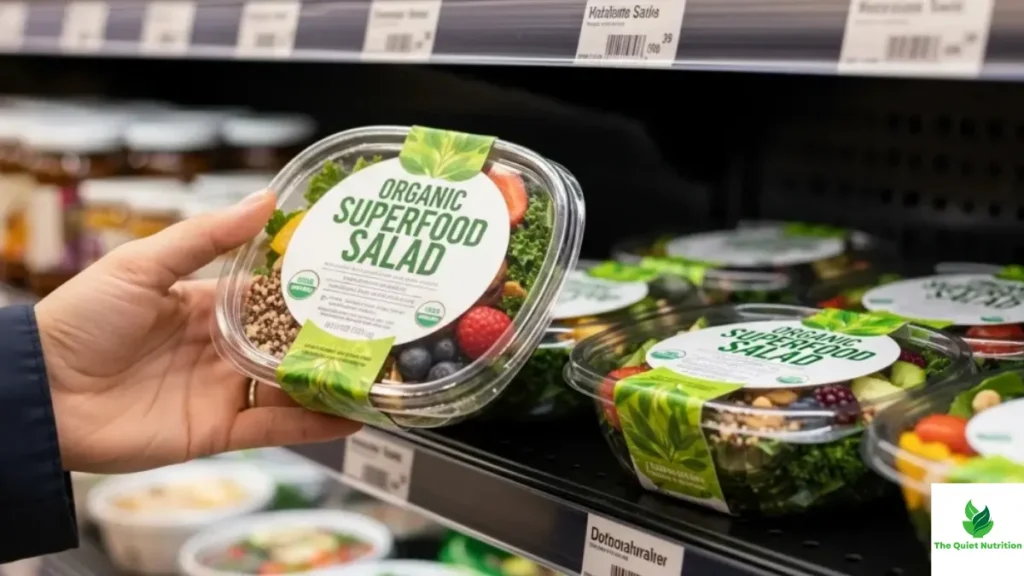
Here’s a strange experiment worth picturing: give people the exact same food, twice, changing nothing but the label. Same ingredients, same preparation, same everything — the only variable is what the package says. If food were purely a matter of chemistry hitting your taste buds, the results should be identical. They’re not. People report the food actually tasting different, depending entirely on what they were told before the first bite. That’s not a data collection quirk. It’s a documented, repeatable finding, and it says something uncomfortable about how much control a label has over an experience you assume is purely physical.
The Taste Isn’t Just in the Food — It’s Partly in the Expectation
Researchers have a specific term for this: the marketing placebo effect. It describes how peripheral, non-nutritive elements of a product — packaging, labeling, price, branding — can genuinely alter how pleasant or effective an otherwise identical product feels, purely through the expectation they create beforehand.
One of the clearest demonstrations of this involves price. Studies have found that a higher price on an identical product measurably increased how pleasant people rated its taste, and even shifted behavioral performance measures tied to consuming it. Nothing about the product itself changed. Only the number on the tag did — and that number altered the sensory experience that followed.
This isn’t limited to adults sophisticated enough to have complex associations with pricing and prestige. Research with children found that identical snack products rated as more pleasant-tasting when presented with playful, appealing packaging compared to plain packaging, and that this effect on taste was strong enough to show up in a completely unrelated behavioral measure — how much physical effort children were willing to exert to earn the product, tested using a hand-grip device. The children who showed a bigger taste boost from fun packaging also showed a bigger effort boost, suggesting the expectation created by the label was shaping something deeper than a passing preference.
Expectations Don’t Just Bias Your Opinion — They Change the Actual Sensory Experience
It would be easy to assume this is just people saying what they think researchers want to hear — a demand effect, in research terms, rather than a genuine change in perception. But the evidence goes further than self-report. Studies using neuroimaging have found that marketing-driven expectations influence neural responses to products down to a primary sensory processing level, not just at the level of conscious judgment or stated preference. The brain isn’t performing polite diplomacy when it reports a labeled product tastes better. Something upstream in sensory processing is actually shifting.
This lines up with a broader psychological framework researchers use to describe expectation effects generally: experiences tend to shift in the direction of what’s expected, a pattern known as an assimilation effect, mirroring the same mechanism behind placebo responses in medicine. Tell someone a food will taste rich and satisfying, and their sensory experience tends to bend toward that expectation, all without any change to the food’s actual composition.
Brands Themselves Carry Taste Expectations, Independent of the Product
It’s not only specific label claims doing this work — the overall personality a brand projects matters too. Research examining how people perceive brands along two dimensions, warmth and competence, found that both dimensions independently influenced how good a product tasted, measured both as a stated belief and as an embodied experience after actually consuming it. A brand that feels trustworthy and likable doesn’t just earn goodwill — it appears to change how the product itself tastes going down.
This taste-shaping effect extends to nutrition claims specifically, which is where things get particularly relevant to health-conscious shopping. Research on nutrition claims has found they shape expectations about a food’s attributes and can dampen activity in reward-related brain regions during actual tasting — meaning a “healthy” claim can measurably change the brain’s real-time response to eating the product, sometimes without necessarily changing how pleasant people report the experience to be. The label reaches further into the sensory experience than most people would guess, and not always in the direction someone might expect.
Why This Matters Beyond Curiosity
None of this means your taste preferences are fake or that you’re constantly being fooled without any say in the matter. It means the sensory experience of eating is genuinely, measurably shaped by information you received before the food ever touched your tongue — which is exactly why food marketing invests so heavily in packaging design, claims, and branding rather than relying purely on the product’s intrinsic qualities to sell itself.
Understanding this doesn’t make the effect disappear — expectation effects are remarkably resistant to simply knowing about them. But it does explain something that otherwise feels strange: why the same snack can taste noticeably better in fun packaging, why a higher price can make an identical wine taste smoother, and why a “healthy” label on a food can shift your brain’s real-time response to it. Your brain isn’t waiting for the first bite to start forming an opinion about a food. By the time you take that bite, it’s already halfway there.
Sources:
- Frontiers in Psychology — Food Packaging Cues Influence Taste Perception and Effort Provision in Children
- NCBI/PMC — Tasteful Brands: Products of Brands Perceived to Be Warm and Competent Taste Subjectively Better
- ResearchGate — Effects of Set Size, Scarcity, Packaging, and Taste on the Marketing Placebo Effect

Aarti Solanki, B.Sc. (Food Science), is a food science writer passionate about making nutrition simple and evidence-based. She creates well-researched, easy-to-understand articles on healthy eating, food science, and nutrition, using information from trusted scientific and public health sources.

Pingback: Why “Fortified” Sounds Healthier Than It Is — The Nutrition Label Promise Most People Misunderstand
Pingback: Why Ingredient Order Matters More Than Buzzwords — And How to See Past Food Label Hype
Pingback: Why Clean-Looking Packaging Instantly Builds Trust — Even Before You Read the Label
Pingback: How Marketing Language Quietly Shapes Food Identity — And What You Think You’re Eating