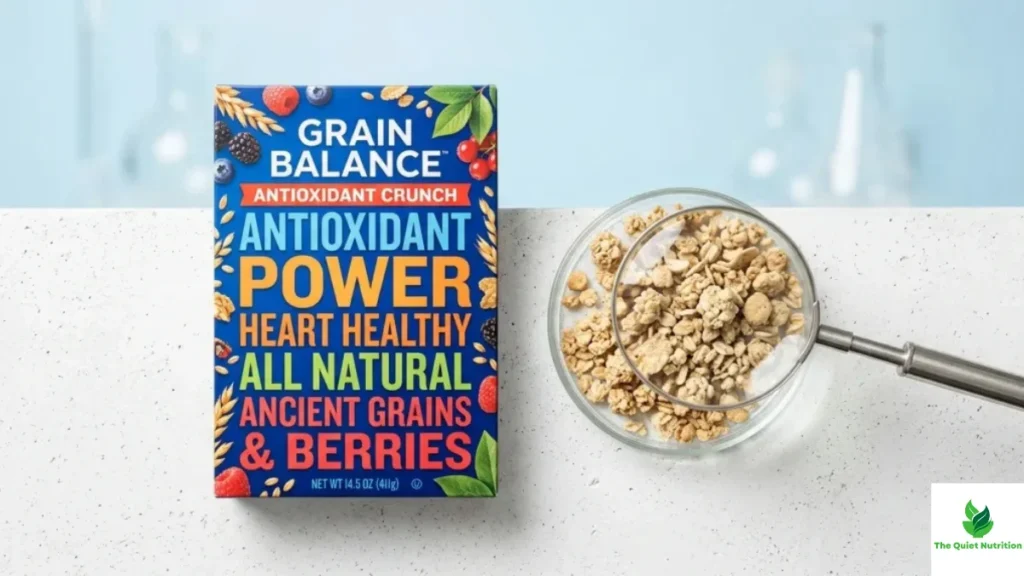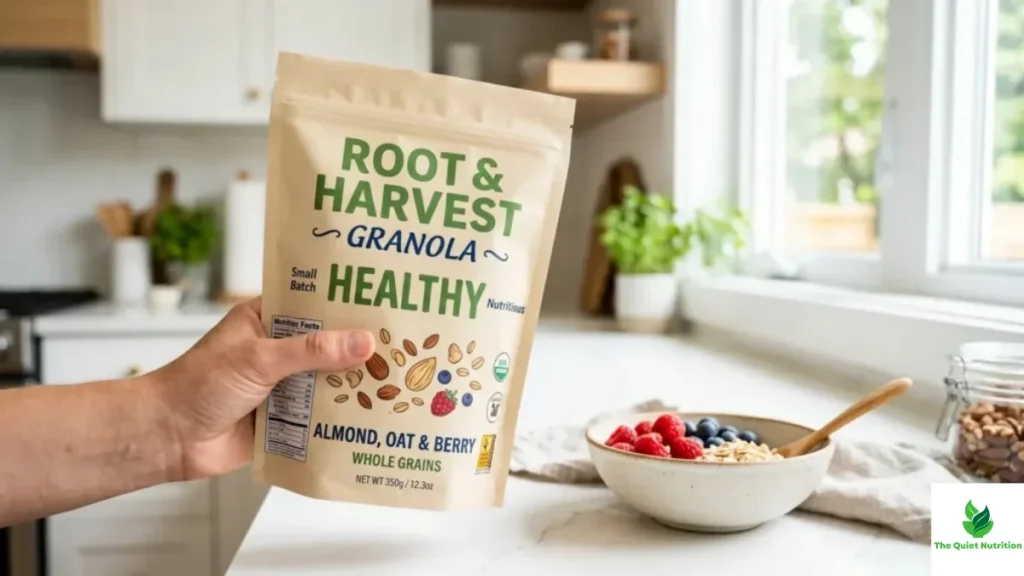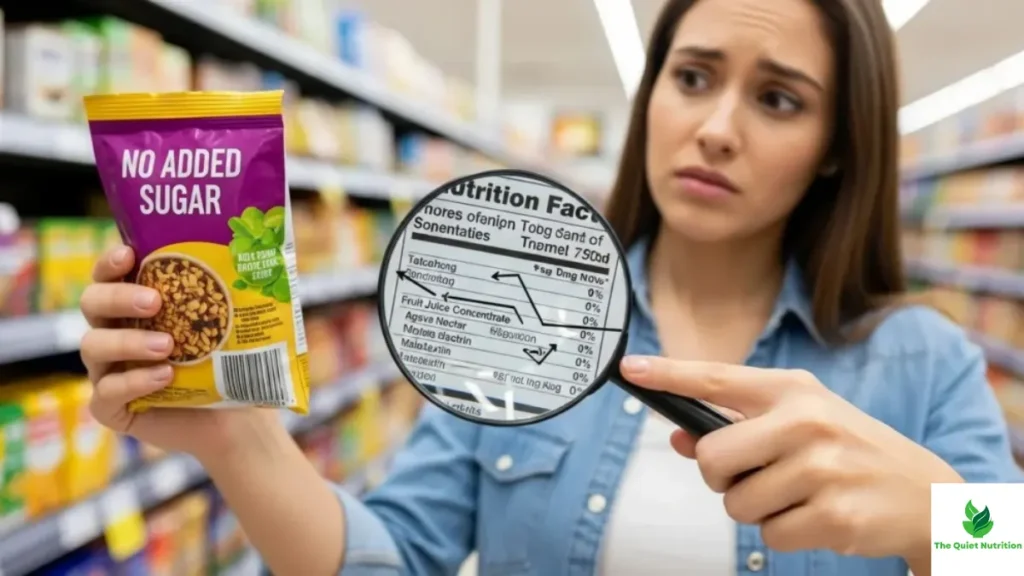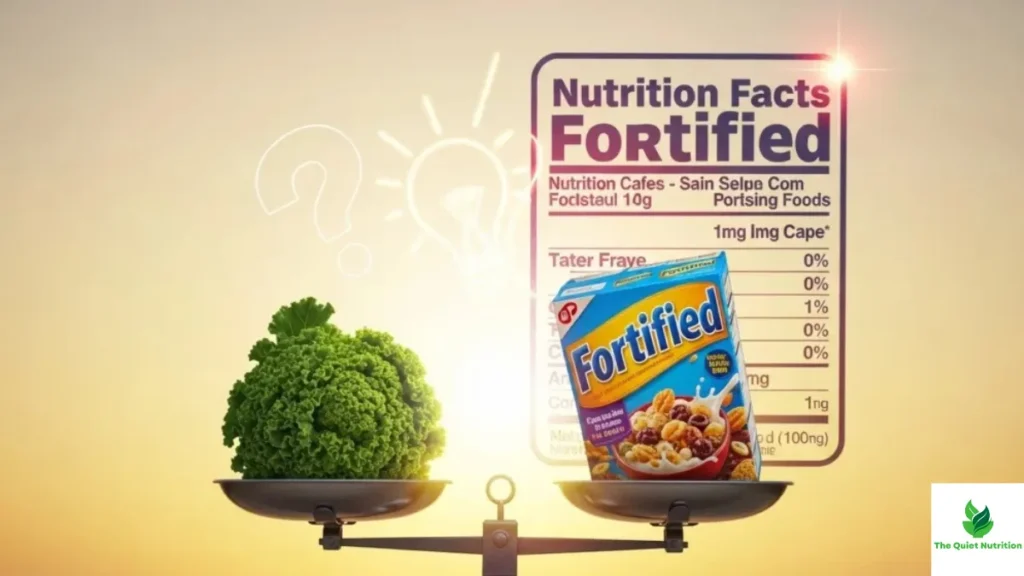
Stand in front of a shelf of breakfast cereals and you’ll see the word everywhere: “fortified with 12 essential vitamins and minerals.” It sits right next to a cartoon mascot, printed in bold, confident type. It reads like a badge of quality. Most people glance at it, feel reassured, and toss the box in the cart without a second thought. Almost nobody stops to ask what “fortified” is actually doing — or what it might be quietly covering for.
Fortified Doesn’t Mean What Most People Assume It Means
Here’s the part that surprises people: fortification isn’t a claim about a food being naturally nutritious. It’s a description of a manufacturing step. It simply means nutrients were deliberately added to a product that didn’t originally contain them, usually to boost intake of something the general population tends to fall short on.
That’s meaningfully different from enrichment, a related but distinct term. Enrichment specifically means adding back nutrients that were stripped out during processing — like the iron and B vitamins added to white flour to replace what’s lost when whole wheat gets milled down. Fortification goes further: it adds nutrients that were never part of the food to begin with, like vitamin D in orange juice or B12 in plant-based milk. One restores. The other supplements. Both get marketed with the same confident language on the front of the box.
The rules get even looser than that. Under FDA policy, terms like “fortified,” “enriched,” “added,” “extra,” “more,” and “plus” can actually be used interchangeably on many products, provided they meet a basic regulatory threshold. In practice, this means a cluster of words that sound like they mean very different things to a shopper are, legally, largely synonymous.
The Nutrients Are Real. The Rest of the Product Might Not Be Good
This is the crux of the misunderstanding: fortification tells you something true about a handful of specific nutrients, and nothing at all about everything else in the product.
A sugary cereal fortified with iron and folic acid genuinely does contain iron and folic acid. That part isn’t a trick. But fortification says nothing about the added sugar sitting a few lines below those vitamins on the nutrition panel, the refined flour forming the bulk of the product, or the near-total absence of fiber. A company can add a vitamin premix to almost anything — including products that are, by any reasonable nutritional standard, closer to dessert than to a health food — and the fortification claim will still be accurate.
This is precisely why fortification became such an effective piece of packaging real estate. It lets a product borrow credibility from a genuinely good public health tool — targeted nutrient addition — without requiring the rest of the product to earn that credibility on its own.
Why Fortification Exists in the First Place
None of this means fortification is a scam or a marketing gimmick at its core. Historically, it’s been one of public health’s more effective, low-cost interventions. Fortifying salt with iodine, flour with folic acid, and milk with vitamin D has prevented large-scale deficiency diseases across entire populations, particularly in groups whose typical diets fell short on specific nutrients due to regional food availability or processing losses.
The original policy reasoning behind fortification in the U.S. was narrow and specific: restore nutrients lost during processing, provide a proportional nutritional balance relative to a food’s calorie content, or prevent a newer packaged food from being nutritionally worse than the traditional food it was replacing in people’s diets. That’s a legitimate, carefully bounded public health goal. What’s happened since is that the language built for that narrow purpose has been stretched across a much wider range of products, many of which were never part of the original problem fortification was designed to solve.
Synthetic Nutrients Don’t Always Behave Like the Originals
There’s a second, quieter issue worth understanding: the vitamins and minerals added during fortification aren’t always processed by the body the same way as the versions naturally occurring in whole foods. Folic acid, the synthetic form added to fortified grains, is absorbed differently than the folate found naturally in leafy greens and legumes, and researchers have studied how that distinction affects metabolism at high fortified intakes. Iron added to fortified cereal isn’t always as bioavailable as iron from food sources that also carry supporting compounds like vitamin C, which improves absorption. None of this makes fortified nutrients useless — for populations with real dietary gaps, they’ve made a measurable difference. It just means “contains X vitamin” and “your body will use X vitamin exactly the way it would from a whole food” aren’t automatically the same claim.
What to Actually Do With This Information
None of this means avoiding fortified foods. Fortified milk, cereal, and flour genuinely help fill real nutritional gaps for a lot of people, and the practice has a legitimate public health track record behind it. The shift worth making is smaller than that: stop letting the word “fortified” answer questions it was never built to answer.
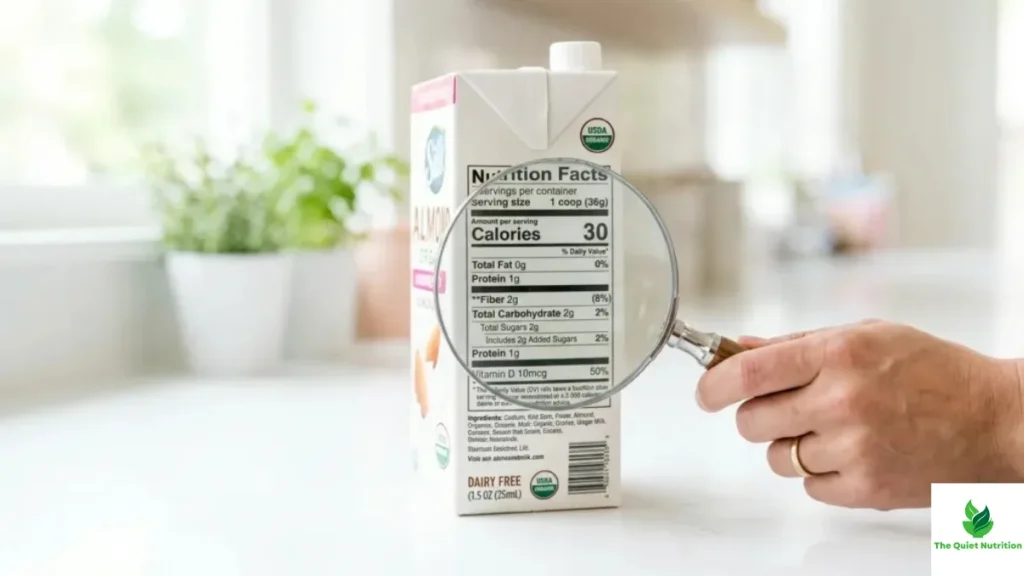
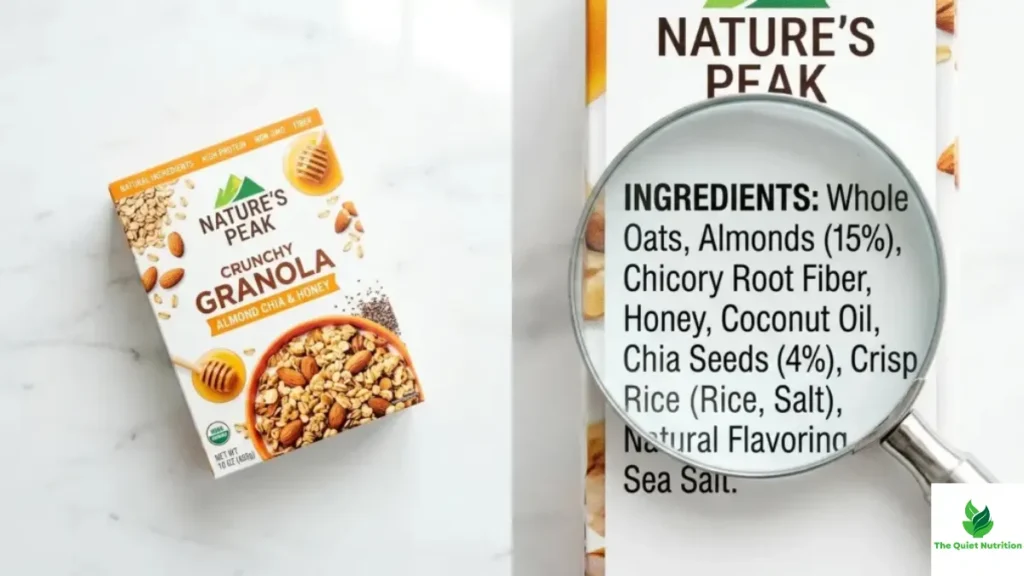
It tells you a specific nutrient was added. It says nothing about sugar content, fiber, processing level, or overall nutritional balance. Those answers are sitting a few inches below the buzzword, in the ingredient list and nutrition panel — the only part of the package that has to tell the whole story.
Sources:
- U.S. FDA — Questions and Answers on FDA’s Fortification Policy
- eCFR — 21 CFR Part 104, Subpart B: Fortification Policy
- NCBI Bookshelf — Overview of Food Fortification in the United States and Canada
- Medicine LibreTexts — Understanding Food Labels: Enrichment vs. Fortification

Aarti Solanki, B.Sc. (Food Science), is a food science writer passionate about making nutrition simple and evidence-based. She creates well-researched, easy-to-understand articles on healthy eating, food science, and nutrition, using information from trusted scientific and public health sources.