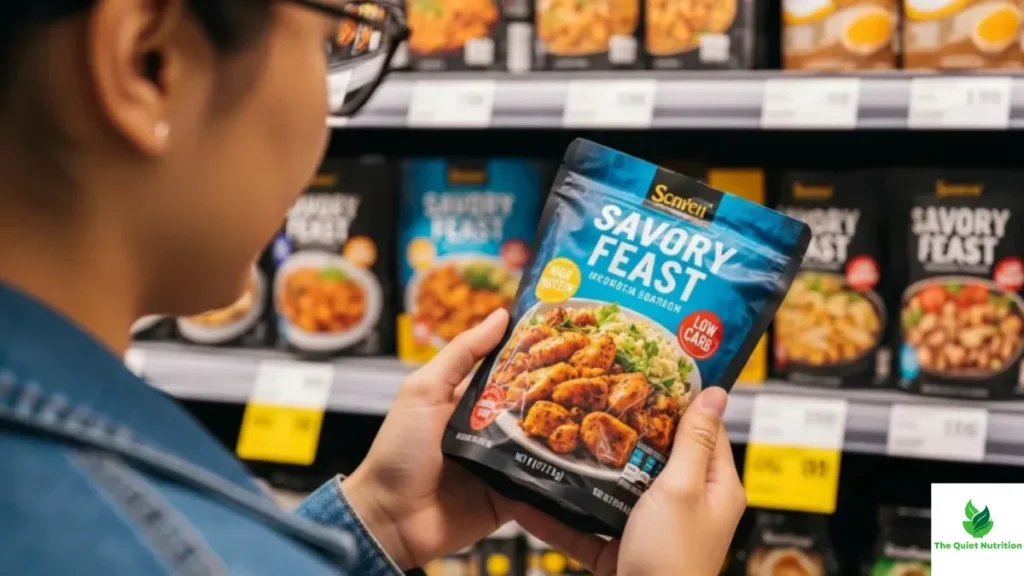
There’s a yogurt I used to buy for years before I actually stopped and did the math on it. The front of the container was practically shouting at me — “high protein,” “live cultures,” “no artificial flavors,” a small sunburst claiming it was “packed with vitamin D.” Four separate claims fighting for space on a container the size of my fist. What none of those claims mentioned, anywhere on the front, was that it also contained more sugar per serving than a comparable scoop of ice cream. I found that out by accident, flipping it over one day out of boredom rather than diligence. The front of the package had told me everything except the thing that actually mattered most.
That’s not really a story about one yogurt. It’s a story about how the entire front-of-package system works, and it works, almost without exception, backward from what a shopper assumes it’s doing.
The Front of the Box Isn’t Regulated the Way People Think
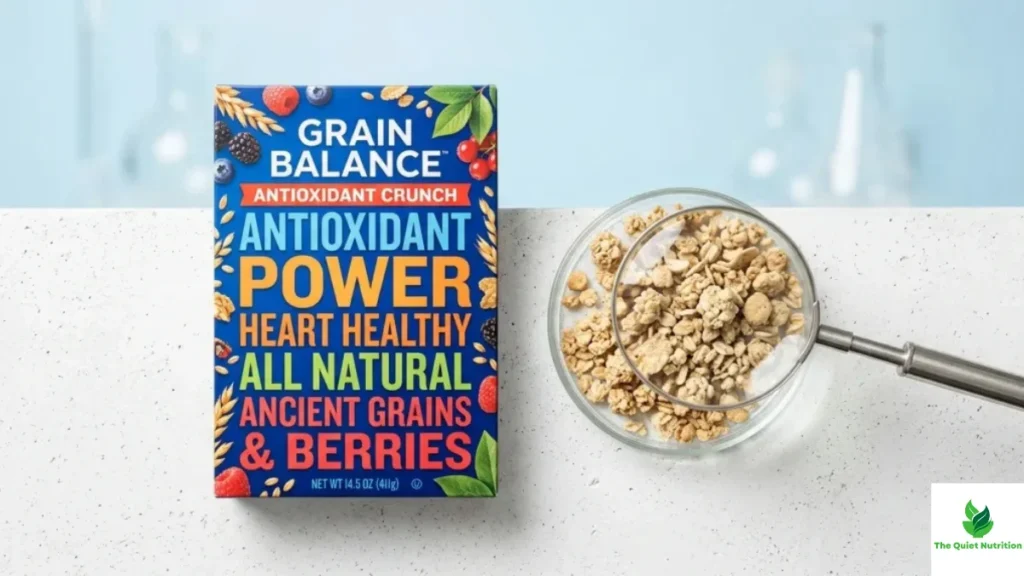
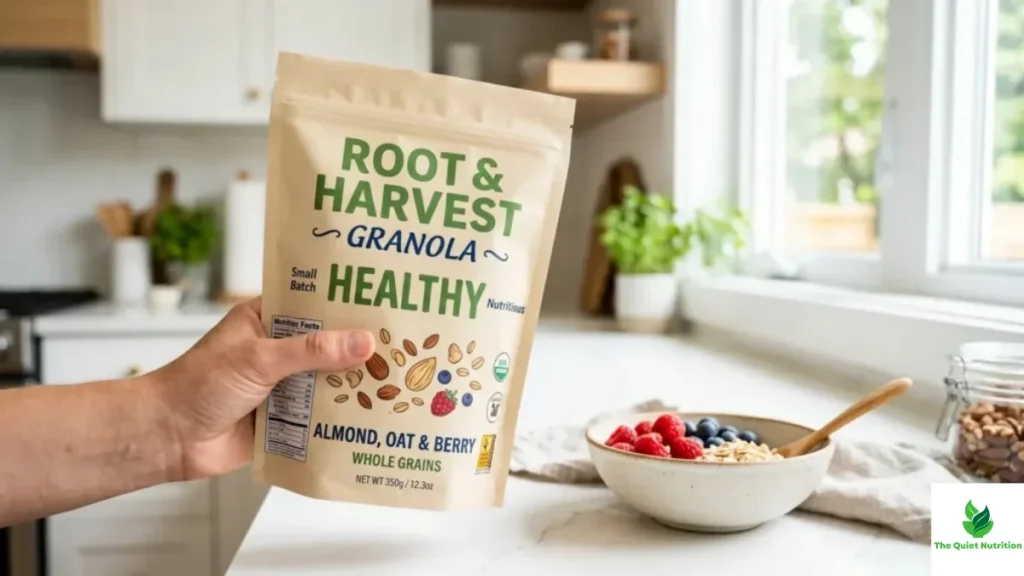
There’s a persistent assumption that if a claim is printed on food packaging, some agency has verified it means what it appears to mean. In reality, front-of-package claims occupy a strange regulatory middle ground. Certain terms — “organic,” “reduced fat,” “high fiber” — do have legal thresholds attached to them. But plenty of the language that actually drives purchasing decisions, phrases like “natural,” “wholesome,” or “made with real fruit,” carries little to no enforced definition at all. A product can be “made with real fruit” while containing a fraction of a percent of actual fruit, buried behind sugar, corn syrup, and flavoring designed to mimic what the fruit itself would have tasted like.
This matters because the front of the package isn’t functioning as a nutrition summary. It’s functioning as a sales pitch that happens to be regulated just enough to avoid outright legal trouble, while remaining almost entirely optimized around what triggers a purchase rather than what accurately represents nutritional value.
Marketing Claims Chase Trends, Not Truth
Food companies employ entire teams dedicated to tracking which words are currently resonating with shoppers, and packaging gets redesigned around those words with a speed that has nothing to do with any actual change in the product’s nutritional profile. “Low-fat” dominated shelves for two decades, often achieved by replacing fat with added sugar to preserve taste — a swap that, in retrospect, likely did more harm than the fat it replaced. When public sentiment shifted, “low-carb” and then “keto-friendly” took over the same shelf space, sometimes on products barely altered from their low-fat predecessors, just rebranded around whatever fear or aspiration was culturally dominant that year.
This is the part that deserves more scrutiny than it usually gets: the claims aren’t lying, exactly, most of the time. They’re just answering a question nobody actually asked — “does this product contain a technically defensible amount of protein” — while ignoring the question that matters, which is whether the product, taken as a whole, deserves a place in someone’s regular diet.
What Gets Highlighted, and What Gets Buried
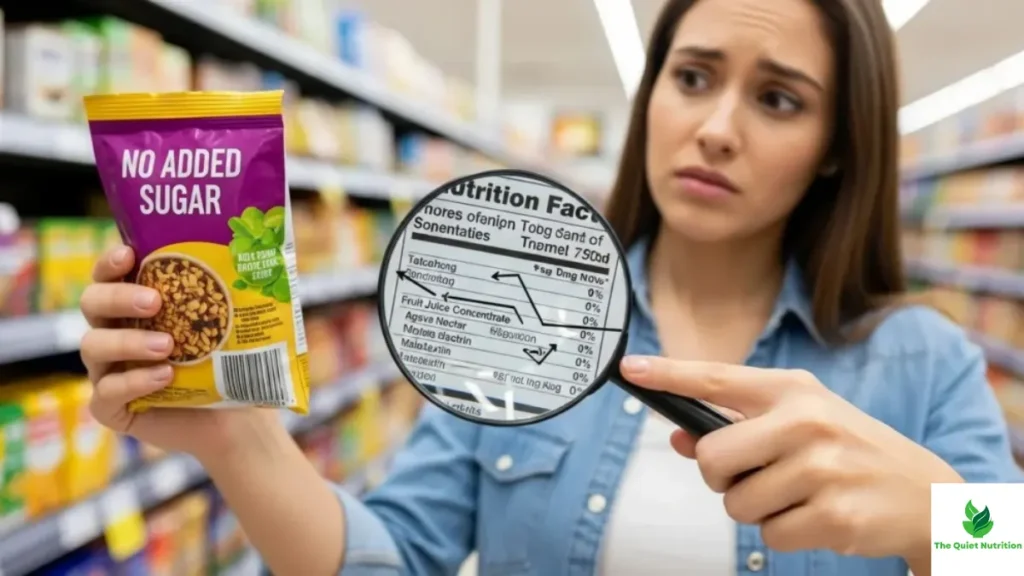
There’s a predictable pattern to what earns front-of-package real estate versus what stays confined to the fine print. Protein content, fiber additions, vitamin fortification — these get celebrated loudly because they’re single, easily quantified positives that consumers have been taught to look for. Added sugar, sodium load, the degree of processing, the actual position of sugar or refined starch within the ingredient list — these stay in the back, in smaller type, competing with a wall of other numbers, precisely because they’re the details most likely to talk someone out of the purchase they were about to make.
It isn’t accidental that a product can be “fortified with 12 vitamins and minerals” on the front while sitting near the top of the sugar content for its entire category. The fortification is real. It’s also strategically positioned to occupy the shopper’s attention before the sugar number gets a chance to.
The Habit That Actually Protects You
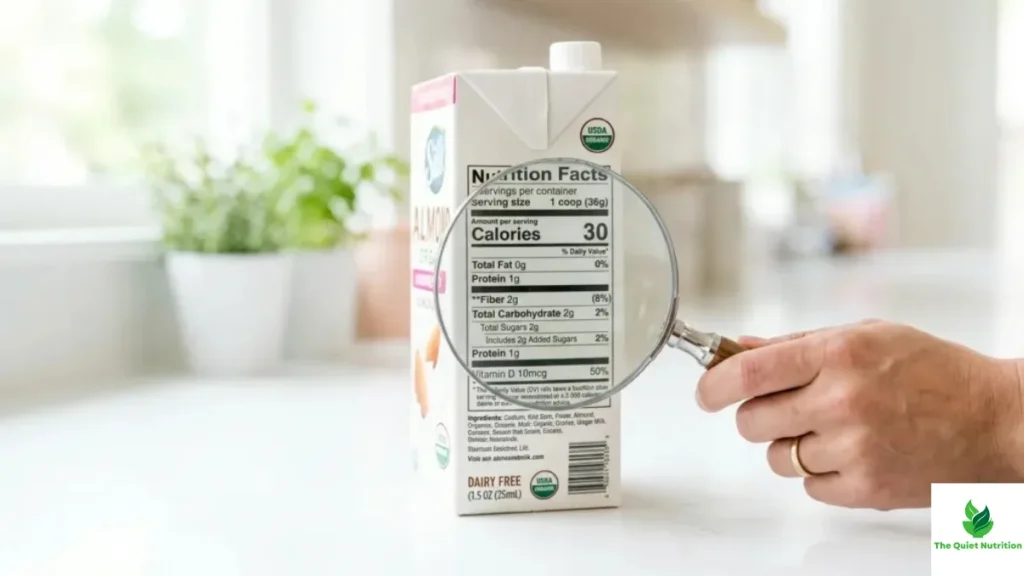
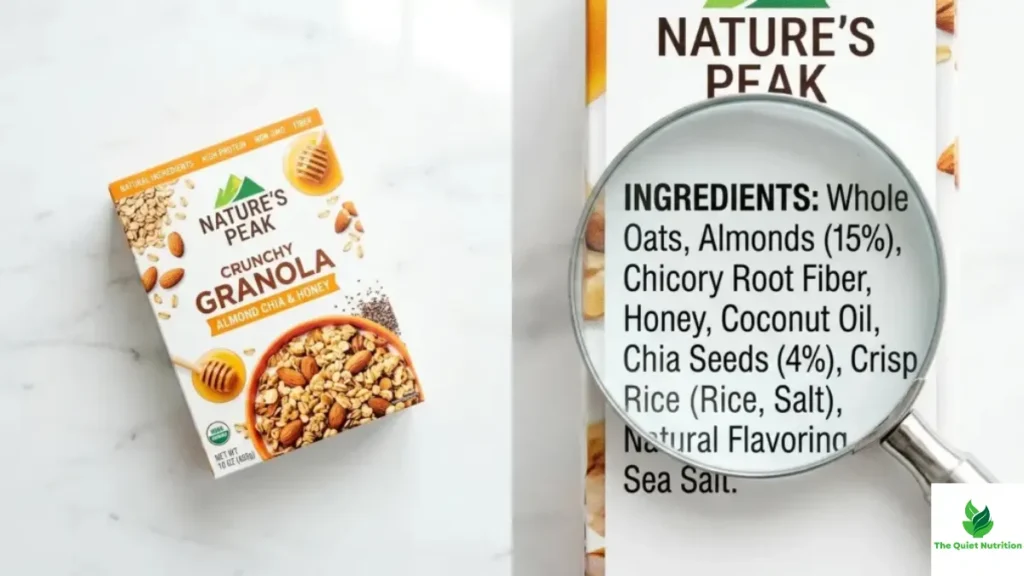
The fix here isn’t cynicism toward every food company, most of which aren’t acting with deliberate malice so much as operating inside a system that rewards this exact behavior. The fix is smaller and more mechanical: treating the front of any package as an advertisement rather than a nutrition summary, full stop, regardless of how official or health-conscious the language sounds. The actual information — the sugar count, the sodium level, where refined ingredients sit in the list — lives in the same two places it always has: the nutrition panel and the ingredient list, both of which were never designed to sell anything, which is exactly why they tend to tell the truth.
My yogurt still sits in the fridge, occasionally, because taste and habit are real things and this isn’t an argument for never enjoying food again. But I read the back now, every time, and that one small habit has done more for how I actually eat than any front-of-package claim ever managed to.
Sources:
- U.S. Food and Drug Administration — Food Labeling Guide: https://www.fda.gov/food/food-labeling-nutrition
- Federal Trade Commission — Food Advertising and Marketing Claims: https://www.ftc.gov/business-guidance/industry/food-manufacturing
- Harvard T.H. Chan School of Public Health — Nutrition Source: https://www.hsph.harvard.edu/nutritionsource/
- World Health Organization — Healthy Diet Fact Sheet: https://www.who.int/news-room/fact-sheets/detail/healthy-diet
- Cornell Food and Brand Lab — Consumer Perception and Labeling Research: https://www.brandlab.cornell.edu/

Aarti Solanki, B.Sc. (Food Science), is a food science writer passionate about making nutrition simple and evidence-based. She creates well-researched, easy-to-understand articles on healthy eating, food science, and nutrition, using information from trusted scientific and public health sources.


Pingback: How Food Labels Trigger Fear — And Why Smart Shoppers Still Fall for It