A few summers ago I sat in on a focus group my cousin was running for a beverage company — she does consumer research for a living, and let me sit in the observation room as a favor. They tested the same drink, identical formula, under two names: one called it a “refresher,” the other called it a “juice drink.” Nothing else changed. Not the bottle, not the color, not the taste people sampled. The group that saw “refresher” rated it lighter, less sugary, more appropriate for kids. The group that saw “juice drink” rated it heavier, sweeter, something to limit. Same liquid. Different food, entirely, in the minds of the people drinking it.
I’ve thought about that room more than almost anything else I learned that summer, because it captures something most people never get to see happen in real time: the name attached to a food actively rewires how it’s experienced, not just how it’s judged on a shelf. Language isn’t describing the product. In a real, measurable sense, it’s building it.
Words Create Categories the Brain Trusts Before Tasting Anything
Humans are categorical thinkers by default, sorting new information into existing mental buckets almost instantly, often before conscious evaluation kicks in. Food marketing exploits this constantly, using language specifically chosen to slot a product into a pre-existing, favorable category rather than let it be evaluated on its own terms. “Refresher” borrows credibility from water and sports drinks. “Juice drink,” despite describing something nutritionally similar, borrows the more cautionary associations people have built around sugary juice over the last decade of public health messaging. The formula never moved. The category the brain filed it under did, and that filing shapes everything downstream — how much someone pours, how guilty they feel drinking it, even how sweet it tastes to them subjectively.
This isn’t a fringe finding. Research on labeling and perceived taste has repeatedly shown that identical foods, framed with different descriptive language, are rated as tasting different by the people eating them. The framing isn’t just changing the decision to buy. It’s altering the actual sensory experience of consumption, which is a stranger and more consequential effect than most people assume marketing is capable of.
“Natural,” “Artisan,” and Other Words Doing Heavy Lifting
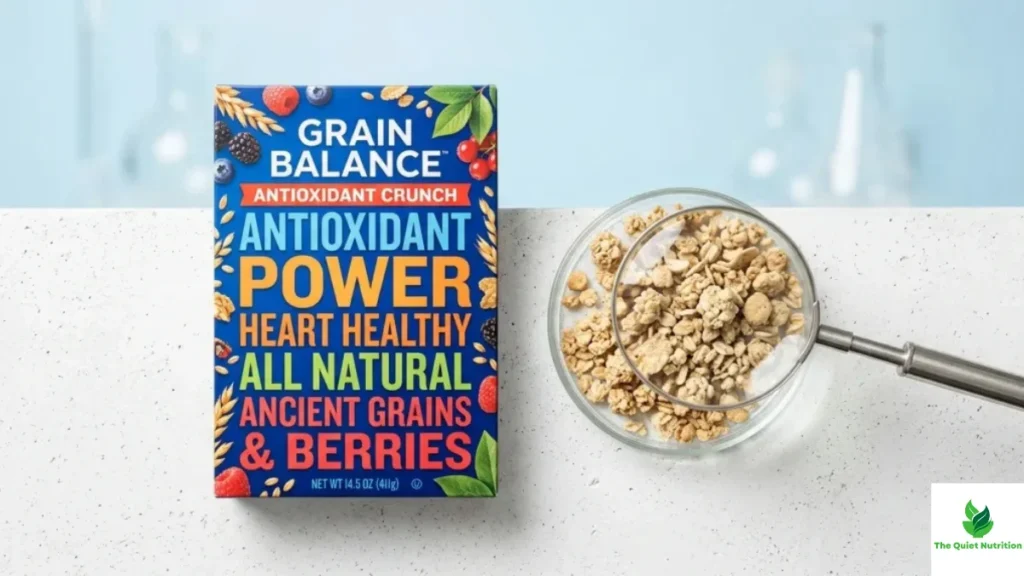
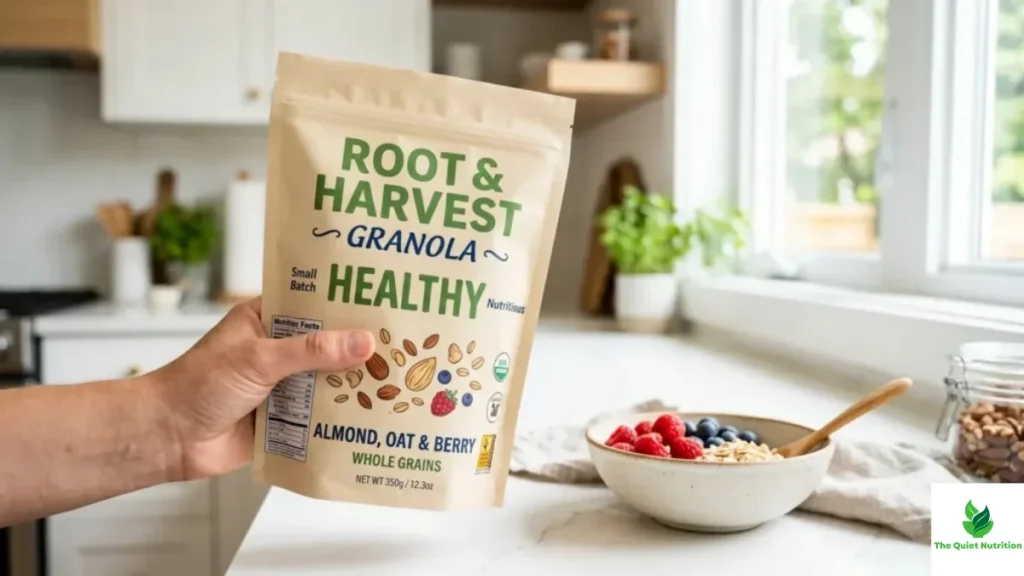
Certain words have become so reliably persuasive that they show up disproportionately across categories where the underlying product would otherwise struggle to earn trust. “Natural” carries almost no enforced regulatory definition in most markets, yet it consistently increases purchase intent and perceived healthfulness in studies, regardless of what the product actually contains. “Artisan” invokes small-batch, handmade imagery, and gets applied liberally to products manufactured at full industrial scale, precisely because the word does emotional work the manufacturing process itself never could.
This is where my neighbor’s bakery story from a different conversation echoes here too — an actual small bakery and a factory both reaching for the same word, “artisan,” because the word has become detached from the process it originally described and reattached to a general feeling of quality that can be manufactured with language alone, no flour required.
Health Halos Get Built Word by Word
Individual claims compound. A product described as “gluten-free,” “non-GMO,” and “plant-based” accumulates what researchers call a health halo — a cumulative impression of virtue built from claims that may each be technically true while collectively implying an overall healthfulness the product doesn’t necessarily earn. A gluten-free cookie is still a cookie. A non-GMO candy bar is still a candy bar. But stacked claims create a compounding psychological effect, where each additional word adds to a sense of permission, making the product feel less like an indulgence and more like a reasonable choice, independent of sugar content, calorie density, or anything else that would actually determine that.
This matters most in exactly the moments willpower is already stretched thin — the tired grocery run, the impulse buy near checkout — where a stack of virtuous-sounding words provides just enough psychological cover to make an easy yes out of a purchase someone might otherwise have paused on.
What the Focus Group Actually Revealed
The unsettling part of sitting in that observation room wasn’t learning that marketing works. Everyone already assumes that, in the abstract. It was watching how little resistance there was to it in the moment — smart, skeptical people, the kind who’d tell you they don’t fall for marketing, rating an identical product differently based on a single word, without any sense that their judgment had been steered rather than formed independently.
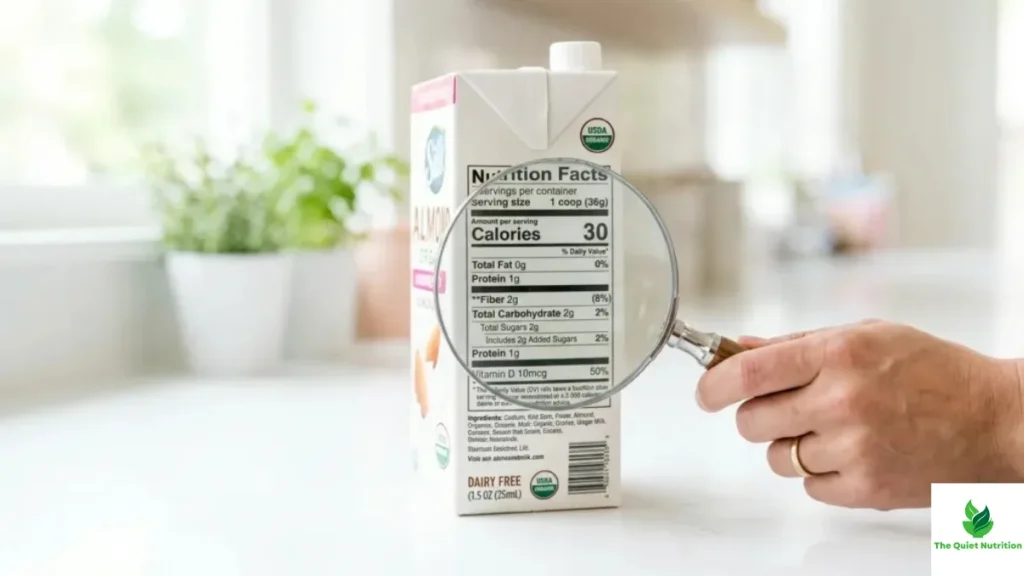
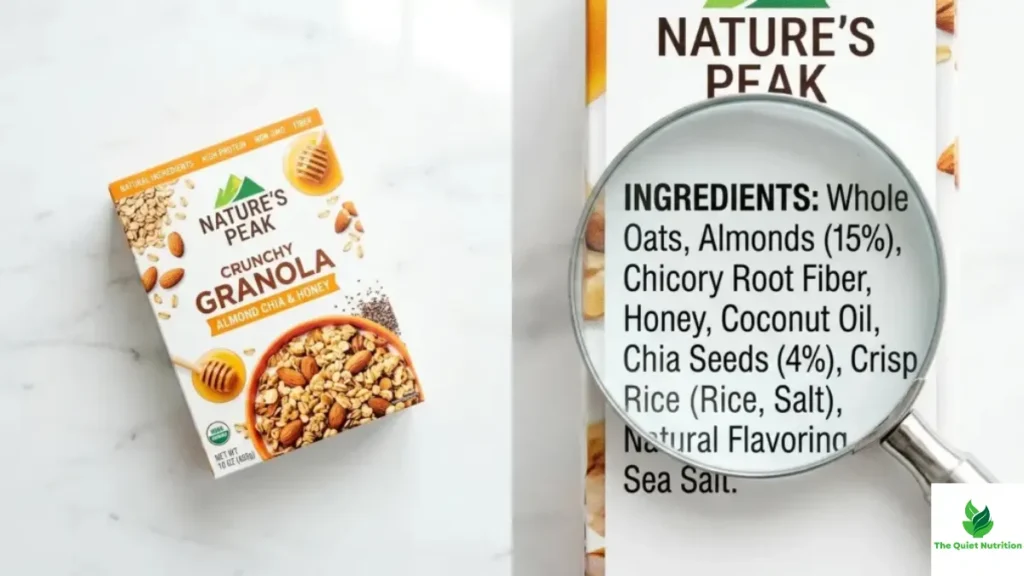
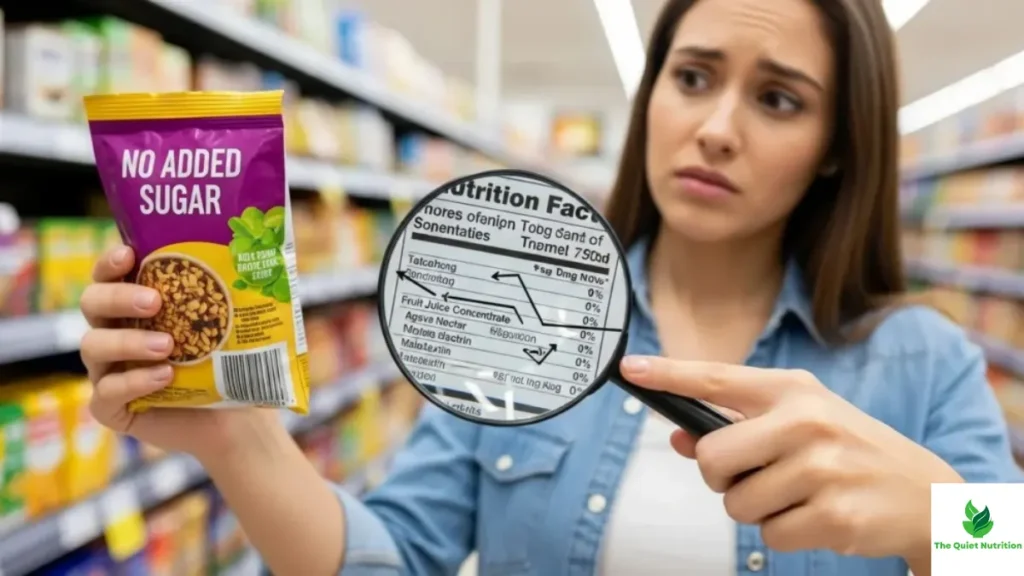
None of this means every marketing claim is a deliberate manipulation, or that language should be treated with blanket suspicion. Words genuinely do communicate real information sometimes. But the “refresher” in that focus group room is still, chemically, the “juice drink” sitting one label over, and the only way to see that clearly is the same unglamorous habit that keeps surfacing in every version of this problem: setting the words aside and reading what the product actually is, ingredient by ingredient, before the name gets a chance to decide the story first.
Sources:
- Journal of Consumer Research — Studies on Language and Food Perception: https://academic.oup.com/jcr
- Cornell Food and Brand Lab — Consumer Perception and Labeling Research: https://www.brandlab.cornell.edu/
- Federal Trade Commission — Food Advertising and Marketing Claims: https://www.ftc.gov/business-guidance/industry/food-manufacturing
- U.S. Food and Drug Administration — Food Labeling Guide: https://www.fda.gov/food/food-labeling-nutrition
- Harvard T.H. Chan School of Public Health — Nutrition Source: https://www.hsph.harvard.edu/nutritionsource/

Aarti Solanki, B.Sc. (Food Science), is a food science writer passionate about making nutrition simple and evidence-based. She creates well-researched, easy-to-understand articles on healthy eating, food science, and nutrition, using information from trusted scientific and public health sources.