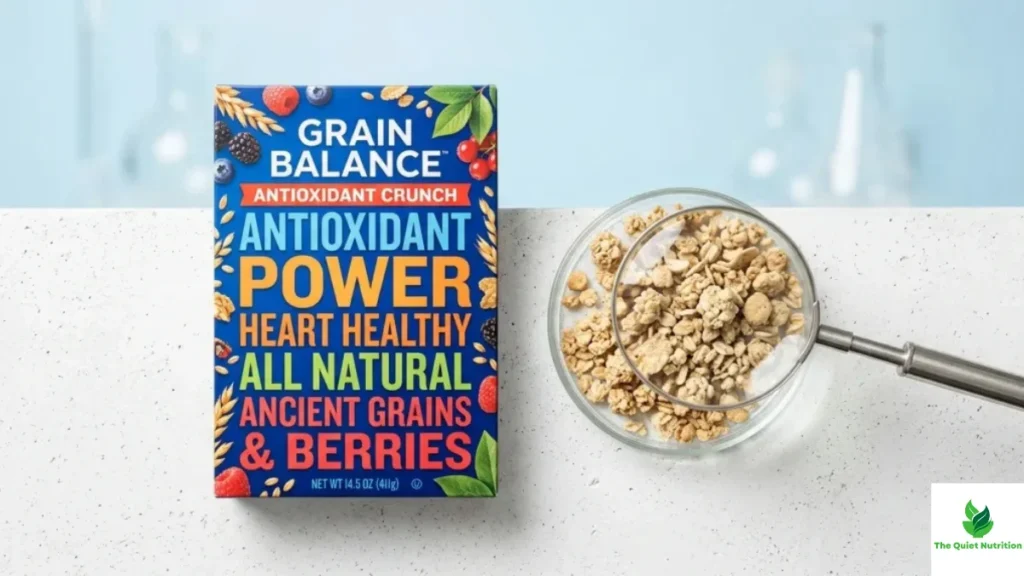
Pick up almost any packaged food in a grocery store and you’ll find a label doing two very different jobs at once. One job is legal disclosure — a government-mandated panel of numbers. The other job is persuasion — words and colors chosen specifically to make you feel good about putting the product in your cart. Most people read a label assuming both jobs are the same thing. They’re not, and the gap between them is where a lot of confusion about “healthy” food quietly lives.
What the Nutrition Facts Panel Was Actually Built For
The familiar black-and-white nutrition panel exists because of a specific piece of legislation: the Nutrition Labeling and Education Act of 1990. Before that law, nutrition information on packaged food was largely voluntary, and companies weren’t even allowed to make health claims on food labels at all — regulators treated a claim like “reduces risk of disease” as effectively turning a food into an unapproved drug. The 1990 law changed that by creating mandatory nutrition disclosure alongside a defined, regulated system for the claims companies are allowed to make.
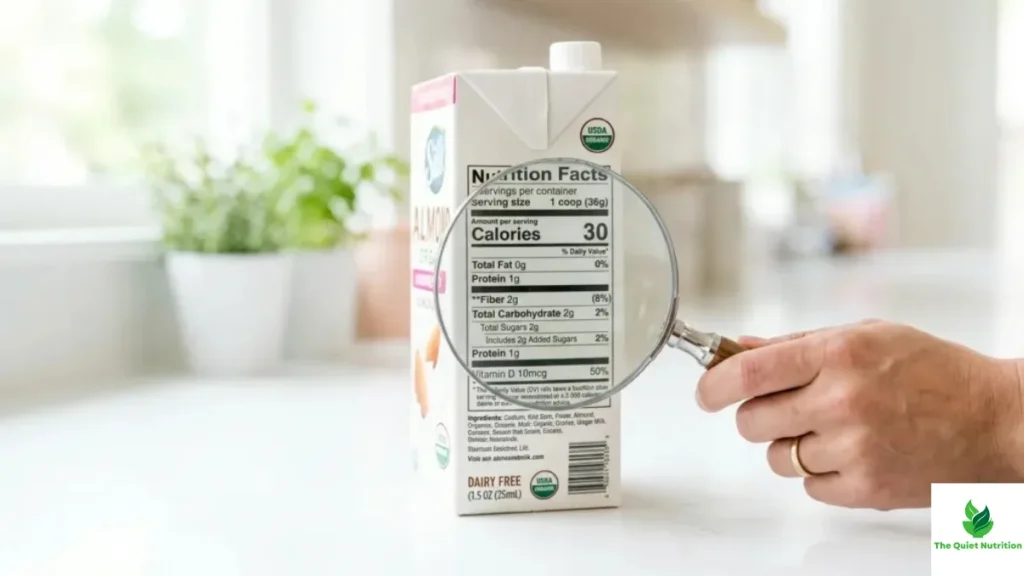
That panel’s job, in other words, is narrow and specific: disclosure. It exists to answer “what’s actually in this,” not “should you eat this.” Those are different questions, and only one of them is what the panel is legally required to answer.
The Words Around the Panel Have a Completely Different Job
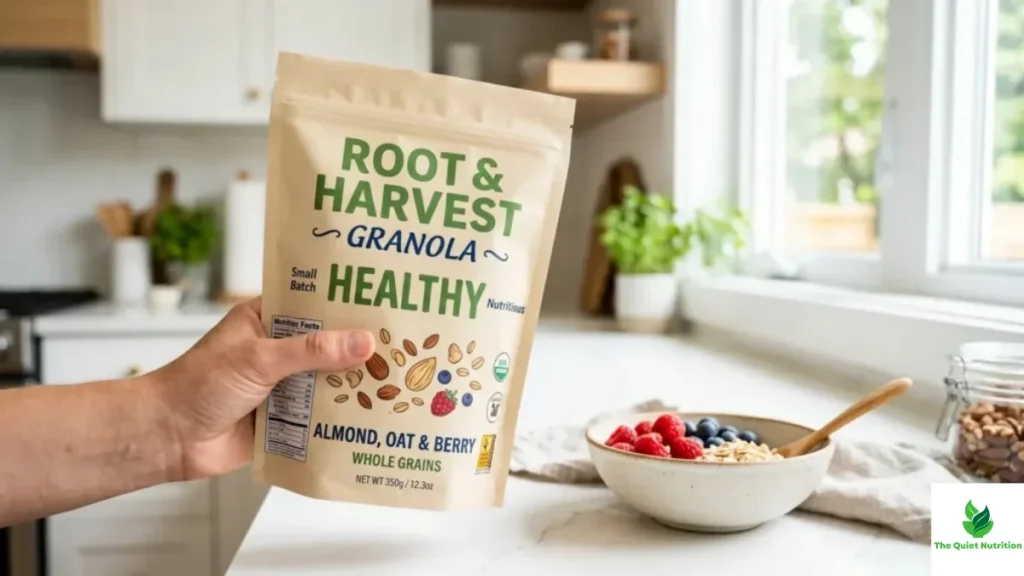
Everything printed around that mandated panel — “natural,” “made with real fruit,” “a good source of,” “protein bar” as a product name instead of just a description — belongs to a different category entirely: marketing claims. And there is a well-documented psychological phenomenon describing exactly what these words are designed to trigger: the health halo effect, where a single positive-sounding claim causes people to generalize and assume the entire product is healthier than it actually is.
Researchers have tested this directly. One study on protein bars found that health-related nutrient claims caused people to rate products as healthier overall — not just higher in the specific nutrient being claimed. Another study specifically on cereal found that simply adding a “protein” label to the front of the box shifted people’s perception of the product’s general healthfulness, even though the rest of the nutritional profile hadn’t changed at all. A broader meta-analysis of over 100 studies on front-of-package labeling found that these claims can improve people’s ability to spot a genuinely healthier product in a side-by-side comparison — but the same research found that these labels also generate halo effects that spill over onto less healthy “vice” products, softening how unhealthy they’re perceived to be.
This is the core design tension: the panel discloses, and the marketing around it reframes. One is regulated for accuracy. The other is regulated far more loosely, and its entire purpose is to shape a feeling before you’ve read a single number.
Why “Healthy” Doesn’t Mean What You’d Assume
Even the word “healthy” itself has been a moving regulatory target. For decades, the FDA’s official definition of what a product needed to meet in order to legally use the word “healthy” on its packaging was based on outdated nutrition science — old thinking around total fat content, largely disconnected from what’s now understood about added sugar, whole grains, and overall dietary pattern. The FDA only finalized an updated definition of the term relatively recently, specifically because the old rules allowed products most people wouldn’t consider healthy to legally wear the label, while genuinely nutrient-dense foods sometimes couldn’t qualify.
That regulatory history matters, because it reveals something people rarely think about: “healthy” on a label isn’t a nutritional judgment made fresh for that specific product. It’s a checkbox against a formal legal definition, one that has been debated, revised, and — for years — noticeably out of step with actual nutrition science. A word that sounds like a verdict is, legally, closer to a technicality.
What Labels Never Promise You
Here’s the part that gets lost in all of this: even a fully accurate, perfectly legal nutrition label was never designed to tell you the thing you probably actually want to know — whether this food, eaten the way you’ll realistically eat it, in the pattern you’ll realistically eat it in, supports your health over time. The panel gives you numbers per serving. It says nothing about:
- Whether the “serving size” bears any resemblance to how much you’ll actually eat in one sitting
- How the food behaves as part of your overall weekly pattern, versus in isolation
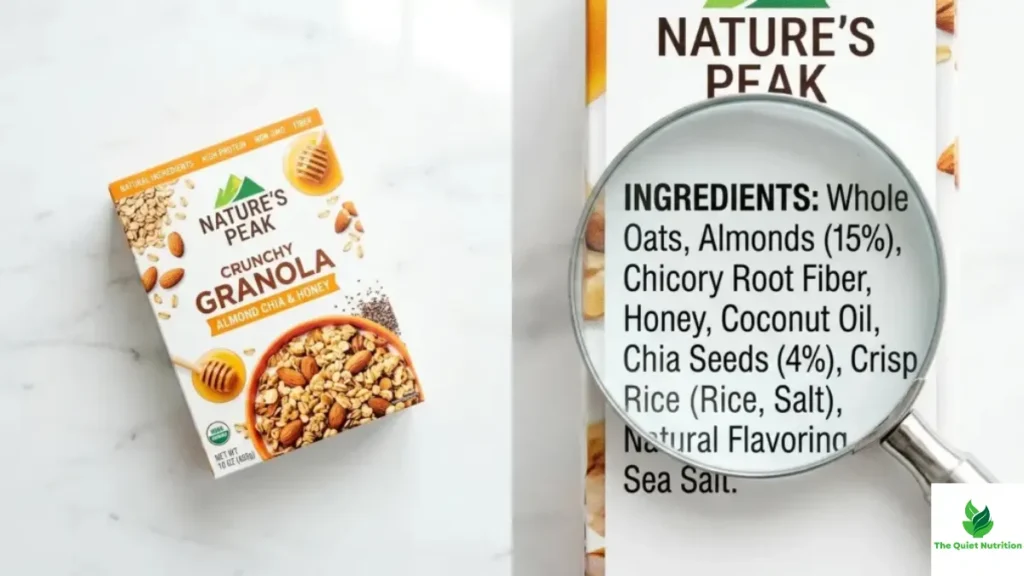
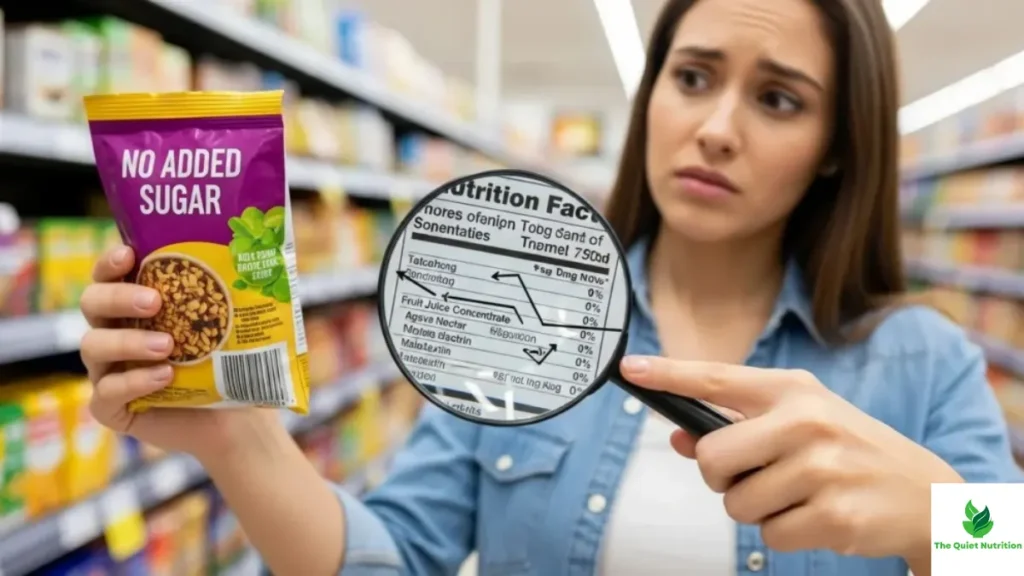
- Whether the specific type and source of an ingredient matters as much as its raw quantity (added sugar from fruit juice concentrate behaves differently in a formulation than the label alone conveys)
- Long-term outcomes — no panel or claim is designed to tell you anything about what eating this regularly for ten years does to you
None of this makes labels dishonest. The Nutrition Facts panel, specifically, is one of the more rigorously regulated pieces of a food package, and it remains a genuinely useful tool for direct comparisons. But it was built to answer a narrow legal question, not a broad personal one — and the marketing claims layered around it were built to answer no question at all. They were built to produce a feeling.
Reading a Label the Way It Was Actually Designed to Be Read
Once you separate these two functions, labels become far more useful, not less. The panel is worth reading closely — serving size first, since nearly everything else on the panel scales from that one number, and it’s frequently set smaller than what people actually eat in a sitting. The front-of-package language is worth reading with active skepticism, treated as an advertisement rather than a nutritional summary, because that’s precisely what regulatory history shows it functionally is.
The label was never lying to you, exactly. It’s just been doing two jobs at once, wearing one unified design, and only one of those jobs was ever about giving you the full truth.
Sources
- Congress.gov (Congressional Research Service) — Food and Dietary Supplement Labeling Claims: FDA Regulation and Select Legal Issues
- Federal Register / FDA — Food Labeling: Nutrient Content Claims; Definition of Term “Healthy”
- NIH/NCBI — Front-of-Package Protein Labels on Cereal Create Health Halos
- PubMed — Health Halo Effects from Product Titles and Nutrient Content Claims in the Context of “Protein” Bars
- Journal of the Academy of Marketing Science — Consumer Effects of Front-of-Package Nutrition Labeling: An Interdisciplinary Meta-Analysis

Aarti Solanki, B.Sc. (Food Science), is a food science writer passionate about making nutrition simple and evidence-based. She creates well-researched, easy-to-understand articles on healthy eating, food science, and nutrition, using information from trusted scientific and public health sources.


Pingback: How Nutrition Labels Turn Complicated Food Science Into Simple Everyday Choices
Pingback: Why Bright Health Claims Trigger Trust — And Why Your Brain Falls for Them Instantly
Pingback: How Packaging Influences Food Choices — The Silent Persuasion You Rarely Notice
Pingback: Why “Low Fat” Became a Marketing Shortcut — And How It Quietly Changed the Way We Eat
Pingback: Why Food Labels Highlight What Sells — Not What Truly Nourishes You