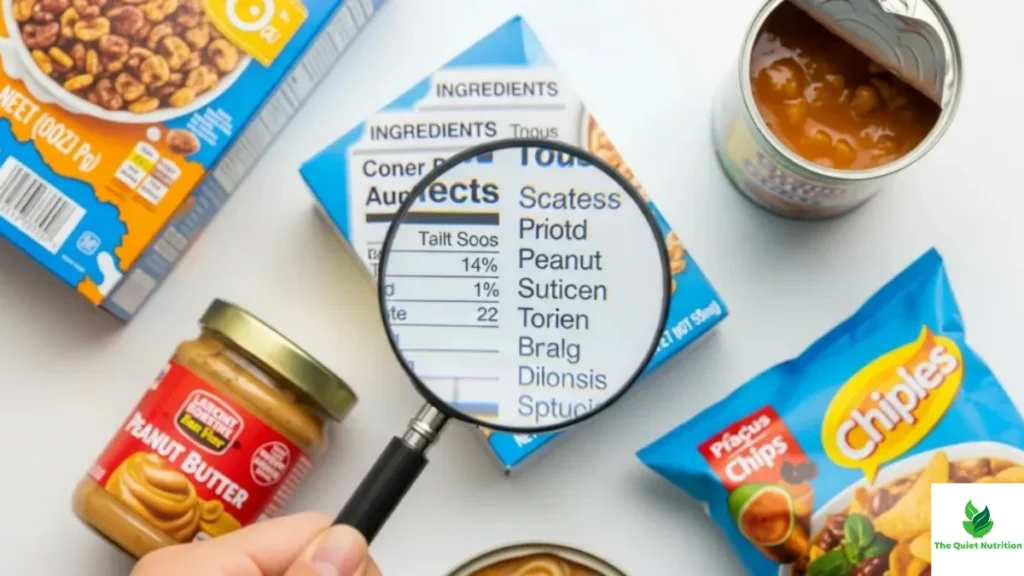
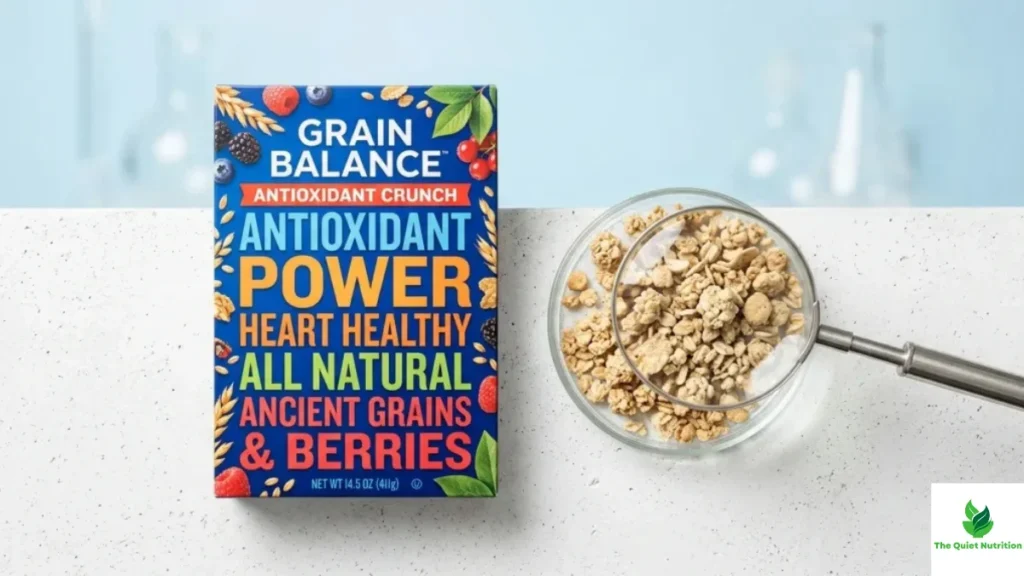
Pick up almost any snack in a grocery aisle and the front of the box is basically shouting at you. “Made with real fruit.” “Natural.” “Lightly sweetened.” “Simply made.” It’s designed to make you feel good about the purchase before you’ve read a single actual fact about what’s inside. And here’s the uncomfortable part — most of those words don’t legally have to mean much of anything.
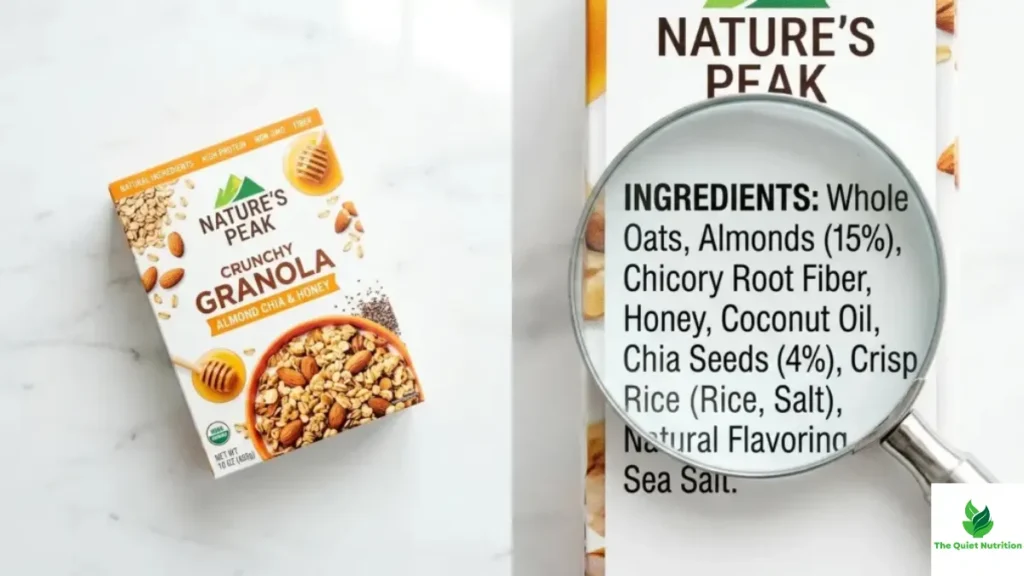
The information that actually tells you something is printed in small type on the back, in a place almost nobody stops to read carefully: the ingredient list. Understanding just one rule about how that list works can save you from more marketing tricks than any amount of buzzword-decoding ever could.
The One Rule That Actually Matters
Here’s the rule: ingredients are listed in order of how much of the product they make up, from most to least. <cite index=”28-1″>The ingredient list shows each ingredient by its common or usual name in descending order by weight, so the ingredient contributing the most to the product’s weight is listed first, and the one contributing the least is listed last.</cite> This isn’t a suggestion or an industry norm — it’s federal law. <cite index=”34-1″>Under FDA regulation, ingredients required to be declared on a food label must be listed by common or usual name in descending order of predominance by weight.</cite>
That single rule turns the ingredient list into the most honest thing on the entire package. A cereal box can plaster “made with whole grains” across the front, but if you flip it over and see sugar sitting in the first three ingredients, you already know more about that product than the marketing team wanted to share upfront.
Why “Made With Real Fruit” Barely Means Anything
Take one of the most common claims on snack packaging: “made with real fruit.” It sounds specific. It isn’t. <cite index=”36-1″>A strawberry gummy might say “made with real fruit” even though the fruit content is a small amount of apple puree, with the bulk of the product made up of fillers, added sugars, artificial flavoring, and coloring.</cite>
The claim is technically regulated, but the regulation doesn’t require much. <cite index=”38-1″>The FDA doesn’t dictate how much real fruit has to be present for a company to make that claim, so high-sugar products like fruit snacks, granola bars, and juice drinks often contain barely any of it.</cite> That’s not the company lying — it’s the company using a true statement to imply something false. The ingredient list is the fastest way to catch it: <cite index=”36-1″>check the list to make sure the healthy component is actually one of the first ingredients, not buried near the bottom.</cite>
“Natural” Sounds Meaningful. It Isn’t Regulated the Way You’d Expect
Few words carry more unearned trust than “natural.” Shoppers hear it and mentally file the product as healthier, simpler, less processed.
<cite index=”37-1″>The FDA does not strictly regulate the use of the term “natural” on food packaging, giving manufacturers considerable discretion in how they use it.</cite> As a result, <cite index=”37-1″>products labeled “natural” can still be highly processed and may contain added sugar, preservatives, or extra flavorings.</cite> Sugar, salt, and refined carbohydrates are, technically, natural — and none of that makes them healthier ingredients.
Even “natural flavors” as a phrase carries less specificity than it sounds like it should. The wording tells you almost nothing about what’s actually flavoring your food, or how processed that flavoring compound is. If a brand wanted you to know exactly what was in the product, it would say so — the vague version exists because it’s more flexible for the manufacturer, not because it’s more informative for you.
Watch for Ingredients Hiding in Plain Sight
Ingredient lists have their own quirks worth knowing. Composite ingredients — things made of multiple sub-components — sometimes get broken apart and scattered throughout the list instead of grouped together. <cite index=”33-1″>Manufacturers can either list a composite ingredient by name with its components in parentheses, or skip naming it entirely and disperse its individual components into the main list in their proper weight order — both approaches are legal.</cite> That second method can make a product look like it has fewer concerning ingredients near the top than it actually does, simply because those ingredients got split up and re-sorted individually by weight.
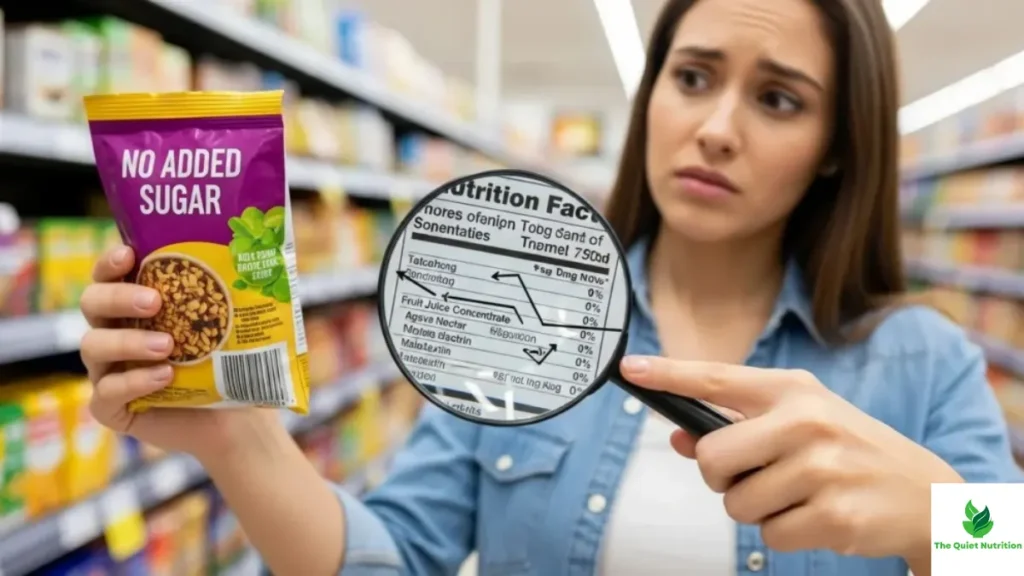
Sugar plays this game especially well. It shows up under dozens of different names — cane syrup, dextrose, maltose, rice syrup, and anything ending in “-ose” — and a product can contain several of these simultaneously, none of which individually ranks high enough to appear near the top of the list, even though their combined total might rival or exceed the first ingredient.
How to Actually Use This When You’re Shopping
You don’t need to memorize dozens of buzzwords or become suspicious of every label claim. You need one habit: flip the package over before you decide anything based on the front.
Look at the first three to five ingredients — they typically make up the overwhelming majority of the product. If sugar, refined flour, or oil dominate that early section, no front-of-package claim changes what you’re actually buying. If whole foods dominate that early section, the marketing on the front becomes far less important, because the substance backs it up.
This one habit — order before adjectives, list before label — cuts through more marketing noise than any list of “watch out for these words” ever fully can, because it relies on a rule companies are legally required to follow, not on language they’re free to spin however they like.
Sources:
- U.S. FDA — Interactive Nutrition Facts Label: Ingredient List
- Cornell Law School — 21 CFR § 101.4, Food Designation of Ingredients
- Tufts Health & Nutrition Letter — Don’t Be Duped by Misleading Package Labeling

Aarti Solanki, B.Sc. (Food Science), is a food science writer passionate about making nutrition simple and evidence-based. She creates well-researched, easy-to-understand articles on healthy eating, food science, and nutrition, using information from trusted scientific and public health sources.

Pingback: How Food Label Design Tricks the Brain Into Seeing “Healthy” — Even When It Isn’t
Pingback: Why Clean-Looking Packaging Instantly Builds Trust — Even Before You Read the Label