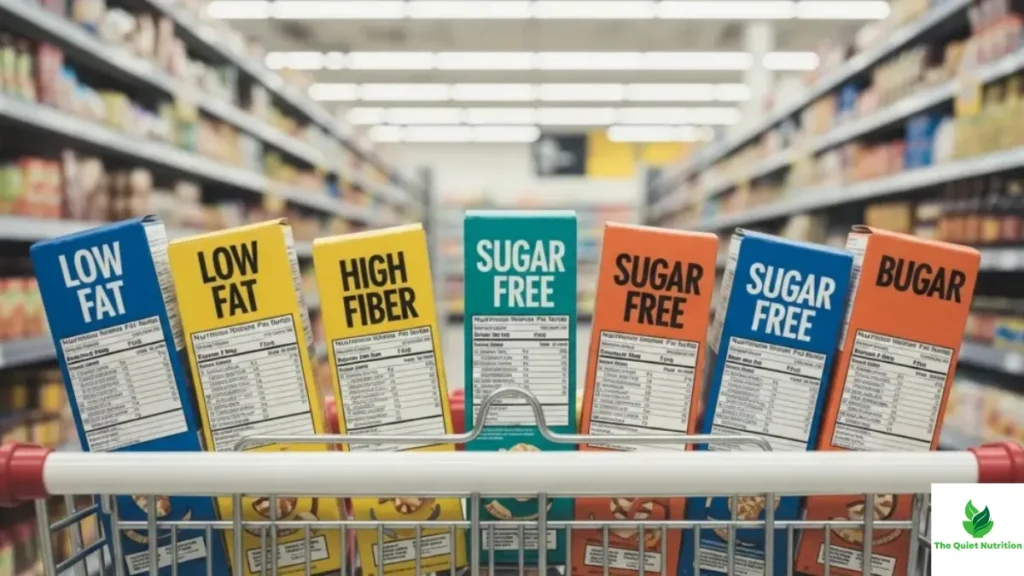
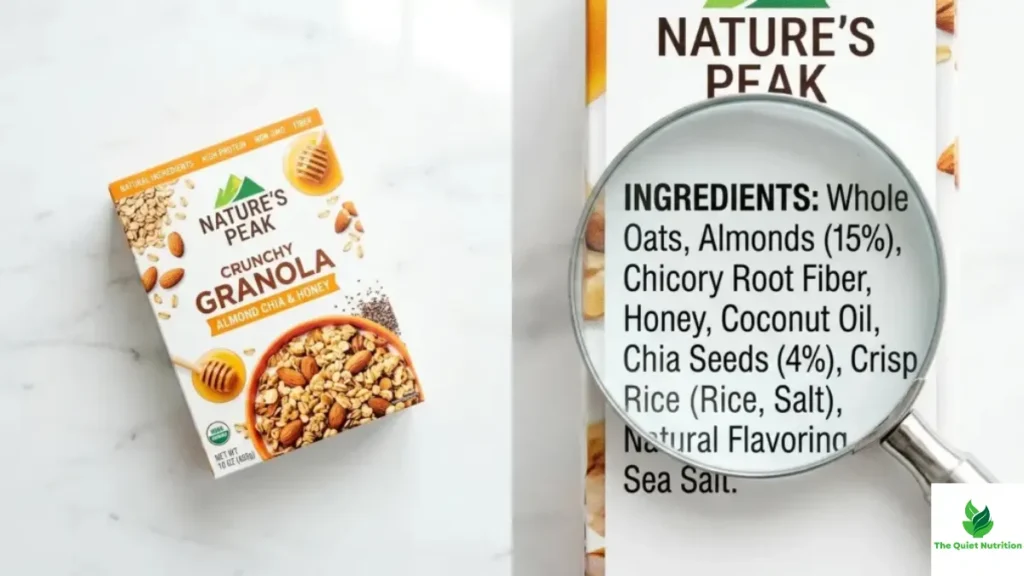
Flip over almost any packaged snack and somewhere on the front you’ll find a proud little callout: “10g of protein!” or “Good source of fiber!” or “Excellent source of vitamin C!” These claims are true. They’re also, quietly, doing a very specific job — pulling your attention toward the one thing about the product that looks good, while the things that don’t get no mention at all. That’s not an accident of design. It’s how the whole system is built.
The Label Isn’t Lying — It’s Just Not Telling You the Whole Story
Nutrition claims on packaging are regulated, which is exactly why they feel trustworthy. But regulation dictates what a company is allowed to say, not what it’s required to say. A product can legally boast “high fiber” on the front without a single word about the sugar content sitting a few inches below it on the nutrition panel.
Researchers studying grocery store labeling have found that companies overwhelmingly favor this kind of one-sided highlight. An FDA study looking at grocery store products found that more than half of foods carried nutrient claims like “High Fiber” or “Low Sodium” — and that pattern hasn’t slowed down since. Walk down any cereal or snack aisle today and you’ll see the same selective spotlight, product after product, positive claim after positive claim, with almost nothing volunteered about what those products might be high in that you’d actually want to avoid.
Good Nutrients Don’t Cancel Out Bad Ones — But Labels Often Imply They Do
Here’s where the real distortion happens. A lot of food scoring systems and front-of-package designs work on an underlying assumption that beneficial nutrients — vitamins, fiber, protein — can offset the negative impact of things like added sugar or sodium in the same product. It’s an intuitive-sounding idea. It’s also not supported by evidence. Public health researchers reviewing these labeling systems have pointed out that there are no studies showing fiber, vitamins, or minerals can actually offset the harmful effects of high sugar, sodium, or saturated fat levels in the same food.
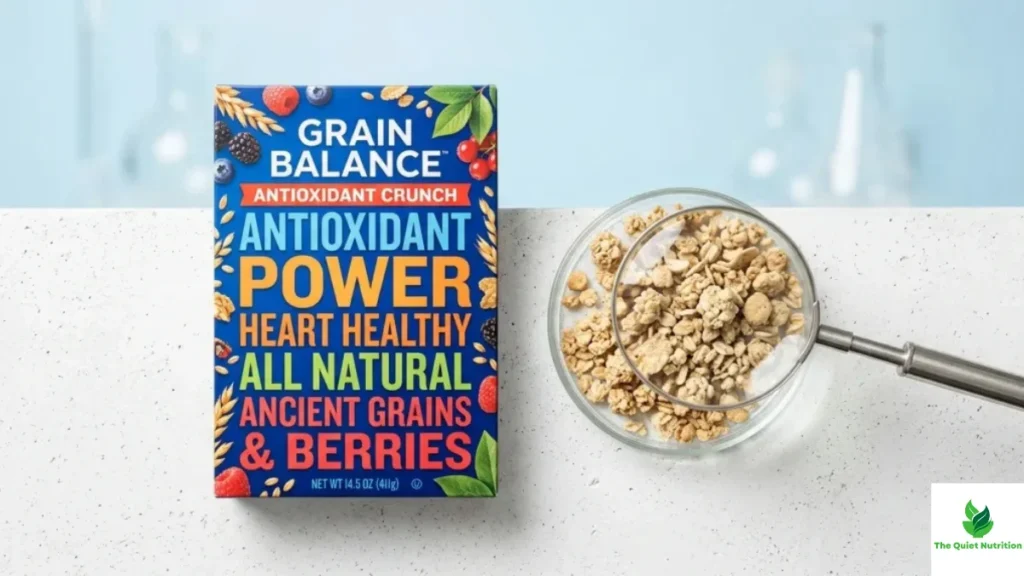
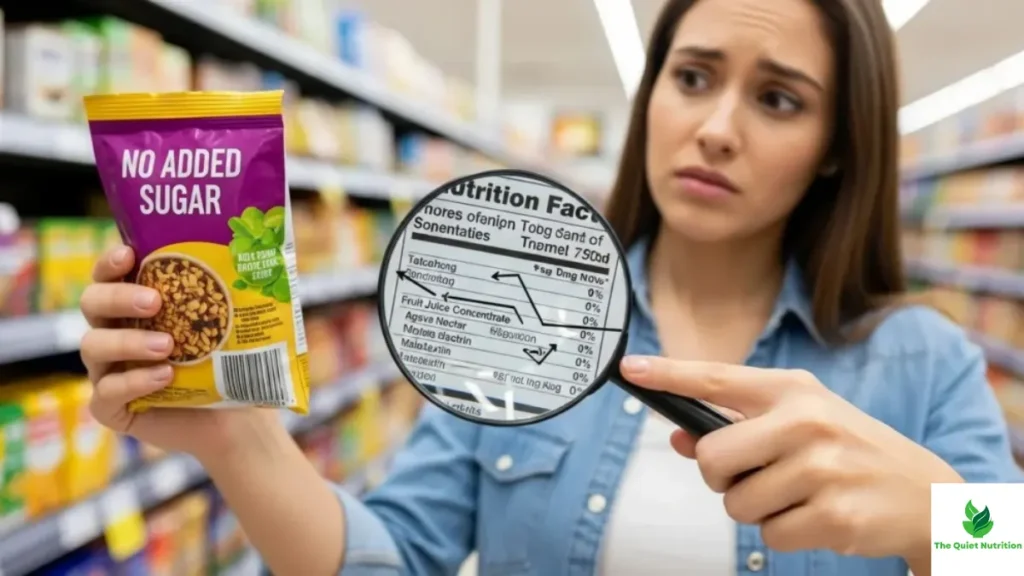
In other words, a granola bar that’s “high in fiber” and “high in added sugar” isn’t nutritionally balanced just because one positive claim sits next to one negative reality. But visually, on the package, only the positive half usually gets a spotlight. The negative half is left to the small-print nutrition panel, where most shoppers spend a few seconds at most.
Why Your Eyes Go to the Wrong Numbers
It turns out this selective emphasis doesn’t just shape what companies choose to print — it shapes what shoppers actually look at, even when better information is available right next to it. One eye-tracking study testing how people evaluate front-of-package nutrition symbols found that participants’ accuracy in picking the more healthful of two products was below chance on half of the comparisons, despite consulting the labels. The researchers noted that shoppers tended to over-rely on calories, fat, and sodium while paying relatively little attention to sugar — and that greater attention to sugar and fiber, when it did happen, was linked to better decisions.
This is a strange, almost backwards result: information was available, people looked at the label, and they still frequently got it wrong. That’s a strong signal that label design itself — what gets emphasized visually versus what gets buried — plays a bigger role in people’s decisions than the raw facts do.
Regulators Have Started Pushing Back
This imbalance hasn’t gone unnoticed. The FDA has been working on a standardized front-of-package labeling framework that flips the usual emphasis: rather than highlighting positive nutrients, the proposed system focuses specifically on three nutrients people are typically advised to limit — saturated fat, sodium, and added sugars — labeling each as Low, Medium, or High based on daily value percentage. Manufacturers would still be allowed to voluntarily highlight positive nutrients elsewhere on the package, but the core standardized information would finally center on what consumers are usually never shown clearly: the stuff worth limiting, not just the stuff worth boasting about.
Public health advocates pushing for this shift have argued it directly, framing existing label practices as a form of “health-washing” — foods marketed around one or two positive attributes while their less flattering nutritional profile stays comfortably out of the spotlight. Whether or not that framing lands for everyone, the underlying pattern it describes is well documented: companies highlight what flatters the product, and label design determines what shoppers actually notice.
The Practical Shift Worth Making
None of this requires distrust of every product on a shelf. It requires recalibrating where your attention goes. A front-of-package claim, by design, tells you about one ingredient the company is proud of. It was never built to tell you the whole nutritional story — and current evidence suggests it usually doesn’t, unless you deliberately look past it.
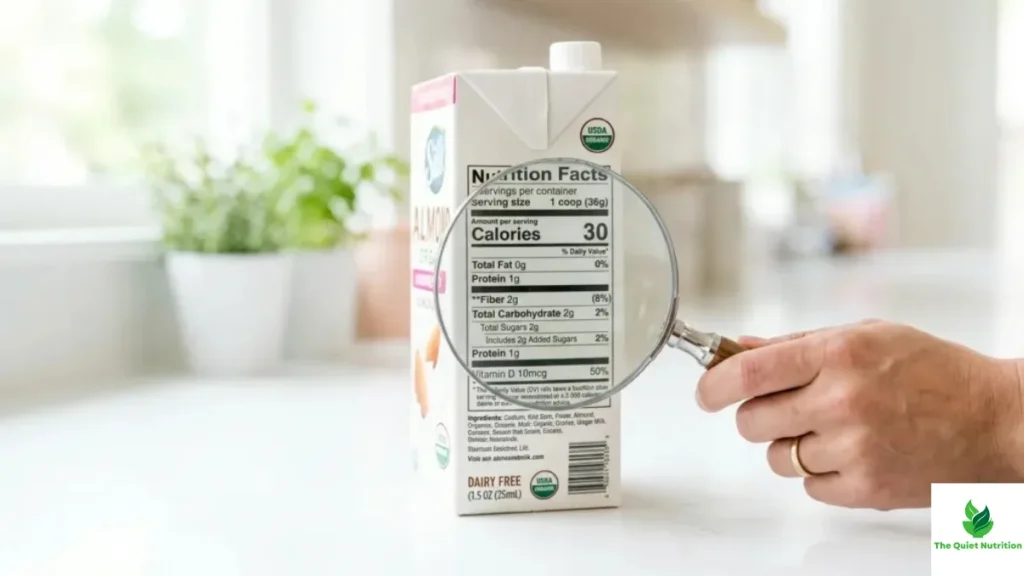
The fix is almost too simple to feel satisfying: read past the boast. The nutrition panel doesn’t get to cherry-pick what it reports. That makes it the only part of the package actually obligated to tell you both halves of the story — not just the half the product wants you to remember.
Sources:
- Center for Science in the Public Interest — The Food Industry’s False Claims About Front-of-Package Nutrition Labeling
- NCBI/PMC — Experimental Studies of Front-of-Package Nutrient Warning Labels: A Scoping Review
- NCBI/PMC — Misunderstanding of Front-of-Package Nutrition Information on US Food Products
- National Academies Press — Front-of-Package Nutrition Rating Systems and Symbols: Promoting Healthier Choices

Aarti Solanki, B.Sc. (Food Science), is a food science writer passionate about making nutrition simple and evidence-based. She creates well-researched, easy-to-understand articles on healthy eating, food science, and nutrition, using information from trusted scientific and public health sources.


Pingback: Why Nutrition Claims Focus on Single Nutrients — And Why That’s Rarely the Full Health Story
Pingback: How Front-of-Pack Labels Simplify Too Much — And Why “Easy” Nutrition Choices Often Miss the Truth
Pingback: “High in Protein” But Still Unhealthy? How Nutrient Claims Distract From What Food Really Does to Your Body