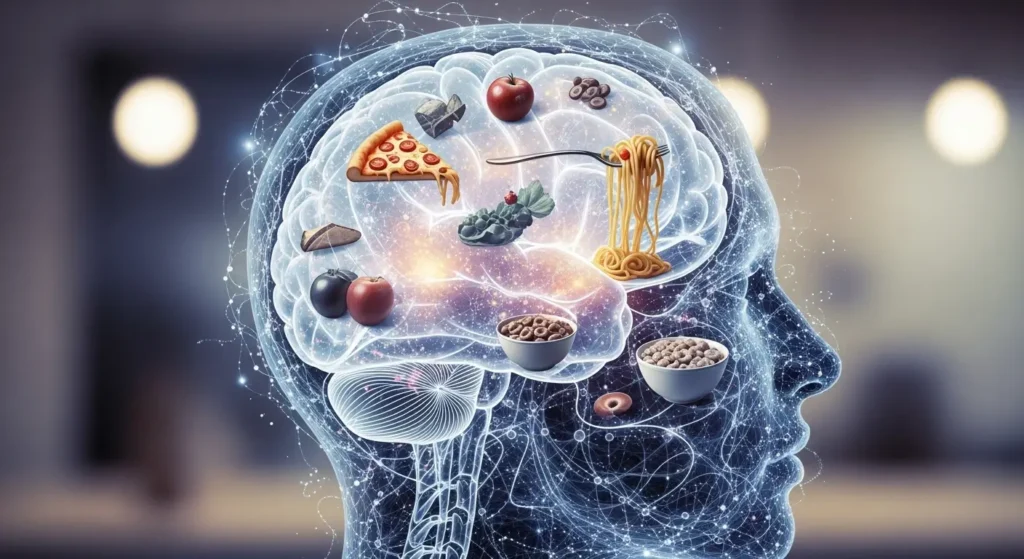
When Your Thoughts Feel Loud, Fast, and Hard to Stop
Your body may be sitting still.
But your mind is racing.
Thoughts overlap. Decisions feel heavy. Even small things feel urgent. You might assume this is stress, personality, or pressure—but often, it’s something quieter and more physical.
It’s how your brain is being fueled.
Calm thinking isn’t just an emotional state. It’s a metabolic one. When nutrition sends signals of stability and safety, the brain naturally softens its pace. When nutrition feels chaotic, rushed, or insufficient, the mind mirrors that tension.
This is why calm nutrition supports calm thinking—without forcing relaxation, breathing exercises, or willpower.
Calm Thinking Is a Biological State, Not a Mental Trick
We often treat calm as something you do.
But calm is something the brain allows.
The brain shifts into calm thinking when it senses:
- Stable energy availability
- Predictable nourishment
- Low internal threat
When these conditions are met, the nervous system relaxes its grip. Thoughts slow. Focus narrows. Emotional reactivity eases.
When they aren’t met, the brain stays vigilant—even if nothing is “wrong.”
Nutrition is one of the strongest signals the brain uses to decide whether it’s safe to slow down.
Why the Brain Interprets Food Patterns as Safety Signals
From an evolutionary perspective, food equals survival.
The brain constantly monitors:
- When food arrives
- How reliable it is
- Whether energy feels scarce
Erratic eating, chronic restriction, or rushed meals tell the brain:
“Resources are uncertain. Stay alert.”
Calm nutrition sends the opposite message:
“Fuel is available. You can relax.”
This shift happens below conscious awareness—but its effect on thinking is profound.
What “Calm Nutrition” Actually Means (And What It Doesn’t)
Calm nutrition is not:
- Eating perfectly
- Following a rigid plan
- Avoiding entire food groups
Calm nutrition is:
- Consistent meal timing
- Adequate energy intake
- Balanced macronutrients
- Eating without urgency or fear
It’s not about control.
It’s about reliability.
The calmer the signal to the brain, the calmer the mental response.
How Unstable Nutrition Creates Mental Noise
When nutrition is inconsistent, the brain compensates.
It increases:
- Cortisol
- Alertness
- Scanning behavior
This creates:
- Racing thoughts
- Overthinking
- Emotional sensitivity
- Difficulty relaxing
People often try to “think their way out” of this state—when the root cause is physiological instability, not mindset.
Real-Life Example: Calm Days vs Chaotic Food Days
Many people notice this pattern:
On days when they:
- Eat regularly
- Don’t rush meals
- Feel adequately fueled
Their mind feels:
- Quieter
- More focused
- Less reactive
On days when they:
- Skip meals
- Eat lightly during stress
- Rely on caffeine
Their thoughts speed up—even if nothing else changed.
The difference isn’t discipline.
It’s nutritional signaling.
Blood Sugar Stability: The Foundation of Calm Thinking
One of the strongest links between nutrition and calm is glucose stability.
When blood sugar swings:
- The brain interprets it as threat
- Stress hormones rise
- Thinking becomes urgent and scattered
- Emotional regulation
- Steady focus
- Calm attention
This is why extreme highs and lows in eating patterns often increase anxiety-like thinking—even without emotional triggers.
Calm Nutrition vs Stimulating Nutrition
| Aspect | Calm Nutrition | Stimulating Nutrition |
|---|---|---|
| Energy Delivery | Steady | Spiky |
| Nervous System | Settled | Activated |
| Thought Pace | Measured | Rushed |
| Focus | Sustained | Jittery |
| Emotional Reactivity | Lower | Higher |
Calm doesn’t mean low energy—it means stable energy.
The Hidden Role of Meal Timing in Mental Calm
Timing matters as much as content.
Long gaps between meals:
- Increase stress hormones
- Reduce emotional tolerance
- Make the brain hypervigilant
Regular timing:
- Reduces internal urgency
- Improves patience
- Supports calm focus
The brain relaxes when it doesn’t have to guess when fuel is coming next.
Why “Eating Light” Can Make the Mind Feel Heavy
Many people eat lightly to feel better mentally.
Short-term, this can feel okay.
Long-term, it often backfires.
Chronic light eating:
- Signals scarcity
- Increases internal stress
- Makes thoughts feel louder
Calm thinking doesn’t come from less fuel—it comes from enough, delivered consistently.
Why This Matters Today
Modern life already stimulates the brain constantly:
- Notifications
- Deadlines
- Decisions
If nutrition also adds instability, the brain never truly rests.
Calm nutrition becomes a counterbalance—quietly supporting mental steadiness in a noisy world.
This isn’t about escaping stress.
It’s about reducing unnecessary internal stress.
Actionable Ways to Practice Calm Nutrition
You don’t need drastic changes.
Start With These Gentle Shifts
- Eat at roughly the same times daily
- Include carbohydrates, protein, and fat at meals
- Avoid long fasts during high-stress days
- Eat without rushing when possible
- Refuel after mentally demanding tasks
Calm is built through repetition, not perfection.
Common Mistakes That Undermine Calm Thinking
Avoid these patterns:
- Skipping meals to feel “lighter”
- Replacing food with caffeine
- Eating reactively after long restriction
- Ignoring subtle mental fatigue
Mental agitation often starts in the body—not the mind.
Subtle Signs Nutrition Is Supporting Calm Thinking
Look for:
- Fewer racing thoughts
- Better emotional control
- Easier focus
- Reduced irritability
- More mental patience
These changes are often gradual—but deeply stabilizing.
Key Takeaways
- Calm thinking is supported by stable nutrition
- The brain interprets eating patterns as safety signals
- Inconsistent intake increases mental urgency
- Calm nutrition focuses on reliability, not restriction
- Mental steadiness often improves before mood awareness
Frequently Asked Questions
1. Can food really affect how calm my thoughts feel?
Yes. Nutrition directly influences stress hormones and brain energy regulation.
2. Is calm nutrition the same as mindful eating?
They overlap, but calm nutrition focuses more on consistency and adequacy than awareness alone.
3. Does this mean I need to eat more?
Not necessarily more—more reliably and sufficiently for your needs.
4. Why does skipping meals increase anxiety-like thoughts?
Because the brain interprets energy gaps as a potential threat.
5. How long does it take to notice changes?
Many people notice mental steadiness improving within days to weeks of consistent patterns.
Conclusion: Calm Thinking Begins With Calm Signals
You don’t have to force your mind to slow down.
Often, it’s waiting for permission.
Calm nutrition sends that permission quietly—through stability, adequacy, and rhythm.
When the brain feels supported, thinking softens naturally.
Not because you tried harder—but because your system felt safe enough to relax.
Disclaimer: This article is for general educational purposes only and does not replace personalized medical or nutrition advice.