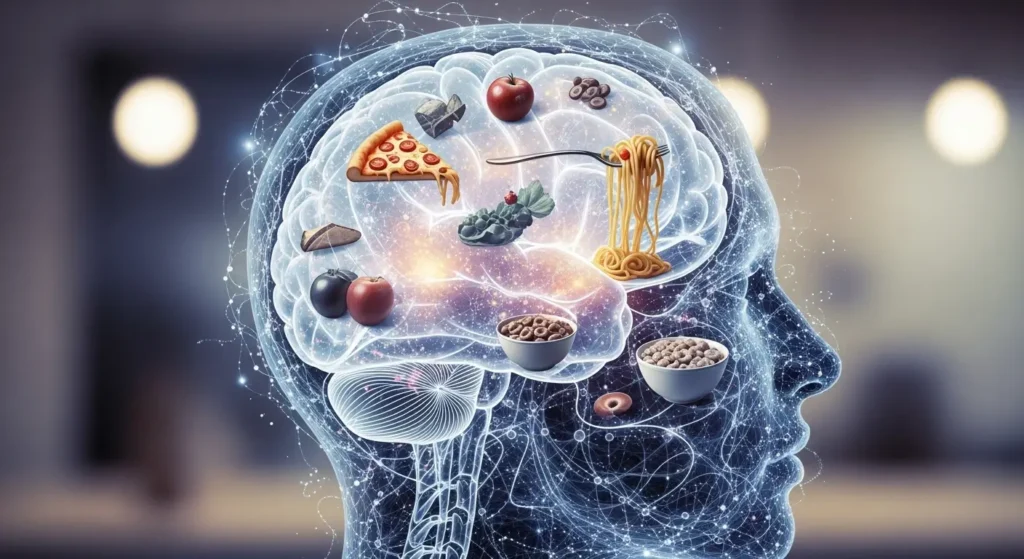
When Tired Isn’t Physical—It’s Mental
You wake up tired.
Not sore.
Not sick.
Just mentally heavy.
Simple decisions feel overwhelming. Concentration slips. Motivation fades. Yet nothing in your schedule explains the exhaustion.
For many people, this kind of fatigue isn’t caused by stress or sleep alone. It’s the quiet cognitive cost of eating too little.
Low energy intake doesn’t always feel like hunger. Often, it shows up as mental fatigue—a slow dulling of clarity, focus, and emotional resilience.
Understanding this connection changes how you see tiredness entirely.
Mental Fatigue Isn’t Laziness — It’s an Energy Signal
Your brain is not passive tissue.
It is one of the most energy-demanding organs in the body.
Even at rest, the brain uses:
- ~20% of daily energy
- A constant supply of glucose
- Stable nutrient availability
When overall energy intake drops, the brain doesn’t shut down—it conserves.
That conservation feels like:
- Brain fog
- Slower thinking
- Reduced motivation
- Emotional flatness
This isn’t weakness. It’s biological prioritization.
Why Eating Less Often Feels “Fine” at First
One of the most confusing parts of low energy intake is that it doesn’t hurt immediately.
Early on, people may notice:
- Reduced appetite
- Slight alertness from stress hormones
- A feeling of “lightness”
This phase is temporary.
As energy intake stays low, the brain gradually shifts into efficiency mode, reducing non-essential cognitive output to protect survival.
Mental fatigue appears after adaptation, not before.
The Brain’s Energy Budget: Why Calories Matter for Thinking
Calories are often discussed in terms of weight.
But for the brain, calories are currency.
Energy supports:
- Neurotransmitter production
- Attention regulation
- Emotional control
- Decision-making speed
When intake drops too low, the brain reallocates energy away from:
- Focus
- Creativity
- Motivation
Toward:
- Basic alertness
- Threat detection
- Survival signaling
You stay awake—but not sharp.
How Low Energy Intake Disrupts Focus and Motivation
Mental fatigue from under-eating isn’t random. It follows predictable patterns.
Common Cognitive Effects Include:
- Difficulty sustaining attention
- Slower processing speed
- Reduced working memory
- Emotional irritability
- Loss of mental “drive”
People often mislabel this as burnout or boredom—when it’s actually fuel deprivation.
Real-Life Example: The “Healthy but Exhausted” Trap
Consider someone eating:
- Clean foods
- Regular meals
- Plenty of vegetables
But total intake is low.
They may not feel hungry, yet they report:
- Afternoon brain fog
- Difficulty focusing on tasks
- Constant mental tiredness
This happens because volume and quality don’t guarantee adequacy.
The brain cares about energy availability, not just food choices.
Why Mental Fatigue Often Appears Before Physical Fatigue
Muscles can adapt to low energy by becoming more efficient.
The brain is different.
It relies on:
- Continuous glucose
- Adequate total energy
- Stable metabolic signaling
When intake drops, the brain reduces output early to protect function.
That’s why people often say:
“I’m not physically tired, just mentally drained.”
The Stress Hormone Effect: Why Low Intake Feels Wired and Tired
Low energy intake increases stress hormones like cortisol.
Short-term effects:
- Alertness
- Appetite suppression
Long-term effects:
- Mental exhaustion
- Sleep disruption
- Emotional fragility
This creates the wired-but-tired feeling many people experience while dieting or skipping meals.
Low Energy Intake vs Adequate Intake: A Comparison
| Aspect | Low Energy Intake | Adequate Energy Intake |
|---|---|---|
| Focus | Inconsistent, fragile | Stable, sustained |
| Motivation | Low, forced | Natural, reliable |
| Mood | Irritable, flat | Balanced |
| Cognitive Endurance | Short-lived | Long-lasting |
| Mental Clarity | Foggy | Clear |
Mental performance isn’t about willpower—it’s about supply.
Hidden Mistake: Confusing “Light Eating” with “Optimal Eating”
Many people aim to feel:
- Light
- Not full
- Slightly restrained
But the brain performs best when energy is sufficient, not minimal.
Eating too little doesn’t always feel bad physically—but cognitively, the cost accumulates.
Mental fatigue is often the first warning sign.
Why This Matters Today
Modern life demands:
- Prolonged attention
- Rapid decision-making
- Emotional regulation
Low energy intake makes these tasks feel harder than they should.
People then compensate with:
- Caffeine
- Sugar
- Stimulation
Which masks the problem without fixing it.
Adequate nutrition remains one of the most underrated tools for mental resilience.
Practical Steps to Reduce Mental Fatigue from Low Energy Intake
You don’t need to overeat. You need to eat enough consistently.
Start With These Adjustments:
- Stop skipping meals during busy days
- Add a small energy-dense component to meals
- Avoid long gaps without food during mental work
- Eat before cognitive demand—not after fatigue hits
Mental clarity often improves faster than expected.
Mistakes That Prolong Mental Fatigue
Avoid these common traps:
- Relying on caffeine instead of food
- Ignoring early signs of brain fog
- Eating “clean” but too little
- Believing hunger must be extreme to matter
Mental fatigue doesn’t require starvation—just chronic underfueling.
Key Takeaways
- Mental fatigue is often a sign of low energy intake
- The brain reduces output to protect itself
- Under-eating affects focus before physical strength
- “Healthy” food isn’t helpful if total energy is too low
- Adequate intake restores clarity, motivation, and mood
Frequently Asked Questions
1. Can eating too little really cause brain fog?
Yes. The brain depends on sufficient energy to maintain focus and clarity.
2. Why don’t I feel hungry if I’m under-eating?
Stress hormones can suppress hunger signals, even when energy is insufficient.
3. Is mental fatigue from low intake reversible?
In most cases, yes. Restoring consistent energy intake often improves symptoms.
4. Does this affect productivity?
Absolutely. Low energy intake reduces cognitive endurance and decision-making capacity.
5. Is caffeine enough to compensate?
No. Caffeine stimulates alertness but cannot replace actual energy supply to the brain.
Conclusion: Mental Energy Comes From Enough, Not Less
Mental fatigue isn’t always a sign that you’re doing too much.
Sometimes, it’s a sign that you’re eating too little for the demands placed on your brain.
When energy intake supports cognitive needs, focus returns, motivation stabilizes, and mental clarity feels natural again—not forced.
Your brain doesn’t need perfection.
It needs enough.
Disclaimer: This content is for general educational purposes only and does not replace personalized medical or nutrition advice.