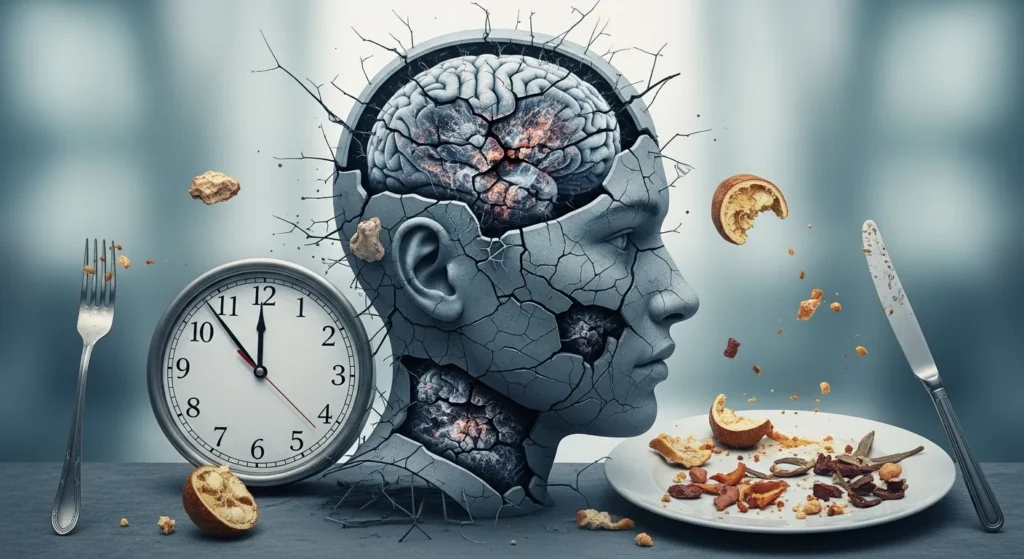
When Your Day Has No Mental Flow
Some days feel smooth.
Your thinking has rhythm.
Focus comes naturally.
Other days feel fragmented.
Your mind jumps, stalls, then rushes again.
What’s strange is that nothing obvious changed—except maybe when you ate.
Cognitive rhythm isn’t just about sleep or discipline. It’s deeply tied to predictable fuel timing. When meals are inconsistent, the brain loses its internal pacing—and thinking becomes erratic.
This disruption happens quietly, long before hunger or exhaustion appear.
What Is Cognitive Rhythm—and Why the Brain Depends on It
Cognitive rhythm is the brain’s natural cycle of:
- Alertness
- Focus
- Processing speed
- Mental recovery
It relies on predictable inputs:
- Light
- Sleep
- Nutrition timing
When those inputs follow a rhythm, the brain anticipates energy and allocates resources efficiently. When they don’t, the brain stays reactive—never fully settling into flow.
Inconsistent meals break this rhythm faster than most people realize.
Why the Brain Thrives on Predictable Energy
The brain is not reactive by nature—it’s predictive.
It constantly asks:
- When is fuel coming next?
- How much energy should I allocate now?
- Should I conserve or engage?
Regular meals allow the brain to plan.
Irregular meals force the brain into defensive mode, where it prioritizes vigilance over efficiency.
That shift changes how thinking feels.
How Inconsistent Meals Create Mental Stop-and-Go
When meals arrive at unpredictable times:
- Glucose availability fluctuates
- Stress hormones rise pre-emptively
- Focus becomes intermittent
This produces:
- Bursts of clarity
- Sudden fog
- Difficulty sustaining attention
It’s not lack of ability—it’s lack of rhythm.
The brain struggles to stay “on” when energy signals are unreliable.
Why You Don’t Always Feel Hungry—But Still Lose Focus
One of the most confusing aspects of irregular eating is that hunger isn’t always present.
Stress hormones can:
- Suppress appetite
- Mask energy depletion
But cognitive rhythm still suffers.
So you may feel:
- “Fine” physically
- Disorganized mentally
This is why people often blame productivity tools or motivation—when the real issue is fuel timing.
Real-Life Example: The Unpredictable Workday
Consider a common pattern:
- Breakfast skipped
- Lunch delayed
- Dinner late
The person reports:
- Scattered thinking
- Poor task completion
- Difficulty entering flow
Even when calories are adequate by day’s end, the timing mismatch disrupts the brain’s internal schedule.
Total intake matters—but rhythm matters more for cognition.
Cognitive Rhythm vs Physical Energy: Why the Brain Suffers First
Muscles can:
- Store fuel
- Compensate for timing
The brain cannot.
It depends on:
- Continuous glucose
- Predictable availability
So when meals are inconsistent:
- Physical energy may remain
- Mental efficiency drops
This is why people say:
“I can move, but I can’t think clearly.”
Inconsistent Meals vs Consistent Meals: A Comparison
| Aspect | Inconsistent Meals | Consistent Meals |
|---|---|---|
| Cognitive Rhythm | Fragmented | Stable |
| Focus | Intermittent | Sustained |
| Mental Energy | Reactive | Predictable |
| Stress Response | Elevated | Lower |
| Task Flow | Disrupted | Smooth |
Mental flow is built on reliable fuel signals.
The Hidden Stress of Meal Uncertainty
When meals are unpredictable, the brain perceives uncertainty.
Uncertainty triggers:
- Cortisol release
- Heightened alertness
- Reduced creativity
This doesn’t feel like panic—it feels like mental tension.
Over time, this state becomes familiar, and people assume it’s normal.
But it’s not inevitable—it’s patterned.
Why Inconsistent Eating Feels “Normal” in Modern Life
Modern schedules reward:
- Skipping
- Delaying
- Eating on the run
The brain adapts—but at a cost.
It learns to:
- Stay hyper-alert
- Avoid deep focus
- Expect interruption
This adaptation protects survival—but undermines cognitive rhythm.
Why This Matters Today
Today’s demands are mental, not physical.
They require:
- Deep focus
- Decision clarity
- Emotional regulation
Inconsistent meals quietly sabotage all three—without obvious warning signs.
Restoring meal rhythm often improves thinking before people notice changes in energy or mood.
Actionable Steps to Restore Cognitive Rhythm
You don’t need perfection—just predictability.
Simple Ways to Support Brain Rhythm
- Eat within a consistent time window daily
- Avoid skipping meals during high-focus periods
- Keep meals evenly spaced
- Fuel before mental fatigue sets in
- Treat meals as cognitive support, not interruption
The brain responds quickly to consistency.
Common Mistakes That Keep Rhythm Disrupted
Avoid these patterns:
- Waiting until you feel exhausted to eat
- Compensating with caffeine
- Large intake swings day to day
- Treating meals as optional during busy periods
Cognitive rhythm depends on proactive nourishment.
Subtle Signs Your Cognitive Rhythm Is Off
Look for:
- Difficulty entering flow
- Predictable mental crashes
- Increased irritability
- Trouble completing tasks
These often resolve when meal timing stabilizes.
Key Takeaways
- Cognitive rhythm depends on consistent meal timing
- Inconsistent meals confuse brain energy planning
- Focus suffers before hunger appears
- Regular meals reduce internal stress
- Predictability restores mental flow
Frequently Asked Questions
1. Can irregular meals really affect focus?
Yes. The brain relies on predictable energy to maintain cognitive rhythm.
2. Is total calorie intake enough to prevent this?
No. Timing matters as much as quantity for brain function.
3. Why does my thinking feel scattered on busy days?
Busy days often involve delayed or skipped meals, disrupting rhythm.
4. How quickly can consistency help?
Many people notice improvements within days of regular timing.
5. Is this about blood sugar?
Glucose stability plays a major role, but predictability is equally important.
Conclusion: The Brain Thinks Best When It Knows What’s Coming
Your brain isn’t asking for perfect meals.
It’s asking for reliable signals.
When meals arrive consistently, the brain relaxes its vigilance, restores rhythm, and allows thinking to flow naturally.
Mental clarity doesn’t require more effort.
It often requires better timing.
Disclaimer: This article is for general educational purposes only and does not replace personalized medical or nutrition advice.


Pingback: Why Stable Meals Support Decision-Making — The Hidden Nutrition Link to a Clearer Mind