Your Body Is Keeping a Food Record — Even If You Aren’t
Most people think nutrition works like a daily reset.
Eat well today…
Eat poorly tomorrow…
And everything starts over again.
But the truth is much deeper.
Your body stores nutritional memory.
Not as thoughts.
Not as conscious recall.
But as biological changes that accumulate quietly over time.
Your body remembers:
- long-term deficiencies
- repeated blood sugar spikes
- chronic under-eating
- years of protein imbalance
- consistent nourishment
And that memory shapes how you feel now…
Even if your habits have changed.
That’s why two people can eat the same diet today and experience completely different results.
Because nutrition is not just about what you eat.
It’s also about what your body has learned to expect.
What Is Nutritional Memory?
Nutritional memory is the body’s ability to reflect past nutrition through:
- stored nutrient reserves
- metabolic adaptation
- tissue rebuilding history
- hormonal patterning
- cellular programming
It explains why health is cumulative.
Your body isn’t responding only to lunch.
It’s responding to the last hundreds of meals.
This is one of the most important concepts in nutrition science:
The body remembers patterns, not moments.
Why the Body Has to Store Nutritional Memory
From a survival perspective, nutritional memory is essential.
For most of human history, food was uncertain.
So the body evolved to:
- store fuel during abundance
- conserve energy during scarcity
- adapt metabolism based on repeated intake
- prioritize essential nutrient storage
Your biology is designed not just for today…
But for preparing for tomorrow.
That preparation is nutritional memory in action.
The Most Visible Form: Nutrient Storage Systems
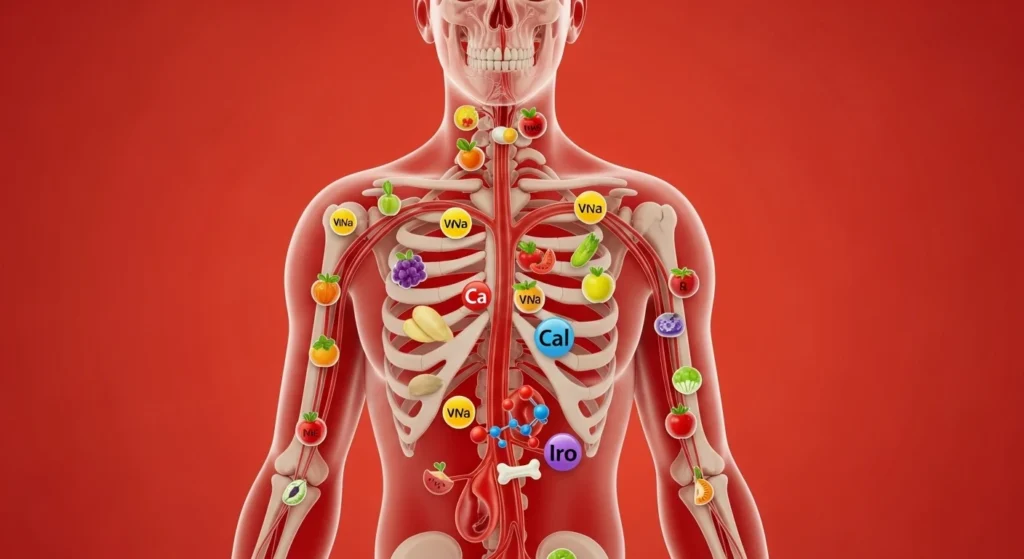
Your body stores key nutrients because you can’t always consume them daily.
Examples include:
- Vitamin B12 stored in the liver (often for years)
- Iron stored as ferritin
- Vitamin D stored in fat tissue
- Glycogen stored in muscle and liver
- Fat reserves stored for long-term energy
This is why deficiency symptoms often appear slowly.
By the time you feel something is wrong…
The memory bank is already low.
Nutritional Memory Isn’t Just Storage — It’s Adaptation
The body also remembers through metabolic adjustment.
For example:
If you under-eat for months…
Your body may:
- lower resting metabolic rate
- reduce thyroid output
- increase hunger hormones
- conserve energy more aggressively
If you overeat consistently…
Your body may:
- increase fat storage enzymes
- shift insulin sensitivity
- upregulate appetite cues
The body doesn’t judge.
It adapts.
That adaptation is a form of memory.
Real-Life Example: “I Eat Better Now, So Why Don’t I Feel Better Yet?”
This is one of the most common frustrations.
Someone improves their diet and expects instant change.
But nutritional memory explains the delay.
If the body has experienced:
- years of low fiber
- repeated nutrient gaps
- chronic stress eating
- poor protein intake
- inconsistent energy supply
It takes time for tissues to rebuild.
Nutrition is not a light switch.
It’s a slow restoration process.
The Gut Microbiome Stores Dietary Memory Too
Your gut bacteria reflect what you repeatedly eat.
Research shows the microbiome adapts within days…
But also stabilizes long-term based on patterns.
A high-fiber diet builds different bacterial communities than a processed one.
That means your digestion remembers:
- what foods you usually provide
- how often you eat plants
- whether meals are diverse
- how much sugar and fat are habitual
So when someone suddenly eats “clean,” their gut may resist at first.
That’s not failure.
That’s microbial memory adjusting.
Comparison Table: Short-Term Eating vs Nutritional Memory Effects
| Nutrition Event | Immediate Effect | Nutritional Memory Effect |
|---|---|---|
| One balanced meal | Temporary energy support | Minimal long-term change |
| Consistent protein intake | Better recovery over weeks | Muscle retention improves |
| Chronic low iron intake | Slow depletion | Deficiency develops over time |
| Repeated sugar spikes | Quick crash | Insulin patterns reshape long-term |
| Regular fiber intake | Better digestion | Microbiome shifts and stabilizes |
Cellular Memory: How Cells “Learn” From Nutrition
Nutrition influences gene expression through epigenetics.
This is a major area of research.
Epigenetics doesn’t change DNA…
But it changes how genes are turned on or off.
Examples:
- high inflammation diets may activate stress pathways
- nutrient-rich diets may support repair pathways
- long-term energy restriction affects metabolic signaling
This is one reason early nutrition can shape long-term health outcomes.
Your cells remember the environment you create.
Hidden Tip: The Body Prioritizes Survival Nutrients First
When nutrients are scarce, the body triages.
It prioritizes organs that keep you alive.
For example:
- iron goes to red blood cell production before hair growth
- calcium maintains blood levels before bone density
- protein supports immune function before muscle building
That’s why deficiency symptoms often show up as “secondary” issues:
- brittle nails
- fatigue
- hair thinning
- brain fog
Nutritional memory is often hidden until reserves run low.
Common Mistakes That Work Against Nutritional Memory
Many people unintentionally disrupt the body’s rebuilding process.
Mistakes to avoid:
- expecting quick fixes after long-term imbalance
- supplement hopping without consistency
- extreme dieting cycles
- inconsistent protein intake
- skipping meals then overeating
- focusing only on calories, not nutrients
The body responds to patterns, not extremes.
How to Build Positive Nutritional Memory
The good news?
Nutritional memory works both ways.
Just as the body stores depletion…
It also stores stability.
Here are practical ways to create a healthier nutritional history.
Actionable Steps to Support Long-Term Nutritional Memory
1. Think in Months, Not Days
Ask:
“What pattern can I repeat for 6 months?”
Not:
“What can I fix by Friday?”
2. Prioritize Protein Consistency
Muscle is one of the body’s long-term nutritional reservoirs.
Aim for protein at most meals.
Examples:
- eggs
- fish
- legumes
- poultry
- dairy or tofu
3. Build Nutrient ذخStorage With Whole Foods First
Supplements can help, but food builds deeper nutritional redundancy.
Focus on:
- leafy greens
- beans
- nuts and seeds
- colorful vegetables
- fatty fish
4. Support the Gut With Repeated Fiber
Microbiome change requires repetition.
Add:
- oats
- lentils
- berries
- vegetables
Even small daily additions compound.
5. Avoid the “All or Nothing” Cycle
The body remembers stability.
Not perfection.
Regular, boring nourishment beats chaotic extremes.
Why This Matters Today (Evergreen Truth)
Modern life creates nutritional amnesia:
- irregular meals
- ultra-processed convenience
- diet trend cycling
- supplement shortcuts
- constant reset mentality
But biology doesn’t reset.
Your body carries nutritional history forward.
That’s not scary.
It’s empowering.
Because every steady habit you build today…
Becomes stored resilience tomorrow.
Key Takeaways
- The body stores nutritional memory through nutrient reserves, metabolism, and cellular adaptation
- Deficiencies and excesses accumulate slowly over time
- Gut bacteria and hormones reflect repeated eating patterns
- Nutrition works best when consistent, not extreme
- You can build positive nutritional memory through regular balanced habits
FAQ: How the Body Stores Nutritional Memory
1. What is nutritional memory in simple terms?
It’s the body’s way of reflecting past eating patterns through stored nutrients, metabolism changes, and tissue rebuilding.
2. Can the body recover from years of poor nutrition?
Yes, but recovery takes time and consistency. The body rebuilds slowly.
3. Why do deficiency symptoms appear late?
Because the body uses stored reserves first. Symptoms show up when reserves are low.
4. Does the gut microbiome really “remember” diet?
Yes. Gut bacteria adapt to repeated food patterns over time.
5. How long does it take to build positive nutritional memory?
Many changes begin in weeks, but deeper resilience builds over months and years of consistency.
Conclusion: Your Body Is Always Keeping Score — Quietly
Nutrition is not a daily exam you pass or fail.
It’s a long story your body records over time.
Every meal is a signal.
Every pattern becomes memory.
And the most hopeful truth is this:
You’re never just eating for today.
You’re building the internal foundation your future body will rely on.
So instead of chasing quick fixes…
Focus on the quiet power of consistency.
Because the body never forgets…
But it also never stops rebuilding.