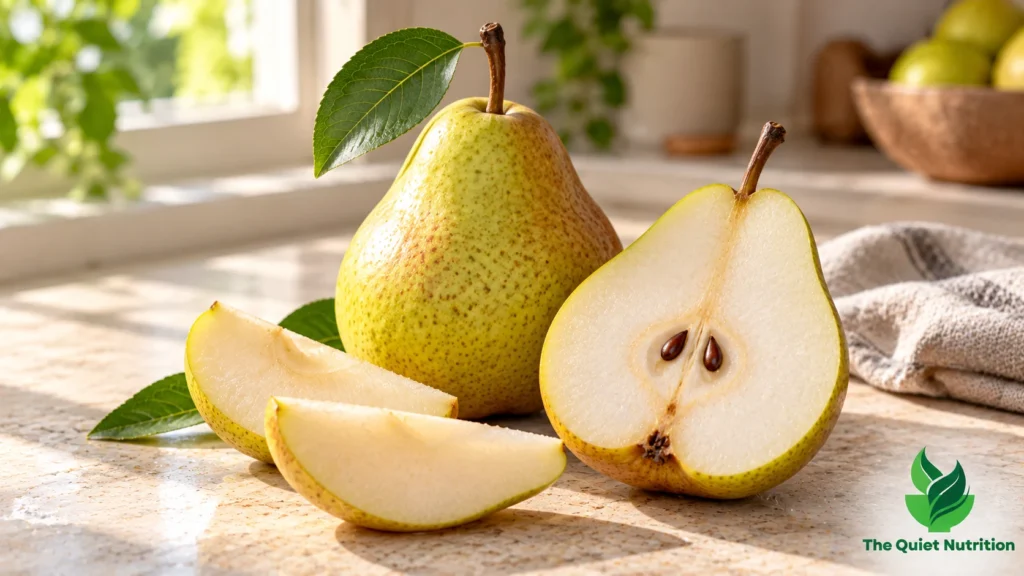
A pear can provide a meaningful amount of fiber, plenty of water and a range of plant compounds, all in a naturally sweet package. Yet its nutritional value is easy to underestimate because pears rarely attract the same attention as berries, avocados or other foods frequently discussed in nutrition research.
The more interesting question is not whether pears are healthy. It is what makes a pear nutritionally useful, how its different components work together, and how much of its reputation is supported by research in people.
The answer begins with the fruit’s structure. A pear is not simply a source of natural sugar. It also contains fiber that affects digestion, water that contributes to hydration, and plant compounds concentrated in parts of the fruit that are often discarded.
Understanding those differences helps explain why eating a whole pear is not nutritionally identical to drinking pear juice—and why a food can be a valuable part of a healthy diet without being a treatment for any particular condition.
What is actually inside a pear?
Pears contain a combination of carbohydrates, dietary fiber, water, small amounts of vitamins and minerals, and naturally occurring plant compounds. Their exact nutritional composition varies with variety, size and ripeness.
A medium raw pear weighing approximately 175–180 grams provides roughly the following amounts:
| Nutrient | Approximate amount |
|---|---|
| Energy | 100 calories |
| Carbohydrates | 27 g |
| Dietary fiber | 5.5–6 g |
| Sugars | 17 g |
| Protein | 1 g |
| Fat | Less than 0.5 g |
| Potassium | Around 200 mg |
| Vitamin C | Around 7 mg |
These are approximate values for a medium raw pear; actual amounts vary by size and variety. Nutrient estimates are consistent with published pear composition reviews and standard food-composition data. Source: Systematic Review of Pears and Health.
The most notable feature is the fiber content. A single medium pear can provide close to one-fifth of the US recommended daily fiber intake for a woman consuming a 2,000-calorie diet under the commonly used 28-gram benchmark, or about 15% of a 38-gram target.
That is a substantial contribution from one ordinary piece of fruit.
Pears are not especially rich in protein, fat or most vitamins, so they should not be treated as nutritionally complete on their own. Their value comes from the combination of fiber, fluid, carbohydrates and plant compounds they contribute to an overall eating pattern.
Why pear fiber matters beyond digestion
Fiber is often discussed as though it were a single nutrient with one job. In reality, dietary fiber includes different substances that behave differently in the digestive system.
Pears contain both soluble and insoluble fiber.
Soluble fiber can absorb water and form gel-like mixtures under suitable conditions. Pectin, a naturally occurring plant polysaccharide, is one of the components associated with this type of fiber. Insoluble fiber contributes bulk to digestive contents and can help support regular bowel movements.
These functions are complementary rather than interchangeable.
How pears may support regular bowel movements
Pears have a particularly interesting combination of fiber, fructose and sorbitol. Sorbitol is a sugar alcohol that occurs naturally in several fruits. It is absorbed incompletely in the small intestine, and the amount that remains can draw water into the bowel.
Together, these properties help explain why pears are commonly associated with a laxative effect.
The fiber contributes bulk and helps maintain normal stool consistency, while incompletely absorbed carbohydrates may increase water in the intestinal contents. For someone whose diet is low in fiber, including a pear regularly may therefore be a practical way to improve fiber intake.
However, there is an important evidence limitation. A systematic review published in Nutrition Today found that direct human feeding studies examining pears as an intervention for health outcomes were lacking at the time of its review. The digestive explanation is biologically plausible, but it should not be confused with strong clinical evidence that a particular number of pears treats chronic constipation. Source: Reiland and Slavin, Systematic Review of Pears and Health.
People also respond differently to fermentable carbohydrates. The same sorbitol and fructose that may help some people have more comfortable bowel movements can cause bloating, gas or diarrhea in others.
For most people, a whole pear is a reasonable way to increase fruit and fiber intake. Those with irritable bowel syndrome or known sensitivity to fermentable carbohydrates may need to consider portion size and individual tolerance.
Pears and the gut microbiome
The gut microbiome is the community of microorganisms living in the digestive tract. Some dietary fibers can be used by intestinal bacteria, producing metabolites that participate in communication between the gut and the rest of the body.
Pears provide fermentable fiber alongside other plant materials that reach the large intestine. This makes them a plausible contributor to a varied, fiber-rich diet that supports gut microbial activity.
But a distinction matters here: evidence that a type of fiber can be fermented does not establish that eating pears produces a particular beneficial change in a person’s microbiome. The response depends on the fiber’s properties, the quantity consumed, the rest of the diet and the individual’s existing microbial community.
A 2025 systematic scoping review of human pectin interventions found research across gut health, blood glucose regulation, cholesterol and other outcomes, while also identifying a need for more precise evidence linking particular pectin properties to specific health effects. That review covered pectin from multiple sources, not just pears. Source: Weber et al., Nutrition Research Reviews.
The practical lesson is straightforward: pears can contribute to a fiber-rich diet, but claims that they independently rebalance the gut microbiome go beyond the evidence.
Does eating pears affect blood sugar?
Pears contain natural sugars, including fructose and glucose. A medium pear supplies approximately 27 grams of total carbohydrates, so it is not carbohydrate-free simply because the sugars occur naturally.
The important distinction is that a whole pear also contains water and fiber, and its intact structure takes time to chew and digest. The amount of carbohydrate in a food is only one factor influencing the rise in blood glucose after eating.
The glycemic index (GI) is a measure of how quickly a carbohydrate-containing food raises blood glucose relative to a reference food when tested under standardized conditions. It can help compare foods, but it does not tell the whole story: portion size, total carbohydrate intake, meal composition and individual responses also matter.
In a study involving 61 people with type 2 diabetes, researchers compared the glycemic responses to several common fruits, including pears. They did not find statistically significant differences in glycemic index among the fruits tested. The findings illustrate that fruit-related glucose responses are more nuanced than simply labeling one fruit good and another bad. Source: No important differences in glycaemic responses to common fruits in type 2 diabetic patients.
Pears can fit into a diabetes-conscious eating pattern, but that does not mean they have a special blood-sugar-lowering effect. Nor does the fruit’s fiber cancel out all of its carbohydrates.
What about the risk of developing type 2 diabetes?
Long-term observational research has found associations between the consumption of certain whole fruits and the subsequent risk of type 2 diabetes.
A 2013 analysis of three large prospective cohorts, covering more than 3.4 million person-years of follow-up, reported that higher consumption of apples and pears combined was associated with a lower risk of developing type 2 diabetes. The study estimated a hazard ratio of 0.93 for each additional three servings per week of apples and pears combined. Source: Muraki et al., BMJ.
That finding is worth understanding, but it does not prove that pears themselves prevent diabetes. Apples and pears were grouped together in the analysis, and observational studies cannot completely eliminate the possibility that people who eat more whole fruit also differ in other health-related behaviors.
The sensible conclusion is that whole pears can contribute to a nutritious dietary pattern. The evidence does not justify treating them as a diabetes-prevention food on their own.
The overlooked value of pear skin
The skin of a pear is more than a protective covering. It contains a variety of polyphenols, plant compounds that researchers study for their potential roles in human health.
Among those identified in pears are chlorogenic acid, catechin, epicatechin and rutin. Some varieties also contain anthocyanins, pigments associated with red or purple coloration.
Polyphenols are of interest partly because they participate in plant defense and can interact with biological processes after consumption. However, a compound demonstrating antioxidant activity in a laboratory does not automatically produce a meaningful health benefit when someone eats the fruit.
What research reveals about the peel
A 2014 study published in Food Chemistry compared the skin and flesh of 10 pear varieties. The researchers found that the peel contained substantially higher concentrations of several groups of plant compounds, with measured levels of the chemical components studied approximately six to 20 times higher in the peel than in the flesh. The varieties differed considerably in their composition. Source: Li et al., Food Chemistry.
These were chemical analyses and laboratory assessments, not a clinical trial demonstrating that people who eat pear skins experience fewer illnesses.
Still, the findings provide a practical reason to eat pears with their skin when comfortable doing so. Peeling the fruit removes some of its fiber and plant compounds, although the precise nutritional difference depends on the variety and preparation.
Wash pears thoroughly under running water before eating them. There is generally no nutritional need to remove the skin simply because it is not perfectly smooth or uniform.
Do pears help with heart health?
Pears contain several nutrients relevant to a heart-healthy dietary pattern, including fiber and potassium. They also provide polyphenols, although the effects of these compounds depend on their absorption, metabolism and interactions with the rest of the diet.
Potassium is involved in normal nerve and muscle function, including the activity of the heart. Adequate potassium intake is also relevant to blood-pressure regulation, particularly as part of an overall dietary pattern that includes vegetables, fruits, legumes and other minimally processed foods.
Fiber is another reason pears deserve a place in a varied diet. Certain types of soluble fiber can influence cholesterol metabolism, but the magnitude of that effect depends on the type and amount consumed. The presence of fiber in pears alone does not establish that eating them will significantly lower an individual’s cholesterol.
What does the clinical evidence show?
A systematic review and meta-analysis published in 2019 examined 22 studies investigating apples, pears or their products in relation to cardiovascular and cardiometabolic outcomes. The evidence included seven randomized controlled trials, one nonrandomized trial and 14 prospective observational studies.
The observational studies associated apple or pear consumption with lower risks of several outcomes, including cardiovascular death and cerebrovascular disease. However, the randomized trials primarily examined apples, and their results did not demonstrate consistent improvements in blood lipids, blood glucose or blood pressure. Source: Effects of Intake of Apples, Pears, or Their Products on Cardiometabolic Risk Factors and Clinical Outcomes.
This difference between observational and experimental evidence is important.
People who regularly eat whole fruit may also consume more vegetables, exercise more frequently or have other habits that contribute to better health. Statistical adjustments help researchers account for these factors, but they cannot eliminate every possible source of bias.
Furthermore, findings that combine apples and pears cannot establish the independent effect of pears.
The evidence supports including pears in a heart-conscious diet. It does not establish that eating a pear every day prevents heart disease or replaces other measures that reduce cardiovascular risk.
Whole pears versus pear juice: does the form matter?
A glass of pear juice may contain many of the same naturally occurring sugars found in the whole fruit. What changes during processing is the physical structure of the food and, depending on the method, the amount of fiber retained.
When you eat a whole pear, you chew the fruit, consume its intact tissues and take in the fiber present in its flesh and skin. Juice generally provides less fiber, particularly when the pulp is removed.
This difference matters for everyday eating. Whole fruit requires chewing and can be more filling than a drink consumed quickly. Its intact structure also influences how the food is processed during digestion.
However, it would be too simplistic to claim that all fruit juice produces a harmful blood-sugar response or that its effect is always greater than that of whole fruit. The amount consumed, the processing method and the rest of the meal all influence the response.
The more useful distinction is that whole pears provide fiber in their natural food structure, whereas juice can make it easier to consume a larger quantity of fruit sugars without obtaining the same amount of fiber.
For an ordinary snack, the whole fruit is generally the more useful default.
Canned pears can also fit into a balanced diet. When choosing them, check whether they are packed in water, juice or syrup, and consider added sugars. Canning changes the fruit’s texture and can affect some nutrients, but it does not automatically make the fruit nutritionally worthless.
Can pears help with weight management?
Pears can be useful in a weight-conscious eating pattern because they provide water, fiber and a naturally sweet taste for approximately 100 calories in a medium fruit.
These characteristics can make a pear a practical alternative to snacks that provide similar or greater amounts of energy with less fiber. It can also help satisfy a preference for sweet foods without requiring added sugar.
But weight management depends on the overall relationship between energy intake and energy expenditure over time. No individual fruit has a unique ability to cause fat loss.
There is also a difference between a food being compatible with weight management and clinical evidence showing that it independently produces weight loss.
In the 2019 systematic review of apples, pears and their products, randomized trials found a reduction in body mass index with apple intake, but did not demonstrate consistent effects on body weight. These results cannot be interpreted as proof that eating pears causes weight loss. Source: 2019 systematic review and meta-analysis.
A more realistic way to use pears is to make them part of a snack or meal that satisfies you. For example, pairing a pear with plain Greek yogurt or a small portion of nuts adds protein or fat alongside the fruit’s carbohydrates and fiber.
That combination may suit someone who wants a more substantial snack than fruit alone, although individual appetite and energy needs differ.
Are there any downsides to eating pears?
For most people, pears are a straightforward way to add fruit to the diet. Their natural sugars do not make them inherently unhealthy, and their fiber content is one of their nutritional strengths.
Nevertheless, a few considerations are worth understanding.
Digestive sensitivity. Pears contain fructose and sorbitol, which can be incompletely absorbed in the small intestine. In susceptible individuals, these carbohydrates may contribute to gas, bloating, abdominal discomfort or diarrhea. People following a low-FODMAP diet for irritable bowel syndrome may need to limit pears during certain phases of that diet.
Sudden increases in fiber. Someone who usually eats very little fiber may experience digestive discomfort after abruptly increasing intake. Gradually adding fiber-rich foods and drinking adequate fluids can make the transition more comfortable.
Diabetes and carbohydrate intake. Pears can fit into many diabetes meal plans, but their carbohydrates still count toward the person’s overall intake. Portion size and individual glucose responses matter.
Allergies. Pears can trigger allergic reactions in some people, including those with pollen-associated food allergy. Anyone who experiences concerning symptoms after eating pears should seek appropriate medical advice.
There is no universally correct number of pears everyone should eat each day. One medium pear is a reasonable serving for many people, but individual needs, digestive tolerance and the rest of the diet determine what works best.
How to get more nutritional value from pears
You do not need a special recipe or complicated preparation method to make pears part of a nutritious diet.
- Eat them with the skin. Wash the fruit thoroughly and leave the skin on when practical to retain more of its fiber and plant compounds.
- Choose whole fruit more often than juice. This preserves the fruit’s natural structure and generally provides more fiber per serving.
- Pair pears with other nutritious foods. Try slices with plain yogurt, oats, nut butter or a small portion of nuts, depending on your preferences.
- Use them in meals. Diced pear can add sweetness and texture to oatmeal, salads or whole-grain dishes.
- Include other fruits too. Pears provide useful nutrients, but berries, citrus fruits, apples and other produce offer different combinations of vitamins, minerals and plant compounds.
Ripeness is mainly a matter of texture, flavor and preference. A ripe pear is softer and often sweeter to the taste, but that does not make it a fundamentally different kind of health food.
The most important habit is not finding a perfect variety or a special time to eat the fruit. It is making whole fruit a regular part of a varied diet.
What the science tells us—and what it does not
The nutritional case for pears is strongest when it focuses on what can be established directly about the fruit and its place in the diet.
What the Science Tells Us—and What It Does Not
The nutritional case for pears is strongest when it focuses on what can be established directly about the fruit and its place in the diet.
What the Evidence Supports
A useful source of dietary fiber
A medium pear contributes approximately 5.5–6 grams of fiber, helping people increase their overall fiber intake.
A fruit with diverse plant compounds
Laboratory studies show that pear skins contain polyphenols and other compounds, although their presence does not establish a particular clinical benefit.
A practical whole-fruit choice
Pears provide water, fiber and natural sweetness, making them a useful option in a balanced eating pattern.
Health outcomes need more direct research
Observational findings involving apples and pears together cannot prove that pears independently prevent diabetes, heart disease or other chronic conditions.
The practical takeaway
Pears earn their place in a healthy diet without needing extraordinary claims.
Their fiber content is substantial for a piece of fruit, their skin contributes a range of plant compounds, and their combination of water and natural sweetness makes them easy to include in everyday meals and snacks. Their fiber and naturally occurring sorbitol also help explain their reputation for supporting bowel regularity, although individual digestive responses vary.
The research on longer-term health outcomes is less definitive. Studies combining apples and pears have reported encouraging associations, but direct clinical evidence establishing the independent effects of pears remains limited.
For most people, the sensible approach is simple: eat pears whole, keep the skin on when practical, and enjoy them alongside a varied diet rich in fruits, vegetables, whole grains, legumes and other nutritious foods.
A pear is not a treatment or a shortcut to better health. It is an accessible way to make an already useful eating pattern a little more nutritious.
Sources
The article’s scientific interpretation is based on the following research and reference sources, with claims kept within the limits of the evidence reviewed.
- Reiland H, Slavin J. Systematic Review of Pears and Health. Nutrition Today, 2015. Read the full review.
- Koutsos A, et al. Effects of Intake of Apples, Pears, or Their Products on Cardiometabolic Risk Factors and Clinical Outcomes: A Systematic Review and Meta-Analysis. Current Developments in Nutrition, 2019. Read the review.
- Muraki I, et al. Fruit consumption and risk of type 2 diabetes: results from three prospective longitudinal cohort studies. BMJ, 2013. Read the study.
- Li X, et al. Chemical composition and antioxidant and anti-inflammatory potential of peels and flesh from 10 different pear varieties. Food Chemistry, 2014. Read the study record.
- Weber AM, et al. Nutrition and health effects of pectin: A systematic scoping review of human intervention studies. Nutrition Research Reviews, 2025. Read the review record.
- No important differences in glycaemic responses to common fruits in type 2 diabetic patients. Read the study record.

Aarti Solanki, B.Sc. (Food Science), is a food science writer passionate about making nutrition simple and evidence-based. She creates well-researched, easy-to-understand articles on healthy eating, food science, and nutrition, using information from trusted scientific and public health sources.