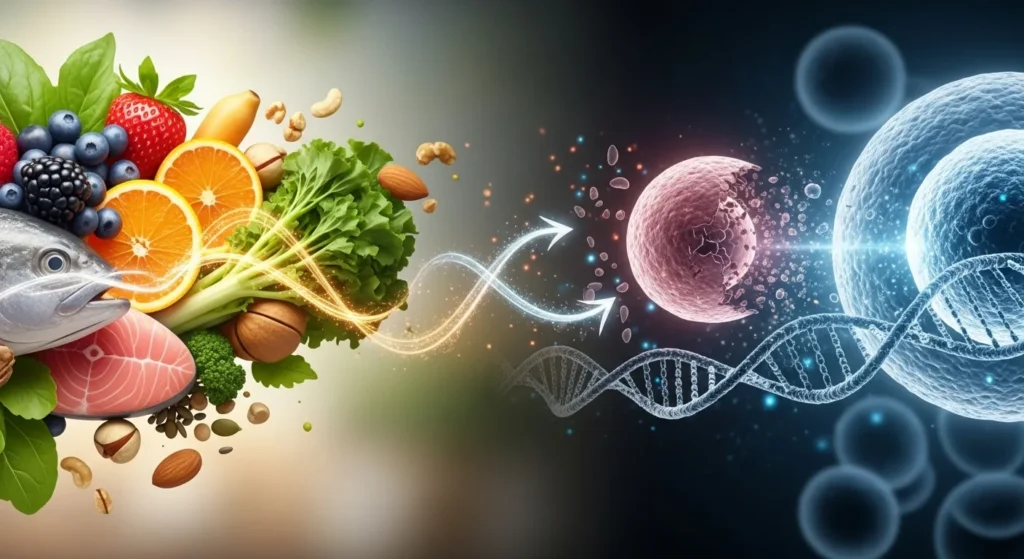
Your Body Is Rebuilding Itself Right Now — Whether You Notice or Not
Every second, millions of cells in your body are being repaired, replaced, or recycled.
Skin cells shed.
Gut lining renews.
Blood cells are rebuilt.
Muscle fibers repair microscopic damage.
You don’t feel this happening.
But how well it happens determines:
- How fast you recover
- How resilient you feel
- How quickly aging shows up
- How well your body adapts to stress
At the center of this invisible process is one quiet factor:
Nutrition.
Not trends.
Not supplements alone.
Not occasional “healthy weeks.”
Cellular Renewal Is a Constant Process, Not an Emergency Response
Cellular renewal doesn’t wait for illness.
It’s ongoing maintenance.
Your body replaces:
- Gut lining cells every few days
- Red blood cells every few months
- Skin cells every few weeks
- Many immune cells continuously
This renewal keeps tissues functional and resilient.
But renewal isn’t automatic.
It requires:
- Building materials
- Energy
- Enzymes
- Signaling molecules
All of which come from food.
Why Cellular Renewal Slows With Age
Aging doesn’t stop renewal.
It raises the cost of renewal.
As we age:
- Cells respond less efficiently to repair signals
- Nutrient absorption becomes less reliable
- Inflammation increases baseline demand
- Repair systems compete for limited resources
If nutrient availability stays the same — or declines — renewal slows.
That slowdown doesn’t feel dramatic.
It feels like:
- Slower healing
- Dull skin
- Reduced stamina
- Lingering soreness
- Lower stress tolerance
Often mislabeled as “normal aging.”
Nutrition Is More Than Fuel — It’s Cellular Instruction
Food doesn’t just provide energy.
Protein signals rebuilding.
Minerals activate enzymes.
Vitamins regulate DNA repair.
Fats maintain cell membranes.
Carbohydrates fuel regeneration cycles.
This concept is emphasized by nutrition researchers at Harvard T.H. Chan School of Public Health, who highlight how dietary patterns influence cellular health and long-term aging.
Cells respond to patterns, not promises.
Protein: The Primary Building Block of Cellular Renewal
Protein provides amino acids — the raw material for:
- New cells
- Repair enzymes
- Structural tissue
- Immune defenses
With age, cells become less responsive to protein signals.
That means:
- You need protein more consistently
- Distribution across meals matters
- Skipping protein delays renewal
Guidance summarized by the National Institute on Aging links adequate protein intake to preserved muscle, tissue integrity, and functional aging.
Low protein doesn’t stop renewal.
It slows it.
Micronutrients: The Silent Drivers of Cell Repair
Micronutrients don’t rebuild cells directly.
They enable the machinery that does.
Key examples:
- Zinc → DNA repair and immune cell renewal
- Magnesium → energy production inside cells
- Vitamin C → collagen and connective tissue
- B vitamins → cell division and energy cycles
Deficiencies don’t cause instant damage.
They cause inefficient renewal.
Cells survive — but don’t thrive.
Cellular Renewal vs. Cellular Survival
When nutrients are abundant, cells invest in:
- Optimal structure
- Efficient repair
- Long-term resilience
When nutrients are scarce, cells shift into survival mode:
- Minimal repair
- Delayed replacement
- Reduced function
Over time, this survival bias looks like aging.
Not because cells are failing — but because they’re under-supported.
How Inflammation Interferes With Renewal
Short-term inflammation helps repair.
Chronic inflammation blocks it.
Poor nutrition patterns can:
- Increase oxidative stress
- Disrupt cell signaling
- Delay tissue renewal
Balanced nutrition helps inflammation resolve, allowing renewal to complete.
Unresolved inflammation traps cells in a half-repaired state.
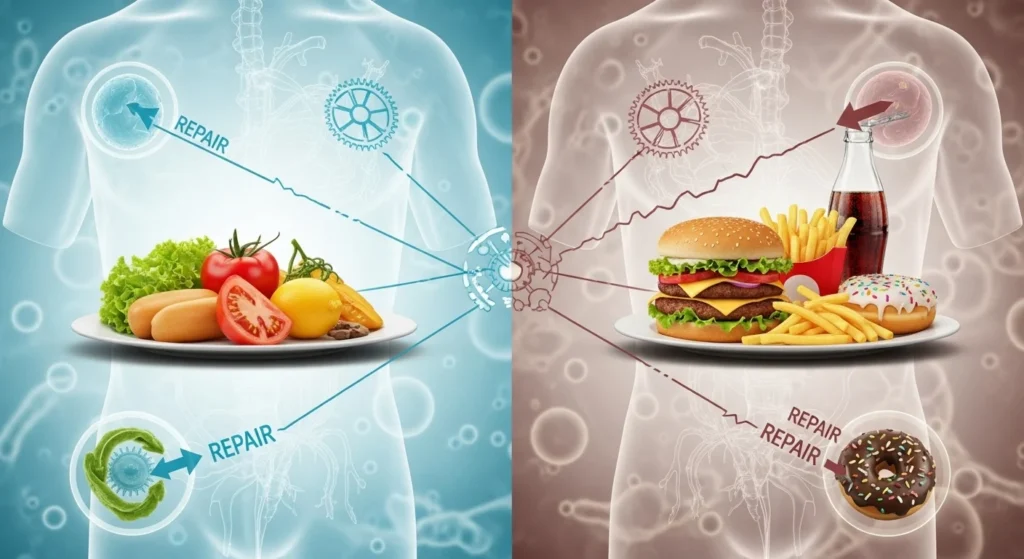
Cellular Renewal-Supportive Nutrition vs. Depleting Nutrition
| Renewal-Supportive Nutrition | Renewal-Depleting Nutrition |
|---|---|
| Regular protein intake | Frequent protein gaps |
| Micronutrient-rich foods | Ultra-processed calories |
| Consistent meals | Skipped or delayed eating |
| Balanced fats | Inflammatory fat imbalance |
| Stable energy | Repeated under-fueling |
Cells remember patterns.
Real-Life Example: Why Healing Slows Quietly
Two people get minor injuries.
One heals quickly.
The other takes weeks longer.
Often the difference isn’t age or fitness.
It’s:
- Protein intake
- Micronutrient sufficiency
- Overall nutritional consistency
Cellular renewal determines recovery speed.
Hidden Habits That Disrupt Cellular Renewal
Many people unknowingly impair renewal.
Common mistakes:
- Chronic under-eating
- Skipping meals during stress
- Fear-based fat avoidance
- Relying on supplements alone
- Ignoring declining appetite
None cause immediate harm.
They accumulate repair debt.
Why This Matters Today
Modern diets often provide:
- Plenty of calories
- Insufficient nutrients
At the same time, stress and sedentary life increase cellular damage.
This mismatch strains renewal systems.
Public health organizations like the World Health Organization emphasize nutrition’s role in maintaining cellular health, resilience, and healthy aging.
Renewal needs support — not shortcuts.
Actionable Ways to Support Cellular Renewal
You don’t need extremes.
You need reliability.
Focus on:
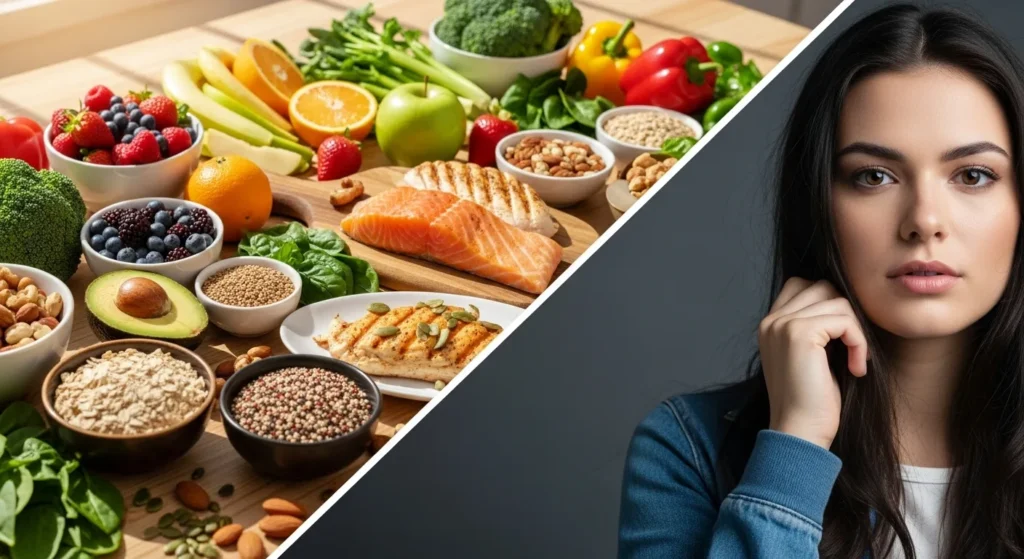
- Protein at every main meal
- Whole foods with mineral density
- Regular meal timing
- Adequate carbohydrates for repair energy
- Eating enough during stress
Cells respond best to consistency.
Emotional Relief: Renewal Is Still Possible
Many people assume it’s “too late.”
It isn’t.
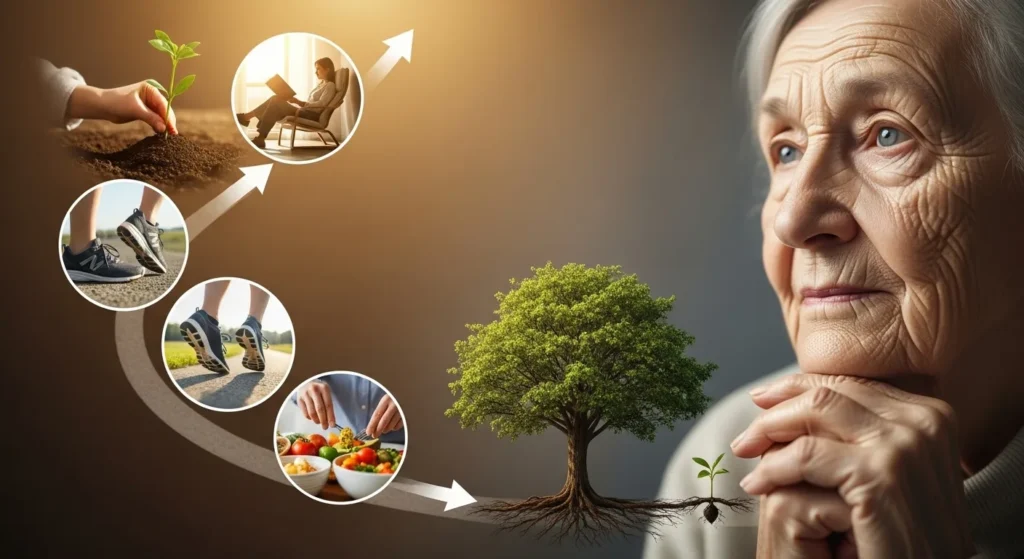
Cellular renewal continues throughout life.
It slows only when support drops.
When nutrients return consistently, renewal improves — often faster than expected.
Key Takeaways
- Cellular renewal happens constantly, not occasionally
- Nutrition supplies both materials and instructions
- Protein and micronutrients are essential for repair
- Inconsistent eating slows renewal quietly
- Supporting renewal supports healthy aging
Frequently Asked Questions
1. Can nutrition really affect cellular renewal?
Yes. Cells rely on nutrients to repair, divide, and function properly.
2. Does cellular renewal stop with age?
No. It slows when nutrients and signals decline.
3. Are supplements enough for renewal?
They can help gaps, but food provides broader repair support.
4. Why does healing take longer as we age?
Repair efficiency drops, making nutrition more critical.
5. Is it ever too late to support cellular renewal?
No. Cells respond positively at any age.
Renewal Is Happening — Whether You Support It or Not
Your body is always rebuilding.
The only question is how well.
Nutrition doesn’t promise immortality.
It promises better maintenance.
And when cellular renewal is supported, aging becomes steadier, stronger, and far more resilient.
Disclaimer: This article is for general educational purposes and does not replace personalized medical or nutritional advice.




Pingback: Why Nutrition Builds Stability, Not Instant Change — The Quiet Way Food Actually Shapes Your Health
Pingback: How Nutrition Shapes the Body’s Baseline Health — The Invisible Foundation That Determines How You Feel Every Day
Pingback: Spinach Is More Powerful Than You Think — The Hidden Nutrients Inside Every Leaf