
The Change You Don’t Feel — Until You Do
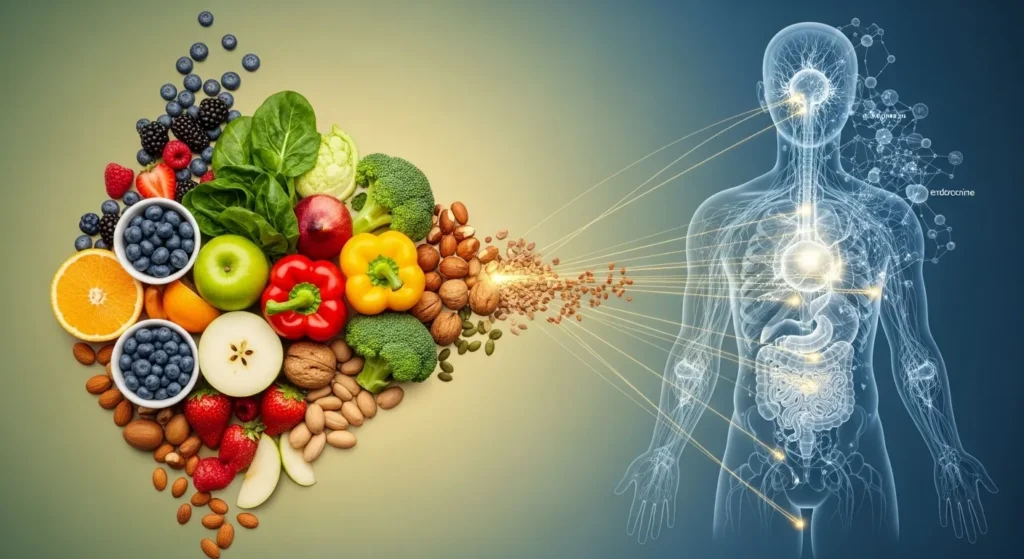
Most people believe their body reacts to what they eat today.
In reality, your body is reacting to what you’ve been eating repeatedly.
One sugary meal won’t redefine your metabolism.
One healthy dinner won’t repair long-term imbalance.
But what you eat most days quietly trains your body to expect, prepare for, and adapt to those inputs.
This adaptation happens slowly:
- Hunger shifts first
- Energy patterns follow
- Hormones recalibrate
- Metabolism adjusts last
Because it’s gradual, it’s easy to miss—until the body starts responding in ways that feel confusing or frustrating.
Why the Body Is Built to Adapt, Not Resist
From an evolutionary perspective, adaptation is survival.
Your body assumes that:
- Repeated food patterns reflect your environment
- Regular intake signals availability
- Scarcity or excess should be prepared for
So instead of fighting habits, your body learns from them.
Eat frequently?
Your hunger hormones adjust to expect constant intake.
Eat late at night?
Your digestion and insulin timing shift.
Eat very low energy for long periods?
Your metabolism becomes more conservative.
This isn’t malfunction.
It’s biological intelligence.
Repetition Is the Signal That Matters Most
The body doesn’t overreact to novelty.
It reacts to consistency.
That’s why:
- A single fast doesn’t slow metabolism
- A week of indulgence doesn’t cause disease
- One healthy month doesn’t undo years of habits
But repeat something long enough, and the body treats it as the new normal.
Repeated signals teach the body:
- When to release hunger hormones
- How aggressively to store energy
- How sensitive cells should be to insulin
- How much energy is “safe” to burn
Repetition is instruction.
How Hunger Hormones Adjust First
One of the earliest systems to adapt is appetite regulation.
Hormones like ghrelin and leptin respond to patterns, not intentions.
If you regularly:
- Skip breakfast
- Snack constantly
- Eat large dinners late
Your hunger signals shift to match that rhythm.
This is why hunger often feels “out of control” during diet changes.
Your body isn’t sabotaging you.
It’s responding to learned timing.
Change the pattern long enough, and hunger recalibrates—but not instantly.
Metabolism Adjusts More Slowly — But More Permanently
Metabolic adaptation is subtle and cumulative.
When the body senses:
- Prolonged calorie restriction
- Frequent blood sugar spikes
- Constant feeding with no breaks
It adjusts efficiency.
This can look like:
- Burning fewer calories at rest
- Holding onto fat more readily
- Feeling colder or more tired
Not because something is broken—but because the body is protecting stability.
Metabolism is conservative by design.
The Gut Learns Your Diet, Too
Your gut isn’t passive.
The microbial ecosystem inside you shifts based on:
- Fiber intake
- Sugar frequency
- Food diversity
Repeated eating patterns change:
- Which bacteria dominate
- How nutrients are processed
- How hunger and fullness are signaled
A diet repeated over months reshapes digestion—not overnight, but reliably.
That’s why sudden dietary changes can feel uncomfortable at first.
Your gut is recalibrating.
A Simple Comparison: Occasional vs Repeated Eating
| Behavior | Occasional Exposure | Repeated Habit |
|---|---|---|
| Sugary foods | Temporary spike | Insulin adaptation |
| Skipped meals | Minor disruption | Hunger hormone shift |
| Late-night eating | Short-term impact | Circadian disruption |
| High-protein intake | Muscle support | Metabolic adjustment |
| Fiber intake | Digestive aid | Gut ecosystem change |
The body responds to patterns, not exceptions.
Real-Life Example: Why “It Worked Before” Stops Working
Many people experience this:
“I used to eat this way and feel fine.”
“Now the same habits make me gain weight or feel tired.”
What changed?
Time + repetition.
As habits repeat:
- Hormonal sensitivity shifts
- Recovery capacity changes
- Stress tolerance declines
What once felt neutral can become burdensome—not because you’re weaker, but because biology has adapted.
Common Mistakes People Make
1. Blaming willpower
Your body is responding logically to training signals.
2. Expecting instant reversal
Adaptation takes time—both directions.
3. Changing everything at once
This overwhelms systems already adjusted to old patterns.
4. Ignoring consistency
Random “good days” don’t retrain biology.
Consistency retrains biology.
Why This Matters Today (Evergreen Truth)
Modern life encourages constant eating:
- Snacks everywhere
- Liquid calories
- No clear meal boundaries
The body adapts—but not always in ways we want.
Understanding adaptation helps you:
- Stop fighting your body
- Change habits strategically
- Be patient with transitions
Health improves when signals improve consistently.
Actionable Steps to Retrain Food Habits Gently
You don’t need extremes.
You need predictable signals.
Start with:
- Eat meals at similar times most days
- Reduce constant grazing gradually
- Build meals that keep you full longer
- Keep changes consistent for weeks, not days
- Watch energy and hunger trends—not scale fluctuations
Your body responds best to calm, steady change.
Hidden Tip: Adaptation Works Both Ways
The same mechanism that creates imbalance can restore balance.
Repeat:
- Stable meals
- Adequate nourishment
- Reasonable breaks between eating
And the body relearns stability.
Adaptation isn’t the enemy.
It’s the tool.
Key Takeaways
- The body adapts to repeated food habits, not isolated meals
- Hunger hormones adjust before metabolism
- Gut health shifts with consistent dietary patterns
- Adaptation is gradual but powerful
- Consistency, not intensity, creates lasting change
FAQs
1. How long does adaptation take?
Hunger changes can begin in weeks; deeper metabolic shifts take months.
2. Can I undo years of habits?
Yes, but gradual consistency works better than sudden extremes.
3. Why do cravings feel stronger during change?
Your body is responding to old patterns while learning new ones.
4. Is metabolic adaptation permanent?
No. It’s responsive, not fixed.
5. Should I change everything at once?
No. Small, stable changes retrain the body more effectively.
The Quiet Truth About Food Habits
Your body is always learning.
Every repeated choice teaches it what to expect, what to conserve, and how to respond.
When you understand this, frustration fades.
Because you’re no longer fighting your biology—
you’re working with how it actually adapts.
Disclaimer: This article is for general educational purposes only and does not replace personalized medical or nutritional advice.

Pingback: Why Consistency Matters More Than Perfection in Nutrition — The Quiet Rule That Actually Changes Health
Pingback: How Long-Term Eating Patterns Shape Resilience — The Quiet Nutrition Advantage That Lasts for Decades
Pingback: How the Body Learns From Repeated Meals — The Hidden Biology That Turns Food Into Familiarity
Pingback: Quick Diet Overhauls Feel Motivating… Until Your Biology Rebels