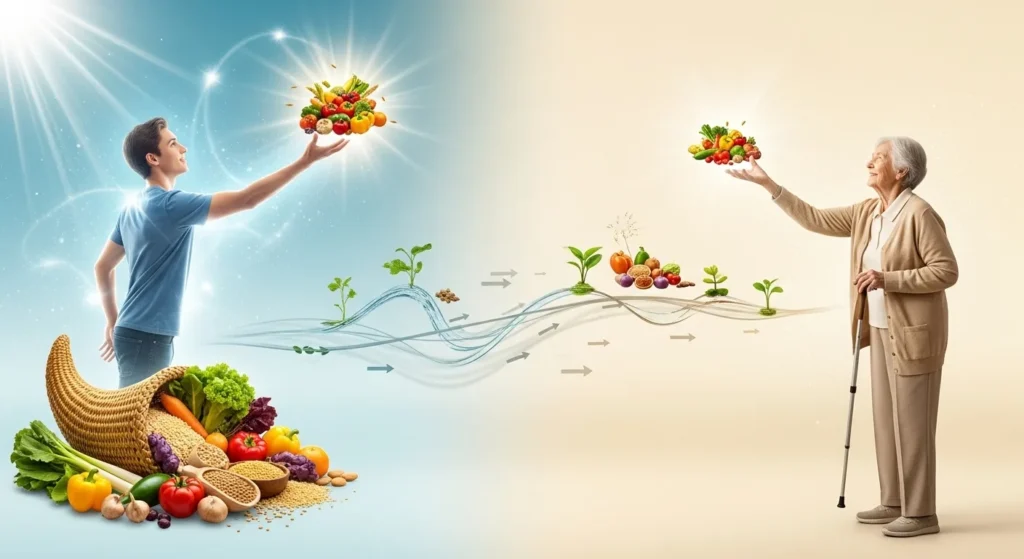
Most people think aging happens in jumps.
One day you’re fine.
Then suddenly—things feel slower, stiffer, heavier.
But biologically, aging doesn’t work like that.
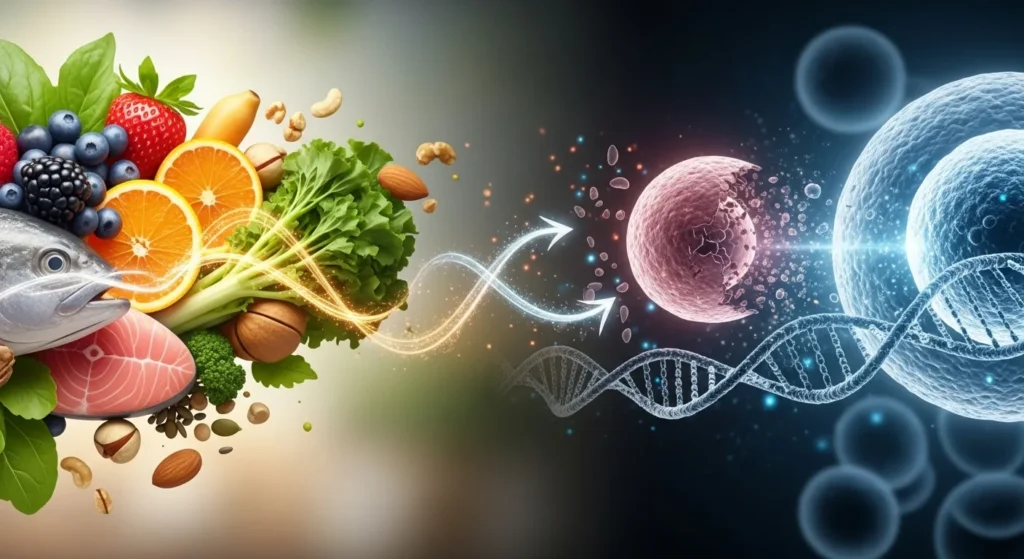
Long before wrinkles appear or energy drops, your cells are responding to how well they’re being fueled, repaired, and protected.
That process starts far earlier than most people realize.
Aging Is a Process, Not a Birthday
Chronological age measures time.
Biological age measures wear and repair.
Two people can share the same birth year and age very differently because aging reflects:
- Cellular damage accumulation
- Repair efficiency
- Metabolic resilience
Nutrition influences all three.
According to public health and aging research commonly referenced by organizations like the World Health Organization, lifestyle factors—especially diet—play a major role in how quickly age-related changes appear.
Aging doesn’t begin when symptoms show up.
It begins when repair quietly falls behind damage.
Why Nutrition Is Central to the Aging Timeline
Every day, your body:
- Repairs tissues
- Recycles damaged cells
- Produces new proteins
- Defends against oxidative stress
All of this requires nutrients.
When nutrition consistently supports these processes, aging slows.
When nutrition is inconsistent or poor, aging accelerates—gradually, invisibly.
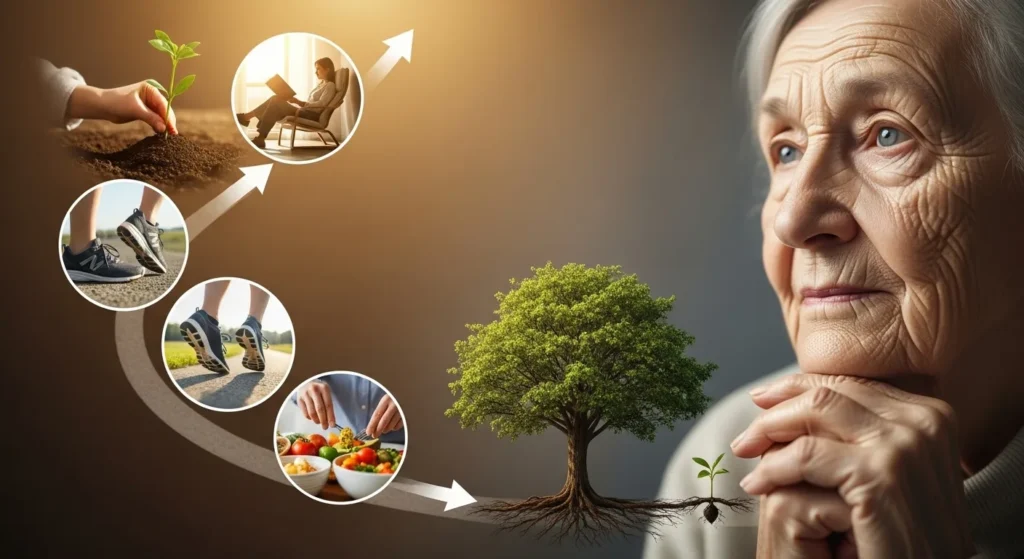
This is why aging is best understood as a nutritional trajectory, not a sudden decline.
The Slow Balance Between Damage and Repair
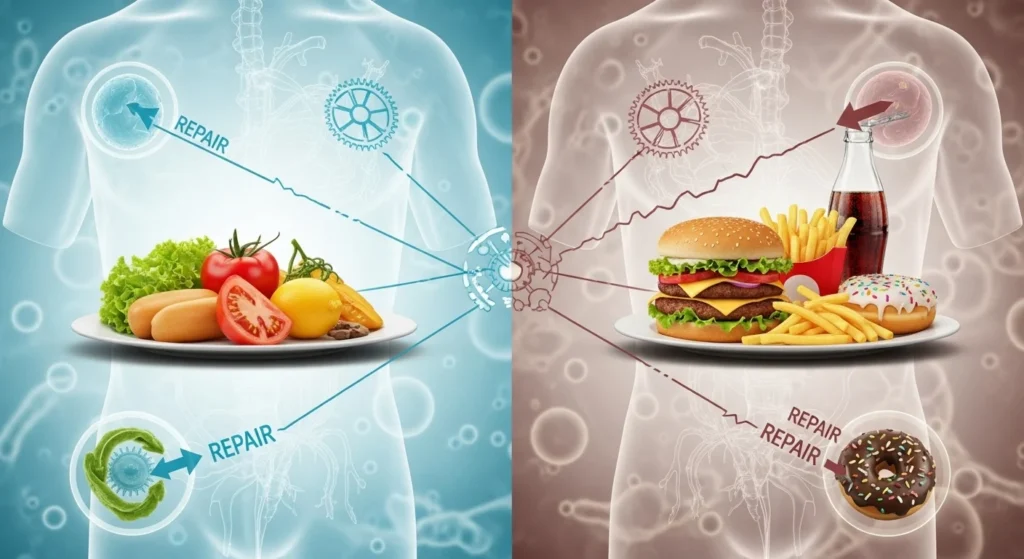
Your body is constantly balancing two forces:
- Damage from metabolism, stress, and environment
- Repair through regeneration and maintenance
Nutrition affects both sides.
Certain foods:
- Increase oxidative stress
- Promote inflammation
- Disrupt metabolic balance
Others:
- Support antioxidant defenses
- Improve repair efficiency
- Stabilize metabolism
The net result over years determines how fast aging unfolds.
Real-Life Example: Aging You Don’t See Until Later
Think about posture, joints, or energy levels.
They don’t collapse overnight.
They reflect:
- Years of inflammation
- Years of nutrient gaps
- Years of blood sugar instability
The body adapts—until it can’t.
By the time aging feels “sudden,” it has already been building slowly for decades.
Oxidative Stress: Aging’s Quiet Accelerator
Every cell produces free radicals as part of normal metabolism.
These molecules damage:
- DNA
- Proteins
- Cell membranes
Nutrition determines how well your body neutralizes them.
Diets lacking antioxidants and micronutrients allow oxidative damage to accumulate faster—speeding the aging process without obvious warning signs.
Inflammation: How Aging Speeds Up Without Pain
Chronic low-grade inflammation often goes unnoticed.
It doesn’t cause immediate illness.
Instead, it:
- Stiffens tissues
- Impairs insulin sensitivity
- Slows cellular repair
This phenomenon—often called “inflammaging”—is strongly influenced by diet quality.
Highly processed, nutrient-poor foods push inflammation upward over time.
Why Aging Feels Gradual… Until It Doesn’t
For years, the body compensates.
- Muscles adapt
- Organs work harder
- Hormones adjust
But compensation has limits.
Once repair capacity drops below damage rate, changes feel rapid—even though they weren’t.
That’s why aging appears sudden but is actually the result of long-term nutritional patterns.
Blood Sugar Stability and Long-Term Aging
Repeated blood sugar spikes contribute to:
- Glycation (sugar binding to proteins)
- Vascular damage
- Mitochondrial stress
These processes:
- Reduce skin elasticity
- Age blood vessels
- Impair brain and nerve function
Balanced nutrition that stabilizes blood sugar slows these changes over time.
Muscle, Metabolism, and the Aging Curve
Muscle loss is one of the strongest predictors of aging-related decline.
Nutrition influences muscle by:
- Providing adequate protein
- Supporting recovery
- Maintaining insulin sensitivity
Low protein intake and inconsistent nutrition accelerate muscle loss—quietly shifting the aging curve upward.
Muscle is not cosmetic.
It’s protective.
Micronutrients: Small Gaps, Big Aging Effects
Micronutrients don’t supply energy—but they run the machinery.
Key players include:
- B vitamins → DNA repair, energy production
- Magnesium → cellular stability
- Zinc → immune repair
- Omega-3 fats → inflammation control
Small deficiencies rarely cause immediate symptoms but compound aging over years.
Gradual Aging vs Sudden Aging: A Comparison
| Gradual Nutritional Aging | “Sudden” Aging |
|---|---|
| Daily small deficits | Visible decline |
| Slow repair loss | Rapid symptom onset |
| Compensated damage | Decompensation |
| Invisible early | Noticeable later |
The second column is the result of the first.
Common Myths That Hide the Nutritional Nature of Aging
❌ “Aging Is Mostly Genetics”
Genetics influence risk, but nutrition shapes expression.
❌ “Nothing Matters Until You’re Older”
Early nutrition determines later resilience.
❌ “Calories Are All That Count”
Quality, timing, and nutrients matter more.
These myths delay action—until change feels harder.
How to Support Healthy Aging Through Nutrition
You don’t need anti-aging products.
You need consistency.
Practical, Actionable Steps:
- Eat nutrient-dense foods most days
- Include protein regularly
- Balance carbohydrates to avoid spikes
- Avoid chronic underfueling
- Think long-term, not quick fixes
These habits support repair quietly, day after day.
Hidden Tip: Recovery Speed Predicts Aging Better Than Appearance
One of the clearest signs of biological aging is recovery.
Ask yourself:
- How fast do I regain energy?
- How quickly do aches fade?
- How well do I bounce back from stress?
Nutrition strongly influences recovery capacity.
Faster recovery often signals slower aging.
Why This Matters Today
Modern life adds stress, poor sleep, and environmental load.
Nutrition can either:
- Add to that burden
or - Act as a buffer
When food consistently supports repair instead of strain, aging becomes slower, steadier, and more manageable.
Key Takeaways
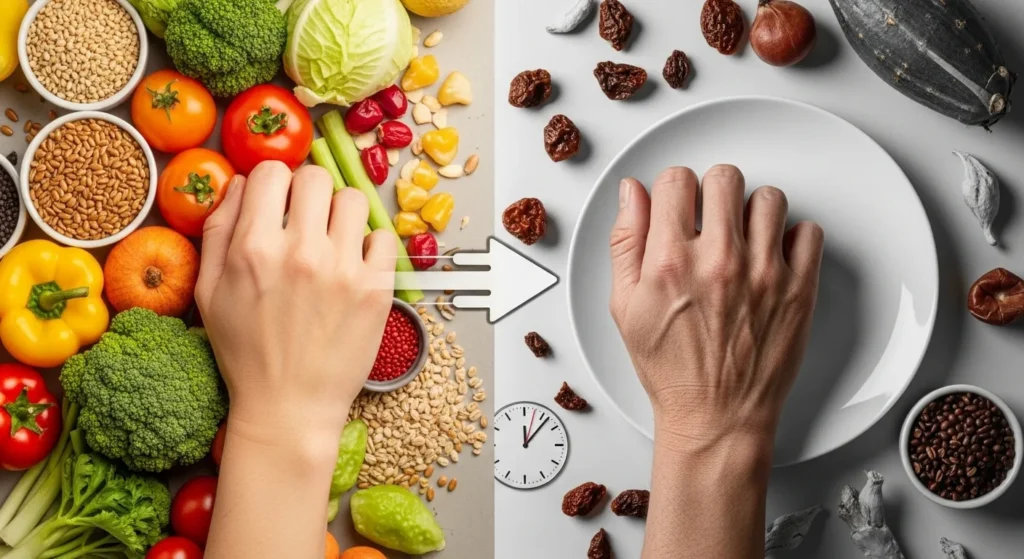
- Aging is a gradual nutritional process, not a sudden event
- Daily food choices shape cellular repair and damage
- Inflammation and oxidative stress accelerate aging quietly
- Nutrient quality matters more than calorie count
- Consistency slows biological aging over time
Frequently Asked Questions (FAQs)
1. Can nutrition really influence how fast I age?
Yes. Nutrition affects inflammation, repair, and metabolic health—all key aging drivers.
2. Is aging reversible with diet?
Some age-related decline can be slowed or partially improved, but prevention works best.
3. Does eating less always slow aging?
Not necessarily. Undereating can reduce repair capacity and accelerate decline.
4. When should I start caring about nutrition and aging?
As early as possible—aging begins long before symptoms appear.
5. Is aging mostly visible or invisible?
Mostly invisible at first; visible changes come later.
Conclusion: Aging Is Built Slowly—And So Is Vitality
Aging doesn’t sneak up overnight.
It builds quietly through thousands of small nutritional decisions.
The good news?
That means every meal is also a chance to slow it down.
Not dramatically.
Not instantly.
But meaningfully—over time.
Disclaimer: This article is for general educational purposes only and does not replace personalized nutrition or medical advice.



Pingback: Why Aging Reflects Years of Small Habits (Not Sudden Decline or Bad Luck)
Pingback: How Nutrition Quietly Controls the Speed of Aging (And Why It Matters More Than Genetics)
Pingback: Why Aging Starts Earlier Than Most People Think — The Quiet Changes That Begin Long Before You Feel “Old”