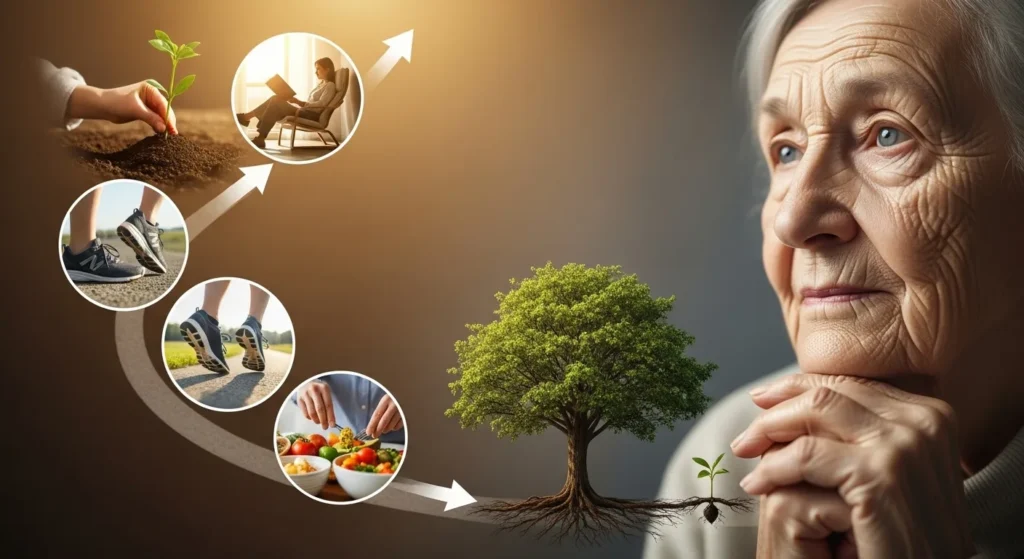
Most people experience aging like a surprise.
One year they feel fine.
The next, energy dips. Recovery slows. Stiffness appears.
It feels sudden—almost unfair.
But biologically, aging doesn’t arrive out of nowhere.
Aging is the visible result of thousands of small habits quietly shaping the body over many years.
Not one bad year.
Not one stressful period.
Not one indulgent phase.
It’s the accumulation that matters.
Aging Is a Record of Patterns, Not a Moment in Time
Chronological age simply counts birthdays.
Biological age reflects:
- How efficiently cells repair damage
- How resilient tissues remain under stress
- How well metabolism adapts over time
Those processes are influenced daily.
Public health research commonly referenced by organizations such as the World Health Organization consistently shows that long-term lifestyle patterns—especially nutrition, movement, sleep, and stress—play a major role in how aging unfolds.
Your body doesn’t forget patterns.
It remembers them—and shows them later.
Why Aging Feels Sudden (Even Though It Isn’t)
If aging is gradual, why does it feel abrupt?
Because the body compensates for years.
- Muscles work a little harder
- Hormones adjust quietly
- Organs adapt to stress
For a long time, compensation hides decline.
Then one day, the margin disappears.
That moment feels sudden—but the groundwork was laid slowly, habit by habit.
Small Habits Create Daily Signals Inside the Body
Every habit sends a biological signal.
Daily choices influence:
- Inflammation levels
- Blood sugar patterns
- Oxidative stress
- Repair and regeneration speed
A single signal doesn’t matter much.
But repeated signals become instructions.
The body adapts to what it experiences most often.
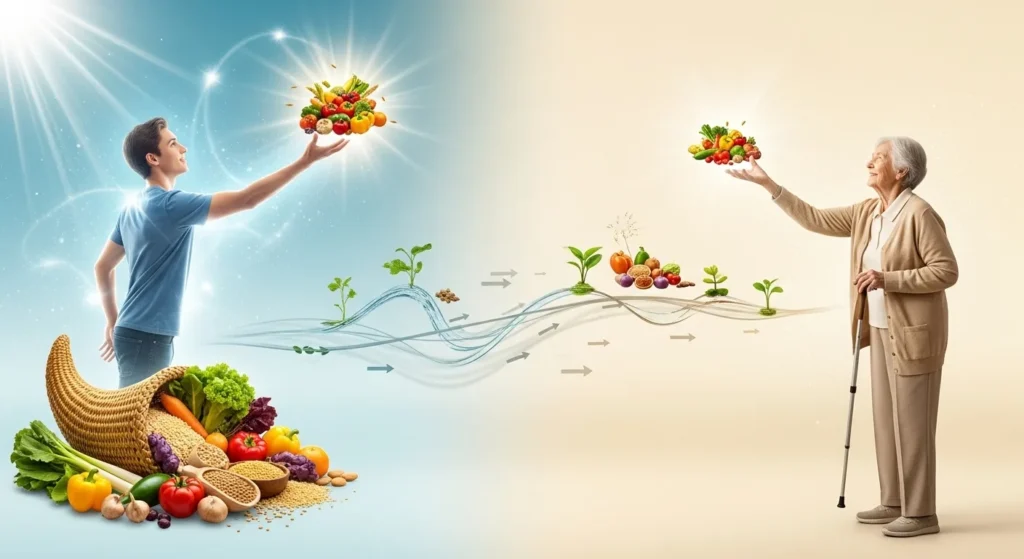
Real-Life Example: Two Identical Ages, Very Different Outcomes
Imagine two people of the same age.
One:
- Eats regular, balanced meals
- Moves a little every day
- Sleeps consistently
The other:
- Skips meals often
- Eats mostly processed food
- Sleeps irregularly
Neither feels dramatic consequences early on.
Years later, the difference becomes obvious.
Aging didn’t choose them differently.
Their habits did.
Nutrition Habits and the Pace of Aging
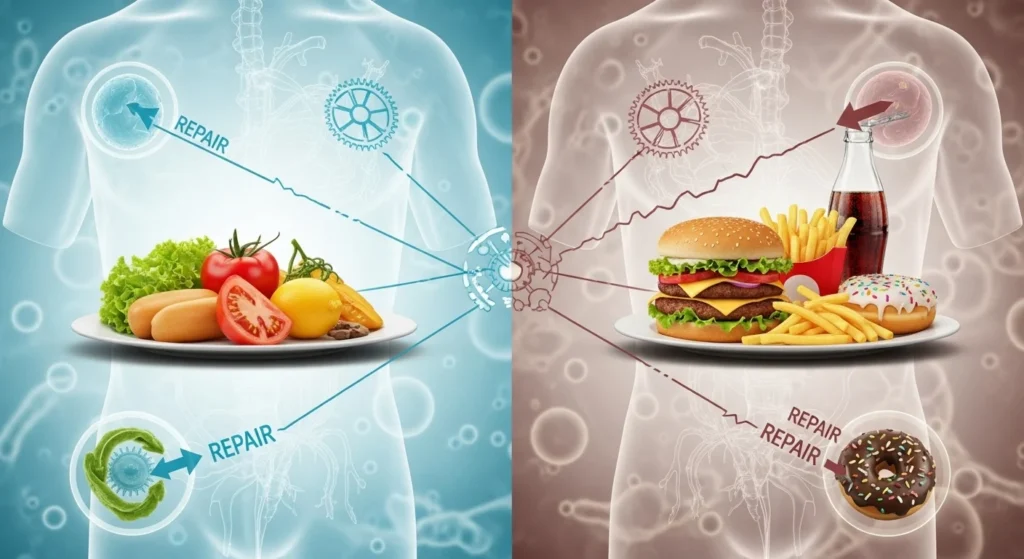
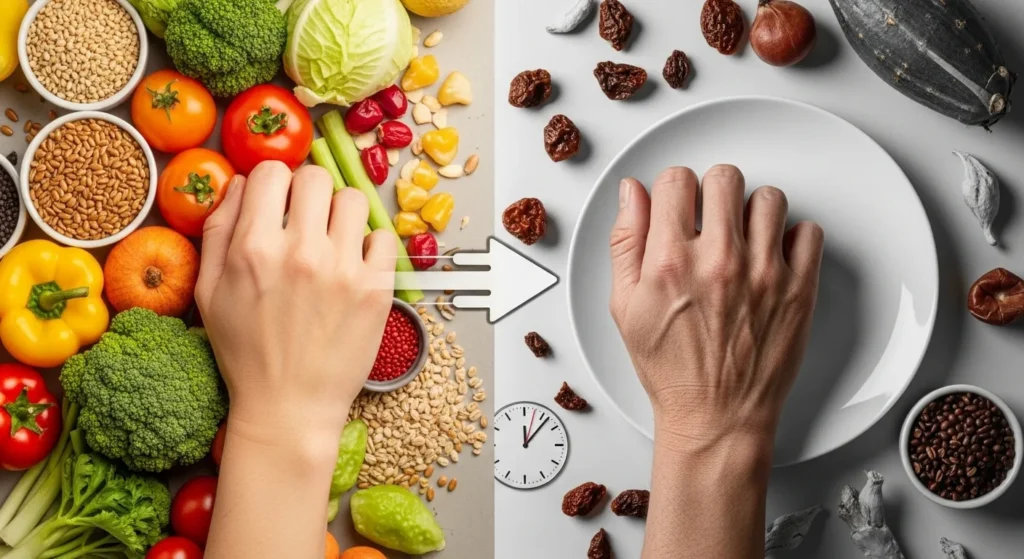
Food choices are among the most powerful habit signals.
- Cellular repair
- Muscle maintenance
- Metabolic stability
- Inflammatory balance
Ultra-processed, nutrient-poor diets don’t cause immediate aging symptoms.
They quietly:
- Increase cellular stress
- Reduce repair efficiency
- Accelerate wear
Meanwhile, consistent nourishment slows that process.
Blood Sugar Habits and Long-Term Wear
Repeated blood sugar spikes are a classic example of small habits with big consequences.
Over time, they:
- Promote glycation (sugar damage to proteins)
- Stress blood vessels
- Accelerate tissue aging
One sugary snack doesn’t age you.
Years of unstable blood sugar patterns do.
Inflammation: The Habit-Driven Accelerator of Aging
Chronic low-grade inflammation rarely announces itself.
It doesn’t feel like illness.
Instead, it slowly:
- Stiffens joints
- Weakens tissues
- Slows recovery
- Impairs metabolic health
Many daily habits influence inflammation:
- Diet quality
- Sleep regularity
- Stress management
When inflammation becomes habitual, aging accelerates quietly.
Movement Habits and Biological Aging
You don’t need extreme exercise to age well.
You need consistent movement.
Daily movement:
- Maintains muscle mass
- Preserves insulin sensitivity
- Supports circulation
Sedentary habits don’t cause instant decline—but they reduce resilience year after year.
Muscle loss is one of the strongest predictors of faster biological aging.
Sleep Habits: The Invisible Aging Multiplier
Sleep isn’t just rest.
It’s repair time.
Inconsistent sleep habits:
- Reduce hormone balance
- Impair cellular repair
- Increase inflammation
One bad night doesn’t matter much.
Years of poor sleep habits do.
Sleep quality compounds—just like nutrition.
Small Habits vs Big Events: A Clear Comparison
| Small Daily Habits | Big Life Events |
|---|---|
| Shape aging pace | Temporary impact |
| Compound over years | Short-term stress |
| Often invisible early | Highly noticeable |
| Harder to notice | Easier to blame |
Aging reflects the left column far more than the right.
Common Myths That Hide the Habit–Aging Connection
❌ “Aging Is Mostly Genetic”
Genetics load the gun; habits pull the trigger.
❌ “It’s Too Late to Change”
Habits influence aging at every stage.
❌ “Only Big Changes Matter”
Small, repeated actions matter most.
These myths delay change—until decline feels inevitable.
How Habits Quietly Become Health Identity
Over time, habits don’t just affect health.
They shape identity.
- “I recover slowly”
- “I’m always tired”
- “My joints just hurt now”
Often, these aren’t age traits.
They’re long-standing habit outcomes.
The good news?
Habits can be adjusted—gradually, sustainably.
Actionable Ways to Build Habits That Slow Aging
You don’t need dramatic overhauls.
You need consistency.
Practical Steps That Compound:
- Eat balanced meals most days
- Move your body daily—even lightly
- Protect sleep timing
- Reduce chronic underfueling
- Think in years, not weeks
These habits don’t promise immortality.
They promise resilience.
Hidden Tip: Recovery Speed Reveals Habit History
One of the clearest signs of biological aging is recovery.
How fast do you:
- Bounce back after stress?
- Recover from poor sleep?
- Regain energy after illness?
Recovery reflects years of habits—not just age.
Faster recovery usually means healthier long-term patterns.
Why This Matters Today
Modern life is habit-unfriendly:
- Constant stress
- Convenience food
- Irregular schedules
Aging accelerates when habits drift.
But slowing aging doesn’t require perfection.
It requires direction.
Small habits, repeated, still work—even in imperfect environments.
Key Takeaways
- Aging reflects years of small habits, not sudden decline
- Daily nutrition, movement, sleep, and stress patterns matter most
- Inflammation and metabolic instability accelerate aging quietly
- Habits compound long before symptoms appear
- It’s never too late to influence the trajectory
Frequently Asked Questions (FAQs)
1. Is aging really more about habits than age?
Biologically, yes. Habits strongly influence how fast age-related changes appear.
2. Can small habit changes still make a difference later in life?
Yes. Improvements in energy, recovery, and resilience often appear within months.
3. Do occasional bad habits matter?
Occasional lapses matter far less than daily patterns.
4. Is exercise or nutrition more important for aging?
Both matter—and they work best together.
5. How long does it take habits to affect aging?
Some effects appear quickly (energy, recovery); deeper aging effects accumulate over years.
Conclusion: Aging Is a Story Written in Small Lines
Aging isn’t written in dramatic chapters.
It’s written in small lines—meal by meal, night by night, habit by habit.
The powerful truth?
If habits helped shape how you’ve aged so far, they can also shape how you age next.
Quietly.
Gradually.
Meaningfully.
Disclaimer: This article is for general educational purposes only and does not replace personalized nutrition or medical advice.




Pingback: How Daily Food Choices Quietly Shape Your Long-Term Health (More Than You Realize)
Pingback: Why Aging Is a Gradual Nutritional Process (And Not Just Time Catching Up With You)