
“I Changed My Diet… So Why Do I Feel the Same?”
This moment frustrates almost everyone.
You clean up your meals.
You eat more consistently.
You make genuinely better choices.
A few days pass.
Then a week.
Then two.
And you think:
“Shouldn’t I feel something by now?”
We’ve been conditioned to expect instant feedback from almost everything—apps, workouts, caffeine, medications. So when nutrition doesn’t respond on that same timeline, it feels broken.
But here’s the truth most people never hear:
Nutrition doesn’t work on your schedule. It works on the body’s.
And the body is patient, cautious, and methodical—by design.
The Core Reason Nutrition Effects Are Delayed
The body’s primary goal is stability, not speed.
Rapid internal changes—good or bad—can threaten survival. So when you improve your nutrition, the body doesn’t rush to change outward signals.
Instead, it asks:
- Is this change consistent?
- Is food availability reliable?
- Is this safe to trust?
Only when the answer becomes “yes” does deeper adaptation begin.
Nutrition effects are delayed because the body waits for proof, not promises.
Nutrition First Repairs What You Can’t Feel
Most people expect nutrition to improve:
- Energy
- Weight
- Appearance
But those are secondary outcomes.
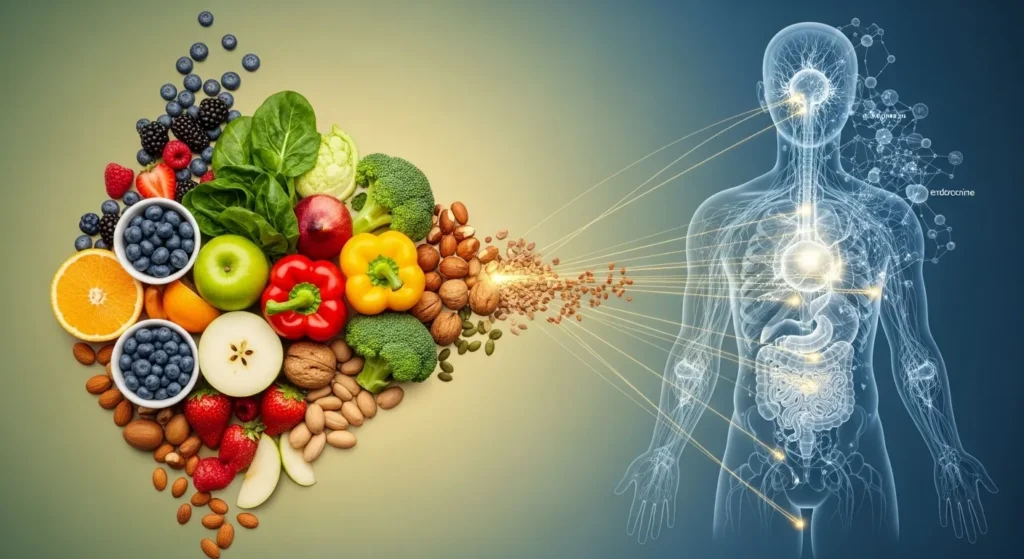
Nutrition’s first targets are invisible:
- Enzyme efficiency
- Mineral balance
- Hormone signaling stability
- Mitochondrial repair
- Inflammatory regulation
None of these create dramatic sensations.
They create capacity—which you feel later.
The Body’s Priority List Explains the Delay
When nutrients arrive consistently, the body doesn’t distribute them evenly.
Top priorities:
- Brain and nervous system
- Heart rhythm
- Blood sugar regulation
- Organ function
Lower priorities:
- Muscle building
- Fat loss
- Skin, hair, nails
- Performance optimization
Until survival systems feel secure, visible changes wait their turn.
Why Short-Term “Results” Are Often Misleading
Some diets appear to work fast.
But look closely:
- Rapid weight loss is often water and glycogen
- Energy spikes come from stimulants or stress hormones
- Appetite suppression isn’t metabolic improvement
These changes feel immediate—but they don’t represent real biological rebuilding.
True nutrition effects are delayed because real repair takes time.
Real-Life Example: “Nothing Happened… Until Months Later”
This is one of the most common patterns.
Someone improves their diet:
- Balanced meals
- Enough protein
- Better food timing
They feel disappointed after a few weeks.
Then, months later, they realize:
- They recover faster
- They get sick less often
- Energy feels steadier
- Stress feels more manageable
Nothing “clicked” overnight.
The benefits accumulated quietly.
The Nutrient Replenishment Timeline Most People Don’t Know
Different nutrients operate on different clocks.
For example:
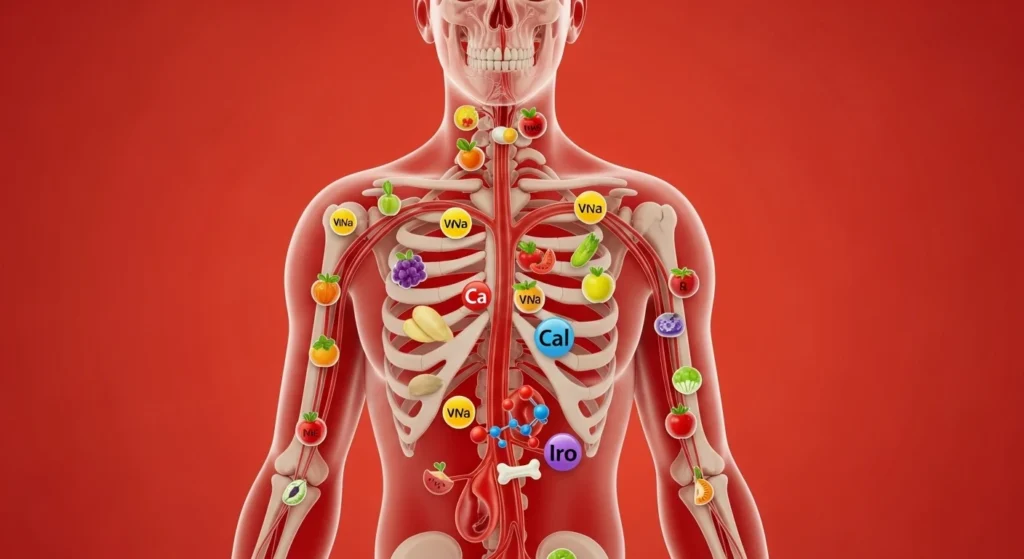
- Blood sugar regulation adapts over weeks
- Iron and B12 stores rebuild over months
- Bone and connective tissue turnover takes years
- Gut microbiome shifts require repeated exposure
Expecting immediate results ignores the biology of storage, turnover, and repair.
Delayed Effects Are a Feature, Not a Flaw
If nutrition worked instantly:
- The body would overreact to every meal
- Minor changes would destabilize systems
- Survival would be compromised
Delayed response protects you from:
- Food scarcity
- Environmental unpredictability
- Short-term dietary mistakes
The delay is what makes health durable.
Delayed Nutrition vs. Instant Stimulation
This difference explains much confusion.
| Approach | Timing of Effect | Sustainability | Risk |
|---|---|---|---|
| Caffeine & stimulants | Minutes | Low | High rebound |
| Crash dieting | Days | Very low | Metabolic stress |
| Supplements alone | Variable | Limited | Incomplete |
| Consistent nutrition | Weeks–months | High | Low |
If it feels subtle, it’s probably real.
Why the Body “Waits” Before Rewarding Change
From an evolutionary standpoint, the body doesn’t trust sudden improvements.
If food appears briefly, it might disappear again.
So the body:
- Observes consistency
- Maintains old settings
- Gradually reallocates resources
Only after repeated signals does it upgrade systems like:
- Metabolic rate
- Repair capacity
- Hormonal efficiency
Nutrition is like earning trust—not flipping a switch.
Common Mistakes That Interrupt the Timeline
Many people sabotage delayed benefits by:
- Changing diets too frequently
- Expecting daily feedback
- Adding extremes when results feel slow
- Measuring success emotionally, not biologically
- Quitting just before adaptation begins
The most powerful nutrition phase often starts after impatience peaks.
Why This Matters Today (More Than People Realize)
Modern culture rewards speed.
But health doesn’t.
When people assume nutrition “isn’t working,” they:
- Jump between diets
- Create metabolic stress
- Lose trust in their body
Understanding delay restores patience—and results.
Delayed effects don’t mean failure.
They mean foundational work is happening.
Subtle Signs Nutrition Is Working (Before You Notice Results)
Look for:
- More stable hunger
- Fewer energy crashes
- Better sleep consistency
- Improved stress tolerance
- Less reactivity to missed meals
These are early wins—often missed.
What Science Says About Long-Term Nutrition Effects
Large-scale nutrition research summarized by organizations like the World Health Organization and the National Institutes of Health consistently shows that diet quality predicts long-term health outcomes far better than short-term changes.
Health is cumulative.
The delay reflects that reality.
How to Work With the Delay Instead of Fighting It
You don’t need more intensity.
You need alignment.
Actionable steps:
- Commit to consistency before optimization
- Track trends over weeks, not days
- Reduce dietary chaos first
- Support recovery alongside nutrition
- Measure success by stability, not excitement
When nutrition feels boring, the body feels safe.
Key Takeaways
- Nutrition effects are delayed by design
- The body prioritizes stability before visible change
- Real repair happens silently
- Immediate effects are often misleading
- Consistency unlocks long-term results
Frequently Asked Questions
1. How long before nutrition changes actually work?
It varies, but foundational changes often take weeks to months.
2. Why do some diets feel fast but fail later?
They rely on stimulation, not repair.
3. Should I change my diet if I feel nothing?
Only after confirming consistency—not impatience.
4. Can supplements speed up results?
They help when needed, but they don’t replace time.
5. What’s the biggest sign nutrition is working?
Greater stability in energy, mood, and recovery.
Conclusion: Delay Is the Price of Real Health
Nutrition doesn’t shout.
It whispers, builds, and waits.
By the time you feel the benefits, your body has already done weeks—or months—of quiet work behind the scenes.
If you understand that delay isn’t failure but proof of depth, nutrition stops feeling frustrating and starts feeling powerful.
Disclaimer: This article is for general educational purposes only and does not replace personalized medical or nutritional advice. Individual responses may vary.

Pingback: Why Nutrition Builds Stability, Not Instant Change — The Quiet Way Food Actually Shapes Your Health