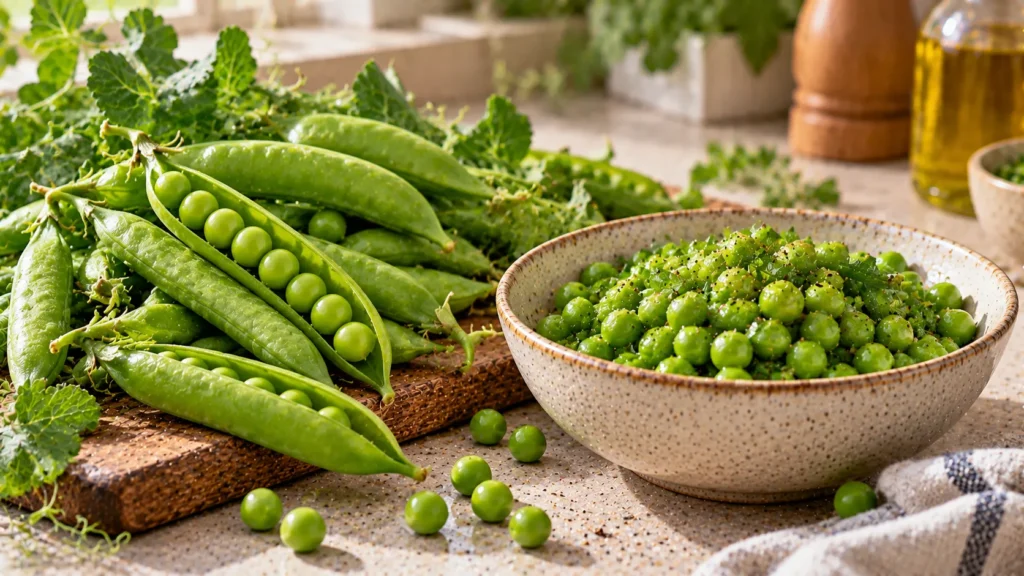
A bowl of green peas can contribute more protein and fibre than many people expect from a vegetable. One cup of cooked green peas contains approximately 8.6 grams of protein and 8.8 grams of dietary fibre, alongside carbohydrates, vitamins and minerals. That combination makes peas particularly useful in meals that need more than colour or a little extra greenery.
Peas occupy an interesting position in the food world. They are legumes botanically, but fresh green peas are generally eaten as a vegetable rather than as a concentrated protein source like dried lentils or beans. Their nutritional value sits somewhere between those categories, giving them a practical role in everyday meals.
The distinction matters because peas are sometimes overlooked as a side dish or treated as little more than a source of carbohydrates. They do contain carbohydrates, including natural sugars and starch, but they also supply plant protein and fibre in the same serving.
Understanding that combination makes it easier to use peas effectively, whether they come from the freezer, a fresh pod or a can in the pantry.
One cup of peas provides a useful combination of protein and fibre
USDA food-composition data provide a useful starting point for understanding green peas. One cup of cooked, boiled and drained peas, weighing approximately 160 grams, contains around 134 calories, 8.6 grams of protein and 8.8 grams of fibre. The same serving supplies approximately 25 grams of carbohydrates.
Those numbers make peas different from many familiar vegetable sides. They provide considerably more protein and fibre per serving than vegetables such as cucumber or iceberg lettuce, although exact comparisons depend on the serving sizes and preparation methods involved.
Protein helps the body maintain and repair tissues and produces enzymes and other molecules necessary for normal function. Fibre contributes to bowel regularity and supports other aspects of digestive health, with effects depending partly on the type of fibre consumed.
Getting both nutrients from one food can make meal planning easier. Rather than adding a separate ingredient for every nutritional purpose, you can include peas in an existing dish and improve its overall composition.
Consider a simple bowl of brown rice, peas and roasted vegetables. The rice provides energy, the peas add protein and fibre, and the additional vegetables broaden the meal’s range of nutrients. Adding eggs, tofu, fish or another protein-rich ingredient can make the meal more substantial, depending on your needs.
Peas do not have to provide everything on the plate to make a meaningful contribution.
How much protein do peas actually provide?
Peas are a useful plant source of protein, but portion size matters.
A half-cup serving of cooked green peas provides approximately 4.3 grams of protein, while a full cup supplies around 8.6 grams. That is a worthwhile amount from a familiar vegetable, especially when peas are combined with other plant foods throughout the day.
However, green peas should not be confused with pea-protein powders or concentrated plant-protein ingredients. Those products are manufactured to supply substantially more protein per gram than ordinary cooked peas.
The distinction also applies when comparing green peas with dried beans and lentils. Dried legumes are more concentrated sources of protein and fibre by weight before cooking, and cooked servings of many beans and lentils provide substantial amounts of both nutrients.
This does not diminish the value of green peas. It simply means they fill a different role.
For someone trying to increase plant-based protein intake, peas can contribute alongside lentils, chickpeas, tofu, nuts, seeds and whole grains. A meal built around several of these foods can provide a varied supply of amino acids, the building blocks used to make proteins in the body.
It is also worth remembering that protein adequacy depends on the overall diet, not on whether one food supplies an impressive number on its own. People who eat plant-based diets can obtain adequate protein from varied food sources when the quantities and overall dietary pattern meet their needs.
The most useful way to treat peas is as a contributor to daily protein intake rather than a complete replacement for every other protein source.
Fibre is what makes peas particularly useful
Peas are not just about protein. Their fibre content is one of their strongest nutritional features.
One cup of cooked green peas supplies approximately 8.8 grams of fibre. That is a substantial contribution toward the 22–34 grams of fibre that the US National Institute of Diabetes and Digestive and Kidney Diseases recommends for adults, with individual requirements varying by age and sex.
Fibre contributes to normal bowel function. Depending on its type, it can add bulk to stool, influence how much water the stool retains and provide material that gut microorganisms can ferment.
Peas contain several forms of fibre as well as starch that is not all digested in the same way. The composition of the food affects how its carbohydrates are broken down and how much reaches the large intestine.
That said, eating peas does not guarantee a particular change in the gut microbiome or prevent digestive problems. The response to fibre depends on the type and quantity consumed, the rest of the diet and individual differences.
One practical consideration is how quickly fibre intake increases. Someone whose usual diet contains very little fibre may experience gas or bloating after suddenly eating a large serving of peas. Increasing fibre gradually and drinking enough fluid can help the digestive system adjust.
Peas are particularly helpful because they are easy to add to familiar meals. A scoop in soup, pasta or a grain bowl can increase fibre intake without requiring a completely different diet.
Peas contain carbohydrates, too—and that is not a disadvantage
Protein and fibre often receive the most attention in discussions about peas, but carbohydrates make up a substantial part of their nutritional profile.
One cup of cooked green peas contains around 25 grams of carbohydrates, including naturally occurring sugars and starch. The fibre is part of the total carbohydrate figure, and there is no need to interpret the entire amount as sugar.
Carbohydrates provide energy, and green peas offer them alongside protein, fibre and micronutrients. This is different from obtaining carbohydrates mainly from refined foods that contribute relatively little fibre or a similar range of nutrients.
Peas are therefore not a food that needs to be judged by whether they are low in carbohydrates. Their nutritional value comes partly from the combination of nutrients accompanying those carbohydrates.
This distinction is useful when comparing peas with other vegetables. Under the USDA’s MyPlate framework, green peas are classified among starchy vegetables, whereas dried peas, beans and lentils are placed in the beans, peas and lentils subgroup. Both groups contribute to a varied diet, but their nutritional roles and composition differ.
For people who monitor carbohydrate intake because of diabetes or another medical consideration, serving size and the composition of the entire meal remain relevant. The carbohydrate content of peas should be counted appropriately rather than ignored simply because they are a vegetable.
For everyone else, their carbohydrates are part of what makes peas a useful ingredient in soups, salads, pasta and more substantial meals.
What else do peas contribute nutritionally?
Protein and fibre may be the main reasons to pay attention to peas, but they also supply several micronutrients.
Green peas contain folate, vitamin C, vitamin K, thiamin and minerals such as potassium and iron. The precise quantities depend on the variety, growing conditions, storage and preparation method.
Folate is needed for DNA production and normal cell division. Vitamin C supports collagen formation, normal immune function and the absorption of non-haem iron from plant foods. Vitamin K participates in normal blood clotting, while potassium contributes to nerve transmission and muscle function.
These nutrients perform distinct functions, and their presence in peas does not mean the vegetable can meet all of the body’s nutritional requirements.
Still, their combined presence helps explain why peas can be a useful part of a varied diet. They contribute several nutrients alongside protein and fibre, making them more than a simple source of starch.
Peas also contain naturally occurring plant compounds, including polyphenols. Researchers have studied pea composition and the potential biological effects of certain components, although laboratory findings should not automatically be interpreted as proven health benefits in people.
There is little reason to exaggerate these additional features. The established contributions of protein, fibre, vitamins and minerals are already sufficient reasons to include peas regularly.
Fresh, frozen or canned: does the choice matter?
Fresh peas straight from the pod can be enjoyable when they are in season, but frozen peas are often the most convenient option for everyday cooking.
Freezing allows peas to be stored for long periods and added to meals with little preparation. They can be stirred into soups, curries, pasta and rice dishes without needing to be shelled, making it easier to keep a vegetable available for quick meals.
Canned peas are another convenient choice. Their nutritional composition can differ from fresh or frozen peas depending on processing, and added sodium varies by product. Checking the ingredient list and choosing a lower-sodium option can be useful when sodium intake is a concern.
There is no need to assume that fresh peas are always nutritionally superior. Storage, processing and cooking influence the nutrients remaining in any vegetable, and the exact differences depend on the nutrient and preparation method.
Convenience matters, too. Frozen peas that can be added to dinner several times a week may be more useful than fresh peas that are rarely purchased because preparing them takes too much time.
The most practical choice is the one that fits your budget, cooking routine and taste while helping you eat vegetables regularly.
How cooking affects peas
Peas are commonly boiled, steamed or heated directly in dishes such as soups and stir-fries. Cooking softens their texture, makes them easier to eat and changes certain aspects of their nutritional composition.
Some water-soluble vitamins, including vitamin C and folate, can be lost or move into cooking water during prolonged boiling. The extent of these changes depends on cooking time, temperature, water exposure and the peas themselves.
That does not make boiled peas a poor choice. The amount of nutrient loss varies, and many of the nutrients that make peas valuable—including protein and fibre—remain important components of the cooked food.
A straightforward approach is to cook peas until they are tender rather than leaving them boiling longer than necessary. Steaming or adding frozen peas toward the end of a recipe can be convenient ways to achieve the desired texture without prolonged cooking.
If peas are added to soup or a stew, the liquid is consumed as part of the dish, so water-soluble nutrients that move into the broth may still be eaten.
The goal is not to preserve every nutrient perfectly. It is to prepare peas in ways that make them appealing, convenient and easy to include in regular meals.
How to put peas to work in everyday meals
Peas have a mild sweetness and a soft texture, which makes them easy to use in a wide variety of dishes.
For a quick lunch, stir them into pasta with olive oil, lemon and herbs. Add tofu, chicken, fish or another protein-rich ingredient if the meal needs a more substantial protein contribution.
For a simple dinner, mix peas into rice alongside other vegetables and an appropriate protein source. They can also be added to soups, casseroles and vegetable curries, where their fibre and protein complement the other ingredients.
Peas work particularly well in meals that contain whole grains. Combining them with foods such as brown rice, oats or whole-grain bread contributes variety and creates a meal with a broader nutritional profile.
They can also be mashed into a spread or blended into soup. These preparations change the texture but still allow peas to contribute to the meal’s overall nutrient content.
The important point is to avoid treating peas as either a compulsory superfood or a complete meal. Their usefulness depends on how they fit into the rest of the plate.
A bowl of peas by itself may provide protein and fibre, but a balanced meal usually benefits from additional ingredients that supply the energy and nutrients peas contribute in smaller amounts.
Why peas deserve a regular place on the plate
Peas are valuable because they bring together several useful nutritional features in a familiar, inexpensive and versatile food. One cup of cooked green peas provides approximately 8.6 grams of protein and 8.8 grams of fibre, alongside carbohydrates and several vitamins and minerals.
Those numbers make peas a particularly useful vegetable to keep in the rotation, especially for people trying to increase their intake of plant foods.
The main limitation is that green peas are not as concentrated a protein source as dried legumes or foods designed to deliver large amounts of protein. They also provide carbohydrates, which should be considered as part of the entire meal when relevant.
Neither point is a reason to avoid them. Instead, they offer a useful reminder that foods perform different roles. Peas can contribute protein and fibre, while lentils, beans, tofu, whole grains, nuts and seeds can fill other nutritional needs.
A small bowl of peas will not transform a diet on its own, but adding them regularly can help build a more varied eating pattern. Their strength lies in what they contribute consistently—not in promises of dramatic effects.
Sources:
[1] U.S. Department of Agriculture, Agricultural Research Service. FoodData Central: Peas, green, cooked, boiled, drained, without salt. Reference for the calorie, protein, fibre, carbohydrate, vitamin and mineral values quoted in the article. https://fdc.nal.usda.gov/food-search/?query=peas%20green%20cooked
[2] National Institute of Diabetes and Digestive and Kidney Diseases (NIDDK). Eating, Diet, & Nutrition for Constipation. Explains recommended daily fibre intake, the role of fluid and why fibre should be increased gradually. https://www.niddk.nih.gov/health-information/digestive-diseases/constipation/eating-diet-nutrition
[3] National Institutes of Health (NIH). Health Benefits of Dietary Fibers Vary. Explains that dietary fibre types differ and can have different effects in the digestive tract and gut microbiome. https://www.nih.gov/news-events/nih-research-matters/health-benefits-dietary-fibers-vary
[4] U.S. Department of Agriculture, MyPlate. Protein Foods Group. Explains the place of peas, beans and lentils among protein foods and the importance of obtaining protein from varied sources. https://www.myplate.gov/web/web/eat-healthy/protein-foods
[5] U.S. Department of Agriculture, MyPlate. Vegetable Group. Explains vegetable subgroups and classifies green peas among starchy vegetables, distinct from the dried peas, beans and lentils subgroup. https://www.myplate.gov/web/web/eat-healthy/vegetables
[6] National Institutes of Health, Office of Dietary Supplements. Vitamin C: Fact Sheet for Health Professionals. Explains vitamin C’s established functions, including collagen formation, immune function and non-haem iron absorption. https://ods.od.nih.gov/factsheets/VitaminC-HealthProfessional
[7] National Institutes of Health, Office of Dietary Supplements. Folate: Fact Sheet for Health Professionals. Explains folate’s role in DNA production and normal cell division. https://ods.od.nih.gov/factsheets/folate-healthprofessional
[8] National Institutes of Health, Office of Dietary Supplements. Vitamin K: Fact Sheet for Health Professionals. Explains vitamin K’s role in normal blood clotting and bone metabolism. https://ods.od.nih.gov/factsheets/VitaminK-HealthProfessional
[9] Ge J, Sun CX, Corke H, Gul K, Gan RY, Fang Y. The health benefits, functional properties, modifications, and applications of pea (Pisum sativum L.) protein: Current status, challenges, and perspectives. Comprehensive Reviews in Food Science and Food Safety. 2020;19(4):1835–1876. DOI: 10.1111/1541-4337.12573. Reviews pea protein’s composition and food applications, including the distinction between whole peas and concentrated pea-protein ingredients. https://pubmed.ncbi.nlm.nih.gov/33337084

Aarti Solanki, B.Sc. (Food Science), is a food science writer passionate about making nutrition simple and evidence-based. She creates well-researched, easy-to-understand articles on healthy eating, food science, and nutrition, using information from trusted scientific and public health sources.