
You’re Not Eating for Today — You’re Eating for Years from Now
Most people think nutrition works meal by meal.
Eat well today, feel good today.
Eat poorly today, feel bad tomorrow.
But the body doesn’t work that way.
Nutrition behaves more like compound interest—quiet, slow, and powerful over time. One meal rarely changes your health. Thousands of meals do.
This is why people are often shocked by their own health changes. They didn’t suddenly “start eating badly.” They simply underestimated how small, repeated habits accumulate.
And once you understand this process, nutrition stops feeling overwhelming—and starts feeling manageable.
Why the Body Remembers What You Eat
The body doesn’t reset every morning.
It stores information from food in:
- Tissues
- Hormonal signals
- Gut bacteria
- Metabolic pathways
Each meal leaves a trace.
Over time, these traces shape how efficiently you:
- Regulate blood sugar
- Recover from stress
- Build or lose muscle
- Manage inflammation
- Absorb nutrients
This is why nutrition is less about perfection and more about patterns.
The Difference Between Occasional Choices and Daily Habits
A single indulgent meal doesn’t harm long-term health.
But habits repeated daily or weekly do.
Examples:
- Skipping breakfast once = neutral
- Skipping breakfast for years = hormonal and metabolic shifts
- Low fiber one day = no issue
- Low fiber for decades = gut and metabolic consequences
The body adapts to what it sees most often—not what you do occasionally.
How Nutritional Habits Compound Over Time
Think of nutrition as layers stacking quietly.
Layer 1: Intake Patterns
- Protein distribution
- Fiber consistency
- Micronutrient diversity
Layer 2: Metabolic Adaptation
- Insulin sensitivity
- Fat storage efficiency
- Energy regulation
Layer 3: Structural Changes
- Muscle mass
- Bone density
- Gut microbiome diversity
Layer 4: Functional Outcomes
- Strength
- Cognitive clarity
- Disease resistance
- Aging trajectory
You don’t feel these layers forming—but you live with their results.
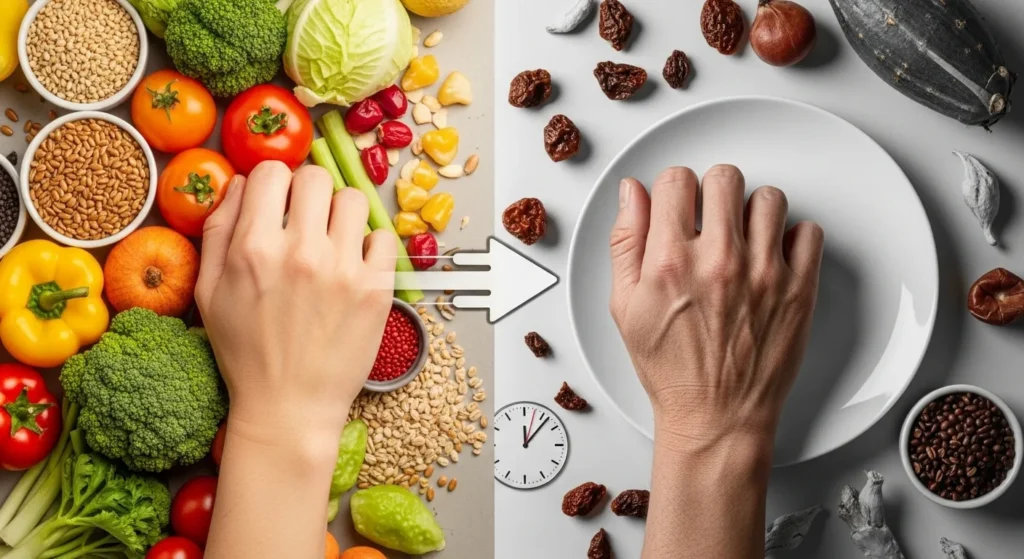
Why People Overestimate Short-Term Diets and Underestimate Long-Term Habits
Short-term diets feel powerful because:
- They produce visible changes quickly
- They create a sense of control
- They promise fast results
Long-term habits feel boring because:
- Results are slow
- Benefits are subtle
- There’s no dramatic “before and after”
But biology rewards consistency—not intensity.
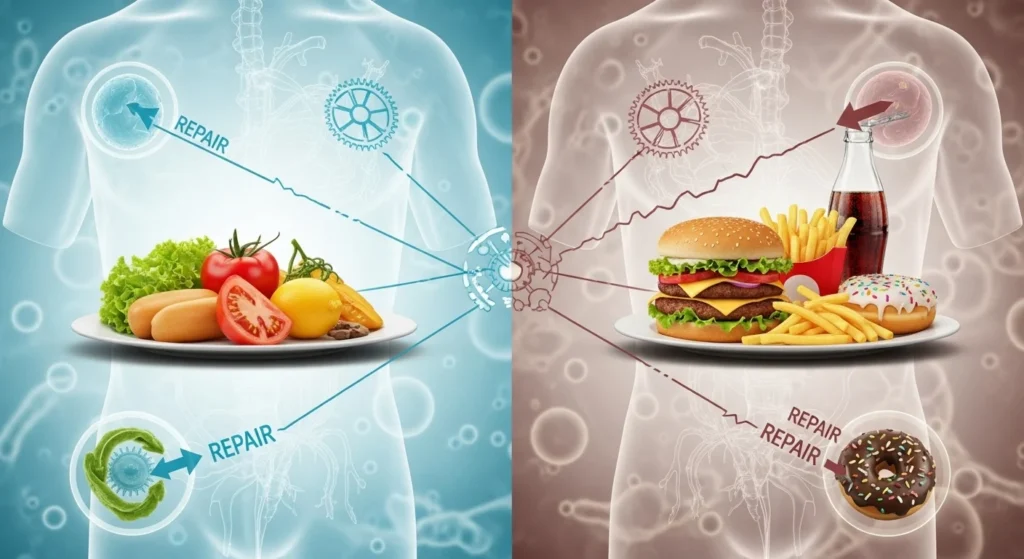
Real-Life Example: Two Lunches, Two Futures
Consider two people who eat lunch at work for 20 years.
Person A
- Highly processed meals
- Low fiber
- Sugary drinks
Person B
- Balanced meals
- Regular protein
- Vegetables most days
At year 1: no visible difference
At year 10: energy and weight diverge
At year 20: metabolic health tells the story
Neither made extreme choices.
One simply repeated better ones.
The Accumulation Effect Most People Miss
Nutritional habits accumulate in ways that aren’t obvious.
For example:
- Slight protein deficiency → gradual muscle loss
- Mild mineral gaps → slow bone weakening
- Chronic low fiber → reduced gut resilience
- Frequent blood sugar spikes → metabolic strain
Each change is small.
Together, they become significant.
Reactive Nutrition vs Accumulative Nutrition
| Aspect | Reactive Nutrition | Accumulative Nutrition |
|---|---|---|
| Focus | Fixing problems | Building resilience |
| Timeframe | Weeks to months | Years to decades |
| Strategy | Restriction | Consistency |
| Results | Short-lived | Long-lasting |
| Stress | High | Low |
Understanding accumulation shifts nutrition from stressful to strategic.
Common Nutritional Habits That Accumulate Positively
These habits don’t feel dramatic—but they matter.
- Eating protein consistently, not occasionally
- Including vegetables most days, not perfectly
- Supporting gut health through fiber diversity
- Eating enough, not chronically undereating
- Maintaining stable meal timing
None of these require perfection.
Hidden Mistakes That Quietly Accumulate Damage
Some habits feel harmless but compound negatively.
Avoid these long-term traps:
- Skipping meals as a lifestyle
- Relying heavily on ultra-processed foods
- Chronic dieting cycles
- Ignoring micronutrient variety
- Treating supplements as food replacements
The damage is slow—but real.
Why This Matters Today (More Than Ever)
Modern life accelerates accumulation:
- Highly processed food availability
- Chronic stress
- Reduced movement
- Poor sleep
This means nutritional habits matter more now, not less.
Small daily decisions carry greater long-term weight than ever before.
Actionable Steps to Build Positive Nutrition Accumulation
You don’t need to overhaul your diet.
Start here:
- Anchor every meal with protein
- Add one fiber-rich food daily
- Eat consistently, not sporadically
- Rotate foods weekly for micronutrient diversity
- Focus on habits you can repeat for years
Sustainable beats perfect.
Why Nutrition Feels Slow—but Works Deeply
Nutrition rarely provides instant feedback.
You don’t feel bones strengthening.
You don’t feel gut diversity increasing.
You don’t feel inflammation reducing gradually.
But your future body does.
And it reflects what you practiced quietly for years.
Key Takeaways
- Nutritional habits compound like interest over time
- Patterns matter more than individual meals
- Small, consistent choices shape long-term health
- Prevention is built through repetition, not restriction
- Nutrition works slowly—but powerfully
Frequently Asked Questions
1. Can small habits really make a big difference?
Yes. Small daily habits repeated over years often outweigh dramatic short-term changes.
2. Is it ever too late to benefit from better nutrition?
No. Positive accumulation can begin at any age.
3. Do cheat meals ruin progress?
No. Progress is shaped by overall patterns, not occasional deviations.
4. Is consistency more important than food quality?
Both matter, but consistency makes quality sustainable.
5. How long does it take to see results from better habits?
Some changes appear in weeks, others unfold over years—but all contribute.
Conclusion: You’re Building a Body One Habit at a Time
Nutrition is not a series of decisions—it’s a long conversation with your body.
Every meal is a sentence.
Every habit is a paragraph.
And decades become the story.
The good news?
You don’t need to write it perfectly—just consistently.
Disclaimer: This content is for general educational purposes and should not replace personalized medical or nutritional guidance.






Pingback: Why You Don’t “Suddenly” Get Sick — The Long Nutritional Story Behind Symptoms