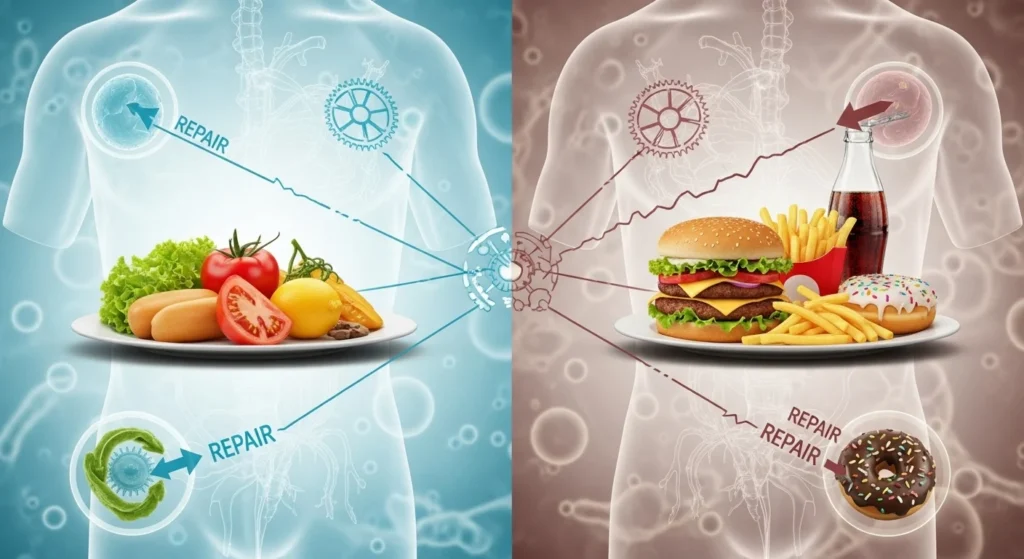
Health Rarely Announces Itself While It’s Being Built
Most people imagine health as something you notice.
You feel energetic.
You lose weight.
You hit a milestone.
But long-term health doesn’t arrive with fireworks.
It forms quietly, invisibly, through thousands of ordinary days when nothing dramatic happens.
That’s why people are often shocked when health declines. They didn’t “do anything wrong” recently. What they missed was how years of small, seemingly harmless habits slowly shaped the body behind the scenes.
Nutrition is one of the quietest—and most powerful—forces in that process.
Why the Body Rewards Consistency, Not Intensity
Biology doesn’t respond well to extremes.
It responds to patterns.
A single healthy week doesn’t rebuild resilience.
A single unhealthy month doesn’t destroy it either.
What matters is what the body sees most often.
Daily nutrition patterns influence:
- Metabolism
- Hormonal balance
- Inflammation
- Tissue repair
- Gut health
These systems adapt slowly. They don’t need perfection—they need reliability.
The Slow Timeline of Long-Term Health
Health develops in stages that rarely feel dramatic.
Stage 1: Invisible Adaptation
- The body compensates for gaps
- Energy feels “normal”
- No symptoms appear
Stage 2: Subtle Signals
- Recovery slows
- Fatigue becomes common
- Minor aches appear
Stage 3: Functional Changes
- Blood markers shift
- Strength declines
- Digestion or mood changes
Stage 4: Diagnosis
- Symptoms finally demand attention
Nutrition influences every stage—but works best in the first two, when nothing feels wrong.
Why Quiet Habits Matter More Than Big Changes
Big changes feel satisfying because they’re visible.
Quiet habits work because they’re repeatable.
Examples of quiet habits:
- Eating enough protein most days
- Getting fiber regularly, not perfectly
- Maintaining steady meal timing
- Meeting micronutrient needs over time
None of these trends on social media.
All of them shape long-term health.
The Difference Between Reactive Health and Quiet Health
| Aspect | Reactive Health | Quiet Health |
|---|---|---|
| Trigger | Symptoms | Prevention |
| Focus | Fixing damage | Reducing risk |
| Approach | Short-term | Long-term |
| Stress | High | Low |
| Sustainability | Poor | Strong |
Quiet health doesn’t look impressive—but it holds up under stress.
Real-Life Example: The Health You Don’t See Coming
Consider two people who both feel fine at 35.
Person A
- Skips meals often
- Relies on convenience foods
- Diets on and off
Person B
- Eats consistently
- Focuses on food quality
- Avoids extremes
At 40, both still feel “okay.”
At 50:
- Person A manages multiple issues
- Person B feels stable and capable
Nothing dramatic happened.
Health simply followed the path it was quietly given.
Why Nutrition Works Best When You’re Not Paying Attention
The body doesn’t need constant intervention.
It needs:
- Enough energy
- Adequate protein
- Micronutrient variety
- Digestive support
When these are met consistently, the body repairs itself automatically.
This is why the best nutrition plans feel boring.
They don’t hijack attention.
They fade into routine.
Hidden Nutritional Gaps That Accumulate Quietly
Long-term health often erodes through small gaps, not big mistakes.
Common examples:
- Slight protein deficiency over decades
- Chronic low fiber intake
- Repeated micronutrient shortfalls
- Long-term under-eating
Each gap feels minor.
Together, they shape aging, resilience, and disease risk.
Why “Feeling Fine” Can Be Misleading
Feeling fine often means your body is compensating well.
Compensation looks like:
- Using stored nutrients
- Increasing inflammation to repair damage
- Slowing metabolism to conserve energy
These strategies work—until they don’t.
Quiet nutrition reduces the need for compensation in the first place.
Mistakes That Disrupt Quiet Health Building
Avoid these common traps:
- Chasing trends instead of habits
- Prioritizing restriction over nourishment
- Treating supplements as substitutes for food
- Ignoring digestion and absorption
- Expecting fast feedback from slow systems
Health isn’t unresponsive—it’s patient.
Why This Matters Today (and Going Forward)
Modern life accelerates depletion:
- Highly processed foods
- Chronic stress
- Irregular eating patterns
- Reduced nutrient density
This means long-term health now depends more than ever on quiet consistency, not dramatic interventions.
The earlier quiet habits are established, the more powerful they become.
Actionable Ways to Build Health Quietly
You don’t need a reset. You need repeatability.
Start with:
- Eating regular meals most days
- Anchoring meals with protein
- Adding fiber gradually and consistently
- Rotating foods for micronutrient diversity
- Supporting digestion before adding complexity
Health grows where effort is sustainable.
The Psychology of Quiet Health
Quiet health feels unsatisfying at first because:
- There’s no instant reward
- No visible milestone
- No dramatic “before and after”
But over time, it delivers something better:
- Stability
- Confidence
- Physical trust
That’s why people who age well rarely credit one decision—they credit years of ordinary ones.
Key Takeaways
- Long-term health is built through small, repeated habits
- Nutrition works quietly, not dramatically
- Consistency matters more than intensity
- Prevention begins before symptoms appear
- Sustainable habits protect future resilience
Frequently Asked Questions
1. Can quiet nutrition really prevent health problems?
Yes. Many conditions develop slowly, and consistent nutrition reduces long-term risk.
2. Is it ever too late to benefit from better habits?
No. Quiet health building helps at any stage, though earlier always compounds more.
3. Do occasional unhealthy meals undo progress?
No. Patterns matter far more than isolated choices.
4. Why don’t I feel immediate benefits from better nutrition?
Because many systems improve gradually and silently before becoming noticeable.
5. Is simple nutrition enough for long-term health?
Often, yes. Simplicity improves consistency—and consistency drives results.
Conclusion: The Strongest Health Is the Least Dramatic
Long-term health isn’t built in moments of motivation.
It’s built in ordinary meals, ordinary days, and ordinary routines that don’t feel special at all.
That’s not a weakness.
It’s why health—when built quietly—lasts.
Disclaimer: This article is for general educational purposes only and does not replace personalized medical or nutritional guidance.