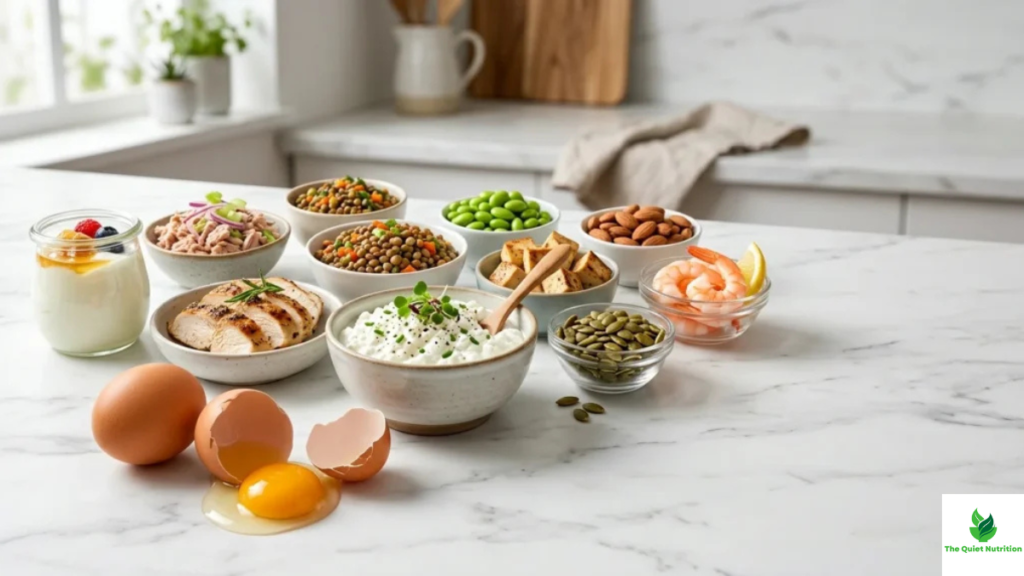
If you’ve ever cracked open an egg thinking you were getting a protein jackpot, you’re not wrong — eggs are fantastic. But here’s the thing nobody tells you: plenty of everyday foods sitting in your fridge or pantry right now pack more protein per serving than that trusty egg. And once you know which ones, your meals will never look the same.
A large egg gives you about 6 grams of protein. That’s solid. But if you’re trying to build muscle, recover faster, stay full longer, or just hit your daily protein goals without eating a dozen eggs a day — you need bigger hitters on your plate.
Let’s break down 10 foods that genuinely outmuscle the egg.
1. Chicken Breast — 31g per 100g
This is the gold standard for a reason. Lean, versatile, and easy to cook a hundred different ways, chicken breast delivers over five times the protein of an egg in the same weight. Grilled, baked, or shredded into a salad — it just works.
Try this: Meal-prep grilled chicken breast on Sundays and you’ve got a protein base for the whole week.
2. Greek Yogurt — 10g per 100g (up to 20g in some brands)
Don’t underestimate this creamy staple. Full-fat or non-fat, Greek yogurt is strained to remove excess liquid, which concentrates the protein. Some brands like Fage or Skyr-style yogurts push past 15-17g per serving.
Bonus: It’s also loaded with probiotics for gut health — something eggs simply can’t offer.
3. Cottage Cheese — 11g per 100g
Cottage cheese has quietly become a fitness-world favorite, and for good reason. It’s rich in casein protein, a slow-digesting protein that keeps you full for hours — perfect for a bedtime snack that supports overnight muscle recovery.
4. Tuna — 29g per 100g
Whether canned or fresh, tuna is a lean-protein heavyweight. It’s also rich in omega-3 fatty acids, which support heart and brain health. A single can of tuna can rival the protein content of 4-5 eggs.
5. Lentils — 9g per 100g (cooked)
For plant-based eaters, lentils are a game-changer. They’re not just protein-rich — they’re loaded with fiber, iron, and folate. A cup of cooked lentils gives you nearly double the protein of one egg, minus the cholesterol.
6. Salmon — 25g per 100g
Salmon isn’t just a protein source — it’s practically a superfood. Between the high-quality protein and the omega-3s, it supports muscle repair, brain function, and heart health all at once.
Real-world insight: A 150g salmon fillet gives you roughly 37g of protein — more than six eggs combined.
7. Paneer (Indian Cottage Cheese) — 18g per 100g
A staple in South Asian kitchens, paneer is a fantastic vegetarian protein source. Unlike regular cheese, it’s low in lactose and holds its shape well when cooked — making it perfect for curries, grilling, or stir-fries.
8. Tofu — 8g per 100g (firm tofu can go higher)
Tofu often gets underrated, but firm and extra-firm varieties pack a serious protein punch while staying naturally low in saturated fat. It’s also a complete protein, meaning it contains all nine essential amino acids — rare for a plant-based food.
9. Turkey Breast — 29g per 100g
Turkey is chicken’s leaner, often-overlooked cousin. It’s a fantastic source of tryptophan too, which supports better sleep — not something you’ll get from your morning omelet.
10. Peanuts — 25g per 100g
Yes, peanuts. A handful (about 30g) gives you roughly 7-8g of protein, and they’re incredibly calorie-dense for their size, making them a great snack for anyone needing extra protein without extra meal prep.
Why This Matters More Than You Think
Protein isn’t just about “bulking up.” It’s the building block for:
- Muscle repair and growth
- Hormone and enzyme production
- A stronger immune system
- Longer-lasting fullness (goodbye, mindless snacking)
Most Tier-1 country adults need 0.8g of protein per kg of body weight daily — more if you’re active, aging, or trying to lose fat while preserving muscle.
The Takeaway
Eggs are great — but they’re not the only way to hit your protein goals. Mixing in foods like chicken, Greek yogurt, lentils, and salmon gives you more variety, more nutrients, and honestly, more exciting meals.
Next time you’re meal planning, don’t just reach for the egg carton. Build a plate that works harder for you.

Aarti Solanki, B.Sc. (Food Science), is a food science writer passionate about making nutrition simple and evidence-based. She creates well-researched, easy-to-understand articles on healthy eating, food science, and nutrition, using information from trusted scientific and public health sources.

Pingback: Why Pineapple Helps Digestion More Than You Think (The Science-Backed Benefits Inside This Tropical Fruit)
Pingback: Why Nutrition Labels Were Created — And How They Quietly Shape Your Choices
Pingback: “High in Protein” But Still Unhealthy? How Nutrient Claims Distract From What Food Really Does to Your Body
Pingback: Why the Brain Responds Poorly to Extreme Diets — The Hidden Mental Cost of Restriction